

Last Updated on October 20, 2026 by Umar Farooq
In the gray vs tan polymeric sand choice, match the sand to the dominant tone of your pavers. Gray suits gray, charcoal and blue-toned pavers and stone. Tan (sold as beige) suits tan, buff, brown, red and warm-toned pavers. When a paver blend mixes warm and cool tones, or you can't decide, gray is the safer pick. Joints collect dirt and darken over the years, and a gray joint hides that better than a light tan one. Choose tan to make the joints disappear into a warm paver, gray or black to outline each paver, and test a spare paver before you buy ten bags.
A joint is only about 1/8 inch wide, which makes it tempting to believe the color doesn't matter. Then you lay a 300 sq ft patio and discover you've drawn a grid across the entire backyard in the wrong shade. The joints make up a small share of the surface, but a large share of the look.
Gray vs tan polymeric sand by paver color
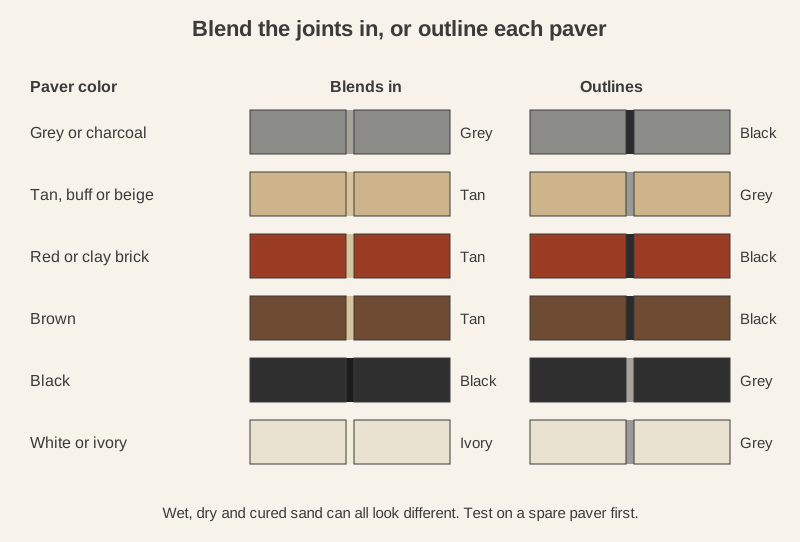
There are two approaches, and both are legitimate. A blending joint makes the surface read as one calm field. A contrasting joint outlines each paver and shows off the laying pattern. Unilock's jointing sand color guide frames it the same way, and adds that a busy blend can take a range of sand colors.
| Paver color | Blends in | Outlines the pattern |
|---|---|---|
| Gray, charcoal, bluestone | gray, slate grey | black, or tan for a softer edge |
| Tan, buff, beige, sandstone | tan / beige | gray |
| Red or clay brick | tan, brown | black, gray |
| Brown | tan | black |
| Black | black | gray |
| White, ivory, travertine | ivory | gray |
Two rules of thumb sit behind the table:
- Blend with the paver's main tone, not its lightest fleck. A charcoal paver with cream speckles is still a charcoal paver. Tan joints will pick out the speckles and make the whole field look busier.
- Outline only a pattern you want to show off. Herringbone, basketweave and a crisp running bond look good with contrasting joints. An irregular tumbled paver can look like a jigsaw puzzle with every piece outlined.
For picking the paver itself, our guide to paver colors covers how tones read in sun and shade.
Why gray is the safer default
Here's the opinion. If you can't decide, go gray, or at least go a shade darker than your first instinct.
The reason is what happens to joints over time. Polymeric sand sits 1/8 inch below the paver surface, in a small channel where dust, soil and grass clippings collect. Techniseal's data sheets list soil and organic matter left on the joints as a cause of moss and mildew. Anything that collects there darkens the joint as it ages. A tan joint that matched a buff paver on day one drifts toward a brownish outline by year five. A gray joint that starts slightly darker than the paver drifts in the direction it was already going. Unilock makes the related point for driveways: darker sands hide dust and tire marks.
The exception is a genuinely warm paver: red brick, terracotta-toned concrete, golden sandstone. Gray on those reads as cold and deliberate. If a deliberate outline isn't the look you want, go tan. We have a separate page on sandstone vs slate if you need the specifics.
"Tan" is not one color
This is the part the color guides skip, and I only found it because I opened Techniseal's polymeric sand color chart. Techniseal makes its sand from regional sources and lists around 20 named colors, each available only in its own list of states or provinces. Names such as Napa Tan, Mojave Tan, Bourbon Tan and Niagara Tan hint at where the sand comes from. The sheet warns that colors are "for reference only" and that "actual color may vary".
So a "tan" in someone's photo from Arizona may not be the tan on your local shelf. Other brands also note that their color varies because the sand is natural. Two practical consequences:
- Judge by a sample, not a photo. Buy one bag, or ask the yard for a sample, and look at it next to your actual pavers.
- Buy the whole job at once. Colors can shift between batches, so a bag bought three weeks later to finish the edges may not match.
Black, slate grey, ivory and red polymeric sand
Beyond gray and tan, the choice narrows by brand:
- Black is the strongest outline, and it looks sharp on gray, white and some red pavers. Alliance Gator's Maxx G2 comes in Black Diamond, which covers about 10 percent less per bag than its other colors. Dominator sells Midnight Black, and Techniseal offers Black only in HP NextGel.
- Slate grey is Alliance Gator's darker gray, sold in both Super Sand G2 and Maxx G2. It sits between standard gray and black, and suits charcoal pavers and bluestone without the full contrast of black.
- Ivory suits white travertine, light limestone and white porcelain. Gator Maxx G2 and Techniseal HP NextGel both offer it. On anything darker than cream, it turns every joint into a white line.
- Red is rare. None of the Alliance Gator, Techniseal, Dominator or Sakrete ranges I checked lists a red. A few specialty makers pigment sand brick red, usually in small bags. For red pavers, tan or brown is easier to find and ages more gracefully.
For the full lineup of brands and their color ranges, see our polymeric sand for pavers comparison. The four Maxx G2 shades are also covered in our Gator Maxx G2 review.
What color polymeric sand for red pavers?
Tan or brown for a warm, blended look. Black for a crisp, traditional brick outline. Gray gives a cooler contrast that suits modern red concrete pavers better than old clay brick. Worth a read next: paver colors for brick house.
Red pavers carry a practical warning too, and it matters more than the color choice. Sakrete's PermaSand data sheet singles out red and textured pavers as the places where leftover dust is "especially critical", because any polymer residue shows up as a pale film on a red face. Whatever color you choose, blow the surface completely clean before watering. A film on red brick is more noticeable than any joint color.
Test the color before you fill the patio
Color guides can't show you your own pavers in your own light, so run a quick test:
- Take two spare pavers, or pick an out-of-the-way corner, and fill a short joint with each candidate color.
- Water and cure it as the bag directs. Dry sand in the bag, freshly wet sand and cured sand can all look different.
- Look at it in morning light, midday sun and under any patio lighting. Unilock recommends the same, because light shifts how joint color reads.
- Check it wet as well. A patio spends a lot of its life wet, and wet joints go darker.
It costs one bag and a day's wait. Re-doing 300 sq ft of joints in a different color costs a weekend with a scraper.
Blend with the main tone, lean darker when unsure
Gray vs tan polymeric sand comes down to your pavers' main tone. Use gray for cool and mixed pavers, and tan for warm, red and brown ones. Use black or slate grey when you want the pattern outlined. If you're torn, pick the slightly darker option, because joints only get darker from here. And test the color on a spare paver first, since "tan" in one state isn't quite "tan" in the next.
FAQ
Should polymeric sand be lighter or darker than pavers?
Usually the same tone or slightly darker. Joints collect dirt and darken over time, so a joint that starts slightly darker stays looking intentional. A joint lighter than the paver outlines every unit and shows haze and dirt more.
What color polymeric sand goes with gray pavers?
Gray or slate grey to blend the joints in. Black gives a crisp outline. Tan works only if the gray paver has warm flecks you want to pick out.
Is there a big difference between gray and tan polymeric sand?
Less than you might expect in the bag, and more once it's down across a whole patio. Both are natural sand colors, and the exact shade varies by region and brand. Compare a sample against your pavers before you buy the full order.
Does polymeric sand change color when it cures?
The shade can shift between dry, wet and cured. Wet joints look darker, and joints also darken over the years as dirt collects. Test a small area and let it cure before judging the color.
Can you change the color of polymeric sand after it's installed?
Not by adding anything to it. Alliance Gator advises against mixing colorants into polymeric sand. To change color, you remove the joints to at least 1 1/2 inches deep and refill with new sand.


