Last Updated on September 23, 2026 by Umar Farooq
Here is how to remove pavers without breaking them, and the good news is that the first one is the only difficult one. Free the joints: dampen plain joint sand, or cut and soften hardened polymeric sand. Then lift the first paver by sliding two flat tools, such as flat bars, stiff putty knives or a paver extractor, into the joints on opposite sides and levering straight up. Once it's out, the rest slide sideways into the gap and lift out easily. Work row by row, scrape the old sand off anything you plan to reuse, and stack the pavers on edge or on a pallet.
Check the joints before you pry anything
What holds a paver in place decides how you get it out. Scratch a few joints with a screwdriver (the patio equivalent of a doctor asking you to say aah):
| What you find | What it means | How it comes out |
|---|---|---|
| Loose sand that scratches out easily | Sand-set pavers with regular joint sand | Easiest. Wet the joints, then lift |
| Joint material that is firm, slightly rubbery or crusty | Polymeric sand | Cut or soften the joints first |
| Hard gray mortar in the joints, pavers on a slab | Mortar-set pavers | Usually broken out; few survive for reuse |
| Pavers tight, no visible joint | Very tight interlock, often an older patio | Start with a cracked or cut paver |
Sand-set pavers rest on a 1-inch sand bed and are held by friction and interlock, not glue, which is why they come out whole. That's the quiet superpower of pavers, and why a sunken corner is not a failed patio, whatever the rip-it-all-out quote says: lift the section, fix the base, put the same pavers back. A cracked slab doesn't offer that. Mortar-set pavers, bonded to a slab, are the exception.
Getting the first paver out
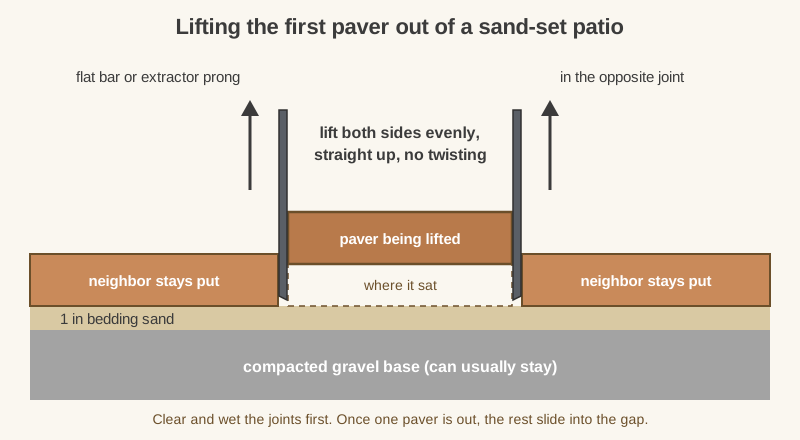
Every other paver is locked in by its neighbors, so the first one takes patience and a small sacrifice. Choose it well:
- A cracked or stained paver you plan to replace anyway. If it won't lift, break it out with a chisel and hammer. The neighbors then come out whole.
- A cut paver at the edge, next to the restraint. Pull the restraint spikes first and the edge row has room to move.
- A paver in the middle only when you need one specific piece out for a repair.
Then lift it:
- Clear the joints as deep as you can with a putty knife, margin trowel or old flat screwdriver, removing sand, moss and weeds.
- Wet the joints if the sand is dry and packed; moist sand lets go.
- Slide two flat tools into the joints on opposite sides. Stiff putty knives, 3/4-inch flat bars or the prongs of a paver extractor all work.
- Lever gently and evenly, lifting both sides together a little at a time. If one side comes up first, the paver wedges and chips its neighbor.
- Tap the surrounding pavers with a rubber mallet if it won't budge. Vibration loosens the sand's grip.
- Grip and pull straight up. Don't twist or rock it; that chips the top edges.
My favourite find while reading up on this was in This Old House's paver removal guide: homemade pullers from two pieces of stiff wire, each with a bent "finger" at the bottom. Slide them down the joints, turn the fingers under the paver, and pull up on both handles. Cheapest tool in this article.
Paver removal tools compared
| Tool | Best for | Watch out for |
|---|---|---|
| Two flat screwdrivers | One or two pavers, small repairs | Narrow tips can chip the arris (top edge) |
| Stiff putty knife or margin trowel | Clearing joints and prying | Thin blades bend on tight pavers |
| Paver extractor (two hardened shims on a lever or clamp) | Removing many pavers standing up | Needs a joint to slide into |
| Wire pullers | Lifting from joints without prying against neighbors | Need a slightly open joint |
| Vacuum lifter | Large slabs and heavy pavers | Needs a smooth, clean face; mostly a rental or pro tool |
| Flat bar or pry bar | Rows after the first paver is out | Pry only against the paver you are lifting |
Western Interlock's guide to removing a paver stone adds a useful habit: a scrap of rubber, cardboard or cloth between the tool and the stone, so the lever doesn't scar the next paver.
How to remove pavers with polymeric sand joints
Hardened polymeric sand bonds the joints, so pavers won't lift until you break that bond. The data sheets I read explain in detail how to put it in and say nothing about getting it out. Options, from gentlest to strongest:
- Soak and scrape. Saturate the joints and wait. Some polymeric sands soften and dig out with a margin trowel or a hooked joint scraper.
- Hot water. Very hot or boiling water helps break down some binders. Pave Tool's removal walkthrough uses this for cured jointing material. Carry the kettle carefully; the patio is now full of holes.
- Oscillating tool with a carbide grout blade. Cuts the joint material out without touching the paver faces. Slow, but precise.
- Polymeric sand remover. Solvent-based removers are made for this. Follow the label, protect nearby plants and wear the gloves it calls for.
- Thin diamond blade on a grinder, run down the center of the joint. Fast, but it widens the joint and makes silica dust. Keep it as a last resort.
When the pavers go back down, re-joint them with fresh polymeric sand. The steps are in our guide to how to apply polymeric sand.
Pulling up a whole patio, row by row
Once the first paver is out, removing the whole patio is mostly labor, and a surprising amount of bending:
- Pull the edge restraint and its spikes along one side.
- Work along a row from the gap, sliding each paver sideways into the open space and lifting it out. After a few, most pavers lift by hand.
- Photograph or number the layout if you are reinstalling in the same pattern, especially borders and cut pieces.
- Stack as you go, so the pile doesn't block the next row.
- Deal with the bedding sand. Old bedding sand is contaminated with fines and debris; scrape it off and replace it.
- Decide about the base. If you are rebuilding the patio, a sound compacted base can stay. If the patio sank, the base is usually why. Rebuild it before relaying.
Mortar-set pavers are a different job. Break them out with a heavy chisel or a rented demolition hammer, then decide whether the slab is worth keeping.
Reusing old pavers
Concrete and clay pavers last decades, so pavers from a sand-set patio are almost always reusable:
- Scrape the sand off the sides and bottom. A crust of old sand stops it sitting tight against its neighbors.
- Knock off polymeric residue with a scraper or wire brush. Soak stubborn pieces and scrub them.
- Sort as you stack: whole pavers, cut pieces and border pieces in separate piles.
- Store them flat on a pallet or on edge, off the soil, in stacks a hand truck can move.
- Expect a few losses. Order matching pavers if the color is still made.
Replacing a few broken pavers is covered in our paver patio repair guide.
Disposing of pavers you won't reuse
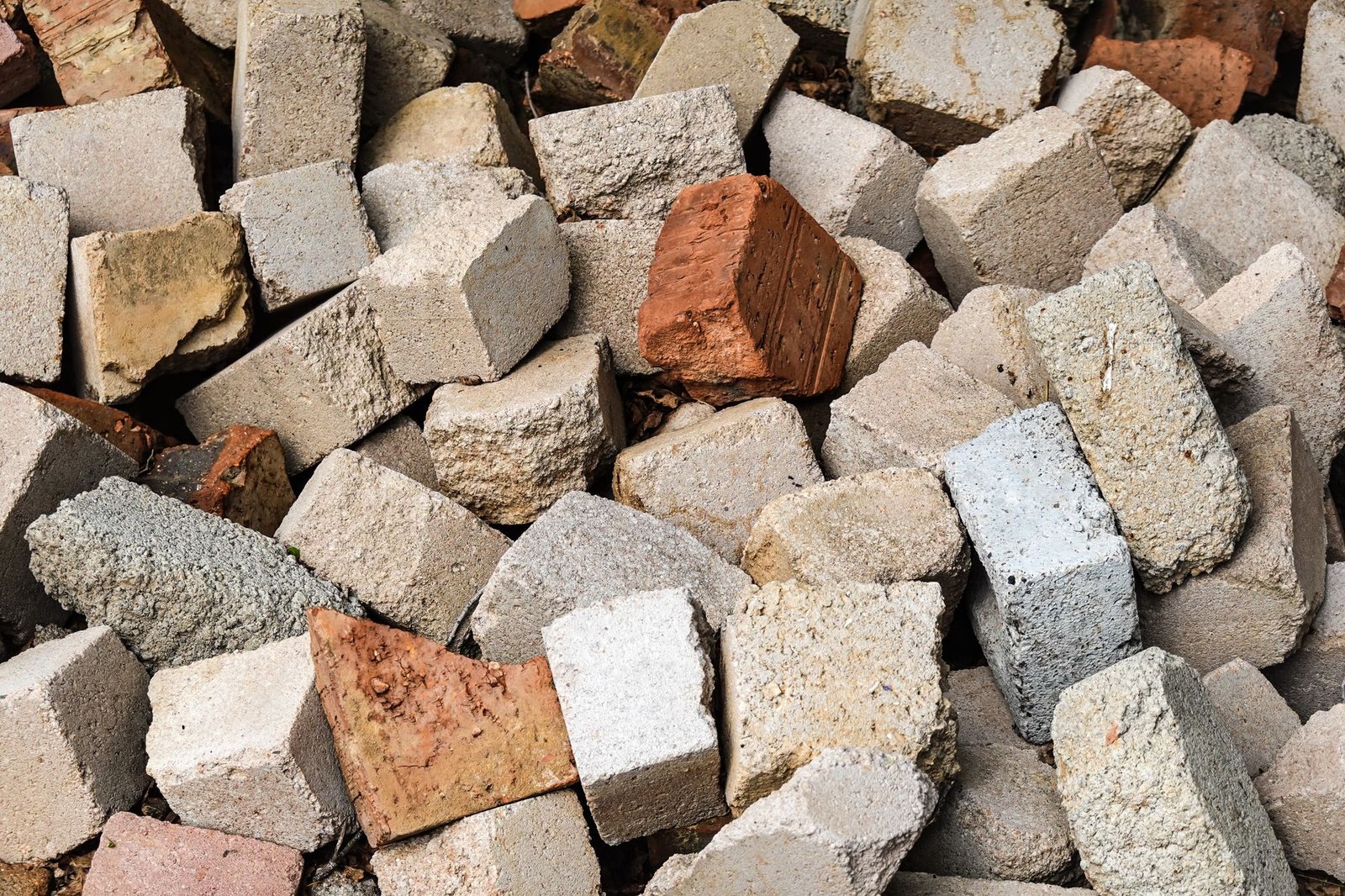
Pavers are heavy, which you'll have noticed by now. Normal-weight concrete weighs roughly 140 to 150 pounds per cubic foot, so standard 2 3/8-inch pavers come to about 28 pounds per square foot. A 12 × 16-ft patio is about 2 1/2 to 3 tons of pavers before you count the base stone.
Ways to get rid of them:
- Give them away or sell them. Whole, clean pavers are in demand, and people often haul them away themselves.
- A concrete or masonry recycling yard. Many crush clean concrete and brick into recycled aggregate. Call first; most refuse loads mixed with soil or wood.
- A dumpster rated for heavy debris. Standard roll-offs have weight limits, and concrete hits them long before the dumpster looks full. Tell the rental company you're loading masonry.
- Keep broken pieces as fill under a new base only if they are clean and crushed to base-stone size. Whole broken chunks leave voids.
Free the joints first, then lift straight up
Removing pavers without breaking them comes down to the joints. Wet sand joints, or cut and soften polymeric ones. Sacrifice or carefully pry out one paver, lifting it straight up from both sides; the rest slide into the gap. Clean the sides, replace the old bedding sand, and most pavers go straight back down. When you relay them, screed a fresh 1-inch bed of ASTM C33 concrete sand as described in our screeding sand for pavers guide. The first paver will fight you. The two-hundredth will practically hand itself over.
FAQ
What is the easiest way to remove a paver?
Clear and wet the joints around it. Then slide two flat tools, or a paver extractor, into opposite joints and lever the paver straight up. If it is the first paver in the field and it won't budge, break a damaged one out with a chisel and lift the neighbors into the gap.
How do you remove pavers with polymeric sand?
Soften or cut the hardened joint first. Soak it and dig it out, pour hot water on it, cut it out with an oscillating tool, or use a polymeric sand remover as directed. Then lift the paver as normal. Re-joint with fresh polymeric sand when you reinstall.
Can old pavers be reused?
Yes. Sand-set concrete and clay pavers are usually reusable. Scrape the old sand and polymeric residue off their sides and bottom, discard any cracked ones, and relay them on a fresh bed of sand.
Do you need to remove the sand under pavers?
If you're relaying, replace the bedding sand; old sand is contaminated and no longer screeds evenly. The compacted gravel base can stay if it's still firm and level.
How do you get rid of old pavers?
Give away or sell whole ones, take clean concrete and brick to a masonry recycling yard, or rent a dumpster rated for heavy debris. Standard 2 3/8-inch concrete pavers weigh about 28 pounds per square foot, so plan the hauling accordingly.