


Last Updated on October 20, 2026 by Umar Farooq
Limestone pavers are cut slabs of sedimentary rock made mostly of calcium carbonate, sold in cream, buff, tan and light gray. They stay cool underfoot, cut easily and give a smooth, formal look. The trade-off is that limestone is softer than granite or bluestone, it is etched by acids, and a porous grade can flake in freeze-thaw weather. Choose a dense grade with low absorption, ask for test data, and be ready to seal it. In a warm climate, limestone is a very good patio stone.
The guides I read agree on the benefits and then quietly disagree on sealing intervals, cost and cold-weather performance. This guide sorts out which numbers hold up. If you are still choosing, our natural stone pavers overview compares limestone with granite, slate, bluestone and sandstone.
What limestone pavers are, and the three density classes
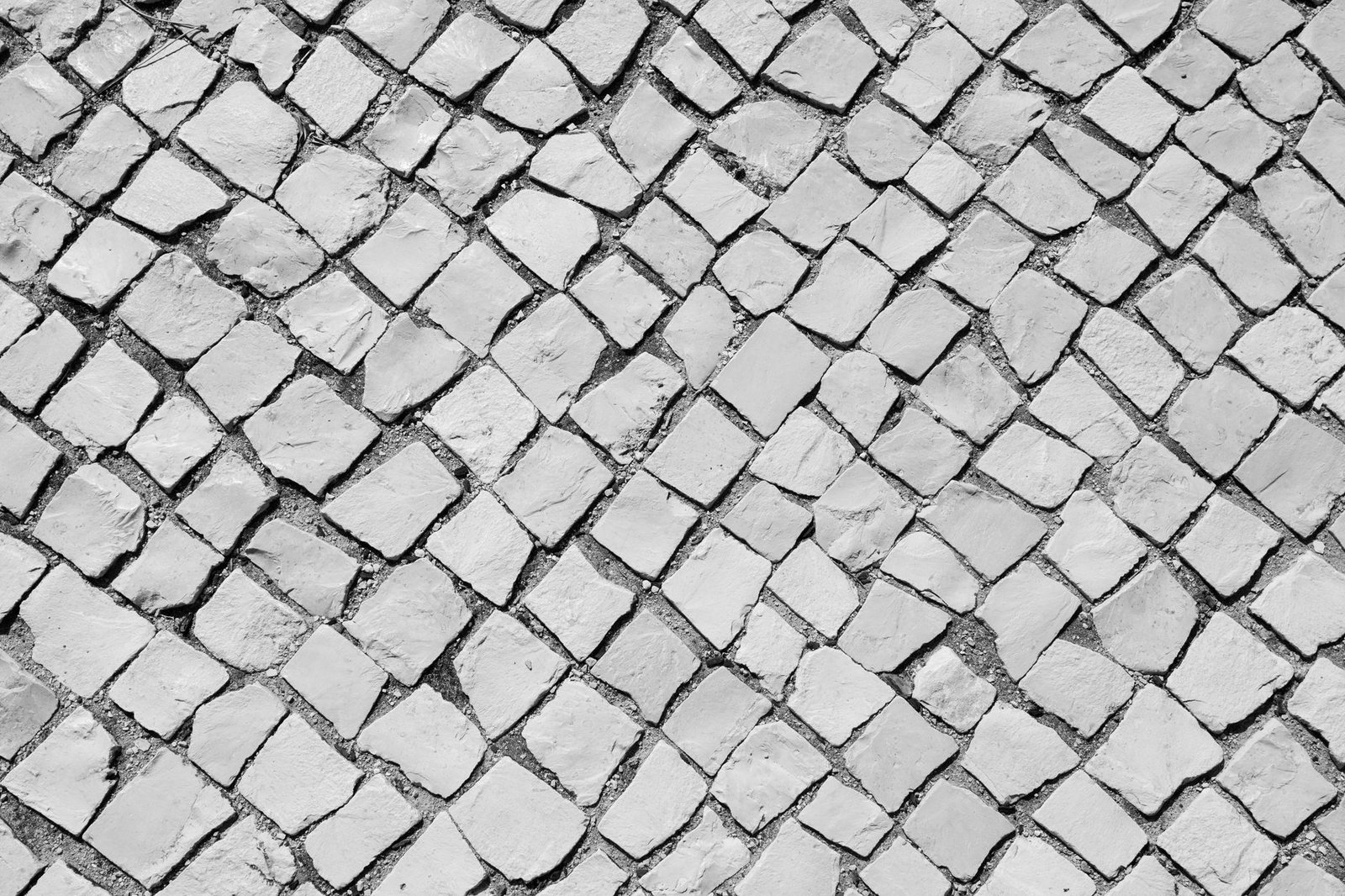
Limestone forms from calcium carbonate laid down over time, often from shells and sea life, and compressed into stone. That chemistry is the key to everything else. Calcium carbonate reacts with acid, and more porous limestone takes up more water.
ASTM C568 is the specification for limestone dimension stone. Its abstract says limestone is sorted into three categories (low density, medium density and high density), with requirements for absorption, density, compressive strength, modulus of rupture and abrasion resistance. In plain terms, the dense stone is the better paving stone. A low-density limestone is a lovely wall and a poor floor.
The practical consequence is the same one I made for sandstone: "limestone" on a label tells you very little. What you need from the supplier is:
- the ASTM C568 density class,
- the water absorption figure,
- compressive strength and modulus of rupture,
- and, in a cold climate, freeze-thaw test results for that exact product.
Our sandstone pavers guide goes through the same test-sheet logic for the sister stone.
The types you will actually find
FreshPatio's guide lists four limestones you will meet in landscape work:
- Indiana (Bedford) limestone. A long-used building stone, mostly for exterior and high-end work.
- Texas limestone. Valued for durability, with Texas Cream the most sought-after variety.
- Jerusalem stone. Very pale, white to pink, and some varieties harden after quarrying.
- Coral stone. Made mostly of fossilised coral, with a textured, pitted look.
Colours run from cream and moderno beige through grey and brown to rare blue and black. FreshPatio notes brown limestone can fade lighter in strong sun, which matters if you match a repair years later.
Limestone is not travertine, though the two are related. Travertine forms in springs and is full of holes, which gives it a pitted face. Limestone is usually smoother and more formal. Our travertine pavers guide covers the pitted cousin.
Why limestone suits hot, bright patios
Limestone's strongest argument is comfort. Stone Center says limestone stays cooler underfoot than bluestone, which retains heat, and recommends it for sun-exposed patios and pool surrounds. StoneHardscapes, writing for South Florida, says the same about limestone in a hot, humid climate. The mechanism is the usual one: pale stone reflects sunlight instead of absorbing it.
None of the three guides gives a measured surface temperature, so treat "cooler" as relative, not as a number. A light cream will run cooler than a dark brown or grey. If heat is your main worry, compare it with the options in our bluestone pavers guide, where the dark stone is the trade-off.
Limestone is also easy to work. FreshPatio puts it at Mohs 3 to 4, which makes it simple to cut for curves and odd angles. That is a real advantage for a patio with a curved edge.
Water, ice and flaking in cold climates
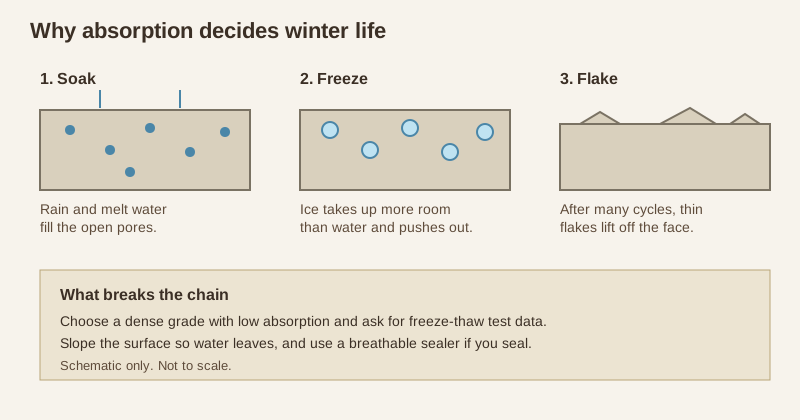
Cold weather is where limestone gets into trouble, and it is the section most guides skim.
The mechanism is simple. Porous stone soaks up water. When the water freezes it expands, and after enough cycles the surface lifts in thin flakes. Salt makes it worse. The more porous the grade, the more water gets in, so a dense, low-absorption limestone is far safer than a soft one.
The guides split on how bad the problem is:
- FreshPatio says freeze-thaw cycles are a concern for pool decks, that standard limestone may not hold up well, and that some quarried options can handle winter.
- StoneHardscapes does not discuss freeze-thaw at all, because it is writing for South Florida.
- Stone Center lists limestone's freeze-thaw performance as good when sealed, and recommends low-porosity grades.
Here is my one strong opinion on this. In a freezing climate, do not buy limestone on the colour sample. Buy it on the absorption figure and the freeze-thaw results. If the supplier cannot produce them, pick bluestone or granite and enjoy the winter. A patio slab in a region where it freezes is a very long science experiment, and you are the one paying for it.
Slope the patio so water leaves, because standing water is what freezes. ICPI's minimum surface slope is 1.5 percent. Avoid de-icing salt on limestone, and use sand for traction instead.
Soft stone, easy cuts and easy damage
The same softness that makes limestone easy to cut makes it easy to mark. It scratches more readily than granite, and acid dissolves it. Practical limits:
- No vinegar, citrus cleaners or acidic patio products. Stone Center says acidic products can etch limestone. FreshPatio suggests vinegar only for efflorescence, a mild case; use stone-safe cleaners as the default and test a hidden corner first.
- Sweep grit away. Sand and gravel scratch soft stone under shoes and furniture.
- Use soap and warm water for oil stains, and a stone-safe cleaner for the rest.
- Protect the surface from hot grease and rust. See the next section.
If you cut it yourself, use a wet saw. OSHA's rule for masonry saws is water on the blade, every time (29 CFR 1926.1153), because cutting stone makes silica dust.
Rust and yellow stains: the iron problem
FreshPatio flags something most guides skip. Iron-bearing minerals in limestone, exposed to water, can leave yellow or brown discolouration. A few things cause it or make it worse:
- metal furniture legs and planters that rust,
- irrigation water that is rich in iron,
- leaf debris that stays damp on the surface.
Use plastic or rubber feet under metal furniture, keep sprinklers from soaking the stone, and sweep leaves. A penetrating sealer reduces absorption, which reduces how deep stains go.
Sealing limestone: one year, three or only when needed?
The sources disagree, and this is a useful warning. FreshPatio says limestone is porous, sealing is essential, and a silicone-based natural stone sealant should be reapplied annually. Stone Center lists a sealing interval of every 1 to 3 years. StoneHardscapes calls sealing optional but useful.
My answer is to ignore the calendar and read the stone. Reseal when water stops beading, and not before. Choose a breathable, penetrating sealer made for natural stone, because film-forming sealers can trap moisture, which is exactly what freezes. Let the stone dry for several days first, test a hidden paver for darkening, apply thin coats, and follow the product's data sheet.
A dense, well-drained limestone needs less sealing than a soft one. Check the absorption figure on the sheet and let that decide how worried you need to be.
Laying limestone: mortar bed or sand over a thick base
FreshPatio says limestone pavers on a path generally need a mortar bed, whereas crushed limestone does not, and that dry-set and mud-set methods both exist. Stone Center and the other guides give little installation detail, so rely on the industry specs.
Sand-set, thicker units. Use at least 4 inches of compacted crushed stone for a patio or walkway on well-drained soil, with 2 to 4 inches more on wet or freezing ground (ICPI Tech Spec 2). Screed a nominal 1 inch of ASTM C33 concrete sand and leave it undisturbed. Check that the base is flat to within 3/8 inch over a 10 foot straightedge. Soft, thin stone cracks over a lumpy base.
Mortar-set, thinner units. Bond the stone to a concrete slab with a full mortar bed and no voids. Spot-bedding leaves air pockets that collect water, and water is what you are trying to avoid.
Limestone is not a driveway stone in thin slabs. Use thick, high-density units if cars will cross it, and see our paver base guide for the 6 inch driveway base.
What limestone costs against bluestone and travertine
The figures disagree again. FreshPatio puts limestone at about $7 to $15 per square foot for material and $16 to $32 installed. Stone Center puts it at $3 to $16 for material and $12 to $28 installed, and places bluestone at $8 to $18 for material and $15 to $31 installed. FreshPatio says limestone is cheaper than travertine and marble but slightly pricier than granite and sandstone.
That is a wide overlap, so the stone name does not settle the budget. Thickness, density, finish, freight and region do. Ask for quotes that include base, sand and sealer, and keep in mind that availability depends on region, which FreshPatio lists as a downside.
Pick the dense grade and keep it dry
Limestone pavers are a strong choice for warm, bright patios, formal courtyards and pool surrounds, because they stay cool, cut easily and look refined. Pick a high-density grade with the absorption figure in writing, keep acids and rust away from it, give it a flat 4 inch base and a slope that sheds water, and seal it with a breathable product when water stops beading. In a freezing climate, get frost test results or choose bluestone or granite. The rock spent a very long time on the sea floor; it will cope with your patio if you keep it dry.
FAQ
Are limestone pavers good for patios?
Yes, especially in warm climates. Limestone stays comfortable underfoot, cuts easily and gives a smooth, formal look. Choose a dense grade, seal it with a breathable product and avoid acidic cleaners.
Do limestone pavers need to be sealed?
Most guides recommend it because limestone is porous. The advised interval varies from annually to every 1 to 3 years. A better rule is to reseal when water stops beading, using a breathable stone sealer.
Can limestone pavers be used in cold climates?
Dense, low-absorption grades can. Porous limestone can flake when water in the pores freezes. Ask for absorption and freeze-thaw test data for the specific product, slope the patio so water drains, and avoid de-icing salt.
What is the difference between limestone and travertine pavers?
Both are calcium-based and react to acid. Travertine forms in springs and has natural holes and a pitted face. Limestone is usually smoother and more formal, and suppliers often rate dense limestone as the stronger option.
Are limestone pavers slippery when wet?
A smooth honed face can be slick, while textured, tumbled or bush-hammered finishes grip better. Choose a textured finish for pool decks and steps, and keep moss and algae off shaded areas.
How much do limestone pavers cost?
FreshPatio quotes about $7 to $15 per square foot for the stone and $16 to $32 installed, while Stone Center quotes $3 to $16 for material and $12 to $28 installed. Get local quotes that include the base, sand and sealer.


