Last Updated on September 23, 2026 by Umar Farooq
Modern pavers are defined less by a single product than by five traits: large formats, smooth or finely textured faces, narrow and even joints, straight-line patterns, and a restrained color palette. Put those together and a concrete, porcelain or stone patio reads as clean and contemporary. Mix in tumbled edges, busy blends or fan patterns, and it reads as traditional, however new the pavers are. I went through a stack of manufacturer lookbooks to confirm this, and the modern pages all look like the same very tidy person lives there.
Below is each trait, what it looks like and what it asks of the installation. Large, smooth, tightly jointed pavers are much less forgiving than small rustic ones.
What makes modern pavers look modern
Techo-Bloc's patio design guide sums up the style well: modern patios "prioritize clean geometry and a streamlined look, often using larger formats, tight joint lines, and a restrained color palette." In practice, that comes down to seven choices:
- Bigger units, meaning slabs and long planks rather than small bricks.
- Plain faces, smooth, honed or lightly textured instead of rough or tumbled.
- Crisp edges with small chamfers or none at all.
- Narrow, consistent joints in a color that doesn't compete.
- Linear patterns such as stack bond, grid and plank running bond.
- One color family, with texture doing the work instead of contrast.
- Negative space: pads floating in gravel or lawn, and clean edges against planting.
You don't need all seven. A plain gray plank in a stack bond with charcoal joints already looks modern, and slightly judgemental of the neighbours' cobblestones.
Large-format slabs and planks
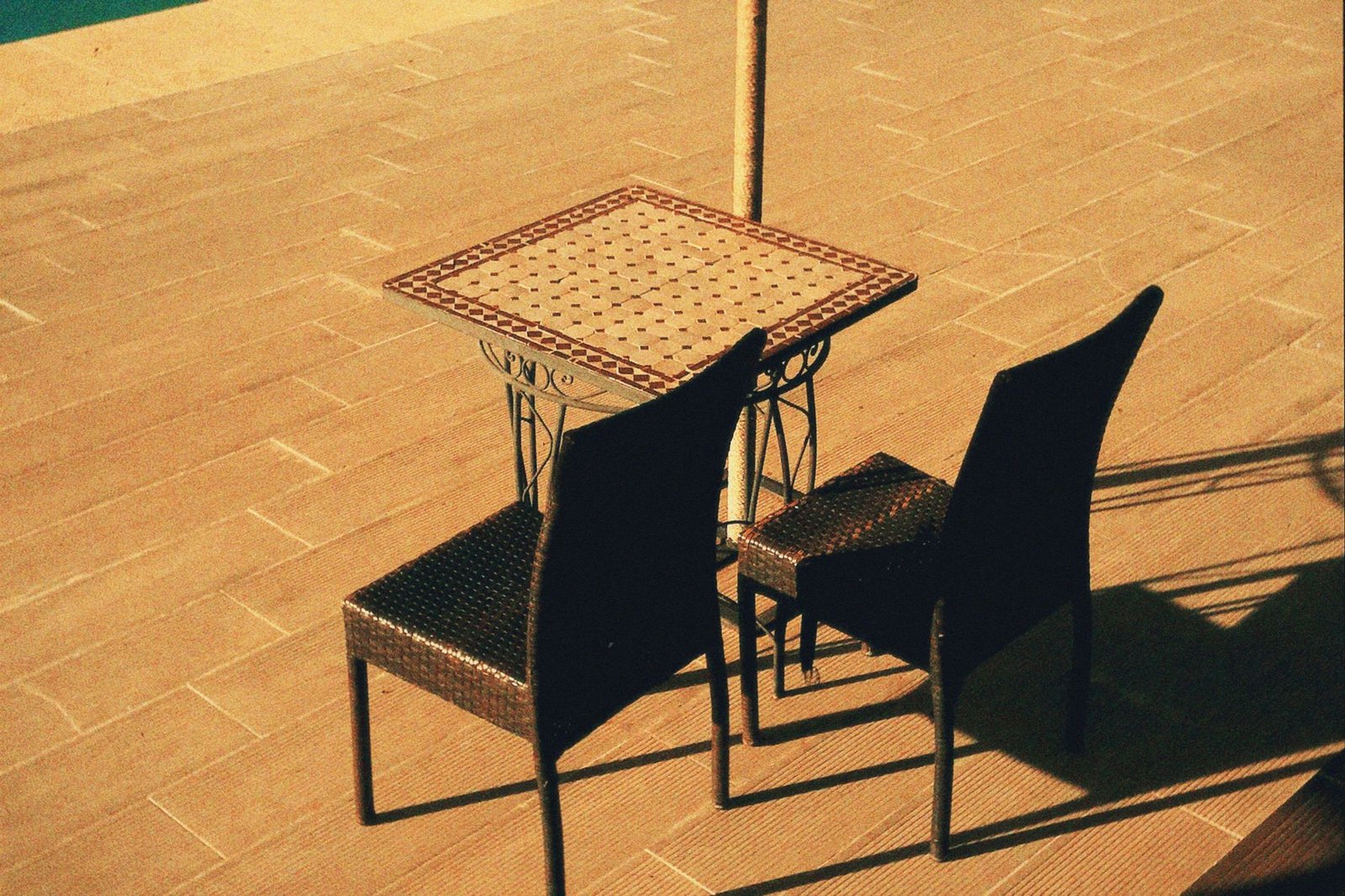
Size is the most noticeable modern cue. Fewer joints mean a calmer surface, and Techo-Bloc notes that large pavers can make a backyard feel more open. Its own Techo-Bloc paver range runs up to slabs about 36 by 36 inches (its Industria 900 x 900 mm).
Two shapes dominate:
- Square slabs such as 24×24 or larger, laid in a grid. These give the most architectural look.
- Planks, meaning long, narrow rectangles, laid in a stack bond or a long running bond. They echo decking and siding lines and make narrow spaces look longer.
Bigger units bring practical trade-offs:
- The base has to be flatter. Small pavers ride over small dips. A 2-foot slab bridges them and rocks, or shows an edge higher than its neighbor. The Concrete Masonry & Hardscapes Association's application guide limits paver-to-paver lippage to 1/8 inch and calls for the base to be within 3/8 inch over 10 feet. Large formats make every error in the paver base visible.
- They're heavy. Slabs over about 24 inches are a two-person lift or a job for a vacuum lifter. (Your back will send you a detailed report either way.)
- They're mostly for foot traffic. Long, thin units crack under cars. CMHA's guide says units with a length-to-thickness ratio of 4:1 or more shouldn't carry vehicles.
Smooth, honed and finely textured faces
Modern paver faces are plain. Common options:
- Smooth concrete. Flat, even color, with the fine sand of the face mix visible up close.
- Shot-blasted or brushed concrete. Lightly textured, with a matte look that resembles honed stone and gives better grip.
- Porcelain pavers. Usually about 3/4 inch (2 cm) thick, very dense, stain-resistant, and available in stone, concrete and wood looks.
- Honed limestone, bluestone or granite. Natural stone with a smooth, matte finish.
Watch the grip. A polished face gets slippery when wet, especially around pools and on steps. Outdoor porcelain has textured, slip-rated surfaces for that reason, and brushed or shot-blasted concrete grips better than a glassy finish. NT Pavers' contemporary paver guide lists glossy finishes among common modern-design mistakes. Nothing says minimalism like a trip to urgent care.
Narrow joints in a quiet color
Modern designs rely on joints that are thin, straight and all the same width. Concrete pavers are made with spacer nibs that set joints at roughly 1/16 to 3/16 inch, CMHA's typical range. Keep them that way:
- Snap string lines every few rows. Straight joints are the whole look, and a wandering line on large units is obvious.
- Don't force pavers tight. Butting them hard together causes chipped edges once they're compacted.
- Choose joint sand to match or recede. Gray or charcoal polymeric sand keeps the grid quiet on gray and charcoal pavers. Tan sand on a charcoal field draws a bold grid, which is fine if that's the intent.
Porcelain on pedestals over a roof deck or slab is the exception, usually laid with open joints and no sand.
Linear patterns: stack bond, grid and plank bond
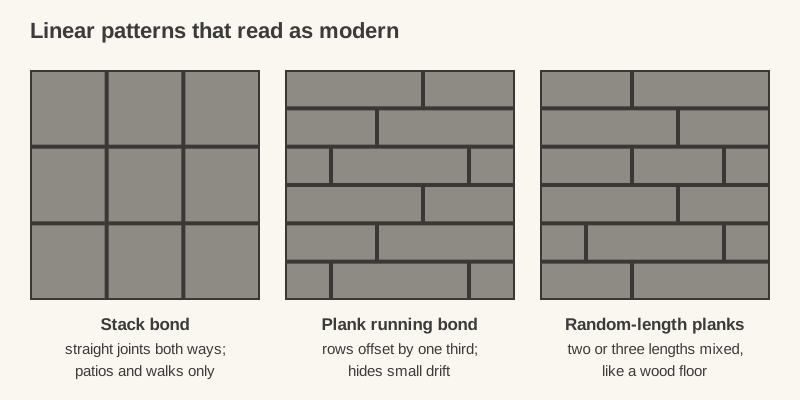
Pattern matters as much as the paver. NT Pavers' guide points to grid patterns, running bond, large-format stacked layouts and simplified herringbone as the patterns that dominate contemporary work.
- Stack bond or grid. Joints run straight in both directions. It's the most architectural pattern, and the least forgiving, because any drift shows. It also has the weakest interlock, so keep it to patios and walkways.
- Plank running bond. Long pavers offset by a third or a half of their length. It's calmer than a brick running bond and hides small alignment errors better than a grid.
- Random-length planks. Two or three plank lengths mixed, like a wood floor. It's modern but slightly relaxed.
- Large-format herringbone. Big planks in a 90-degree herringbone read modern, and herringbone interlocks best if the area carries vehicles.
Line the long joints up with the house. Running planks parallel to a wall, a window line or the main walking direction makes the design look deliberate.
Colors for a modern paver patio
Modern palettes are narrow on purpose. Techo-Bloc's advice is to "keep everything in one color to reinforce the modern feel, then rely on texture or finish, not contrast, to add subtle depth."
Colors that work:
- Light gray and warm white-gray. Bright and cool underfoot, but they show stains.
- Mid gray. The safest modern color; it hides dirt.
- Charcoal. Crisp against a lawn and white walls, but hot in full sun.
- Warm greige and sand. A softer version of modern that pairs with wood cladding.
Skip multi-color blends and strong reds if a clean look is the goal. For heat, dirt and house-matching, see the guide to paver colors.
Floating pads and mixed materials
Some of the most modern paver work uses fewer pavers, not more.
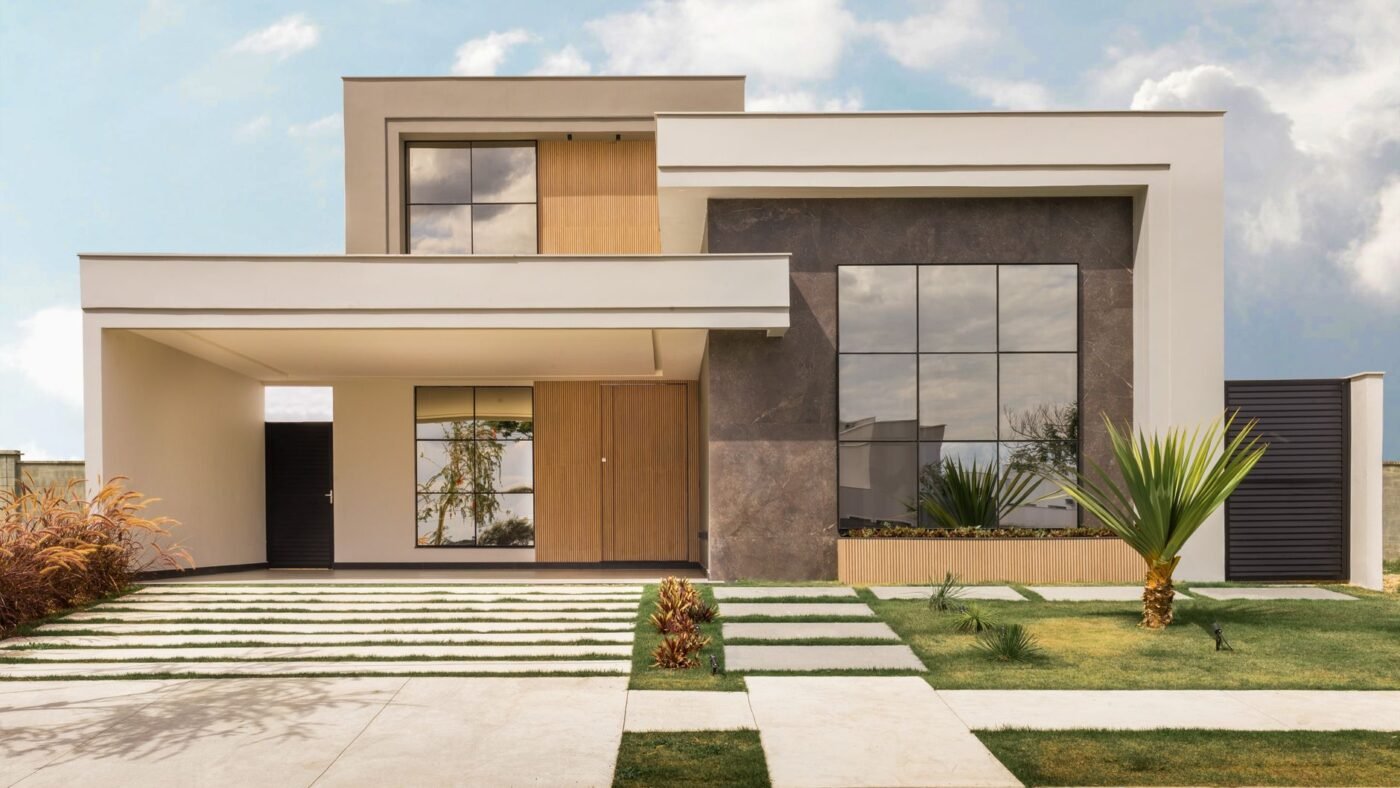
- Pads in lawn or gravel. Large rectangular pavers set as stepping pads with grass or gravel between them, like those in front of the house in the photo at the top of this page. Each pad needs its own compacted base and has to sit level with its neighbors.
- Gravel bands. A strip of dark gravel between slabs, or around the patio edge, breaks up a big field without adding a second paver color.
- Steel or aluminum edging. A thin metal edge gives a crisp line against planting beds where a paver soldier course would look fussy.
- Wood and concrete together. Planks beside a wood deck carry the linear look across materials.
Details that make a modern patio look dated
Most "modern" patios that fall flat do so because of small layout decisions, not the pavers. Watch for these:
- Slivers at the edges. A grid that ends in thin cut strips along the house or lawn looks careless. Lay the pattern out dry and shift it so the cuts at both edges are at least half a unit. CMHA's guide keeps cut pieces no smaller than one third of a paver in vehicle areas, and on a modern patio even that looks busy.
- A border that fights the field. A contrasting soldier course around a stack bond adds a traditional frame. If you want an edge, use the same color turned 90 degrees, a band of gravel, or a thin metal edge.
- Too many colors. Three-tone blends and accent bands in a second color undo the calm that large formats create.
- Joints drifting off line. On a grid, a joint that wanders by half an inch over 10 feet is obvious from a window. Pull string lines often and correct as you go, not at the end.
- Mismatched steps and walls. Rough, split-face wall caps or tumbled steps next to a smooth slab patio mix two styles. Choose steps and caps from the same smooth, square-edged family.
The fix for all of them: decide the grid, edges and cuts before the first paver goes down.
Can modern pavers go on a driveway?
Yes, with the right units. Large slabs and thin planks are pedestrian products. For a driveway, choose pavers rated for vehicles, typically 3 1/8 inch (80 mm) thick, with a length no more than about three to four times their thickness. Many makers offer a vehicle-rated version of their modern lines in smaller sizes. A 90-degree herringbone of long, smooth units still looks clean and contemporary while handling tire loads.
Go big, keep it plain, keep the joints tight
The modern look comes from restraint. Pick larger, smooth-faced units in one color family, lay them in a stack bond, grid or plank pattern, and keep the joints narrow and straight.
My strong opinion: on a sand-set patio, skip the porcelain and buy large smooth concrete slabs. At about 3/4 inch thick, porcelain wants pedestals or a near-perfect bed and a skilled setter; a 2 3/8-inch concrete slab forgives a sand bed far better and gets you the same clean grid. Save porcelain for roof decks and pedestal jobs, where it earns its price.
Get the base flat and the joints straight, and the pavers will do the rest of the showing off. They are very good at it.
FAQ
What are the most modern-looking pavers?
Large-format smooth concrete or porcelain slabs and long planks in gray, charcoal or warm white, laid in a stack bond or plank pattern with narrow joints. Crisp edges and a single color family matter more than the brand.
Are large pavers harder to install?
Yes. They're heavier, and they need a flatter base because they can't ride over small dips the way small pavers can. Plan for two-person lifts or a vacuum lifter, and check the base with a long straightedge before laying.
What paver pattern looks most modern?
Stack bond (a straight grid) is the most modern-looking pattern, followed by plank running bond and random-length planks. Herringbone with large planks also works and is the best choice where cars drive.
Are smooth modern pavers slippery?
Smooth concrete can be slick when wet, and polished stone more so. For pool decks, steps and shady areas, choose a brushed, shot-blasted or slip-rated porcelain finish.
Should I choose porcelain or concrete for a modern patio?
Porcelain offers the thinnest, most uniform look and resists stains, but it needs careful setting and costs more. Concrete is thicker, more forgiving over a sand-set base, and available in large smooth formats. Both look modern when laid with tight, straight joints.