Last Updated on September 23, 2026 by Umar Farooq
Patio edging is the visible strip between a patio and the lawn or planting beds around it: a row of stone or block, a brick band, a steel strip, a timber edge, a gravel strip or a planted border. It is also where the lawn and the patio conduct their slow border dispute. The best choice for most homeowners is a flush row of stone, block or brick set level with the lawn, because a mower can run over it and nobody trips on it. Steel suits modern patios, gravel is the cheapest buffer, and plants soften a hard edge. Whatever you choose sits outside the hidden restraint that actually holds the pavers in.
That last point trips people up, so I start there, then compare seven patio edging options and finish with how to pick one.
Patio edging is the part you see, not the part that holds
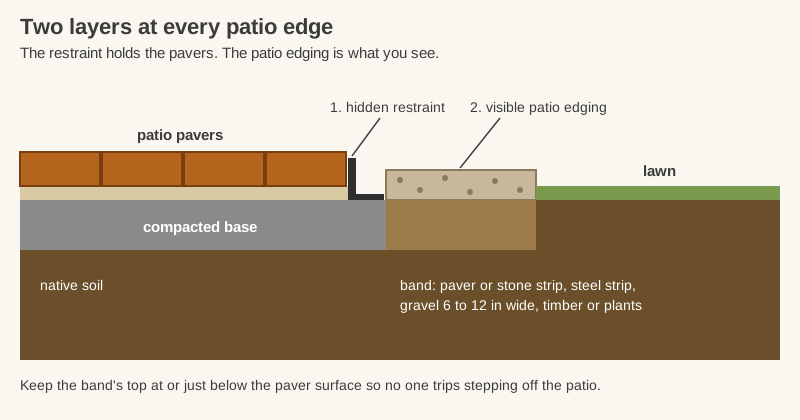
A paver patio has two edges, and they do different jobs.
- The restraint. Plastic, aluminum, concrete or curb, spiked into the gravel base right against the pavers. It stops the pavers from spreading. It is usually buried and invisible. Our guide to paver edging covers choosing and installing it.
- The patio edging. Whatever you see between the patio and the grass or beds. It controls how the edge looks, how you mow, and whether grass creeps onto the pavers.
Sureloc's comparison of landscape edging and paver edging makes the same distinction. Landscape edging does not have the rigidity to restrain pavers, and a paver restraint is not designed to look good. The edging-idea galleries I read mostly skip this. Pretty edging stones sitting loose in soil will not hold pavers in unless they are set in concrete as a proper restraint.
This is the one point I won't hedge on. A paver field holds together only while its edges can't move, so it needs a restraint spiked into the base or locked in concrete. Without it, the outer row rolls, the joints open, the sand washes out, and the patio starts wandering toward the grass. Choose the visible edging for looks and mowing; the restraint underneath is not optional.
Seven patio edging options side by side
| Edging | Look | Mowing | Trip risk | Upkeep | Best for |
|---|---|---|---|---|---|
| Flush stone or block row | Clean, built-in | Mower rides over it | Very low | Low | Almost any patio next to lawn |
| Raised edging stones or palisades | Defined, formal | Needs trimming | Moderate | Low | Beds and slopes beside a patio |
| Brick band | Classic, warm | Mower rides over it if flush | Low | Low | Traditional and brick homes |
| Steel or aluminum strip | Thin, modern line | Mower rides over it if flush | Low if flush | Very low | Contemporary patios, curves |
| Timber or sleepers | Rustic, soft | Needs trimming | Moderate | Rots eventually | Cottage gardens, raised patios |
| Gravel strip | Relaxed, textured | Keeps mower off patio | Loose stones | Top up, rake | Budget edges, drainage |
| Planting border | Soft, green | No mowing at edge | Low | Weeding, pruning | Patios meant to feel enclosed |
The rest of this guide takes them in turn.
Stone and patio edging blocks next to a lawn
Stone and concrete blocks are the most common patio edging for a reason. They last as long as the patio, come in colors that match or contrast, and can be set flush so a mower wheel rolls straight over.
There are two ways to use them:
- Flush, as a mowing edge. Blocks set level with the lawn and just below the patio surface. The grass runs up to them, the mower rides over them, and there is no edge left to trim. This is the lowest-maintenance patio edging there is.
- Raised, as a curb. Stones or upright palisades standing a few inches above the lawn. They hold mulch and soil in beds and make a visual frame, but grass along them still needs a string trimmer.
For a lawn-side edge, go flush. For a bed-side edge, raised stones make more sense because they keep mulch off the patio. Setting individual stones, depths and mowing strip construction are covered in our guide to paver edging stones.
Natural stone, such as granite setts or split flagstone, costs more than concrete block but ages well beside a natural stone patio. Match the patio or the house trim, not both. (Trying to match both is how people end up with a third color.)
Brick edging for a classic frame
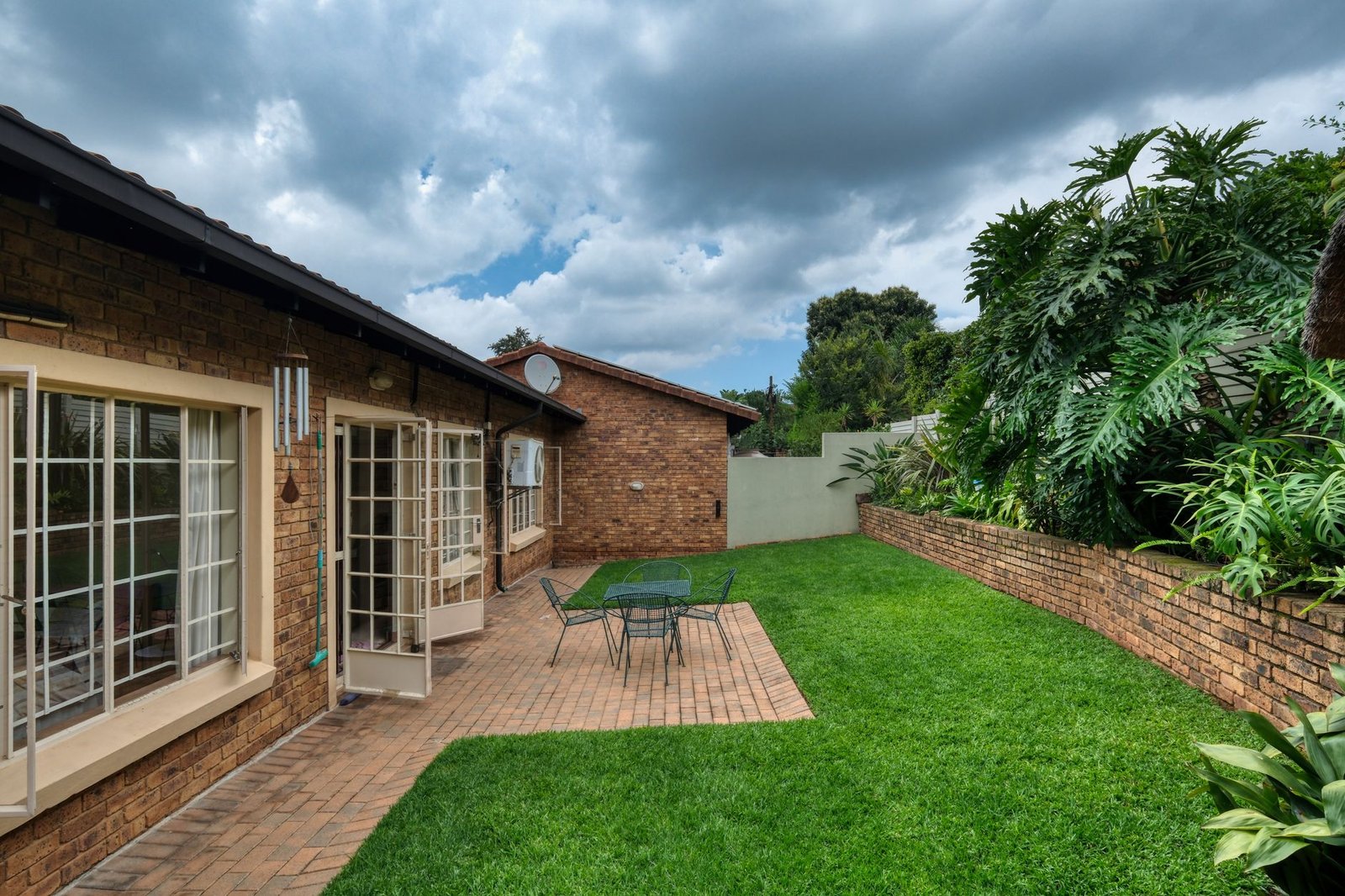
Brick is the traditional patio edging for good reason: its small, regular units follow gentle curves and frame a patio without shouting. It suits clay brick homes, concrete paver patios in red or tan tones, and cottage-style gardens.
Things to know before you buy:
- Use paving brick, not wall brick. Wall bricks are not made to sit in wet soil and can crumble after a few winters. Paving brick or concrete brick pavers are rated for ground contact and freeze-thaw.
- Decide flat or on end. Bricks laid flat make a wide, low band that mowers ride over. Bricks set on end make a narrow, raised edge, sawtoothed if you tilt them. The sawtooth look is charming right up until you mow it.
- Set them on a base. Bricks dropped straight into soil heave and tilt within a season or two. A few inches of compacted gravel under them keeps the line straight.
If you want the brick band to be part of the patio itself, rather than something outside it, that is a paver border, laid in the same bed as the patio.
Steel and aluminum strips for a crisp line
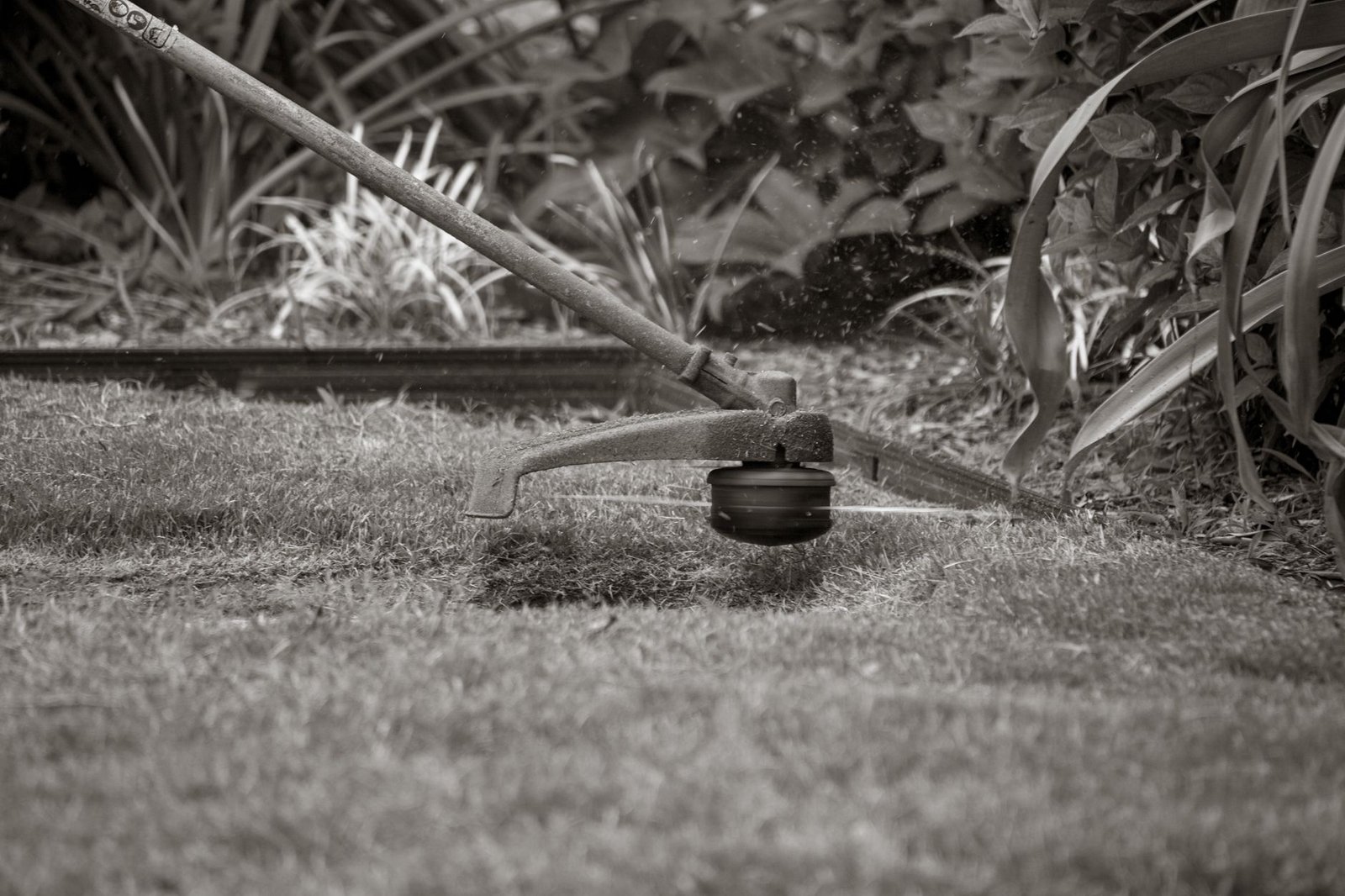
A steel or aluminum strip is the thinnest patio edging you can buy. It draws a single sharp line between patio, gravel, turf and planting, which is why it shows up on so many contemporary patios. It also bends into smooth curves with no cutting.
Choosing metal edging:
- Material. Galvanized or powder-coated steel is strong and cheap. Weathering (corten-type) steel rusts to a stable orange-brown on purpose, which suits natural gardens, but it can stain light pavers and gravel where runoff crosses them. Aluminum is lighter, will not rust, and is easy to curve.
- Height. Set the top flush with the lawn or up to about 1/2 inch above it. Higher strips catch mower blades and toes, in roughly that order of expense.
- The top edge. Look for a rolled or capped top. A bare cut edge of thin steel is sharp enough to injure a bare foot or a pet.
Metal edging does a good job of holding grass roots back from the patio, but a thin strip standing on its own is not a paver restraint. Some aluminum paver restraints are made to double as visible edging, and those do both jobs.
Timber, sleepers and log edges
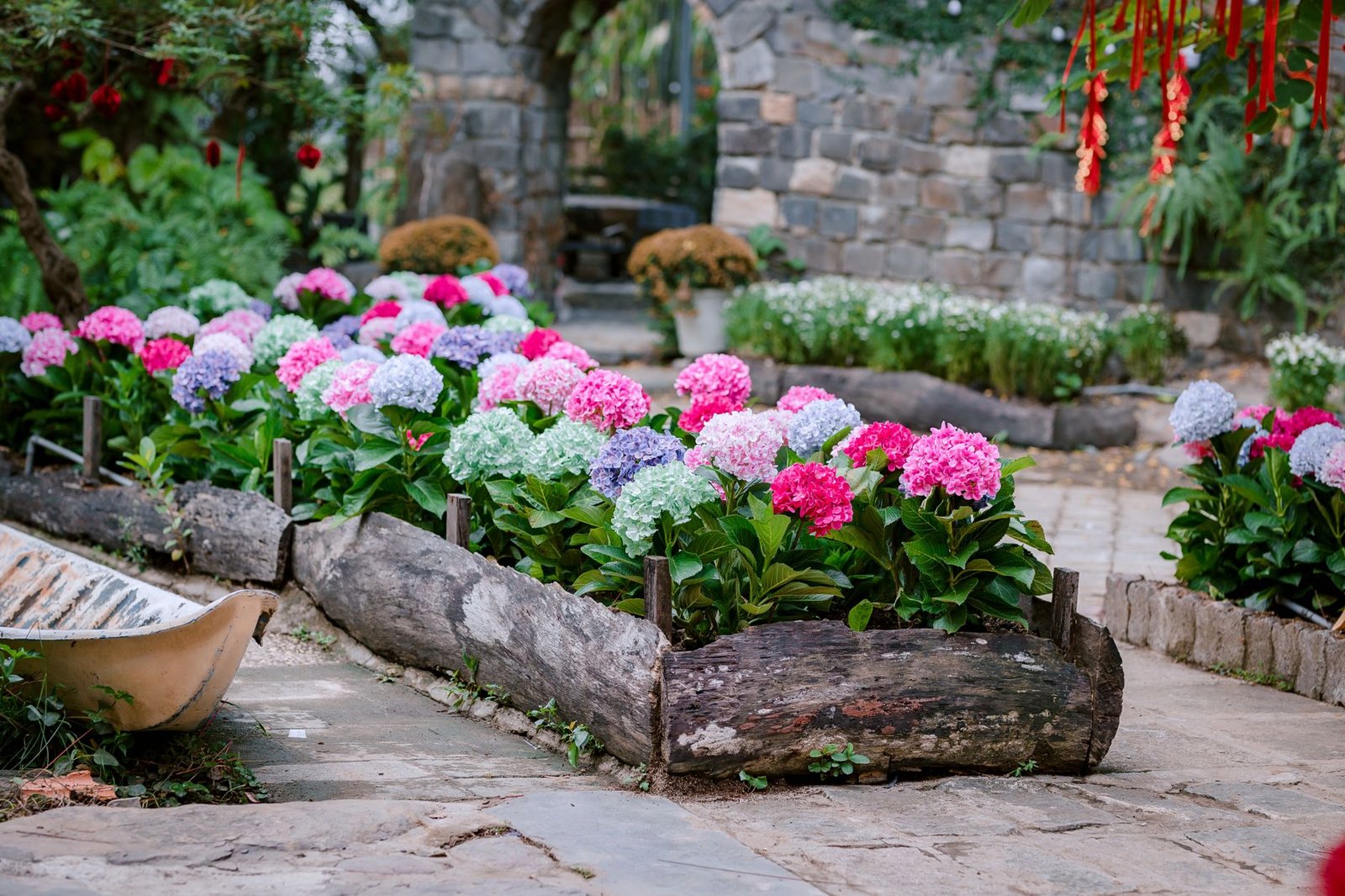
Timber gives the softest, most rustic patio edge: sleepers, boards on edge, or split logs like the one above. Gardeningetc's patio edging ideas includes both sleepers and logs as budget-friendly options, and sleepers are especially handy at the edge of a slightly raised patio, where they act as a low step.
The trade-off is lifespan. Any wood in contact with soil rots eventually; the soil is patient. To slow it down:
- Use lumber pressure-treated for ground contact, or naturally durable species such as cedar or black locust.
- Set the timber on a gravel strip so it drains instead of sitting in wet soil.
- Avoid old creosote-soaked railroad ties next to vegetable beds and play areas.
Expect to replace timber edging long before the patio needs attention. If that sounds like a chore, choose stone or metal.
Natural stone and boulders along the beds
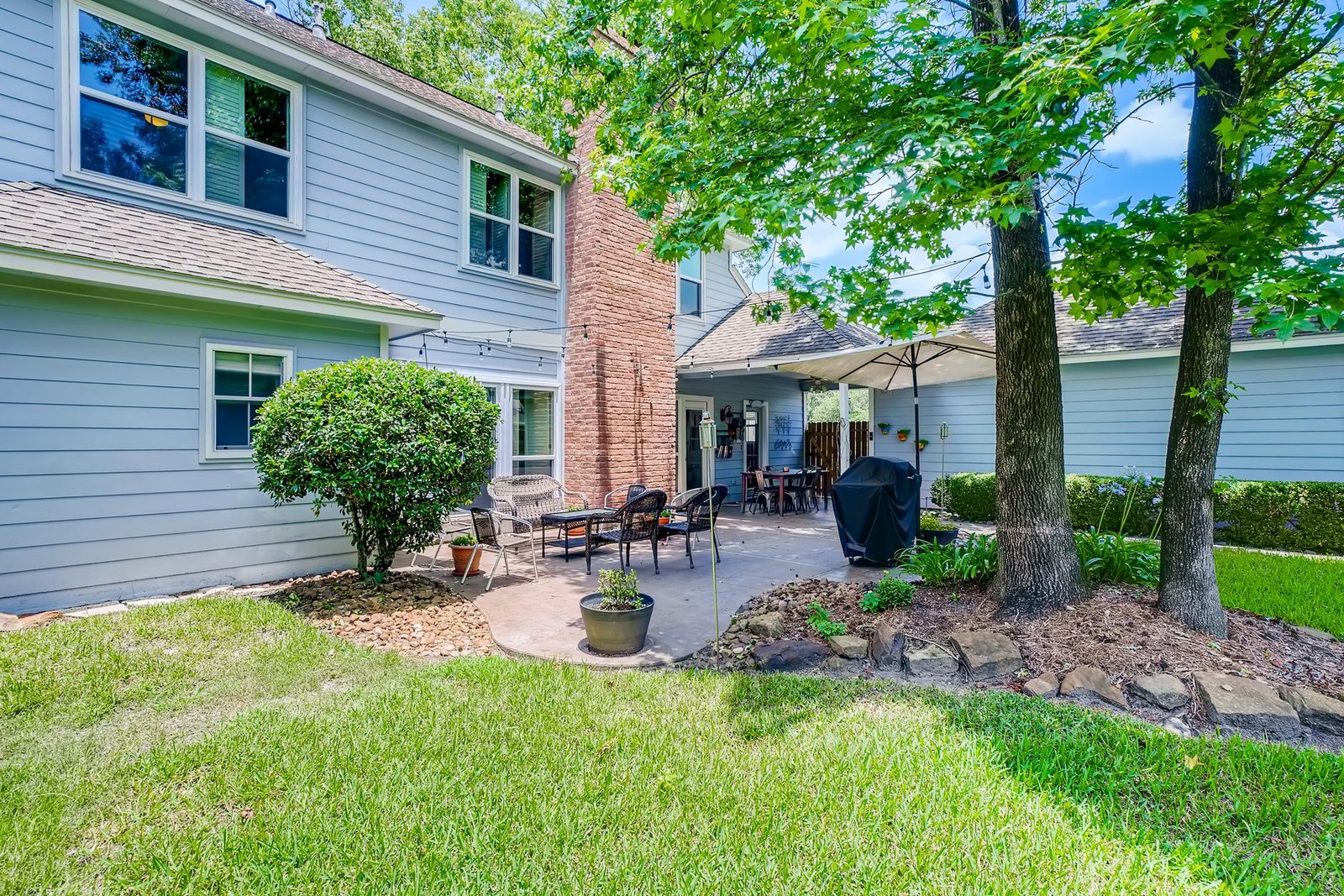
Where a patio meets a planting bed rather than lawn, a loose line of natural stones or small boulders makes an informal edge. It holds mulch back, looks at home in a naturalistic garden, and can be rearranged as the planting grows.
It works best with a few rules:
- Bury each stone by a third or more of its height so it does not roll when bumped.
- Leave a small gap between the stones and the patio so you can sweep and weed there.
- Keep it for beds, not lawns. Grass growing around loose stones means endless hand trimming.
Planting borders that soften the patio
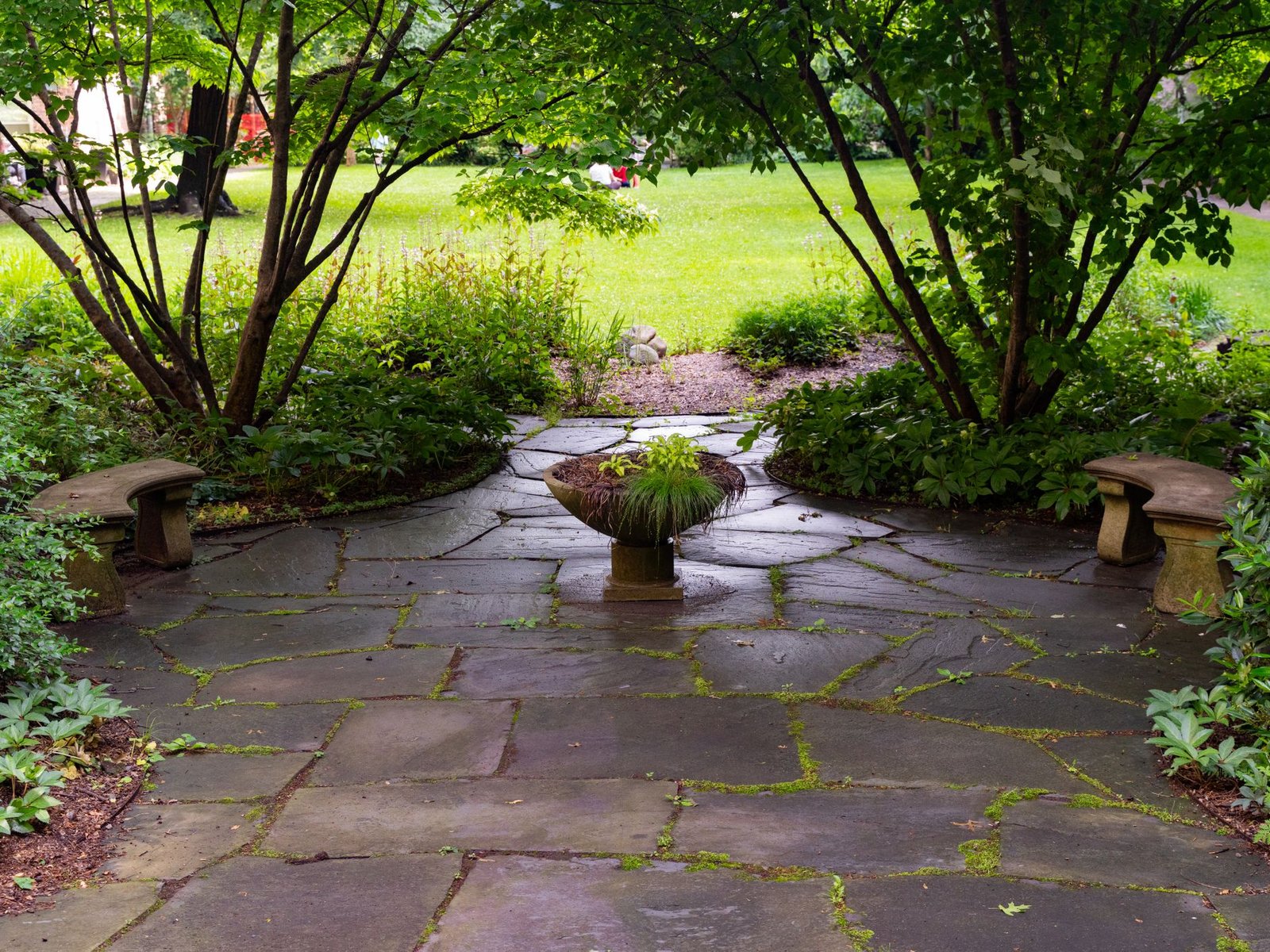
Sometimes the best patio edging is no hard edging at all. A planted border of low perennials, grasses or groundcover wraps the patio in green and makes it feel like a room. Belgard's page on paver borders and edging options suggests low creeping perennials as a border that also crowds out weeds.
To make planting work as an edge:
- Keep plants that sprawl more than a foot back from the pavers, or they will cover the seating area by midsummer.
- Choose tough, low groundcovers right at the edge, where feet and chair legs will land on them.
- Put a strip of mulch or gravel between the plants and the patio, so soil does not wash onto the pavers in rain.
The restraint is still needed under the soil line. Plants hide it; they do not replace it.
Gravel strips: the cheapest buffer
Before you price stone or steel, look at the gravel strip. Typically 6 to 12 inches wide, it is the lowest-cost patio edging and one of the most practical. It gives the mower a margin, stops grass reaching the pavers, and lets runoff soak in rather than pooling at the lawn edge.
Build it properly or it turns into a weedy mess:
- Dig out 3 to 4 inches, lay a separation fabric, and fill with angular gravel that locks in place. Rounded pea gravel rolls, gets kicked onto the lawn, and eventually comes back out of the mower at speed.
- Contain the lawn side with a steel or plastic landscape edge, or the gravel migrates into the grass and the mower throws it.
- Keep the gravel slightly below the patio surface so it is not tracked across the pavers.
How to choose patio edging for your yard
The guides I read all circle the same five questions. Take them in order:
- What does the edge meet? Lawn favors flush stone, block, brick or metal. Beds favor raised stones, timber or planting.
- How do you mow? If you hate trimming, only a flush edge, one that a mower wheel rides over, removes the job.
- Who walks there? Children, older relatives and evening parties all argue for a flush edge with no lip to catch a foot.
- Where does the water go? If the patio sheds water toward the lawn, a gravel strip or a flush edge with a slight fall lets it drain away instead of damming it.
- What matches? Echo either the patio or the house, not something new. A contrasting band of the same paver family almost always looks better than a third material.
Pick the edge for how you mow, then for how it looks
For most patios next to a lawn, a flush row of stone, block or brick is the right patio edging: it lasts, it needs almost no trimming, and it does not trip anyone. Use steel for a modern line, timber or natural stone for a softer garden, gravel when the budget is tight or drainage is an issue, and plants when you want the patio to feel enclosed. Then check that a real restraint holds the pavers behind it. The edging gets the compliments; the restraint does the work, and it has never once asked for credit.
FAQ
What is the best edging for a patio next to grass?
A flush row of concrete block, stone or brick set level with the lawn is the best all-round choice. A mower wheel can ride on it, so there is no edge to trim, and it has no lip to trip over. Steel or aluminum strips set flush are a good modern alternative.
Do I need edging around a paver patio?
You need an edge restraint around a paver patio to stop the pavers spreading. Visible patio edging is optional: it is about looks and maintenance. Many patios have a buried restraint and simply let the lawn run up to the pavers.
What is the cheapest patio edging?
A gravel strip contained by a basic landscape edge is usually the cheapest option, followed by plastic landscape edging and simple concrete edging blocks. Timber is cheap to buy but needs replacing sooner than stone, brick or metal.
How do you stop grass growing onto a patio?
Put a barrier between them: a flush mowing edge of stone or brick, a metal edging strip, or a gravel strip at least 6 inches wide. Trim the lawn edge regularly and keep the patio joints filled so runners cannot root in them.
Can you use pavers as patio edging?
Yes. Pavers set flush along the patio as a mowing edge, or as a contrasting band around it, are one of the most popular options. Set them on compacted gravel, not bare soil, so they stay level.
How high should patio edging be?
Next to a lawn, keep it flush with the grass and at or slightly below the patio surface, and no more than about 1/2 inch above the lawn. Raised edging stones and palisades belong beside planting beds, where no one walks.