

Last Updated on October 20, 2026 by Umar Farooq
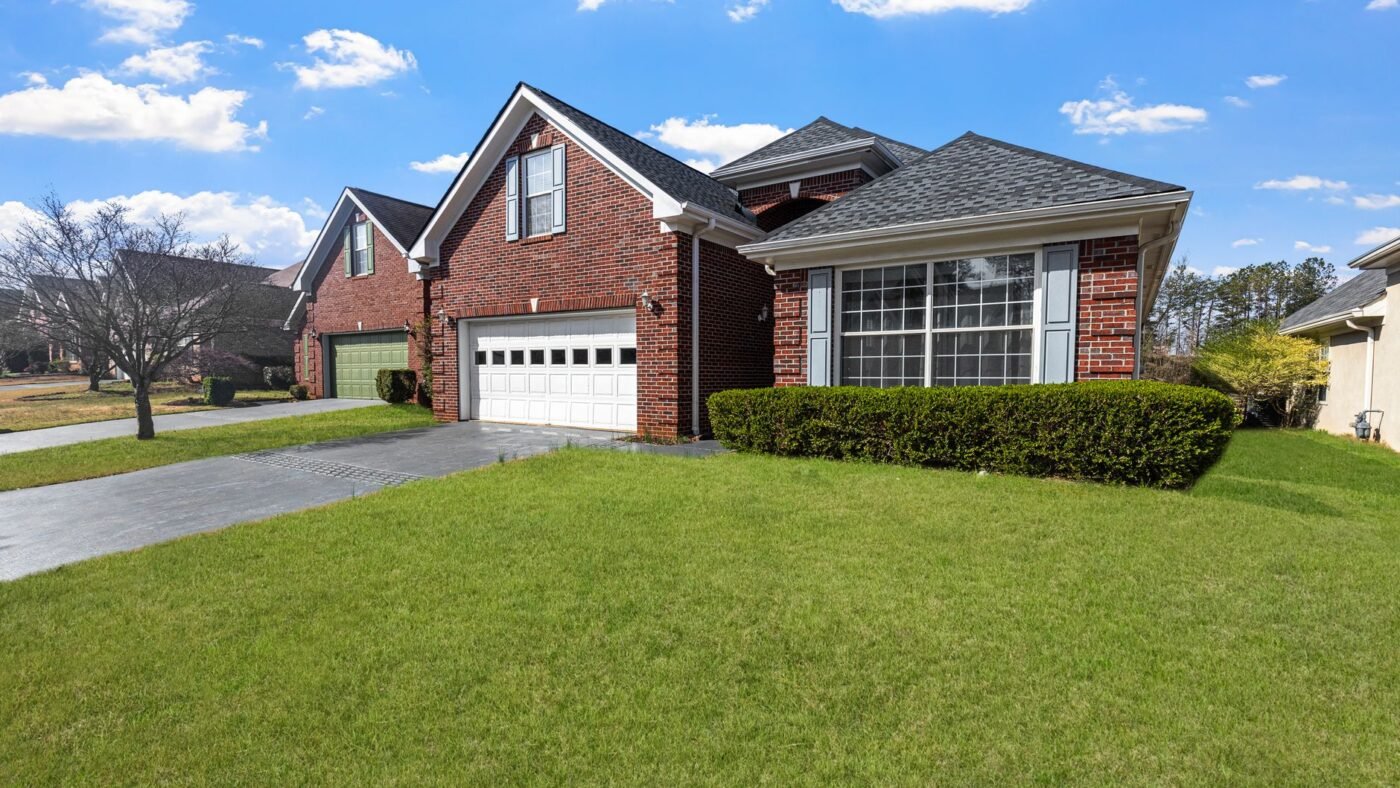
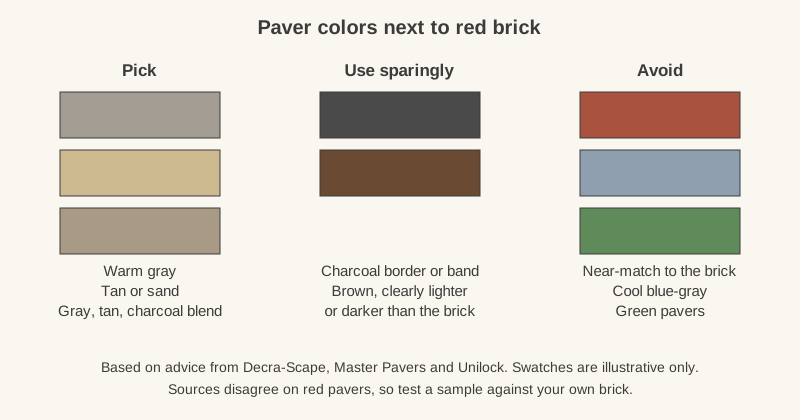
Paver colors for brick house exteriors that work most often are a warm gray, a tan or sand blend, or a gray-tan-charcoal mix, with charcoal saved for borders. What mostly goes wrong is the near-match: a reddish paver next to red brick, or a cool blue-gray next to warm brick. Brick is permanent, so the pavers have to get along with it for as long as the house stands. (The brick was there first, and it has opinions.)
Paver colors for brick house walls: gray, sand or charcoal
Decra-Scape's list for red brick homes runs through six colors, and the advice is consistent enough to summarize:
- Gray, from light silver to deep slate, is the neutral that sits quietly beside brick.
- Charcoal or black gives high contrast, which suits a driveway or walkway edge.
- Sand-colored pavers brighten the space and look good beside plants and flowers.
- Brown harmonizes with the brick's warm tones, but pick a shade clearly lighter or darker than the brick.
- Red or terracotta works only if it is distinctly lighter or darker than the brick.
- Multi-colored blends of gray, brown and red tie the brick to the rest of the landscape.
The same article says to avoid green pavers, because red and green are opposites on the color wheel. (Decra-Scape)
Master Pavers, a Charlotte company, goes the warm route: a tan base, a mid-clay tone and a charcoal or dark brown accent laid randomly, framed by a charcoal border. It warns that cool grays, blue-grays and bright white can make warm brick look dingy (Master Pavers). So gray is recommended by one source and handled carefully by the other. The practical reading is warm gray, not blue gray.
Red pavers on red brick: where the sources split
Decra-Scape allows red if the shade is clearly different. Master Pavers says not to match the brick exactly, because the driveway can blur into the house. Unilock goes further and says red brick on the facade does not require brick pavers on the ground, and that cool-neutral concrete pavers can calm a busy facade (Unilock). Our general paver colors guide says red works well with brick houses, and that holds when the red is a clear step lighter or darker. A near-twin is the one to avoid.
My own take, and it is a take rather than a number: if you must choose between a contrast and a match, choose the contrast, because brick varies from course to course and pavers never will match it exactly, so the near-miss looks like a mistake.
Read your brick's undertone before you read the paver names
Brick is not one color. Walk up to the wall and you will see reds, oranges, browns and charcoal flashes, and mortar between them. Unilock says warm families (sand, cream, brown, with hints of copper or soft red) suit warm facades, and cool families (stone gray, charcoal, misty blue) suit steel, glass and white trim. A warm field with a cool border, or the reverse, can balance the design. So work out whether your brick leans orange-red, brown or buff, then pick a paver that shares one of its undertones and differs in lightness.
If the facade is already busy, a quieter paver is the answer. If the brick is a flat, even tone, a blend with some variation gives the ground life. Our mixing paver colors article covers how much of a second color looks planned.
Mortar, roof and trim also vote
Decra-Scape tells readers to consider the mortar color because its shade affects how well the pavers complement the brick. Cream or buff mortar pulls toward tan pavers; gray mortar pulls toward gray. Unilock adds the roof: match tone rather than exact color, so a warm brown roof suggests buff and caramel paving, while a cool gray roof pairs with gray pavers. When the roof and the brick disagree, as on a gray roof over red brick, a warm-gray paver with a touch of tan is the translator.
Clay dust, light pavers and the cost of looking clean
Master Pavers makes a point none of the other pages did: light pavers show tracked-in red clay sooner. It says pale driveways near clay beds may need pressure washing every 6 to 8 weeks, while clay-toned blends go longer between washes. That is one company's claim from its own market, so treat the interval as a rough signal and not a rule. The mechanism is easy to believe, though. If your soil is orange, an off-white paver will advertise it. If a dark paver is tempting, remember it runs hotter underfoot; our pavers that don't get hot page covers that.
Test a 4 by 4 foot sample against the wall
Buying a color from a thumbnail is how people end up at the supplier's counter with a photograph of the wrong patio. Master Pavers suggests laying a sample panel of about 4 by 4 feet against the house and checking it in full sun and shade. Unilock suggests taking several samples home and viewing them wet and dry, at different times of day, and from inside the house. Do both. The cheapest option is a free sample or a few loose pavers. Take a brick chip to the supplier, put the two side by side outdoors, and walk away from them. If a color still looks right from the street, it will look right in ten years.
Contrast gently, blend the field and let the brick win
For most brick houses, the answer is a warm gray or tan blend with a charcoal border, a paver that is clearly lighter or darker than the brick, and a sample checked against your own wall before you order. Pick the field first and the border second. Your brick has been the star since the house was built, and the patio is best as a supporting actor with excellent lighting.
FAQ
What color pavers go best with red brick?
Gray, tan or sand, and gray-tan-charcoal blends are the most common recommendations. Decra-Scape adds brown or red, provided the shade is clearly lighter or darker than the brick.
Should pavers match the brick on my house?
Not exactly. Master Pavers says a close match can make the driveway blend into the house, and Decra-Scape wants red pavers distinctly lighter or darker than the brick. Aim for a shared undertone with a different lightness.
Are gray pavers good with red brick?
Yes, and Decra-Scape recommends them, though Master Pavers warns that cool or blue grays can clash with warm brick. A warm gray with a hint of tan is the safer choice.
What paver color should I avoid with brick?
Green, according to Decra-Scape, along with near-matches to the brick and cool blue-grays or bright white according to Master Pavers.
Do I need to match the pavers to the roof too?
Match tone rather than exact color, says Unilock. A warm brown roof suits buff and caramel paving, and a cool gray roof suits gray.


