Last Updated on September 23, 2026 by Umar Farooq
A paver sealer stripper is a chemical that softens an old sealer film so you can scrub or rinse it off the pavers, and I've yet to read a single stripper label that calls the job pleasant. Use one when the sealer has turned white or cloudy, is peeling, or has built up into a thick, shiny, blotchy coat that a fresh coat can't fix. Test on a small area first. Apply the stripper thickly to dry pavers, wait until the film wrinkles or lifts, then scrub and rinse it off before it dries again. Repeat where needed. Let everything dry, re-sand the joints and reseal.
My opinion, before anything else: the cheapest fix is usually the right one, and "strip the whole patio" is often the sales answer. Whitening is often local, a dull patio needs a wash and a coat, and a solvent-based film that's gone cloudy can sometimes be revived in an afternoon. Make sure you actually need to strip before you buy the stripper.
Signs your paver sealer has failed
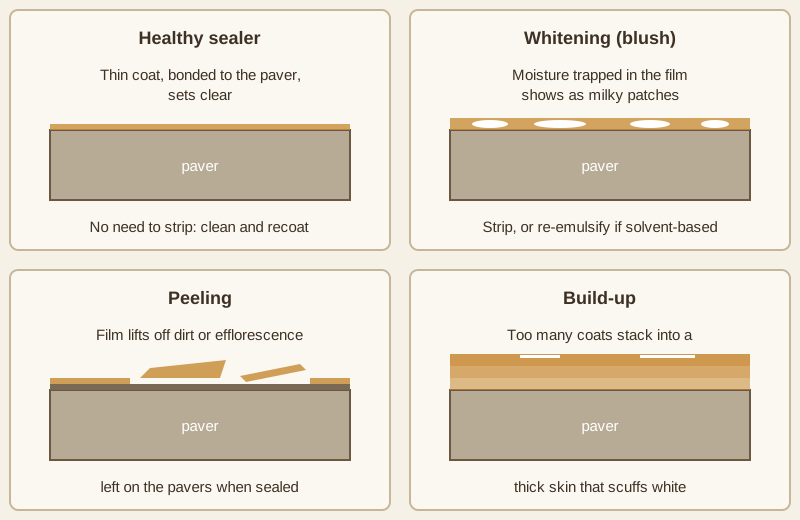
Most sealer failures show up in one of four ways:
- Whitening or blushing. Milky, cloudy patches in the film. Usually moisture was trapped when the sealer went on: damp pavers, rain too soon, or a coat that was too heavy. Concrete Sealer Review's contractor-written stripper guide lists over-application, low-quality acrylics and moisture during or after application as the usual causes.
- Peeling or flaking. The film has lost its bond. The pavers were usually dirty, dusty, or covered in efflorescence when they were sealed.
- Build-up. Years of coats applied over each other leave a thick, glossy, sometimes slippery skin that scuffs white under furniture. It's what happens when a reseal schedule outlives its usefulness.
- Hot-tire marks on a driveway. The film softens under hot tires and lifts or stains. Thick acrylic films are the most likely to do this.
A patio that just looks dull doesn't need stripping; it needs cleaning and a fresh coat. See the guide to paver sealing for that.
Try re-emulsifying before you strip
Whitening in a solvent-based acrylic sealer can sometimes be fixed without stripping. Wiping or rolling on a solvent such as xylene softens the film for a moment, lets the trapped moisture escape, and the film sets clear again. The same contractor guide is explicit that xylene is not a stripper and won't remove old coatings. It only revives a solvent-based film that's still bonded. Think of it as a reset button, not a demolition crew.
It won't help with a water-based sealer, peeling, or a film that's simply too thick. Those need to come off.
Types of paver sealer stripper
Stripper chemistry has changed, and I went further into federal chemical rules than I'd planned to find out why. Methylene chloride used to be the fast, standard ingredient, but the EPA's 2019 rule on methylene chloride ended its sale for consumer paint and coating removal, and a later rule phased out most remaining uses. Today's homeowner products work differently and generally more slowly:
| Type | How it's used | Typical dwell | Notes |
|---|---|---|---|
| Water-based paste or gel | Troweled or rolled on thick, often covered with plastic | Hours, up to overnight | Low odor. Alliance Gator's Sealer Stripper instructions call for at least a 1/8-inch layer, a 12-hour reaction and use between 50°F and 90°F |
| Sprayable biodegradable remover | Pump-sprayed full strength onto dry pavers | 20 to 30 minutes, longer for thick build-up | RCP Block's sealer remover guide calls for a second coat on multiple layers, and warns that it gets slippery once activated |
| Solvent-based stripper | Rolled on in small sections | Roughly 45 to 60 minutes for newer formulas | Strong fumes. Use outdoors with good airflow and a suitable respirator |
Match the stripper to the sealer. Most paver strippers target acrylics, water-based and solvent-based. Polyurethane and two-part coatings are much tougher, so check the label before you buy. If you don't know what's on the pavers, a test patch will tell you.
Stains, tints, brick and natural stone
A few surfaces need extra thought first:
- Stained or tinted pavers. RCP Block lists stains among the coatings its remover takes off. If the pavers were stained or colored with a tinted sealer, stripping can pull that color out too, and patchily. Plan to restain or use a color-enhancing sealer afterward, and test on the most visible color first.
- Clay brick. Brick is dense, so sealer sits on the surface. That usually strips quicker, but softened sealer smears across smooth faces. Rinse often.
- Natural stone. Check the stripper is approved for stone. Limestone, travertine and marble dislike acidic cleaners, and soft sandstones and slates can lose their surface under scrubbing and high pressure. Use a brush and lower pressure.
- Pavers next to a pool or a painted surface. Keep stripper and rinse water out of the pool and off coping, liners and painted walls. Cover them first.
Stripping sealer off pavers, step by step
Work in manageable sections. The contractor guide suggests no more than about 100 square feet at a time.
- Test a patch. Pick a small, out-of-the-way area. Apply the stripper, wait the labeled time, and scrub. If the film softens, goes gummy, wrinkles or turns white, you know it works and roughly how long it needs.
- Protect everything nearby. Stripper removes paint and coatings, so cover siding, door thresholds, painted steps and metal trim with plastic. Soak nearby plants and lawn with water.
- Start dry. Apply to dry pavers unless the label says otherwise. Water weakens most strippers.
- Apply it thickly and evenly. Use a roller, brush or pump sprayer, as directed. Thin spots dry out and stop working. Cover paste strippers with plastic if the label calls for it.
- Wait for the film to lift, and no longer. Too short and the sealer stays bonded. Too long and it dries out and sticks to the pavers again. (This is the only step where wandering off for lunch costs you a second coat of stripper.) Check a spot with a scraper or brush every so often.
- Remove it. Scrub with a stiff nylon brush, or use a pressure washer with a surface cleaner or turbo nozzle to lift the softened film. Work from the low side up, as RCP's guide advises: water deactivates many strippers, so rinse water from a finished section shouldn't run over one that is still working.
- Rinse and repeat. Flush well. Any glossy or white patches that remain get a second application.
Pressure washing off the softened sealer
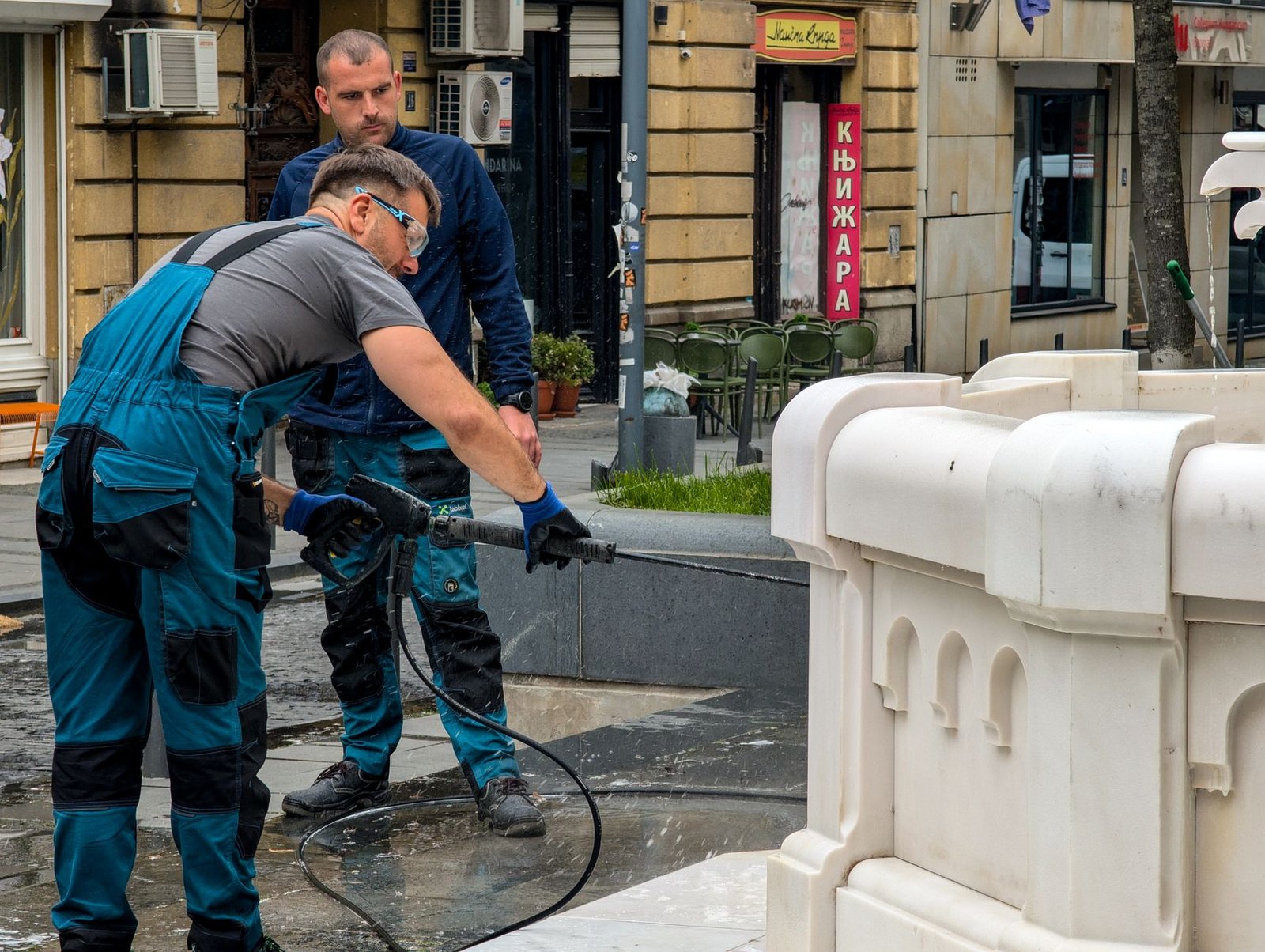
Stripping is one of the few paver jobs where a pressure washer earns its garage space. Softened sealer needs more than a hose. RCP's guide recommends about 4,000 PSI with a rotary turbo nozzle or surface cleaner, and says 2,000 PSI works but takes longer.
That pressure will blast out the joint sand. Accept it: the joints were leaving anyway, and they get re-sanded before you reseal. Keep the tip moving, and hold it back far enough not to etch the paver face. The guide to power washing pavers covers the risks.
Protect yourself, the plants and the drains
- Gear: chemical-resistant gloves, eye protection, long sleeves and boots with good grip. Stripped pavers get slippery.
- Air: follow the label. For solvent products, work outdoors with a breeze and wear the respirator it specifies.
- Runoff: keep the slurry out of storm drains, ponds and flower beds. Collect heavy residue with a wet vacuum where the label asks, and check local disposal rules.
- Pets and kids: keep them off the area until it's rinsed and dry.
Dry, re-sand, then reseal
Once the pavers are clean and uniform, let them dry completely. The contractor guide's FAQ calls for a clean surface that has been dry for 24 to 48 hours before sealing. Sweep in new joint sand or polymeric sand, and let polymeric sand cure fully before any sealer goes on.
Then reseal, and pick a product that doesn't recreate the problem. Thin coats of a breathable sealer are much less likely to whiten or build up than heavy coats of a high-gloss film. The guide to wet look vs natural paver sealer compares finishes and film types.
Strip only what re-emulsifying can't save
A paver sealer stripper is the right tool when the film is peeling, too thick, or white in a water-based sealer. For solvent-based whitening, try re-emulsifying first. When you do strip, test first, work dry and in small sections, lift the softened film before it resets, and let the pavers dry before you re-sand and reseal with thinner coats. Thin enough that, with luck, you never need to read this page again.
FAQ
What is the best way to remove sealer from pavers?
Use a stripper made for paver sealers. Apply it to dry pavers, wait for the film to soften, scrub or pressure-wash it off, and rinse. Test a small area first to confirm the product works on your sealer and to learn the dwell time.
Why did my paver sealer turn white?
Usually moisture was trapped in the film: the pavers were damp, it rained too soon, or the sealer went on too thick. Poor-quality acrylics and heavy build-up make it more likely. Solvent-based acrylics can sometimes be cleared by re-emulsifying with a solvent. Water-based ones usually need stripping.
Can you reseal pavers without stripping the old sealer?
Yes, if the old sealer is still bonded, clear and compatible. Clean the pavers and apply a thin coat. Strip first if the sealer is peeling, white or thickly built up, or if you're switching between incompatible sealer types.
Will a pressure washer alone remove paver sealer?
Rarely. High pressure may chip off loose, peeling sealer, but a bonded film needs a stripper to soften it first. Relying on pressure alone risks etching the pavers before the sealer comes off.
How long does paver sealer stripper take to work?
It depends on the product and the thickness of the sealer. Sprayable removers can work in 20 to 30 minutes, newer solvent strippers in roughly 45 to 60 minutes, and some water-based pastes need several hours or overnight. Always go by the test patch and the label.