


Last Updated on October 20, 2026 by Umar Farooq
Slip resistant pavers have a textured surface that still grips when it's wet: brushed, tumbled or textured concrete pavers, thermal-finished or cleft natural stone, and porcelain pavers tested at a wet DCOF of 0.42 or higher. Polished stone, glazed tile and anything with a glossy sealer on it are the ones that slip. On an existing patio, the fixes are cheaper than new pavers: clean off algae, switch to a matte or penetrating sealer, and mix anti-slip grit into the sealer on steps. I read Belgard's technical note on slip testing to find the one number worth asking for. Worth a read next: pavers vs tile outdoor.
The one slip number worth asking for
For years, people quoted a static friction figure of 0.6 from an old ADA appendix. Belgard's technical note on paver slip resistance explains that the recommendation was withdrawn in 2004, and that ASTM withdrew the old C1028 test in 2014. The current reference is wet DCOF (dynamic coefficient of friction) of 0.42 or greater, measured with a BOT-3000 tribometer under ANSI A326.3. The ADA itself only asks for surfaces to be "stable, firm and slip resistant", with no number attached.
- Porcelain and tile pavers often list a DCOF on the spec sheet. Ask for the wet value, and look for at least 0.42.
- Pendulum values turn up too. Tile Tech's slip resistance explainer cites a minimum pendulum value of 36 for level floors from the Ceramic Tile Institute of America.
- Concrete pavers rarely list either figure, because ordinary paver textures grip well. Belgard says its pavers can exceed 0.42 wet.
Belgard's own caution: shoes, slope, drainage and upkeep matter as much as the rating.
Slip resistant pavers, ranked by texture
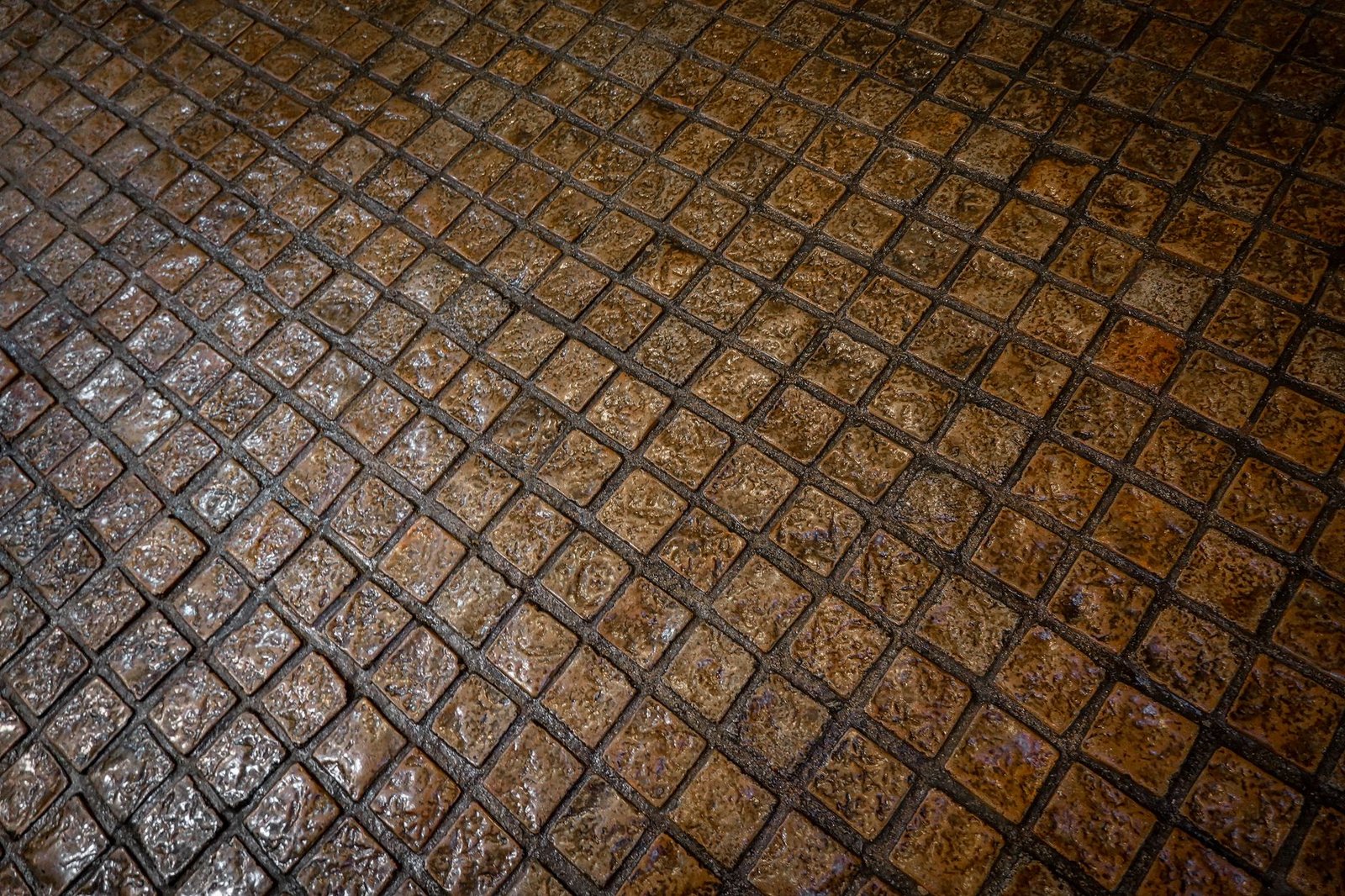

Wet grip comes from texture peaks that break through the water film and touch the sole. Smooth or filled-in texture leaves the sole riding on water.
| Surface | Wet grip | Notes |
|---|---|---|
| Textured or tumbled concrete pavers | Good | The default choice for patios and walks |
| Thermal (flamed) granite, cleft bluestone | Good | Best natural-stone choice for steps |
| Textured porcelain, DCOF ≥ 0.42 | Good | Check the wet value on the sheet |
| Smooth-face concrete slabs | Fair | Fine flat, less so on steps and slopes |
| Honed stone, smooth travertine | Fair to poor | Check the finish before buying for a pool |
| Polished stone, glazed tile | Poor | Keep indoors |
A glossy sealer can erase the grip
Does sealing pavers make them slippery? It can. A film-forming sealer, especially a thick gloss, fills the texture that gives the grip. Penetrating sealers barely change it; Techniseal markets its natural-look penetrating protector as "ideal for slip-prone surfaces." For the full picture, see our guide to choosing a paver sealer.
If you want a wet look on steps or near a pool, add an anti-slip grit. It's a fine additive, often aluminum oxide or polymer beads, stirred into the sealer. Keep it stirred as you apply, because it sinks. Matte or satin plus grit is the safe combination. Gloss with no grit is the one to avoid. Our wet look vs natural paver sealer page covers the finish trade-off.
Steps, slopes and driveways need more grip
- Steps: use textured treads with an eased or bullnose edge. Keep the tread faces free of gloss sealer, even if the patio has it.
- Slopes and ramps: a surface that's fine on the flat can feel treacherous on a slope. Choose a rougher texture.
- Driveways: tumbled and textured pavers help in rain. On ice, no texture wins; clear it.
- Drainage: a paver surface needs at least a 1.5% slope (ICPI) so water runs off instead of lying on it.
Algae is the slip you can fix this weekend

Algae and moss grow in shady, damp spots and coat any paver with a slick film that no rating can beat. Scrub or pressure-wash the green off, trim back the shade, and fix any spot where water sits. On a pool deck this matters more than the paver you picked. Our pool deck pavers guide covers texture choices there.
Texture first, then keep it clean
The safest paver is a textured concrete paver, or a porcelain paver with a published wet DCOF of 0.42 or more, kept free of algae and gloss. Fix a slippery patio with cleaning, a matte or penetrating sealer and a little grit on the steps before you consider pulling pavers up. The rating gets you through the showroom. Maintenance keeps you upright on the patio.
FAQ
What pavers are the least slippery?
Textured or tumbled concrete pavers, flamed granite, cleft bluestone and textured porcelain rated at a wet DCOF of 0.42 or higher. Smooth, honed, polished or glazed surfaces are the most slippery.
Do outdoor porcelain pavers get slippery in the rain?
Outdoor porcelain pavers are made with a textured face and are tested for wet slip resistance. Check the wet DCOF on the spec sheet and choose 0.42 or higher. Indoor polished porcelain is a different product and does not belong outside.
How do you make pavers less slippery?
Clean off algae and moss, strip or wear off any gloss sealer, then reseal with a matte or penetrating sealer. On steps and pool edges, mix an anti-slip grit into the sealer.


