


Last Updated on October 20, 2026 by Umar Farooq
Snow plow damage pavers in four main ways: scrape lines and shallow chips, one raised paver that the blade caught, a cracked or loose unit, and rust streaks left by a metal edge. The first and last are cosmetic. The middle two are the ones that get worse with the next storm, so reset the raised paver, swap the cracked one and photograph everything before you touch it. This page is for after the plow has been through. If you want the "before" rules, our snow removal on pavers guide has them.
The good news is that a paver surface forgives what a poured surface does not. One bad paver is a repair, not a replacement driveway.
Read the marks before you repair
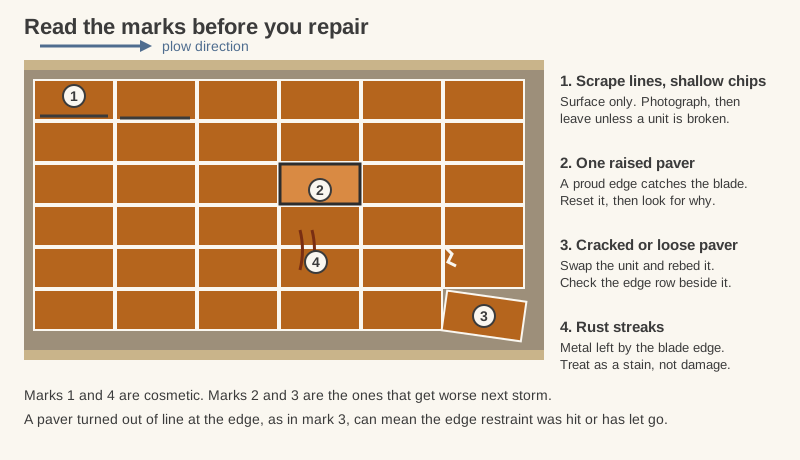
A metal blade can scratch, gouge or chip pavers and leave rust stains, according to a paver contractor's snow-removal post, which adds that no plowing contractor can promise to leave no marks. That fits the map above.
| Mark | What it usually means | What to do |
|---|---|---|
| Scrape lines, light chips | Blade touched the surface | Photograph; leave unless a unit is broken |
| One paver sitting proud | A unit that was already high, or lifted by frost | Reset it, then look for why |
| Cracked, chipped through, or loose unit | Blade caught an edge or a lifted unit | Replace the unit and rebed it |
| Rust streaks | Metal fragments from the blade edge | Treat as a stain (see below) |
| Edge row out of line | Edge restraint hit or failed | Reset the row and check the restraint |
The same contractor warns that paver edges sticking up, which he calls lippage, can catch shovels, snow blowers and plows. ICPI limits lippage to 1/8 inch between neighbouring pavers on a pedestrian route (ICPI Tech Spec 2). That is a pedestrian standard, not a driveway guarantee, but a unit standing proud by more than a pencil width is a good candidate for being the one the blade found.
Plow, frost or both?
Not every raised paver is the plow's fault. Frost heave lifts units, and the contractor says it cannot be fully prevented. If one paver is up and its neighbours show nothing, the plow may be the second event, not the first. Look at the pattern:
- Marks run in the plow's direction and stop where the plow stopped. That points to the blade.
- Raised or sunken units follow a low spot, a downspout, or a line along the edge. That points to the base. See pavers heaving in winter.
- The whole edge row has crept out. That points to the edge restraint, and our paver edges sinking guide covers it.
I went looking for a study on how often plows damage paver driveways versus asphalt and concrete. Home-service blogs say pavers hold up better because units can shift and absorb impact, and then say a steel blade or a plow moving fast can still shift or break them. I found no test behind either claim, so treat both as opinion.
Fix the raised and the broken ones first
This is the small, cheap, local part, and it is a one-afternoon job per patch.
- Photograph first. See the section below.
- Pull the damaged unit and the rows beside it if it will not come out cleanly.
- Check the bedding and the stone beneath it. If it is wet, washed out or hollowed, rebuild that, not just the sand.
- Re-screed one inch of loose bedding sand and set the unit 1/8 to 1/4 inch proud so it settles flush after compaction (CMHA guide spec).
- Re-sand the joints and sweep.
The full step-by-step is in replace a broken paver. Here is my one opinion for plowed driveways: reset the raised unit before winter, every year, whether or not it has been hit yet. A proud edge is the thing a blade grabs. Fixing it costs an afternoon with a rubber mallet. Not fixing it costs the paver and the one beside it.
Rust streaks are a stain. Remove rust stains from pavers covers the cleaner, and the stain is the lesser harm.
Document it, then report it
If someone else plowed, the order matters, because repairs destroy evidence. The advice from consumer sources agrees on this part:
- Take dated photos and video of each mark, with a tape or coin in frame for scale, from standing height and close up.
- Note the date, the storm, who plowed and where the plow went.
- Report it. House Digest says city reporting deadlines range from 15 to 60 days and some are as short as three, so check with your city as soon as you notice. For a private plow company, report it as soon as possible, since you may need to send a formal demand letter and the company may refuse to pay.
- If the company refuses, the same piece says a homeowners' insurance claim or small-claims court may be options, but legal fees can run higher than the repair, and a small repair may sit under your deductible.
I am reporting what those pages say, not giving legal advice. The rules and any limits on liability in your service contract differ by state and by contract. Check your state's rules and read the agreement you signed. If you can, ask the driver or company before anything is repaired.
When it is more than a patch
Stop and get a hardscape contractor if:
- A whole row has shifted or several units are cracked.
- Joints along a wide stretch have opened up and the base looks washed or displaced.
- The edge restraint is bent or pulled out of the base.
- The damage is a long gouge that follows a plow-blade width through several rows.
Get a few quotes and show them your dated photos.
Four shortcuts that leave the damage in place
- Sealer over chips. Sealer does not rebuild an edge, and I found no source saying it does.
- Filling a dip with more sand. The sand bed is one inch. Fix what is under it.
- Gluing a cracked unit back. I found no manufacturer guidance for it; replacing the unit is the documented repair.
- Leaving a proud paver for next winter. It is the unit most likely to be hit again.
Make it harder to hit next time
The usual prevention list is short. The Pool and Lawn suggests telling the plow service your driveway material, having the operator raise the blade and slow down in tight spots, and marking the driveway edge with reflective markers or flags. The contractor above suggests a rubber or polyurethane blade, or a machine with a rotating broom. The snow-removal guide linked at the top says the same about plastic covers on metal blades.
Put those on the contract, not on a handshake. A markers-and-blade conversation takes ten minutes in October. The same conversation in February comes with photographs.
Fix the two that grow, photograph the rest
Snow plow damage pavers can look dramatic and be mostly cosmetic. Fix the raised and the broken units, treat the rust as a stain, and photograph everything before you do, especially if someone else held the blade. Then reset the proud paver before next winter and tell the next driver what is under the snow. Pavers are the rare surface that lets you swap the one piece the plow took.
FAQ
Can a snow plow damage pavers?
Yes. A metal blade can scratch, chip or gouge pavers and leave rust stains, and a blade that catches a raised edge can loosen or crack a unit. Pavers can also shift if the plow is moving fast.
How do I fix pavers a plow tore up?
Photograph the damage, then pull the damaged units, check and rebuild the bedding or base under them, re-screed about 1 inch of loose sand, set the pavers 1/8 to 1/4 inch proud, and re-sand the joints. Scrapes and light chips can stay as they are.
Who pays for plow damage to pavers?
It depends on who plowed. Consumer sources say most cities repair their own plow damage or reimburse you after you report it by a deadline that ranges from days to a couple of months. A private company may not pay, and your contract may limit its liability. Check your state's rules.
Will my homeowners insurance cover plow damage?
House Digest says you could file a claim, but a small paver repair may cost less than your deductible. Ask your insurer, because policies differ.
Why does my plow guy keep chipping my pavers?
A metal blade edge is the usual reason, and a proud paver edge gives it something to catch. Ask for a rubber or polyurethane edge, a raised blade and a slower pass, and reset any raised units before winter.
How do I get rust marks off pavers after a plow?
The marks come from metal fragments left by the blade. Treat them as a stain, not damage, and use a rust remover made for pavers rather than scrubbing the surface.


