

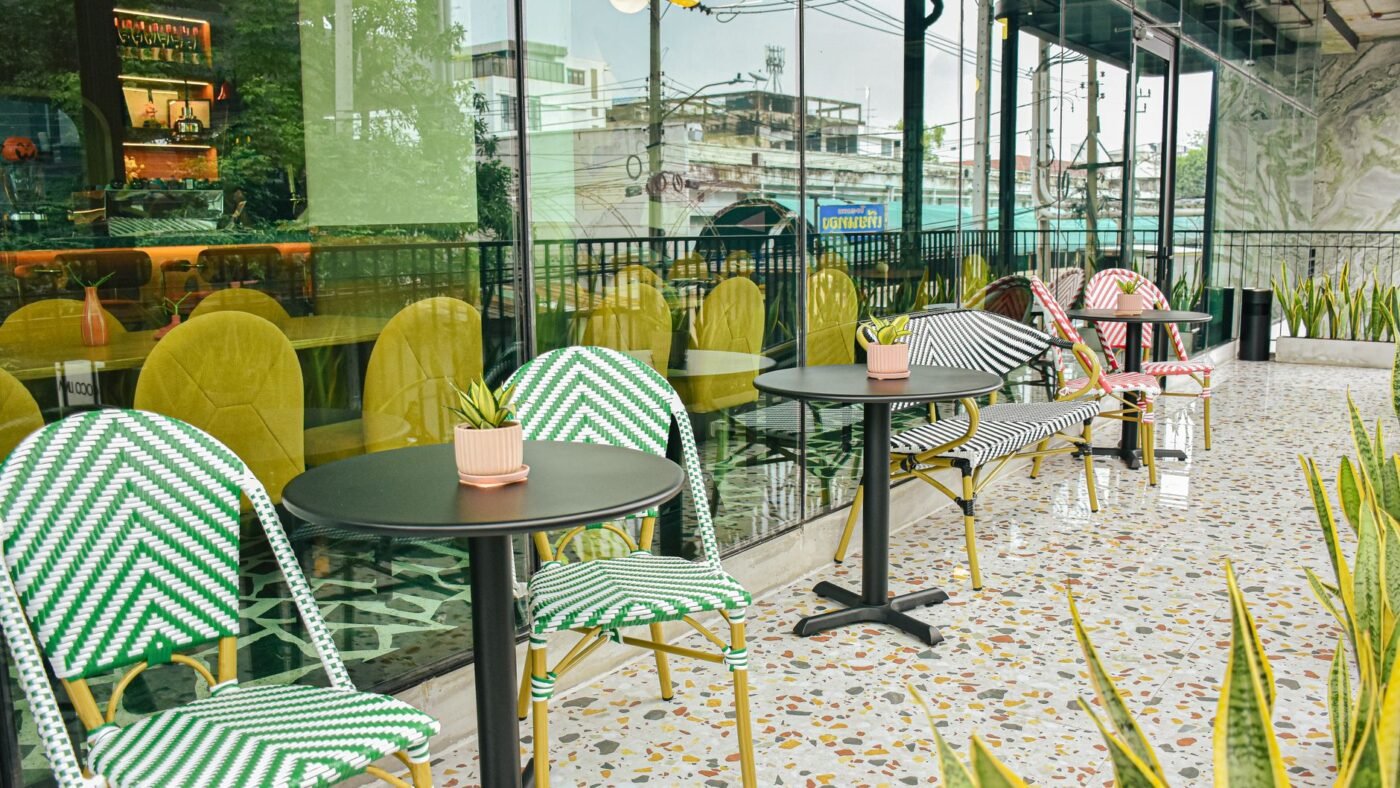
Last Updated on October 20, 2026 by Umar Farooq
Terrazzo pavers are precast units made of marble, granite or glass chips in a binder, ground flat to show the chips, and made for outdoor use in two main forms: cement-based concrete terrazzo pavers, typically 1 3/4 to 3 inches thick, and 3/4-inch porcelain pavers printed with a terrazzo pattern. Outdoor terrazzo pavers must be cement-based or porcelain, never epoxy, and should have a honed, textured or sealed matte finish rather than a polish. They can be set on pedestals, sand or mortar, depending on thickness. The cement splatter on pavers guide covers this in more depth. The details are in our piece on marble pavers.
I went to the National Terrazzo and Mosaic Association's FAQ expecting a long list of outdoor rules. It has one short answer on exteriors, and it's the most useful sentence in this article: epoxy terrazzo is generally not suitable outside.
How outdoor terrazzo pavers are made

Traditional terrazzo is poured in place: stone chips mixed into a binder, spread, cured, then ground and polished. The paver version does the same thing at a factory, one unit at a time, which is what lets it go outdoors.
There are three products on the market under the terrazzo name:
| Type | Binder | Typical thickness | Outdoors? |
|---|---|---|---|
| Concrete (cementitious) terrazzo paver | Portland cement with stone chips, ground and sealed | 1 3/4 to 3 in | Yes, made for it |
| Terrazzo-look porcelain paver | Fired porcelain with a printed or through-body pattern | about 3/4 in (2 cm) | Yes |
| Epoxy terrazzo tile | Resin with chips | about 3/8 in | No |
The NTMA's terrazzo FAQ explains the epoxy problem directly: epoxy is somewhat sensitive to UV light and has a thermal expansion rate that makes it generally unsuitable outside. Diespeker, a UK terrazzo maker, reaches the same conclusion in its note on using terrazzo outside: cement-based terrazzo is best outdoors, while resin fades in sunlight and gets slippery when wet.
Frost resistance and what the test sheet should say
Under the ground face, a concrete terrazzo unit is a concrete paver, so judge it the same way. Wausau Tile's exterior terrazzo lists compressive strength above 8,000 psi, water absorption below 6%, and less than 1% weight loss in freeze-thaw testing. Compare that with the ASTM C936 figures CMHA quotes for standard concrete pavers, an 8,000 psi average and 5% average absorption, and you have a sensible benchmark.
What to ask for before ordering in a cold climate:
- Freeze-thaw result. Weight loss after a stated number of cycles. No result, no order.
- Absorption. Around 5 to 6% for concrete terrazzo is in line with good pavers; porcelain should be under 0.5%.
- De-icing salt guidance. Some makers allow salt on a properly sealed paver; others don't. Follow the sheet, and never use rock salt on a new installation.
Terrazzo-look porcelain handles frost easily, since almost no water gets in. Its weak point is elsewhere, and we'll get to it.
Slip resistance: the finish matters more than the material

My one strong opinion on outdoor terrazzo: outside, it's honed, textured or matte-sealed, never polished. A polished face that looks like a hotel lobby will behave like one in the rain.
The mechanism is the water film. A polished surface has almost no texture to break up a thin layer of water, so your shoe hydroplanes on it. The NTMA puts it plainly: natural terrazzo is not slippery, but the sealers and coatings chosen will dictate the slip resistance. That means the finish and the sealer are the product decision, not the chips.
- Concrete terrazzo pavers for outdoors come with a ground or lightly blasted face and a sealer. Ask for the slip-resistance test on the sealed face, not the raw one.
- Terrazzo-look porcelain is usually made with a textured, anti-slip surface for outdoor use. Buy the outdoor (2 cm, textured) version, not the indoor tile of the same color.
- Steps and pool decks need the most texture of all.
If you reseal, choose a matte, non-film sealer. A glossy topcoat brings the slip problem back.
Heat and color
Wausau publishes a Solar Reflectance Index (SRI) for each exterior color, from 24 to 78; higher numbers reflect more sun and stay cooler. For a pool deck or a south-facing roof, pick from the high end. It's rare for a color chart to include a number you can actually use.
Setting terrazzo pavers: pedestals, sand or mortar

The method depends on what's underneath and how thick the paver is.
- Pedestals. The standard for roof terraces and balconies. Adjustable pedestals hold each paver above a waterproofed deck, with open joints so water drains underneath. The paver must span between supports, so use either thick concrete terrazzo or porcelain rated for pedestals. Weight matters here: Wausau's figures run from 21 lb per square foot for 1 3/4-inch units to 36 lb at 3 inches, while Tile Tech lists its 3/4-inch Terrazzo-Series porcelain at 9 lb per square foot. On a roof, the difference is structural. Our guide to lightweight pavers covers deck load limits.
- Sand-set. Full-thickness concrete terrazzo can go on a 1-inch sand bed over a compacted crushed-stone base, like any concrete paver. Wausau says its exterior terrazzo can be installed by any standard paver method. Use a padded plate compactor or none at all, because the ground face scratches.
- Mortar-set. Bonded to a sound, sloped concrete slab with grouted joints. This is the usual way to set porcelain terrazzo-look pavers at ground level. The full method for porcelain is in our porcelain pavers guide.
Whatever the method, build in slope: standing water leaves every mineral deposit on show.
Concrete terrazzo or terrazzo-look porcelain?

| Concrete terrazzo paver | Terrazzo-look porcelain | |
|---|---|---|
| Look | Real chips, ground face, depth | Printed or through-body pattern; very consistent |
| Weight | 21 to 36 lb/sq ft | about 9 lb/sq ft |
| Absorption | around 5 to 6% | under 0.5% |
| Sealing | Yes, periodically | No |
| Chips and scratches | Can be reground and resealed | Chips show the body; a damaged unit is replaced |
| Setting | Pedestal, sand or mortar | Pedestal or mortar; sand only on a very stiff base |
Choose concrete terrazzo for the real material and the option to regrind it later. Diespeker notes that terrazzo can be restored with a regrind and repolish after years of use, which is something no printed surface can offer. Choose porcelain for low weight on a roof, no sealing, and stain resistance around a kitchen or grill. The wider trade-offs between the two materials are covered in porcelain pavers vs concrete pavers.
What terrazzo pavers cost
I looked for published prices for outdoor terrazzo pavers and came up almost empty. The main makers sell through dealers and quote per project, so there's no honest national figure I can give you. For context, Terrazzco's cost guide puts poured-in-place epoxy terrazzo at about $30 to $65 per square foot installed, but that is an interior floor system and not what goes outside.
Expect concrete terrazzo to cost well above standard concrete pavers, plus pedestals on a roof, while terrazzo-look porcelain prices like other outdoor porcelain. Get two dealer quotes for the same area, and ask whether sealer and pedestals are included.
Keep the chips, lose the polish
Terrazzo works outdoors when three things line up: a cement or porcelain body, a finish with some texture, and a setting method that suits its thickness and what's underneath. Check the freeze-thaw result, pick a light color from the SRI list if the sun is strong, and keep polished tiles indoors where they belong. Terrazzo has survived outdoors in Venice for centuries. It managed that without a high-gloss sealer.
FAQ
Can terrazzo be used outdoors?
Yes, if it's cement-based terrazzo or terrazzo-look porcelain. Epoxy terrazzo is generally not suitable outside, because it's sensitive to UV light and expands differently with temperature. Outdoor terrazzo should also have a honed or textured finish rather than a polish.
Are terrazzo pavers slippery when wet?
Polished terrazzo is. Outdoor terrazzo pavers have ground, blasted or textured faces with matte sealers, which grip much better. According to the NTMA, the sealers and coatings chosen dictate the slip resistance, so ask for slip test results on the finished surface.
Can terrazzo pavers go on pedestals?
Yes. Thick concrete terrazzo and outdoor porcelain terrazzo-look pavers are both used on pedestals over roof decks and balconies. Check the weight per square foot against your deck's load rating, because concrete terrazzo can weigh four times as much as porcelain.
Are terrazzo pavers freeze-thaw resistant?
Good concrete terrazzo pavers are tested for it; Wausau's exterior line, for example, reports under 1% weight loss in freeze-thaw testing. Porcelain terrazzo-look pavers resist frost because they absorb under 0.5% water. Always ask for the test result for the specific product.


