

Last Updated on October 20, 2026 by Umar Farooq
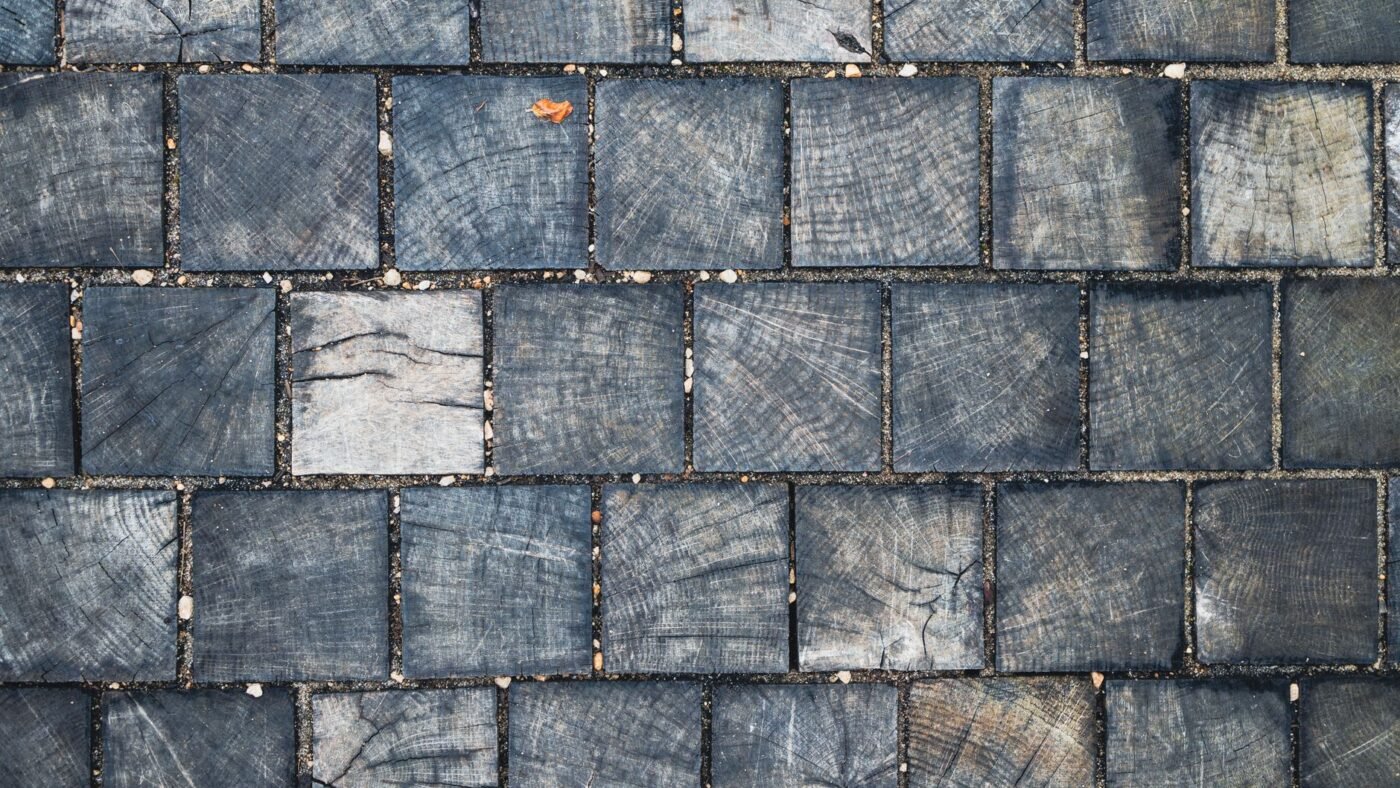
Wooden pavers are blocks, rounds or tiles of wood laid as a walking surface. They come as end-grain blocks set into the ground, log slices for garden paths, and interlocking deck tiles for balconies and concrete slabs. On soil, only a few options last: the heartwood of a highly decay-resistant species such as black locust, or wood pressure-treated for ground contact. Most other wood placed on the ground rots within a few seasons. Deck tiles belong on a hard, draining surface, not on dirt. We have a separate page on wood edging for pavers if you need the specifics.
That's the whole decision in one paragraph. The rest explains why, and how to lay the kind that works.
Four kinds of wooden pavers
| Type | What it is | Where it works | How long it lasts |
|---|---|---|---|
| End-grain blocks (setts) | Short heartwood blocks, rings facing up, often wired into panels | Paths, patios, garden floors | Depends almost entirely on species |
| Log rounds | Cross-cut slices of a trunk | Informal garden stepping paths | Short for most species |
| Timber blocks | Squared lumber cut into pavers | Paths, edging | Needs ground-contact treatment |
| Interlocking deck tiles | Wood slats on a plastic or wood grid that clip together | Balconies, rooftops, over concrete | Only above ground |
Black Locust Lumber's guide to wood pavers describes the most engineered version. Each panel holds 7 to 25 end-grain blocks attached to recycled wire mesh, so a panel lays down like a mat. The blocks start yellow to light brown and weather to a silver-gray patina. The seller claims 50+ years of life for black locust. That's a supplier's figure, so treat it as a ceiling, not a promise.
Why wood on the ground rots

I went through the rot chapter of the US Forest Products Laboratory's Wood Handbook to find out which woods actually survive in the dirt. Three passages settle most of the argument: You can read more in the guide to tree sap on pavers.
- Sapwood rots almost regardless of species. The handbook states that "untreated sapwood of essentially all species has low resistance to decay." The pale outer ring on a log round is the first part to go.
- End grain drinks fastest. Water moves into wood most quickly when the end grain is exposed. End-grain pavers put exactly that face up to the rain and down on the damp base.
- Only a few heartwoods are rated very resistant. In the handbook's decay table, the domestic heartwoods in the top group are black locust, red mulberry, Osage-orange and Pacific yew. Old-growth redwood, white oak and several cedars sit a step lower, and most pines, spruces and maples are at the bottom. The handbook's rule of thumb: "very resistant" heartwood generally performs in ground contact, "resistant" heartwood only above ground, and the rest need preservative treatment.
The handbook's advice for ground contact is plain: wood members in ground contact should be pressure treated. For treated lumber, that means the ground-contact rating (AWPA Use Category 4). Above-ground lumber (UC3) isn't treated for dirt.
Here's where I draw the line: wood on the ground is either very resistant heartwood or ground-contact treated, or it's firewood that hasn't been collected yet. A sealer doesn't change that. It coats the top face, while the end grain keeps wicking moisture up from below.
Wooden pavers that stay down, step by step
Lay end-grain blocks like any flexible paver, with drainage doing the heavy lifting:
- Dig and build a base that drains. Compacted crushed stone under a path, at least 4 inches in well-drained soil, deeper on wet ground. The point is to keep the wood off wet soil so it dries between rains.
- Screed a thin sand or fine-gravel bed about an inch deep.
- Lay the panels or blocks with the rings facing up, tight to a straight line, and cut blocks to fit the edges.
- Fill the joints with something that drains. Black Locust Lumber recommends a flexible, permeable filler. Fine gravel or sand works; a rigid mortar joint traps water against the wood.
- Restrain the edges. Wood blocks move with moisture, so hold the perimeter with a steel or plastic edge or a concrete curb.
Log rounds for a cottage path are simpler: set each slice into a bed of gravel with its top just above the soil so water runs off. Go for the durable species if you can get them. Expect a pine round path to be a few-summers project, and enjoy it for that. (It makes excellent mulch at the end of its career.)
A caution on salvaged wood: old railroad ties are usually creosote-treated. The Wood Handbook says creosote- and penta-treated wood shouldn't be used where it will be in frequent or prolonged contact with bare skin. A barefoot path is exactly that.
Where wooden pavers make sense
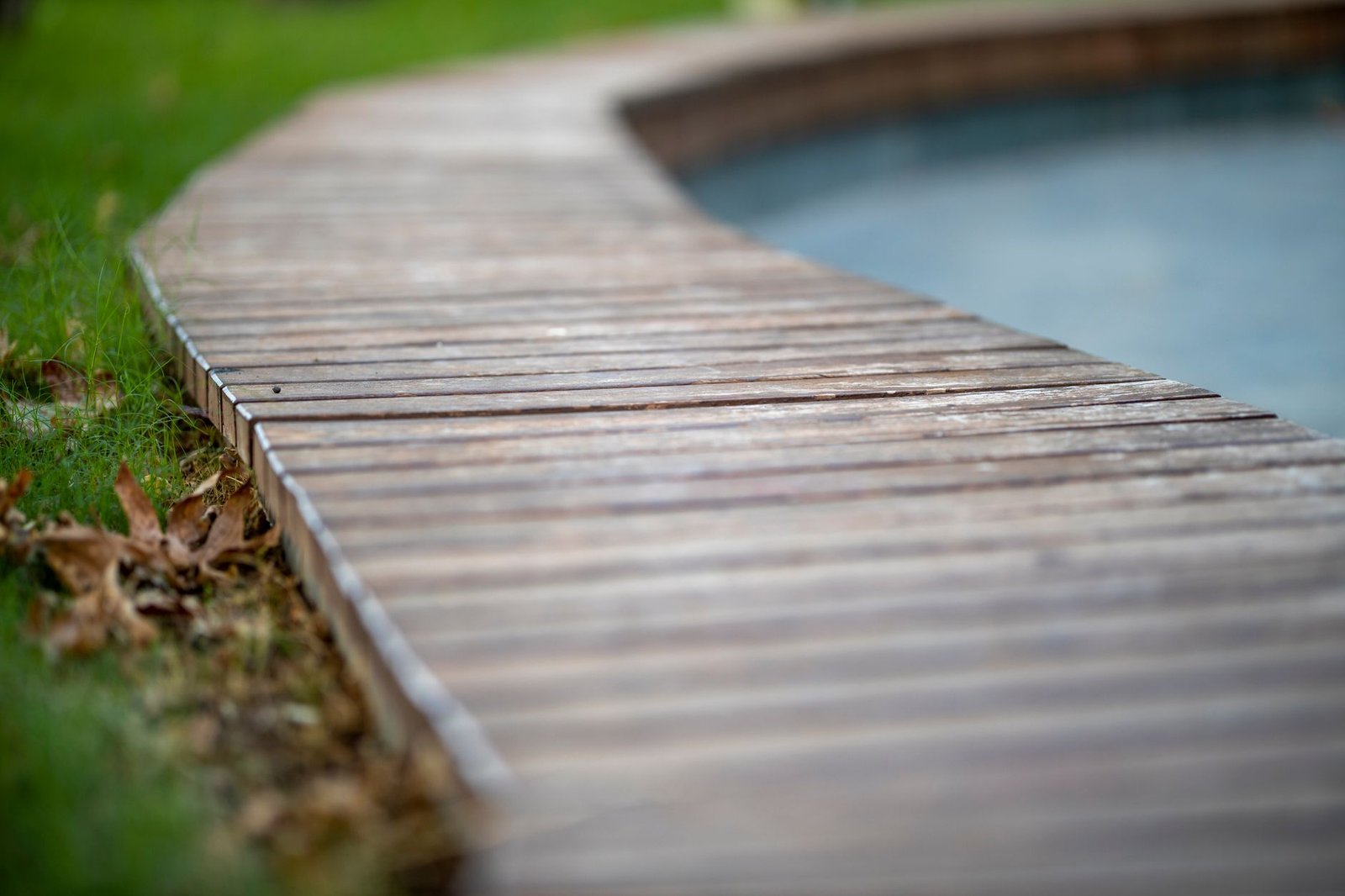
- Barefoot areas. Suppliers point out that wood stays more comfortable underfoot than stone in summer sun, which is why wood shows up around pools and play areas.
- Garden and woodland paths, where a rustic look fits and the path gets light traffic.
- Shaded, damp spots need caution. Any wood surface in the shade grows algae and turns slick when wet, so plan on scrubbing it.
Skip wood on driveways. Some black locust sellers list driveways as a use, but vehicle loads, oil and snowplows are hard on a surface that swells and shrinks with the weather. Concrete pavers rated for vehicles make more sense there.
Wood deck tiles belong above the ground
Interlocking deck tiles (usually acacia, teak-type hardwoods or composite on a plastic grid) are the easiest wooden pavers to install. They snap together on a balcony, a rooftop or an old concrete patio with no tools. The grid holds the slats off the surface so water runs underneath.
They're built for a hard, draining surface. On soil or grass, the grid sinks unevenly and the slats sit in damp dirt. If you want a wooden floor over soil, you're really looking at a deck; our deck vs pavers cost comparison prices one against a patio.
Wood-look pavers without the rot
If you want the look without the upkeep, wood-grain porcelain and concrete planks copy boards convincingly. ArchaTrak's wood-look porcelain guide notes that porcelain is non-combustible and won't swell, warp or split. That matters beside a fire pit or on a roof deck. They're a porcelain seller, so the comparison flatters porcelain, but the fire point stands on its own. See porcelain pavers for install methods and plank pavers for concrete planks.
Rot-resistant heartwood or none at all
Wooden pavers are worth it when the wood is right for the ground: black locust or similar very resistant heartwood, or ground-contact treated timber, laid on a base that drains. Anything else is a short-lived garden feature, and that's fine if you know it going in. Just don't buy pine rounds expecting them to still be a path in ten years.
FAQ
How long do wooden pavers last?
It depends on the species and how wet they stay. Very decay-resistant heartwood such as black locust, laid on a draining base, can last decades; one supplier claims 50+ years. Softwood log rounds laid on soil often last only a few seasons.
Can you use pressure-treated wood as pavers?
Yes, if it's rated for ground contact (AWPA Use Category 4). Above-ground treated lumber isn't treated heavily enough for dirt. Avoid old creosote railroad ties anywhere people walk barefoot.
Are wood pavers slippery?
They can be. Wet wood with algae on it is slick, especially in shade. Sun, drainage and an occasional scrub with a stiff brush keep the surface grippy.
Do wooden pavers need sealing?
Sealing isn't what keeps them from rotting, since moisture comes up through the end grain from below. Black locust pavers are usually left to weather to silver-gray. A penetrating finish can slow checking on the top surface if you want to keep the color.
Can wood pavers be used on a driveway?
Some black locust suppliers list driveways, but wood swells, stains with oil and wears under tires. For vehicles, concrete pavers rated for driveways are the safer choice.


