Last Updated on September 23, 2026 by Umar Farooq
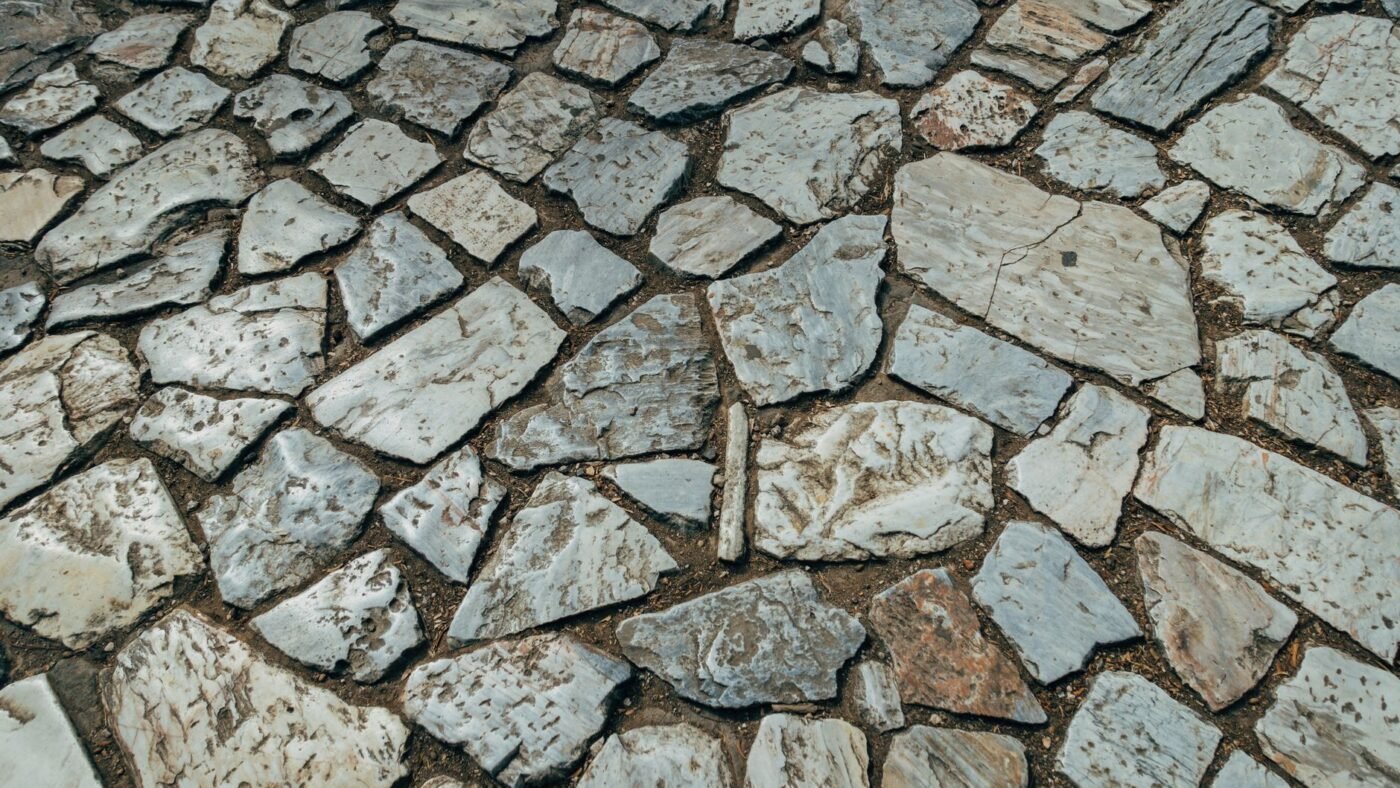
Flagstones are flat slabs of naturally layered rock, usually sandstone, bluestone, quartzite, limestone or slate, split along their bedding planes and used for patios, walkways and stepping stones. They come as irregular pieces fitted together like a jigsaw with no picture on the box, or as cut rectangles and squares. You can lay flagstones dry on sand and gravel, which needs stone about 1 1/2 to 2 inches thick, or mortar thinner stone onto a concrete slab.
Flagstone is a shape, not a single stone. For the properties of each rock in more depth, see our guide to natural stone pavers.
What rock is flagstone?
Wikipedia's flagstone entry describes it as a generic flat stone, usually a sedimentary rock such as sandstone that splits into layers. The minerals that cement the grains give it its common red, blue and buff colors. In the US the word covers several rocks:
| Flagstone type | Typical colors | Where it comes from | What to know |
|---|---|---|---|
| Sandstone (e.g. Arizona) | Buff, pink, red, gold | Southwest | Stays cooler in summer; porous, so seal it |
| Bluestone | Blue-gray, lilac, rust | Pennsylvania, New York | Dense and frost-tough |
| Quartzite | Silver, gold, gray, green | Idaho, Utah, Oklahoma | Very hard wearing and non-slip |
| Limestone | Gray, beige, yellow | Indiana and elsewhere | Heavy; etched by acids |
| Slate | Gray, green, copper | Pennsylvania, Virginia, Vermont, New York | Splits easily; softer; seal it |
The Landscaping Network flagstone comparison chart lists more, including basalt. Ask your yard what is quarried nearby; freight is priced by the ton, and so is rock.
Irregular flagstones vs cut flagstones
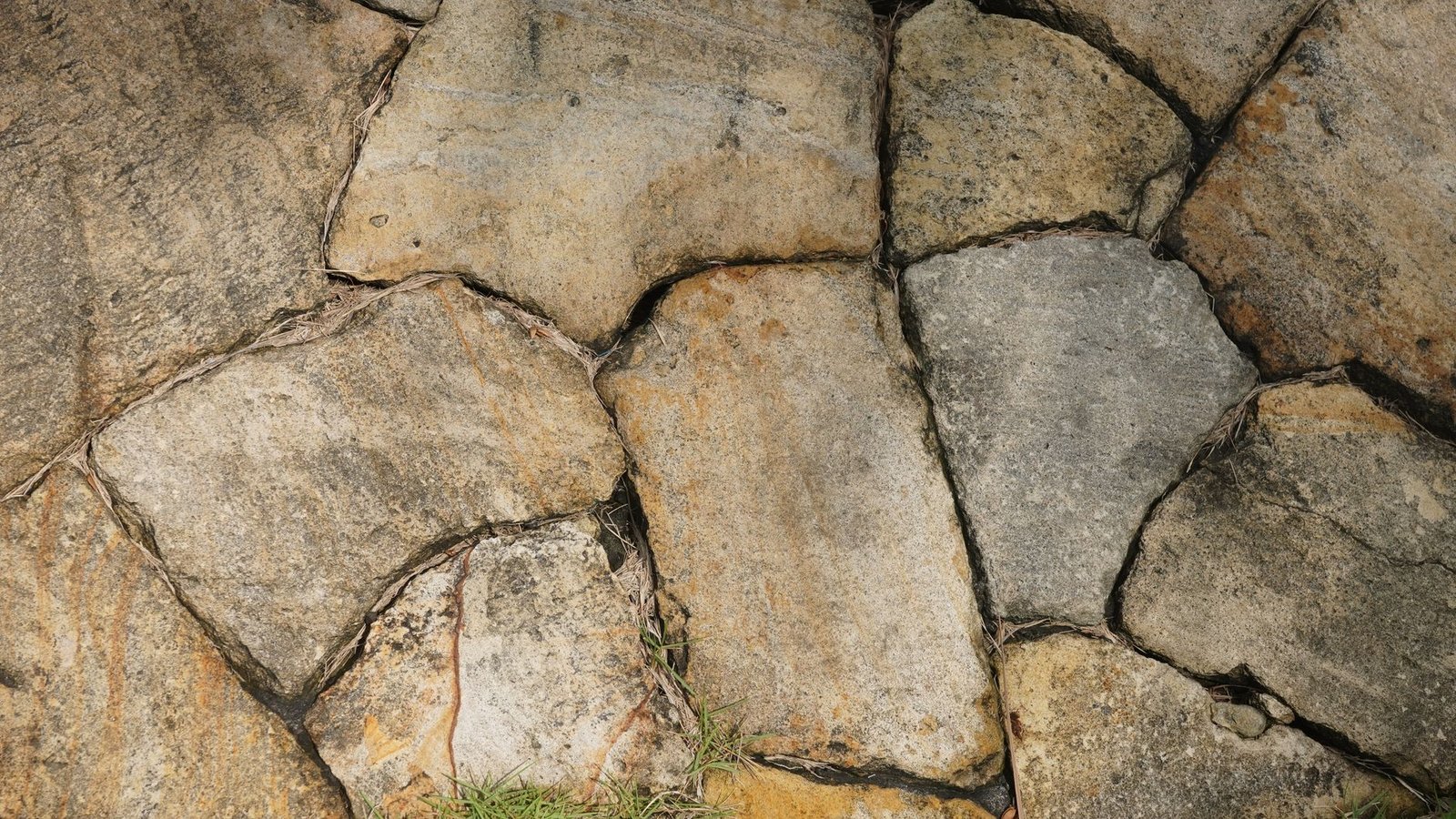
Irregular (random) flagstone keeps the natural broken edges. You fit pieces together, trimming with a chisel or saw to keep joints fairly even. It suits curves and informal paths, takes longer to lay, and wastes more.
Cut (dimensional) flagstone is sawn into squares and rectangles, often in patterns of several sizes. It lays faster, gives tighter joints and a more formal look, and behaves more like a paver. The top face is usually still natural cleft, so it will not be perfectly flat.
Tip: Sort irregular stones by size before you start. Place the big ones first, spread through the area, then fill with medium and small pieces. Many small pieces clustered together look messy and shift more.
Dry-laid vs mortared flagstone
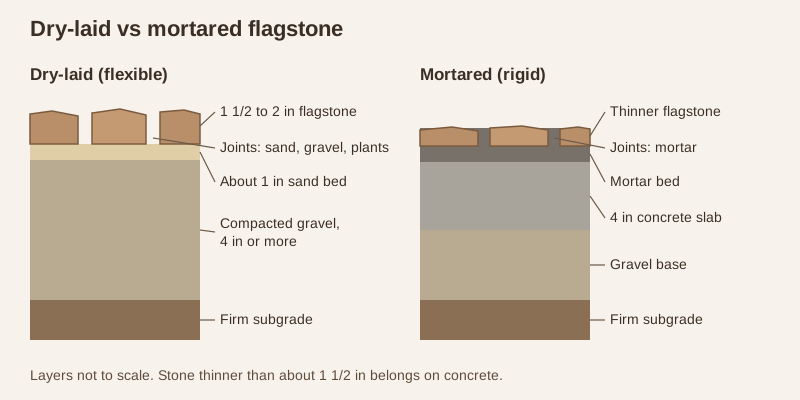
Dry-laid (flexible). Flagstones bed into roughly an inch of concrete sand (ASTM C33) over a compacted gravel base. The Landscaping Network flagstone installation guide says at least 3 inches of base. ICPI Tech Spec 2 disagrees: no less than 4 inches of compacted base under any patio or walk, and another 2 to 4 where the ground is wet or freezes. Use ICPI's number. In cold climates, The Landscape Library describes excavating about 8 inches to fit compacted lifts. Use stone about 1 1/2 to 2 inches thick so it does not crack under point loads. Dry-laid patios are cheaper, suit DIY, let water soak through, and a stone that rocks or sinks can be lifted and reset.
Mortared (rigid). Stones are bedded in mortar on a concrete slab, usually about 4 inches thick, with mortar filling the joints. The Landscaping Network guide recommends a reinforced slab where frost is a concern. This gives a solid, even surface with no weeds and no shifting, suits thinner stone, and works for formal patios and steps. It costs more, it is less forgiving for DIY, and a cracked slab takes the stone with it.
Rule of thumb: stone thinner than about 1 1/2 inches belongs on concrete. My one firm opinion: pick one system and commit. Mortar is rigid and dry-laid stone moves a little with every frost, so mortar joints on a sand bed crack the first winter.
Filling flagstone joints
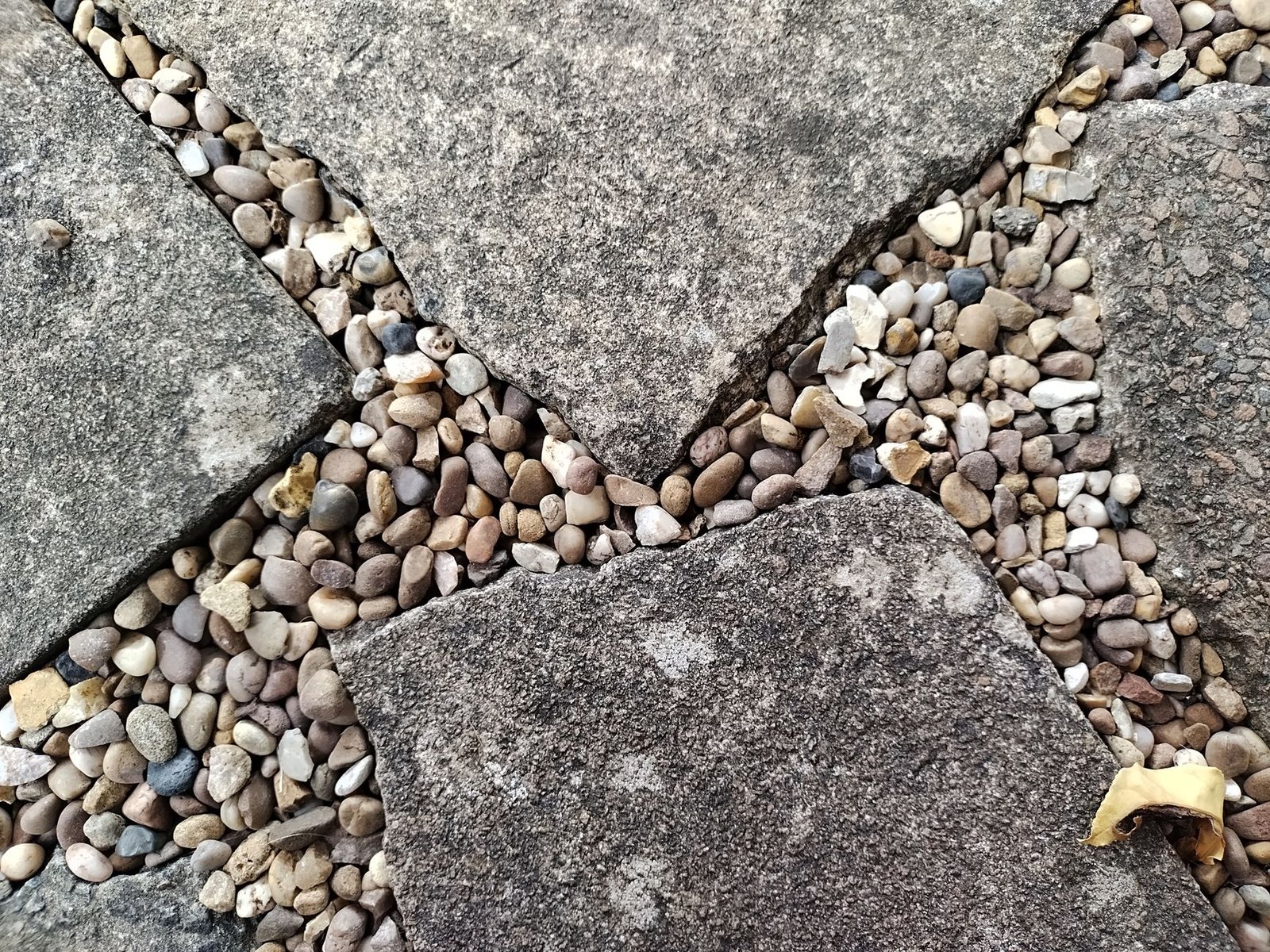
Joint choice changes both the look and the upkeep:
- Sand or stone dust. The cheapest choice. It washes out and grows weeds, so top it up yearly.
- Polymeric sand. It hardens to resist washout and weeds. Check the bag's maximum joint width, because very wide flagstone joints may need a product made for them.
- Pea gravel or small stone. Drains well and suits wide joints. Expect some scatter (pea gravel has never once stayed where it was put).
- Groundcover. Creeping thyme or moss in wider joints softens the look, and suits low-traffic garden paths.
- Mortar. Only on a mortared installation over concrete. Mortar in a dry-laid joint cracks as the stones move. We explain why in our guide to mortar in paver joints.
For a walkway of single stones set into lawn, see how to lay stepping stones.
Flagstones vs concrete pavers
Flagstone wins on character: no two stones match, and the cleft surface grips underfoot. Concrete pavers win on predictability: uniform, quicker to lay, fine on driveways, and easy to match. Flagstone is not a driveway material; thin slabs crack under wheels. Some manufacturers make "flagstone-look" concrete pavers for people who want the look with the paver's uniform thickness.
Lay thick flagstone dry, thin flagstone on concrete
Pick flagstones by the rock that suits your climate, choose irregular for a natural look or cut for a formal one, then match the method to the thickness: 1 1/2 to 2 inch stone on sand and a compacted base, thinner stone mortared to a concrete slab. Fill the joints to suit the method, and never use mortar on a dry-laid bed. Then sort the big stones first, and accept that the last gap will always want a shape nobody quarries.
FAQ
What is the difference between flagstone and pavers?
Flagstone is natural rock split into flat, often irregular slabs of varying thickness. Pavers are manufactured units, usually concrete or clay, with a uniform size and thickness. Flagstone looks more natural. Pavers are easier to lay flat and can carry vehicles.
How thick should flagstones be for a patio?
For a dry-laid patio on sand and gravel, use flagstone about 1 1/2 to 2 inches thick. Thinner flagstone should be mortared onto a concrete slab so it does not crack.
Can you lay flagstone directly on dirt?
Only for stepping stones in a lawn or a light garden path on well-drained soil. For a patio, dig out the topsoil and lay the flagstones on sand over a compacted gravel base, or they will rock and sink.
What do you put between flagstones?
Sand, polymeric sand, pea gravel or groundcover plants for dry-laid flagstone, and mortar for flagstone set on a concrete slab.
Is flagstone slippery when wet?
Most flagstone has a natural cleft surface that grips well when wet. Some smoother slates and limestones are slicker. Algae growing in shade will make any stone slippery, so keep shaded areas clean.