

Last Updated on October 20, 2026 by Umar Farooq
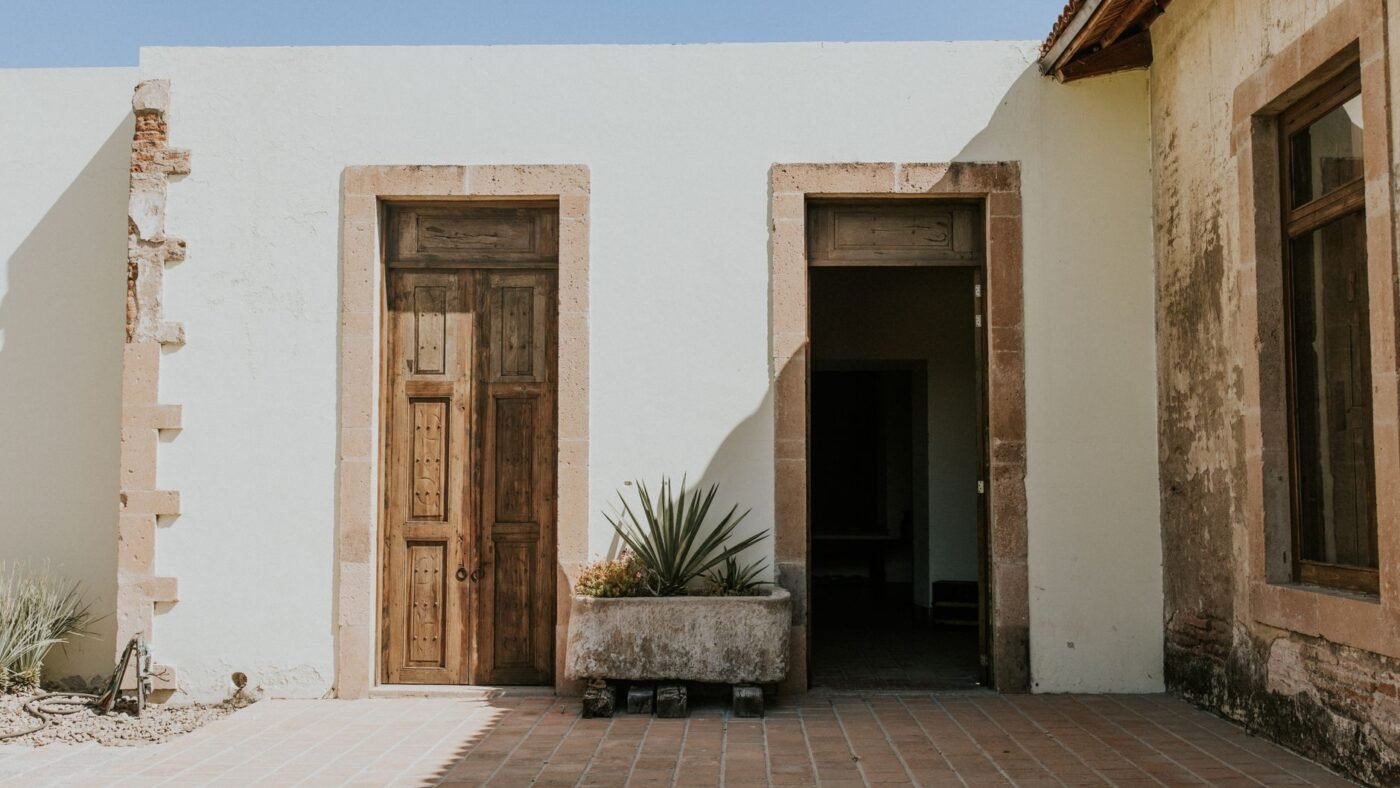
Terracotta pavers are handmade or machine-made clay pavers fired at relatively low temperatures, which gives them their warm orange-red color and also leaves them porous. Outdoors, terracotta pavers work well in mild, dry climates and under a roof, set on a sloped concrete slab and sealed. Where the ground freezes, water soaks into the clay, expands as ice and spalls the face, so choose Class SX clay pavers or terracotta-look porcelain instead. The patio heater placement guide covers this in more depth.
I went looking for a terracotta seller who would promise their product survives a Minnesota winter uncovered. The most honest one I found, Clay Imports, says plainly that its tiles are not designed to withstand freezing. I respect that more than any glossy "all-weather" claim I read. For the full picture, see covered patio ideas.
Terracotta pavers, Saltillo and ceramic: what you are buying

Several products share the terracotta name, and they behave differently outdoors:
| Product | What it is | Typical thickness | Outdoors |
|---|---|---|---|
| Saltillo | Handmade Mexican clay, sun-dried then low-fired | about 1/2 to 1 in | Mild climates, ideally covered |
| Italian or Spanish cotto ("Tuscan" pavers) | Extruded or pressed clay, fired hotter and denser | about 3/4 to 1 1/2 in | Some lines are sold as frost resistant; check the sheet |
| Glazed ceramic pavers | Fired clay with a glass glaze on top | 3/8 to 3/4 in | Glaze gets slick when wet; mostly for covered areas |
| Terracotta-look porcelain | Dense porcelain printed to look like clay | about 3/4 in (2 cm) | Freeze-safe, no sealing |
| Clay brick pavers | High-fired clay made to ASTM C902 | 2 1/4 in and up | Class SX handles freezing |
The last row is fired clay too, but made to a strength and freeze standard; our guide to paver bricks covers it. When people say "terracotta pavers," they usually mean the softer, handmade-looking tiles in the first two rows.
The difference comes down to firing heat. Keope's guide to terracotta-look porcelain puts traditional terracotta at 900 to 1,100°C and porcelain at about 1,235°C, with porcelain absorbing under 0.5% of its weight in water. Hotter firing closes the pores. Fewer pores means less water inside the paver when the temperature drops.
Frost decides whether outdoor terracotta pavers survive
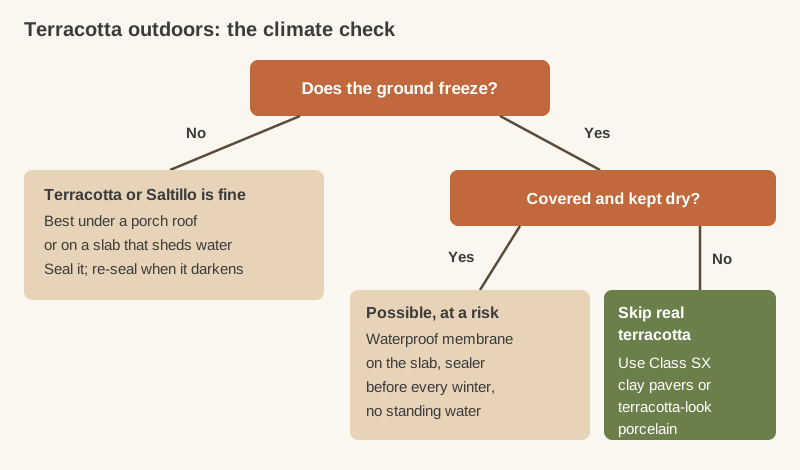
Where I land after the reading: a sealer is not a frost rating. If your patio freezes and gets rained or snowed on, don't put real Saltillo or soft terracotta on it, sealed or not.
The mechanism is simple and unforgiving. Porous clay drinks water. Water expands by about 9% when it freezes. Inside a pore, that expansion has nowhere to go, so it pushes the clay apart a little each cycle until the face flakes off (spalling) or the paver cracks through. Clay Imports' own guidance on Saltillo outdoors says its tiles are not designed for freezing, and that in cold areas you need a water-barrier underlayment, a topcoat sealer, and a fresh seal before winter.
The Brick Industry Association's grading shows what a freeze-rated clay paver looks like. Its Technical Note 14 reserves Class SX for pavers that may freeze while saturated, while Class MX is for exterior use with no freezing. Most handmade terracotta carries no ASTM class at all. If the seller can't tell you the absorption figure or a freeze rating, assume it has neither.
Where terracotta pavers work outdoors
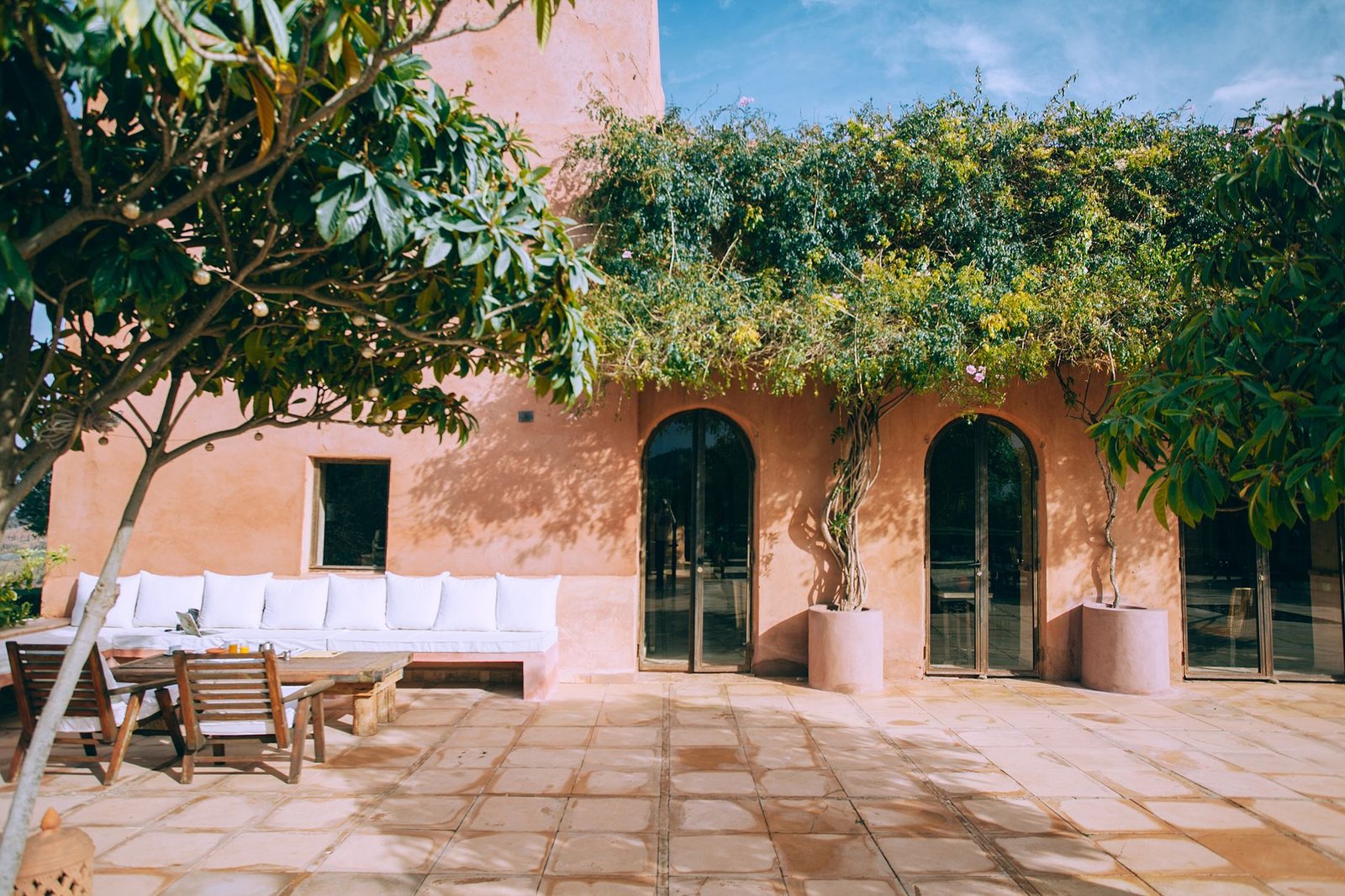
Terracotta is at its best in the places it came from: hot, dry, rarely frozen. In the US, that means the Southwest, Southern California, Florida and the Gulf Coast. Good spots:
- Covered porches and loggias. A roof keeps the pavers dry, which removes most of the frost risk and slows staining.
- Courtyards and patios in frost-free zones. The color improves with age.
- Pool surrounds in warm climates. Unglazed terracotta stays grippy wet. It also stays cooler than dark concrete, although it will still be warm by mid-afternoon.
Poor spots: anywhere that freezes and stays wet, driveways (too thin, too soft), and low areas where water sits after rain.
Setting terracotta pavers on a slab
Most terracotta pavers are too thin and too soft to sand-set on gravel the way concrete pavers are. The usual outdoor method is mortar-set on a concrete slab, the same logic as other thin pavers: the slab does the structural work and the terracotta is the surface.
- Start with a sound, sloped slab. It must fall away from the house so water leaves quickly. A flat slab under porous clay is a reservoir.
- Add a waterproofing membrane. Clay Imports recommends one for any exterior Saltillo installation on concrete, regardless of climate. It stops water that passes through the clay from saturating the mortar bed.
- Seal before grouting. Unsealed Saltillo drinks grout pigment and haze. A pre-sealed product saves a step.
- Set in a full mortar bed. Voids under a porous paver fill with water. Back-butter each piece.
- Leave joints wide enough. Handmade pieces vary in size, so plan wider joints than you would for machine-made pavers. They hide the variation instead of advertising it.
Thicker extruded cotto can sometimes be sand-set in mild climates. Follow the maker's sheet.
Sealing outdoor terracotta, and when not to
Outdoor sealing advice contradicts itself because it describes two different products.
- Mortar-set Saltillo and soft terracotta: seal it. A penetrating sealer slows water and stain uptake. Re-seal when water stops beading.
- Thick sand-set clay pavers: usually leave them unsealed. Film-forming sealer on a sand-set, porous paver can trap moisture coming up from below, which shows as white bloom or a cloudy film.
- Terracotta-look porcelain: nothing to seal. With absorption under 0.5%, there is nowhere for the sealer to go.
Whatever you choose, use a breathable, penetrating product outdoors rather than a glossy topcoat. A shiny film on a patio becomes a skating rink the first time it rains. (Beautiful, briefly. Then it's a lawsuit with a nice color.)
Cleaning and efflorescence on clay
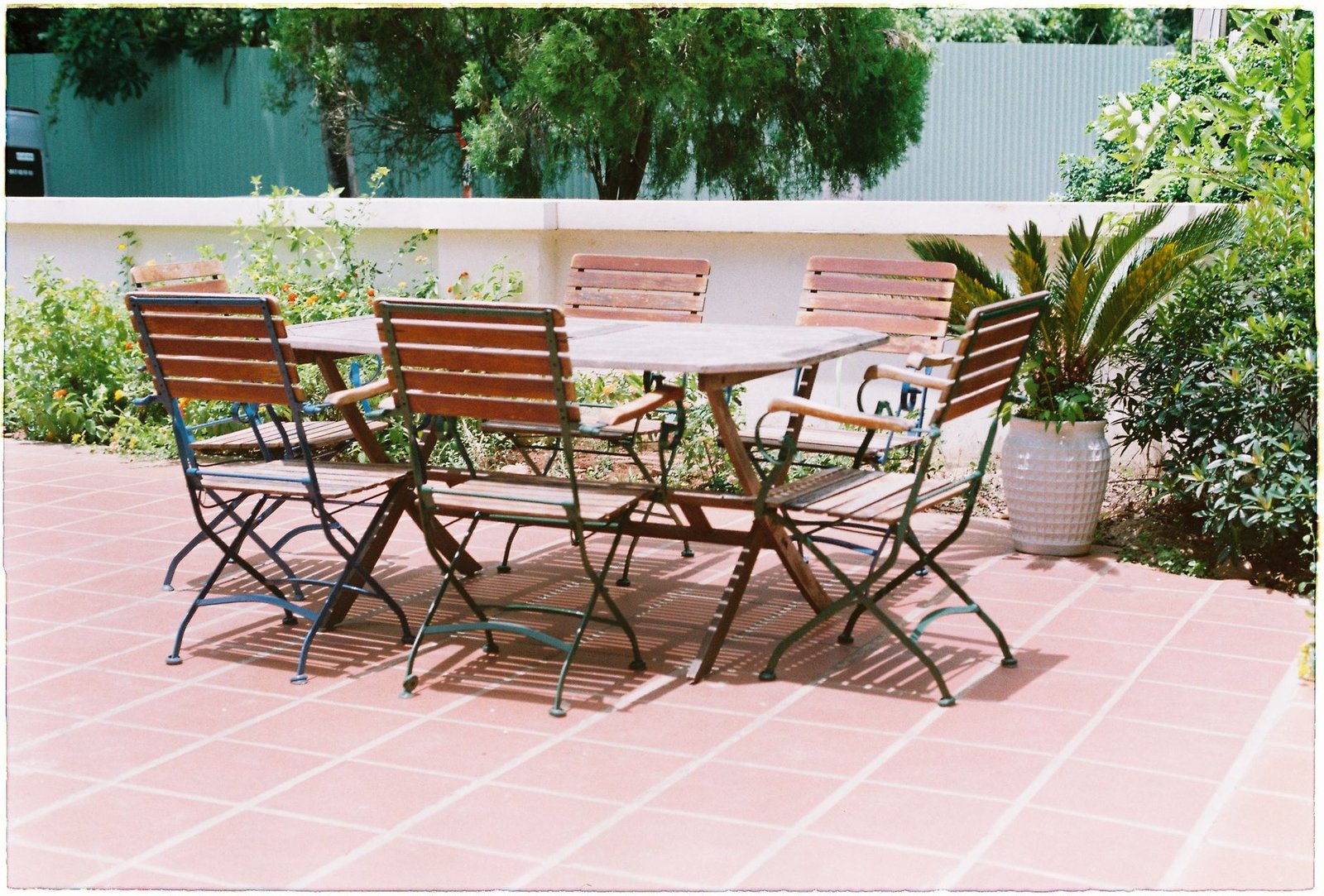
- Sweep often and wash with a mild soap and a soft brush. KG Landscape advises against high-pressure jet washing, which erodes clay faces and blasts out joint material.
- White, powdery deposits are usually efflorescence: salts carried up by moisture. Brush them off dry before washing, and fix the water source if it keeps returning. Our guide to efflorescence on pavers covers removal.
- Green film means the area stays damp. Fix the slope or shade before reaching for chemicals, and keep acidic cleaners off sealed clay unless the sealer maker approves them.
Terracotta-look porcelain for cold winters
If you love the look but live where it snows, terracotta-look porcelain is the practical answer. Archatrak's Cotto line, for example, is a 2 cm porcelain paver at 9 lb per square foot, with a lightly textured anti-slip surface. It gives you the orange-red, mottled look without the absorption, the sealing schedule or the spring spalling.
You give up the handmade edges and the patina. You gain a patio that looks the same in April as it did in October.
Buy terracotta for a mild climate or a roof over it
Real terracotta pavers are lovely to live with while they stay above freezing. In a frost-free climate or under a porch roof, set them on a sloped slab with a membrane, seal them, and let them age. In a freezing, exposed spot, sealer only delays the damage, so buy Class SX clay or terracotta-look porcelain and keep the color. The clay doesn't know what your winters are like. Your patio will find out by March.
FAQ
Can terracotta pavers be used outdoors?
Yes, in climates where it rarely freezes, or under a roof. Terracotta is porous, so water that soaks in and freezes can spall or crack it. In freezing climates, use frost-rated Class SX clay pavers or terracotta-look porcelain for exposed areas.
Do terracotta pavers need to be sealed?
Mortar-set Saltillo and soft terracotta outdoors should be sealed with a penetrating sealer and re-sealed when water stops beading. Thick, sand-set clay pavers are often left unsealed so moisture can escape. Porcelain made to look like terracotta needs no sealer.
Is Saltillo tile good for a patio?
In warm, dry climates, yes, especially on a covered patio. It needs a sloped slab, a waterproofing membrane under the mortar bed, and regular sealing. It is not designed for freezing conditions.
What is the difference between terracotta and ceramic pavers?
Terracotta is unglazed, low-fired clay with a porous body. Ceramic pavers are usually fired hotter and often glazed, which makes them less absorbent but slicker when wet. Porcelain is the densest ceramic, with absorption under 0.5%.


