Last Updated on September 23, 2026 by Umar Farooq
How much polymeric sand do I need? For standard concrete pavers with tight joints of about 1/8 inch, one 50 lb bag covers roughly 75 to 100 square feet. At joints of 1/4 to 3/8 inch, the same bag covers only about 30 to 60 square feet. Irregular flagstone joints can drop it to about 10 square feet or less. Divide your patio area by the coverage for your joint width, add 10 to 15 percent, and round up to whole bags. Nobody in history has run out of polymeric sand at a convenient moment.
Coverage changes with the joint, not just the area. Two same-size patios can differ by twice as many bags.
Polymeric sand coverage by paver size and joint width
The table below shows square feet per 50 lb bag. It assumes a bag of about 0.5 cubic feet (check yours; brands vary) and a polymeric sand depth of 1.5 inches, the minimum on both the Alliance Gator SuperSand G2 and Techniseal HP NextGel data sheets. Figures assume straight-edged pavers.
| Paver size | 1/8 in joint | 3/16 in joint | 1/4 in joint | 3/8 in joint |
|---|---|---|---|---|
| 4 × 8 in (brick, holland) | ~85 sq ft | ~57 sq ft | ~43 sq ft | ~28 sq ft |
| 6 × 6 in | ~96 | ~64 | ~48 | ~32 |
| 6 × 9 in | ~115 | ~77 | ~58 | ~38 |
| 12 × 12 in | ~190 | ~128 | ~96 | ~64 |
| 16 × 24 in slab | ~300 | ~205 | ~154 | ~102 |
These line up with published ranges. Inch Calculator's polymeric sand guide puts a 50 lb bag at 75 to 100 square feet for small gaps and 30 to 60 for 1/4 to 3/8 inch gaps. Treat the table as a best case: tumbled or chamfered edges, uneven joints and full-depth fills all use more, which is why the 10 to 15 percent extra matters.
Measure a joint first. Drill bits make a good gauge: check several and take the typical width, not the tightest one you can find to feel good about.
The joint-volume formula behind every calculator
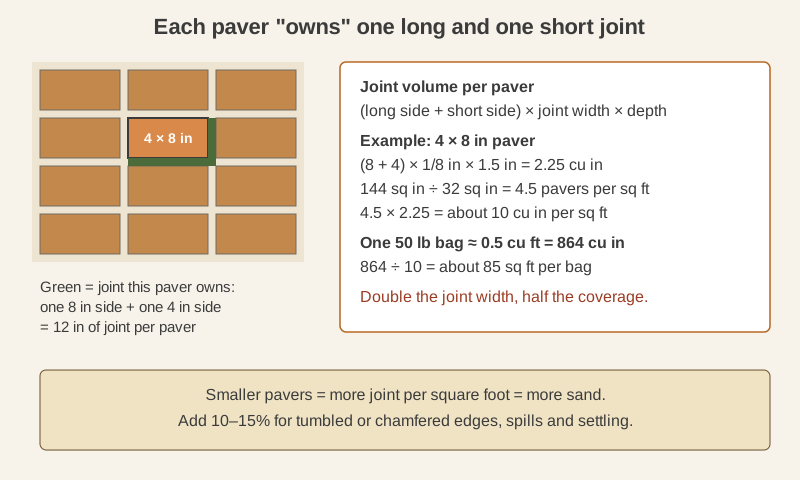
I ran the numbers behind three brand calculators, and they all do the same arithmetic with different bag sizes. Each paver "owns" one long joint and one short joint, so:
- Joint volume per paver = (length + width) × joint width × sand depth, all in inches.
- Pavers per square foot = 144 ÷ (length × width).
- Cubic inches per square foot = step 1 × step 2.
- Bags = (area in sq ft × step 3) ÷ cubic inches per bag. A 0.5 cu ft bag holds about 864 cubic inches.
Brand calculators ask for these inputs: paver dimensions, joint width and area. Black Diamond Coatings, which makes Dominator polymeric sand, publishes a polymeric sand calculator that gives bag counts. Use the maker's own calculator for its bag. Alliance Gator notes on its calculator page that pavers with large spacer bars typically use 10 to 15 percent less sand than calculated, since spacers take up joint space.
Two shortcuts fall out of the formula. Double the joint width and you double the sand. Halve the paver size and you roughly double the sand.
How much polymeric sand do I need for a 12 × 16 patio?
The full calculation for a common DIY patio: 12 × 16 feet (192 sq ft), laid in 6 × 9 inch pavers with joints of about 3/16 inch.
- Joint per paver: (9 + 6) × 0.1875 × 1.5 = 4.2 cubic inches.
- Pavers per square foot: 144 ÷ 54 = 2.67.
- Sand per square foot: 4.2 × 2.67 = 11.25 cubic inches.
- Total: 192 × 11.25 = 2,160 cubic inches, or 1.25 cubic feet.
- Bags: 1.25 ÷ 0.5 = 2.5 bags. Add 15 percent for edges and settling to get 2.9, so buy 3 bags.
Change one thing and the answer moves. With 4 × 8 inch pavers and the same joints, the patio needs about 3.4 bags before the extra, so buy 4. With tumbled pavers and wider, irregular joints, buy 5 and return what you don't open.
Why real coverage runs short of the chart
If a bag runs out early, one of these is why:
- Tumbled and chamfered edges. Rounded or beveled edges open a V at the top of each joint, which fills with sand.
- Deeper fill. On an existing patio where you've raked joints out to the full paver depth (about 2 1/4 inches on a standard 2 3/8-inch paver), you use roughly half as much sand again as the 1.5-inch table.
- Settling. The plate compactor pulls sand down into voids, and you keep sweeping more in. Alliance Gator's G2 data sheet expects about 30 to 50 percent of the sand to drop after the first compaction. That is correct technique, but it uses sand.
- Uneven joints. Hand-laid patios drift from 1/8 inch to 1/4 inch, and wide spots drink sand.
- Surface waste. The surplus you sweep off counts too, though some can be bagged and reused.
Coverage can also run long: spacer nibs and very tight laying can beat the chart.
Flagstone and wide joints eat bags fast
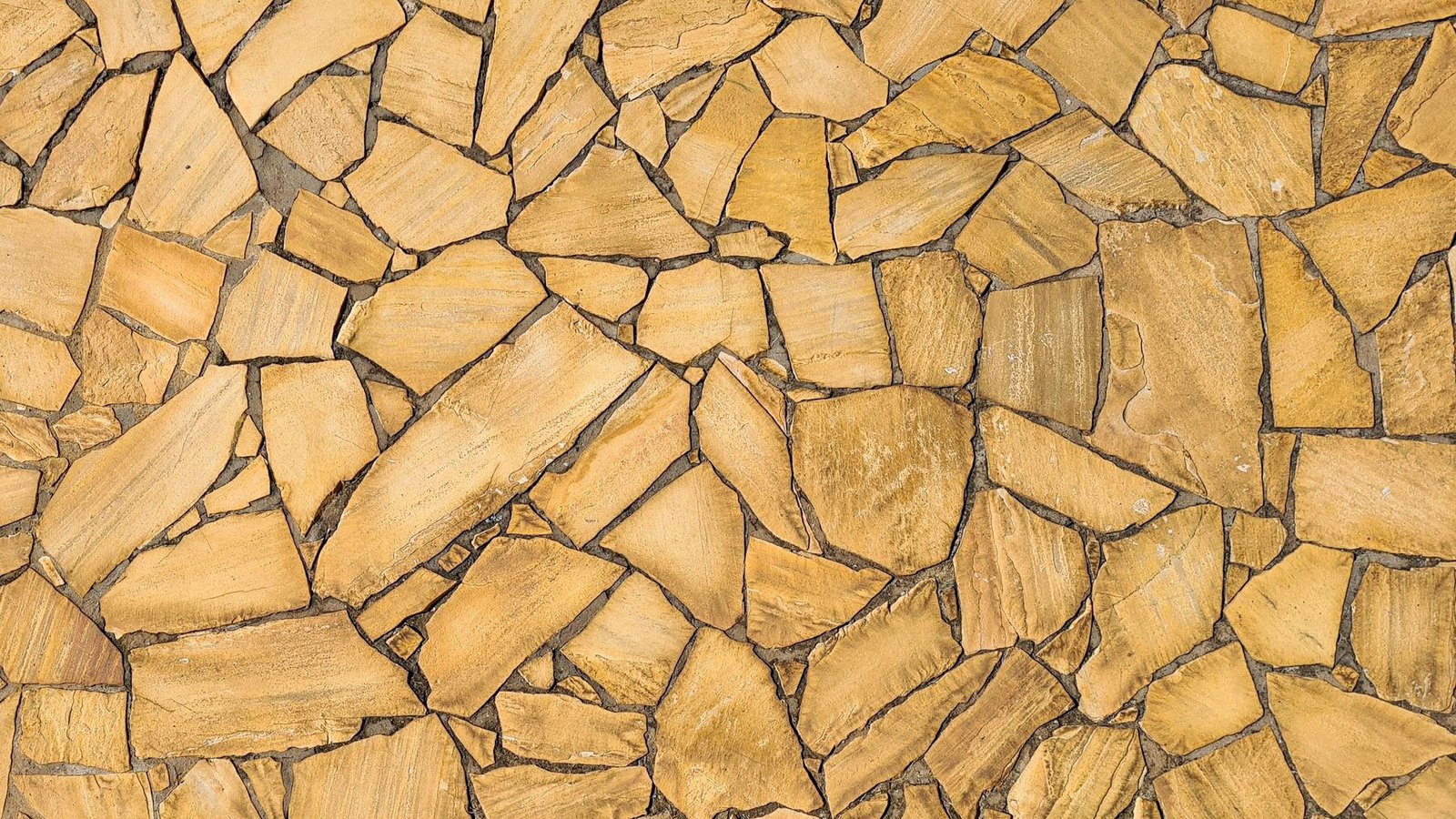
Natural stone breaks every rule above. Joints run from 1/2 inch to 2 inches or more, and change width stone to stone (flagstone has never heard of a formula). Inch Calculator's guide puts irregular flagstone at roughly one 50 lb bag per 8 to 10 square feet. At that rate, a 200 square foot flagstone patio can need 20 bags or more.
Two practical points:
- Check the joint rating. It varies by product: Alliance Gator's SuperSand G2 is rated for 1/8 to 2 inch joints, and many standard sands stop well short of that. Wider gaps need a wide-joint product; calculate from its own chart.
- Estimate by sample. Fill a 10 square foot test area, count what it took, and scale up.
If you're unsure polymeric sand suits your stone, our explainer on what polymeric sand is covers where it works and where it doesn't.
Buy one batch plus a spare bag
My one firm opinion on buying: over-buy by a bag, from a store that takes back unopened ones. A spare sealed bag costs you a return trip. Running short costs you half-finished joints sitting exposed while the sky makes up its mind.
- Buy everything at once, from one batch. Color can shift slightly between production runs, and a line where two batches meet shows up after watering.
- Keep a spare bag for repairs later.
- Store it dry. Keep bags off the ground, covered and sealed; damp bags go lumpy.
- Don't count bedding sand here. Polymeric sand is only for the joints. The 1-inch bed under the pavers is ASTM C33 concrete sand, and our sand for pavers guide covers ordering it by the ton.
Measure the joint, not just the patio
Joint width and paver size decide the answer. Measure a typical joint, find your paver size in the coverage table or run the four-step formula, add 10 to 15 percent, and round up. For a standard 1/8-inch joint patio, that's roughly one 50 lb bag per 75 to 100 square feet, and much more for wider joints, small pavers or flagstone. Whatever the number comes out to, the last bag is the one you'll be glad you bought.
FAQ
How many square feet does a 50 lb bag of polymeric sand cover?
About 75 to 100 square feet for pavers with 1/8-inch joints, and roughly 30 to 60 square feet at 1/4 to 3/8-inch joints. Irregular flagstone can drop coverage to around 8 to 10 square feet per bag. Always check the chart on your brand's bag.
How much polymeric sand per square foot of pavers?
It ranges from about 3 to 5 cubic inches per square foot for large slabs with tight joints to 30 or more for small pavers with wide joints. A typical 4 × 8 paver patio with 1/8-inch joints uses about 10 cubic inches per square foot at 1.5 inches deep.
Are polymeric sand calculators accurate?
They're accurate for the inputs you give them, so measure the real joint width. Calculators assume straight edges and uniform joints. Add 10 to 15 percent for tumbled or chamfered pavers, settling and waste.
What happens if I run out of polymeric sand halfway?
Stop before watering anything. Polymeric sand is inert until it's wet, so the finished sections can wait covered and dry while you buy more. Try to match the color and batch. If rain threatens, water only the fully finished, blown-clean sections and protect the rest.
Do I need more polymeric sand for an old patio than a new one?
Usually, yes. On an existing patio, you rake the joints out deeper, often to the full paver depth, and old joints tend to be wider and less even. Expect to use up to about 50 percent more than the 1.5-inch coverage table suggests.