
Last Updated on September 23, 2026 by Umar Farooq
Here's how to fix sunken pavers so they stay fixed. Find out why the area dropped, then lift the pavers a row or two past the low spot. Dig out the bedding sand and any soft base stone underneath, and rebuild the base with crushed stone compacted in thin layers. Screed a fresh 1-inch sand bed, relay the pavers slightly high, then compact and re-sand the joints. Finally, correct whatever caused the dip, whether that's a downspout, a failed edge or soft soil. Filling the low spot with sand from above doesn't work, and a dip fixed that way comes back, usually right where the grill goes.
Sunken pavers are a base problem showing up at the surface. I reckon half the sinking-paver forum threads I've read blame the sand in the first post and find the gravel by the tenth. The pavers almost never fail; the stone, sand or soil under them does, so that is where the repair happens.
Why pavers sink: read the dip before you lift anything
A dip is a confession. Its shape tells you a lot about the cause, so read it before you dig.
| What the low spot looks like | Most likely cause |
|---|---|
| A shallow bowl in the middle of a patio | Base under-compacted, or dumped in one thick layer instead of thin lifts |
| A dip at the end of a downspout or under a roof valley | Water washing fines out of the base (washout) |
| Pavers dropping along the outer edge | Edge restraint loose, missing, or sitting on sand with no base under it |
| A straight, narrow line of low pavers | Settled backfill over a utility trench, irrigation line or drain pipe |
| Wheel-path ruts in a driveway | Base too thin for vehicle loads, or clay pumping up into the stone |
| Humps first, then a dip nearby | Tree roots lifting pavers, or a root that later rotted away and left a void |
| Settling that shows up after the first winter | Wet base that froze, or organic topsoil left under the base |
Rochester Concrete Products' sunken paver guide groups the causes the same way: installation shortcuts, water, soil movement and heavy loads, and trees. How to Hardscape's lift-and-relay guide calls improper compaction of the base the number-one cause of sunken or uneven pavement.
Too much bedding sand belongs on that list too, and it's the one I have the least patience for. The sand bed is one inch thick, ASTM C33 concrete sand, screeded and left loose. It is not a leveling layer. Two inches of sand in a low spot compresses more than one inch everywhere else, so an installer who fixed a lumpy base with 2 or 3 inches of sand built in a slow sink, and the patio shows you exactly where about a year later.
Measure the dip with a string, then run the hose
Spend fifteen minutes on diagnosis and you'll dig the right hole, which beats digging two.
- Map the low area. Lay a long straight 2×4 or a level across the dip in several directions. Chalk where the pavers fall away from the board, and measure the deepest gap.
- Check whether the edges are involved. Push on the outer row. If it tilts outward or the restraint moves, the edge is part of the problem.
- Run a hose where water normally comes from, such as the downspout, the lawn or the driveway apron. Watch where it goes. If water flows into the dip and disappears into the joints, you've found your washout.
- Look in the joints. Empty joints around the dip mean water has been carrying sand down, and possibly carrying base fines away.
- Note what's nearby: trees, downspouts, a backfilled foundation wall, a buried line, a sprinkler head. (Sprinkler heads have a gift for aiming at exactly one paver for years.)
A shallow dip that isn't growing, on a patio that drains well, may only need the bedding reset. A deeper dip, one that holds water, or one that has come back after an earlier fix means the base is involved.
How deep the repair goes: bedding, base or soil
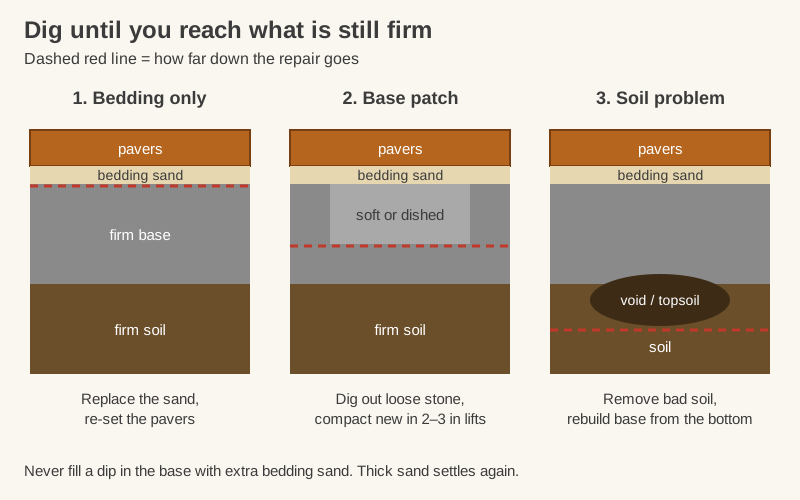
Every sunken-paver repair lands at one of three depths. You won't know which until the pavers are up, so plan for the middle one and be ready to go deeper.
- Bedding only. The base under the dip is firm and flat, but the sand bed is too thick, washed out or contaminated. Replace the sand and relay the pavers.
- Base patch. The base stone is soft, loose or dished. Remove it down to firm material and replace it with fresh crushed stone compacted in lifts.
- Soil problem. Under the base you find black topsoil, roots, a void or loose trench backfill. Dig it out to firm mineral soil and rebuild the base from the bottom up.
The CMHA guide specification runs to dozens of dry pages, and buried in the bedding section is the principle, put plainly: an installer cannot correct deficiencies in the base with additional bedding sand. Elsewhere it says it in four words: "Do not disturb screeded sand." Those are the most useful sentences for anyone fixing sunken pavers.
How to fix sunken pavers without a ridge: lift past the dip
Mark the repair area with chalk, then extend it one or two full rows beyond where the dip ends, into pavers sitting correctly. How to Hardscape recommends at least 5 by 5 feet even for a small dip, so the patch blends in without a visible ridge or gaps at its boundary.
- Photograph the pattern before you start, especially with herringbone, multi-size or circle patterns.
- Clear the joints around the first paver with a putty knife, or cut out hardened polymeric sand.
- Lift the first paver. Use a paver extractor, or two flat screwdrivers worked into opposite joints. It's the hardest one; the rest come up easily once you have an opening.
- Stack pavers in order, row by row, face up, near the hole. Number the rows with chalk if the pattern is complicated.
- Set aside broken or badly chipped pavers and get replacements before you rebuild. Take one to the dealer to match it.
If you're cleaning the pavers too, do it now while they're out. Cleaning them in place first just washes dirty water into the hole you're about to open.
Rebuild the base under the sunken area
With the pavers off, scrape away the bedding sand. Don't reuse it if it's muddy or full of fines. Now probe what's under it.
If the base is firm and flat, stop here. Check it with a straightedge resting on the base of the sound area around the hole. Scrape off any high spots.
If the base is soft or dished:
- Dig out the loose stone until you hit firm, compacted material. Square up the sides of the hole.
- Add fresh dense-graded crushed stone (the same base as the rest of the patio) in layers of 2 to 3 inches. ICPI's lift range of 4 to 6 inches is written around a 7,000 lbf compactor, with thinner lifts for anything lighter; a hand tamper or small rental plate is well below that.
- Mist each layer until the stone darkens, then compact until it stops moving underfoot.
- Build it back up to match the existing base, checking with a straightedge that spans the sound base on both sides.
If you find soil problems, such as topsoil, organic debris, a root void or a wet, pumping clay pocket, keep digging to firm mineral soil. Compact the bottom, add non-woven geotextile over clay, then rebuild the base in lifts. On a utility trench, compact the backfill in thin lifts all the way up first.
Tree roots need a decision. Cutting a large structural root can harm or destabilize the tree, so talk to an arborist before cutting anything thicker than a finger. The tree was there first, and it has a longer memory than you. A root barrier along the edge keeps new roots out.
Re-bed and relay the pavers
- Screed a 1-inch bed of ASTM C33 concrete sand (no stone dust, no mason sand) over the repaired base. In a small area, rest a short straightedge on 1-inch pipes or the bed of the sound pavers, and strike off the sand. Don't compact it.
- Relay the pavers in their original pattern, starting from the undisturbed edge and working toward the center. Keep joints tight and lines straight.
- Set them slightly high. Before compaction, the repaired pavers should sit about 1/8 to 1/4 inch above the surrounding surface, the settlement allowance in the CMHA guide spec, because they settle when compacted.
- Compact. Run a plate compactor with a protective pad over the repaired area and a little way onto the sound pavers. For a handful of pavers, tap each one down with a rubber mallet over a scrap board.
- Fill the joints. Sweep in joint sand or polymeric sand to match the rest of the patio, compact again, and top up.
- Check it with the straightedge and a bucket of water. The repair should drain the same way as the surrounding surface.
Stop the water or edge failure that sank them
A relay without fixing the cause is a temporary repair with good manners. Deal with whatever you found during diagnosis:
- Downspouts: extend them past the patio, or connect them to a buried drain line, so roof water never lands on or next to the pavers.
- Grading: make sure the surface slopes away from the house, roughly a quarter inch per foot, and that the lawn beside the patio doesn't send runoff onto it.
- Edges: reset the edge restraint on compacted base, not on sand, and replace missing spikes.
- Joints: keep them full. Open joints let water carry sand down into the bed, which is how many washouts start.
- Trees: consider a root barrier, and keep new plantings well back from the paving.
Most of these are ongoing care rather than one-time fixes. A spring and fall check, part of a regular paver maintenance routine, catches a new dip while it is still an inch deep, not four.
Shortcuts that bring the dip back
- Sweeping sand into the dip from above. It fills the joints, not the void under the pavers.
- Lifting the pavers and just adding sand. Thick bedding sand is itself a cause of sinking. Correct the base, not the sand depth.
- Injecting foam or grout. Polyurethane foam lifting is designed for concrete slabs. Sand-set pavers are individual units on a loose bed, and lifting and relaying them is the standard repair.
- Fixing the dip and ignoring the downspout. Water will wash it out again.
On cost, area and depth drive the price. A bedding-only reset of a small patch is an afternoon and a few bags of sand. A base rebuild adds digging, stone and a compactor rental; rent it rather than buy it, because a one-repair plate compactor mostly becomes a very heavy doorstop. Widespread sinking means a full lift-and-relay, even if you reuse all the pavers.
When to hand it to a hardscape contractor
Call a pro when the sinking is next to a foundation or basement wall, covers a large part of the patio or driveway, keeps coming back after a proper repair, or sits over utilities or a drainage system. The same goes for driveways, which need a 6-inch compacted base minimum against a patio's 4. For smaller local jobs, such as a single cracked paver or an open joint, see our paver patio repair guide.
Rebuild what's under the dip, not the dip itself
Fixing sunken pavers is never about the pavers. Read the dip to find the cause, lift a row past it, dig down until the material is firm, and rebuild with compacted stone rather than extra sand. Relay the pavers on a proper 1-inch bed, then stop the water or edge failure that caused the drop. Done that way, the repaired patch is often the most solid part of the patio, and you're allowed to stand on it a little smugly.
FAQ
Can you fix sunken pavers without removing them?
Not properly. Sweeping sand into the joints doesn't reach the void under the pavers, and foam injection is designed for concrete slabs, not sand-set pavers. Lifting the affected pavers, correcting the base and relaying them is the reliable fix.
Why are my pavers sinking?
Most often the base was under-compacted, too thin, or placed in one thick layer. Other common causes are water washing out the base (usually from a downspout), too much bedding sand, failed edge restraints, organic soil left under the base, settled trench backfill and tree roots.
How do you keep pavers from sinking?
Build the base to the right depth (at least 4 inches compacted for patios, 6 for driveways, and 2 to 4 extra where soil is soft, wet or frozen in winter), compact it in lifts thin enough for your compactor, keep the bedding sand at 1 inch, set edge restraints on compacted base, and keep roof water and runoff away from the pavers. Then keep the joints full of sand.
Can I just add sand under sunken pavers?
Only if the base underneath is firm and flat and the problem is purely the sand bed. If the base has settled, adding sand makes the bed thicker, and thick bedding sand keeps compressing. The dip will return.
How do I fix uneven pavers that have heaved up?
Lift them the same way, and find what pushed them up. Usually it's a tree root, frost in a wet base, or a pavement edge being pushed from the side. Remove or barrier the root, fix the drainage, rebuild the base level, and relay.
How much does it cost to repair sunken pavers?
It depends on area and depth. A small bedding-only reset needs sand and a few hours. A base rebuild adds excavation, crushed stone and a compactor rental, and contractor pricing rises with access, pattern complexity and how many pavers need replacing. Get quotes that say what's under the dip and how the cause will be fixed.