Last Updated on September 23, 2026 by Umar Farooq
Paver sealing means brushing, rolling or spraying a clear protective coat onto clean, bone-dry, fully settled pavers, and after reading more sealer data sheets than any weekend deserves, I can tell you the product is the easy part. Wait at least 30 days after polymeric sand goes in, longer if white efflorescence is still showing. Pick a dry day between 50 and 85°F with no rain for 24 hours. Spray at low pressure in small sections, back-roll the excess before it dries, and keep feet off for 24 hours and cars off for 48 to 72. The sealer isn't structural. It makes stains easier to clean, slows fading and can lock the joint sand. Nearly every sealing horror story I read was sealed too soon, too wet or too thick, which is three ways of being in a hurry.
Still deciding whether to seal at all? Start with the pros and cons of sealing pavers.
Is paver sealing worth the weekend?
My position, and one no sealer brand will print on the jug: most new pavers don't need sealing, and none of them need it in the first month. Unsealed concrete pavers last for decades. Seal too early and you trap the white bloom under a film you then have to strip; seal on a schedule and the layers build up until they whiten and peel. Seal when there's a reason: grill grease you'd rather see bead than wick in, a color you want deepened, or joint sand you want held against rain and leaf blowers.
In short:
- Worth it: grill and dining areas, driveways, light-colored pavers, and patios where the joint sand keeps washing out.
- Optional: a low-traffic walkway you're happy to see weather naturally.
- Plan on doing it again, eventually: a sealer wears away, but not on a calendar. Techniseal's Natural Look data sheet says recoat only when worn, and not before 2 years. Reseal when water stops beading.
When to seal new pavers, and when to wait
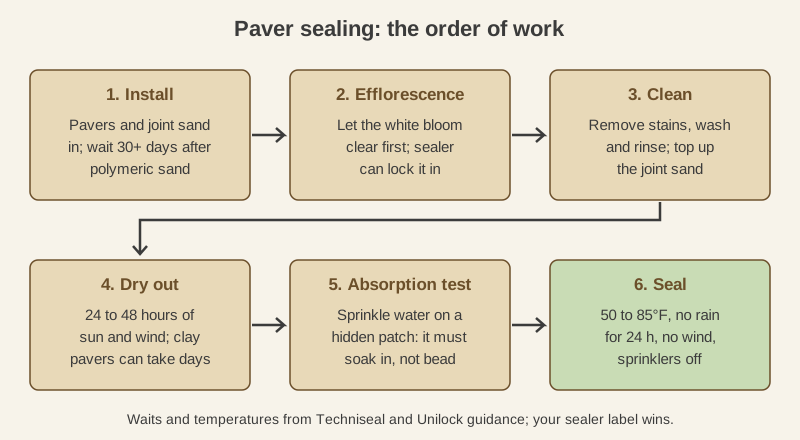
New concrete pavers need time. Moisture is still leaving them, and many produce efflorescence, a white bloom of natural salts, in their first months. A film-forming sealer can trap that bloom as a permanent grey-white haze.
Manufacturer guidance on the wait varies:
- Unilock, in its paver sealing tips, advises waiting 60 to 90 days after installation.
- Techniseal data sheets say to wait 30 days after polymeric sand is installed before sealing.
- Belgard, in its guide on whether to seal pavers, suggests about one week for non-film-forming (penetrating) sealers and 30 days for film-forming ones.
- Nicolock goes further and suggests six to twelve months.
I lined those four up hoping they'd agree. They run from one week to a year, which is less a consensus than a mood board. The practical rule: wait at least 30 days, and don't seal until any white bloom has gone. On an older patio, seal as soon as it's clean and dry.
The weather window
Every sealer label sets conditions. The Techniseal Wet Look (WL5) technical data sheet is typical: the surface must be "clean, dry and warm to the touch," the temperature must stay between 50°F and 85°F during application and for the next 24 hours, and no rain should be forecast for 24 hours. Turn the sprinklers off. (Yes, including the one on a timer you forgot existed.) Don't spray on a windy day; the mist drifts onto siding, cars and plants.
In summer, seal in the morning once the dew has gone, or in the early evening. On pavers baking in midday sun, sealer dries before it levels and leaves roller marks and bubbles.
Choose the sealer type before buying anything
There are two families of paver sealer, and the choice decides the finish, the grip and how you'll recoat later.
| Sealer type | What it does | Finish | Recoat |
|---|---|---|---|
| Penetrating (silane, siloxane, fluoropolymer) | Soaks into the pores and repels water and oil from inside | Natural, matte; grip barely changes | When water stops beading; no film to strip |
| Water-based acrylic film | Thin clear film on top; many also bind joint sand | Matte or satin, some "natural look" | When the film wears in traffic lanes |
| Solvent-based acrylic film | Thicker film; strongest color boost | Wet look, gloss | When worn; a second coat builds gloss |
| Two-part polyurethane | Hard, chemical-resistant film, mostly pro-applied | Satin to gloss | Most durable film; plan on a pro to strip it |
A few rules of thumb:
- Driveways and grill areas: a film or a penetrating sealer with oil repellency.
- Pool decks and steps: penetrating, or a film with anti-slip grit mixed in. Techniseal's own wet-look data sheet warns that its film "will make the surface more slippery when wet."
- Natural stone: only porous stone, and only a product rated for it. The same sheet rules out granite, marble and dense stone for its film sealer.
How glossy you want the finish is its own decision. See wet look vs natural paver sealer for a side-by-side.
How much sealer to buy
Coverage depends on how porous the pavers are. Techniseal lists up to 150 sq ft per gallon for one coat of its film sealers. Its penetrating Natural Look (iN) covers up to 120 sq ft per gallon per coat, and two coats are mandatory. A 500 sq ft patio therefore needs about 4 gallons of film sealer for one coat, or about 9 gallons of penetrating sealer for two. Buy it all at once and mix the containers so the color is even.
Run the water test before you clean
Sprinkle a few drops of water on a hidden spot. If they soak in and darken the paver, the surface is bare and ready for prep. If they bead up, there's still sealer on it.
Beading matters because most sealers can only go over bare pavers or over the same product. An unknown old coating has to come off with a compatible stripper first, or the new coat may peel or turn cloudy. While you're there, pick a hidden 4 sq ft patch to test the finished look on. Techniseal's warranty only covers the whole job if you test first.
Clean the pavers, then let them dry out properly
Sealer locks in whatever is on the surface, including stains, dirt, algae and haze. It is a preservative, not a correction fluid. So cleaning is most of the job.
- Sweep and clear. Move furniture and planters. Pull weeds from the joints.
- Treat stains first. Oil, rust and tannin stains need their own cleaners. A general wash won't lift them, and sealing over them makes them permanent.
- Wash the whole surface. Use a paver cleaner or an efflorescence cleaner if there's white bloom. Scrub, rinse, then pressure wash with a fan tip held well back from the surface so you don't etch the pavers or blow out the joints.
- Dry out. Unilock asks for at least 24 hours of drying after cleaning. Allow 48 hours after a heavy wash, overcast weather or rain. Techniseal notes clay pavers can take a few days.
Check the joints too. A paver can look dry on top while the sand below is still wet, and water trapped under a film is the classic cause of cloudy sealer.
Fill and settle the joints before sealing
Sealer should go on over full, settled joints. There are two approaches:
- Polymeric sand, then sealer. Refill the joints with polymeric sand, activate it, then wait out the cure. Techniseal says 30 days before sealing. The sand does the joint locking and the sealer protects the paver faces.
- Regular joint sand plus a joint-stabilizing sealer. Sweep in fine paver joint sand and settle it with a plate compactor, fitted with a pad. Then flood the joints with a sealer labelled as a joint stabilizer, which soaks into the top of the sand and binds it. Coverage drops because the joints soak it up. Techniseal gives 50 to 125 sq ft per gallon in joint-stabilizing mode.
Either way, the joint sand should sit just below the paver edges and be swept off the paver faces completely. Loose grains left on the surface get glued into the sealer.
How to seal pavers: spray, back-roll, keep a wet edge
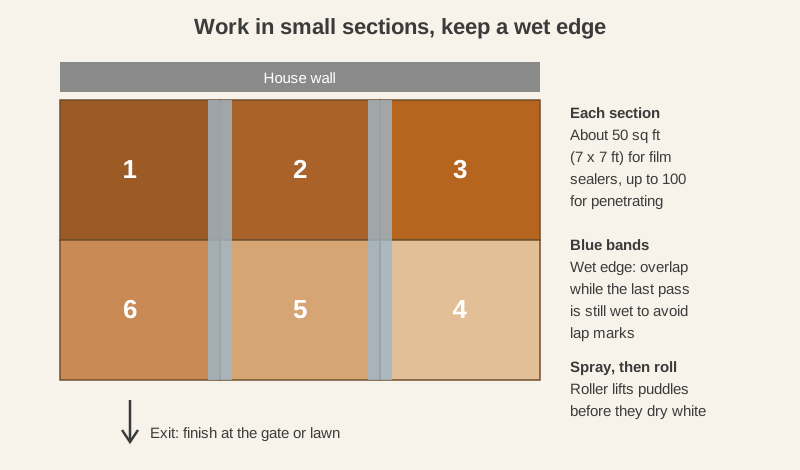
The goal: saturate evenly, leave no pools, and roll it out before it skins over.
Tools: a low-pressure pump sprayer (under 50 psi; solvent-resistant for solvent sealers), a 3/8 inch nap roller or slit-foam roller on an extension pole, a paint tray, gloves, eye protection and plastic sheeting.
- Protect everything nearby. Cover plants, the base of walls and door thresholds. Dried overspray on siding or glass is hard to remove.
- Mix it. Stir or shake the sealer, and blend all containers together. Don't dilute unless the label says to.
- Plan the route. Start at the far corner, usually against the house, and work back toward an exit so you never walk on wet sealer.
- Spray one section. Keep sections to about 50 sq ft for film sealers. Techniseal allows up to 100 sq ft for its penetrating sealer. Saturate the section evenly.
- Back-roll right away. Roll through the section to push puddles into the joints and lift excess from low spots and textured faces. Puddles are what dry white or glossy-blotchy.
- Keep a wet edge. Start the next section while the edge of the last one is still wet, and overlap it slightly. Letting an edge dry and then re-coating it leaves lap marks.
- Second coat, if your product calls for one. Solvent wet-look film sealers need a second, lighter coat once the first is dry to the touch, about 4 hours later, to reach full gloss. Don't add the second coat on dense, low-porosity pavers, because it will be slippery. Penetrating sealers usually go on wet-on-wet: a second coat right after the first, section by section.
Water-based sealers are the easier DIY choice: low odor, soapy-water cleanup, and many go on milky white and dry clear. Solvent-based sealers give deeper color, but they're flammable, need ventilation and clean up with lacquer thinner.
Sealing driveway pavers
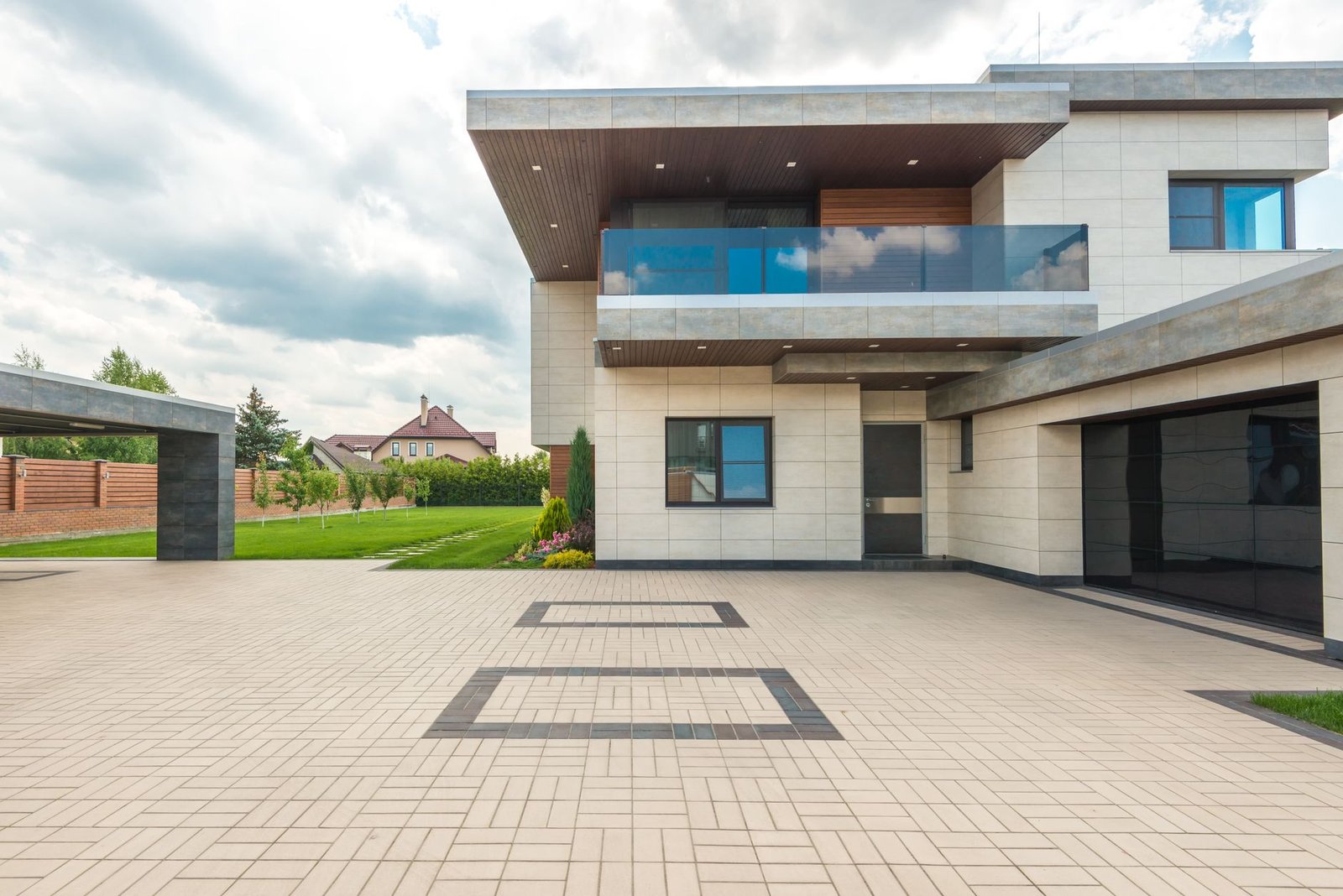
How to seal driveway pavers is the same process with three differences:
- Oil first. Treat engine oil, transmission fluid and tire marks with a degreaser before the general wash. A film sealer over an oil stain seals it in.
- Longer closure. Cars and heavy trucks stay off for 48 to 72 hours, so park on the street. Block the driveway with a barrier, not a note. Delivery drivers have been handed many notes. None has stopped one yet.
- Wheel paths wear first. On driveways the sealer usually fails where the tires run and where cars turn. A penetrating sealer wears less visibly there than a gloss film, which shows as dull tracks against shiny edges.
A film sealer rated for vehicles also resists de-icing salts. Useful in snow country, though it doesn't make de-icers harmless to the pavers.
After the last coat
Keep foot traffic off for 24 hours. Keep cars, furniture and grills off for 48 to 72 hours. Cooler or humid weather pushes both numbers toward the long end, and how long paver sealer takes to dry covers rain, temperature and those timings in detail. Keep the sprinklers off for at least a day.
After that, sweep regularly, clean up spills while they're still sitting on the surface, and run the water-drop test each spring. When drops soak in again, the sealer has worn and it's time to reseal.
Problems that show up the morning after
I read through the sealer makers' troubleshooting pages, and nearly every fault on them traces back to moisture, thickness or dirt:
- White or cloudy patches. Moisture was trapped under a film, or the sealer pooled too thick. It sometimes clears as the film cures. If it doesn't, it needs a sealer-specific fix, and heavy cases need stripping.
- Glossy puddles and roller marks. Too much product in one spot, or edges allowed to dry before overlapping.
- Dull, uneven sheen. Dirt or haze under the sealer, or a second coat skipped on a wet-look product.
- Tacky surface after a day. Cool, humid weather, or a coat that went on too heavy. Give it more time.
- Slippery when wet. A film on dense pavers, or a second coat that should have been skipped. Next time, use anti-slip grit or switch to a penetrating sealer.
Clean, dry and thin, or don't seal at all
Paver sealing is mainly preparation. The sealer does its job only on pavers that are fully settled, clean, dry and filled at the joints, and only when it goes on in thin, even coats in the right weather. Rushing any of those steps gets you haze or peeling that has to be stripped off later. If the sprayer is filled and the forecast has just gone grey, put the lid back on. The pavers have waited this long, and waiting is the one thing they're genuinely excellent at.
FAQ
Do you seal pavers before or after polymeric sand?
After. Install and activate the polymeric sand first, then let it cure. Techniseal specifies 30 days before sealing. If you'd rather not use polymeric sand, you can sweep in regular joint sand and use a sealer labelled as a joint stabilizer to bind it.
Can you seal pavers yourself?
Yes. DIY paver sealing needs only a pump sprayer, a roller, a dry forecast and patience with the prep. The things that go wrong for DIYers are sealing too soon after installation, sealing damp pavers, and applying too much sealer. Test on a hidden patch first.
Is it better to spray or roll paver sealer?
Use both. Sealer manufacturers such as Techniseal describe spraying and then back-rolling as best practice. The sprayer gives even coverage, and the roller spreads puddles and lifts excess before it dries. Rolling alone works, but it tends to put on too much in low spots.
How do you know if pavers are already sealed?
Sprinkle a few drops of water on them. If the water beads, there's still an active sealer. If it soaks in and darkens the paver within a minute or so, the surface is bare or the sealer has worn off. An unknown old coating should be stripped before you apply a different product.
Should concrete pavers be sealed right after installation?
No. Give them at least 30 days, longer if the manufacturer asks for it, and wait until any white efflorescence has cleared. Sealing brand-new pavers risks trapping moisture and salts under the sealer as a haze.