

Last Updated on October 20, 2026 by Umar Farooq
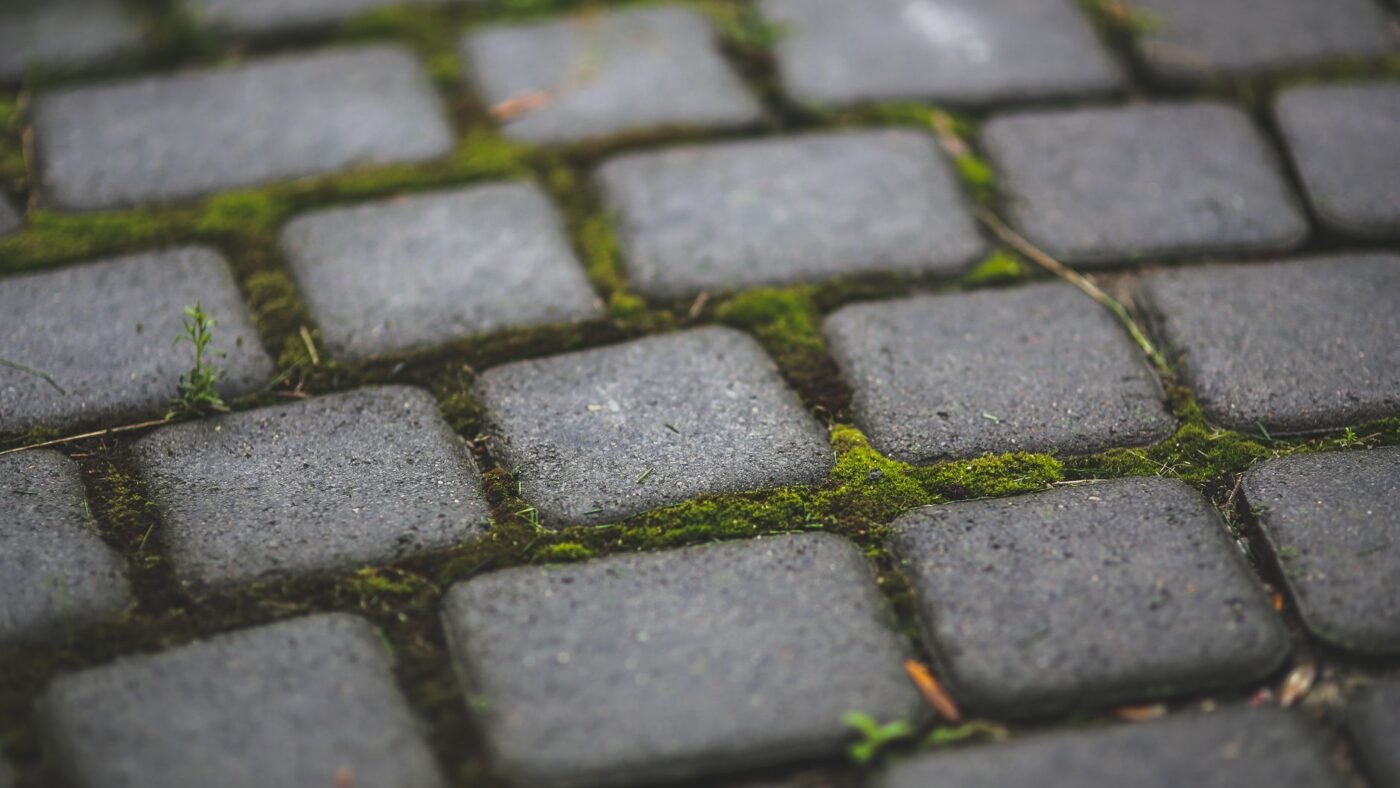
Belgian block pavers are thick, rectangular granite setts, usually 3 to 5 inches deep and 4 to 12 inches long, used for driveway edges, aprons, curbs, garden edging and, less often, whole walkways. The name is a trade label with little to do with Belgium, and the stone is tougher than anything you would normally call a paver. The catch is that it is rough to roll over and slow to lay, so it earns its place on the edge of a driveway or entry rather than across a whole patio.
I read the reference article on setts, a retailer's size table and a short explainer on the name. The pages are mostly sellers, so I flag that. For the wider cobble family, see our cobblestone pavers guide.
A sett with a geography problem
Wikipedia defines a sett, also called a block or Belgian block, as a broadly rectangular quarried stone used in paving roads and walkways, usually granite. It differs from a cobblestone, which is generally a small, naturally rounded rock. A sett has been cut or split to a regular shape.
Historic European Cobblestone calls "Belgian block" a generic term with little connection to Belgium. Its account is that 17th and 18th century ships carried heavy stone as ballast and left it in US port cities such as Boston, New York and Charleston, where it paved streets. That is one supplier's story with no second source, so treat it as plausible, not proven.
The sizes on the pallet, and what an edge costs

Sizes vary because hand-cut stone does. Historic European Cobblestone says Belgian block is typically 10 to 12 inches long. Chief Bricks lists five newly quarried granite sizes:
| Product | Listed size (in) | From |
|---|---|---|
| Jumbo | 10 x 7 x 4 | $6.50 |
| Regulation | 9 x 5 x 5 | $4.50 |
| Paver | 12 x 6 x 3 | $8.45 |
| Landscape | 8 x 4 x 4 | $4.00 |
| Cube | 4 x 4 x 4 | $2.25 |
Here is my own arithmetic, not a quote. To edge 40 feet (480 inches) with blocks laid end to end along their first listed dimension, you need about 54 regulation blocks (about $243), 48 jumbo ($312), 60 landscape ($240) or 120 cubes ($270), before joints, concrete, base and freight. A modest edge is a few hundred dollars in stone, and the labour costs more.
Where Belgian block pavers earn their place
The belgianblock.com applications page lists curbing, edging, driveways, aprons, steps and walkways. Most of that is the edge of something, which is the sensible way to use it.
Here is the one strong opinion: use Belgian block for the edge and the apron, and a flatter paver for everything inside. A driveway edge is where tires turn, snow ploughs scrape and lawns creep, so a dense granite block does a job a concrete paver struggles with. Our driveway border pavers guide covers the course beside the driveway, and our paver driveway apron guide covers the stretch at the street. For a lower raised edge, see paver curbing.
Cheaper first, as always: a poured or precast concrete curb or a restraint with a concrete haunch will hold a paver field for less (my judgment, not a priced quote). Belgian block is for when you want granite, and you are willing to pay for it.
Setting it: on concrete, not sand
I found no installation standard for Belgian block, and the product pages I opened give no steps. Our own guides say that irregular granite cobbles and Belgian block are normally set on a concrete bed because their heights vary, while rectangular concrete pavers go on a 1 inch bed of sand over a compacted base. We have a separate page on decomposed granite base for pavers if you need the specifics.
The base numbers do not change: at least 4 inches of compacted base for foot traffic and at least 6 under a residential driveway, with 2 to 4 inches more on wet or weak ground (ICPI Tech Spec 2). Each block is a different height, so expect to place, check and adjust.
Cut it wet with a diamond blade, and do not cut granite indoors. Granite throws off silica dust, and OSHA's rule for masonry saws is water on the blade every time (29 CFR 1926.1153).
The accessibility catch
The US Access Board, cited on Wikipedia, says cobblestones, Belgian block and similar surfaces can be difficult and sometimes painful to cross in a wheelchair or with a walker. If a walkway has to be accessible, put a smooth route beside the stone, or use Belgian block only where nobody rolls across it. A driveway edge is fine. The front path is not.
Spend Belgian block on the edge and leave the field to something flatter
Belgian block is worth buying where you want an edge that outlives the driveway: curbs, aprons, borders and garden edging. Choose the size by the job, set it on concrete over a compacted base, cut it wet and keep it off any route a wheelchair has to travel. For the large flat area in the middle, a concrete paver or granite tile will be kinder to feet, tires and your back. The block is the bouncer. It does not need to be the dance floor.
FAQ
What is Belgian block?
Belgian block is a rectangular quarried stone, usually granite, used for curbs, edging and paving. It is a sett rather than a cobblestone, because it has been cut or split to a regular shape. The name is a generic trade term.
Is Belgian block the same as cobblestone?
They are related but not identical. Cobblestones are generally small, naturally rounded rocks, while Belgian block is a squared, quarried stone. In the US, the words are often used loosely for the same granite setts.
How big is Belgian block?
Sizes vary. Historic European Cobblestone says typically 10 to 12 inches long, and Chief Bricks lists sizes from a 4 inch cube up to 12 x 6 x 3 inches. Hand-cut blocks differ slightly from one to the next.
Can Belgian block be used for a driveway?
Yes, and it is a traditional edge and apron material. Set it on a concrete bed over a compacted base, with at least 6 inches of base under a residential driveway. The surface is bumpy, so many people use it for the edge only.
Is Belgian block good in cold climates?
Chief Bricks says its granite resists freeze-thaw cycles, moisture and heavy loads, which fits granite's low absorption. Build the base for drainage and frost all the same.
Is Belgian block hard to walk on?
It can be. The US Access Board says cobblestones and Belgian block can be difficult and sometimes painful to cross with a wheelchair or walker, so keep it away from accessible routes.


