

Last Updated on October 20, 2026 by Umar Farooq
A bump in paver patio surfaces is not a bad paver. Something below it is pushing it up: most often a tree root, frost working on wet soil, or a high spot or lump in the base that the sand was never meant to hide. Before you touch it, measure it, note whether it comes and goes with the seasons, and see whether it lines up with a tree. Tapping it down with a mallet feels productive and fixes the symptom for about as long as it takes to put the mallet away.
Bump in paver patio: read the shape, then the calendar

Shape and timing narrow the field fast. The sketch is my own reading aid, not a published test, but each cause on it comes from a source.
| What you see | Likely cause | Where it comes from |
|---|---|---|
| A narrow ridge running toward a tree | Roots lifting the base | Unilock |
| A broad rise that shows up in cold months | Frost heave in wet, frost-prone soil | CMHA, Rochester Concrete Products |
| One high spot, paver may rock | A lump in the base or sand thicker than 1 inch | ICPI |
Measure it before you decide anything
CMHA's maintenance note describes a heave as an area higher than its surroundings, and says visual inspection is unreliable, especially for low-severity cases. A 10-foot (3 m) straightedge is the most reliable method (CMHA PAV-TEC-006). Lay it over the bump, measure the biggest gap, chalk the outline and photograph it.
ICPI caps the height difference between neighboring pavers at 1/8 inch on a pedestrian route, so anything bigger than that is a trip hazard as well as an eyesore. If it is small and the pavers are not rocking, the cheapest first step costs nothing: measure it again after the next winter and the next dry summer. My rule is that a bump you have not explained should not be dug up.
Roots: the ridge that points at a tree
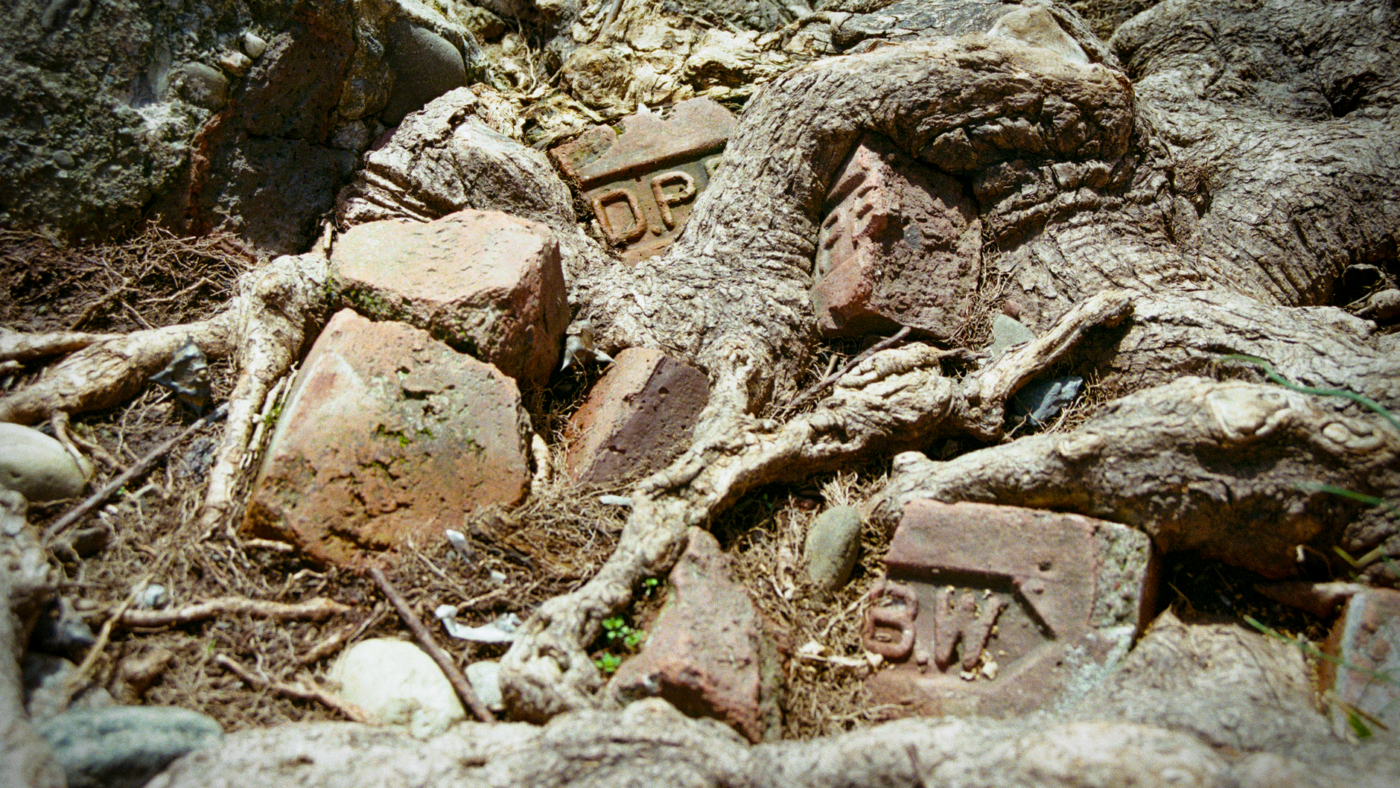
Unilock's guide says shallow roots growing under the surface are the usual cause of wavy, uneven or split paving at the joints, and that roots grow slowly but press hard enough to disturb the base and lift the paved surface (Unilock). Its repair is to lift the pavers, remove the roots, level the base and relay.
Be careful with that second step. Cutting a large root can harm or destabilize a tree, which is why our page on pavers around a tree says to talk to an arborist before cutting anything thicker than a finger. Unilock's own numbers for new work are 3 to 6 feet between an existing tree and the pavers, which is one manufacturer's figure and not a standard I could find. Lift one paver over the ridge and look. If the root is thin, a repair is a reasonable afternoon. If it is thick, stop.
Frost and water: the rise that comes and goes
CMHA says heaves are typically caused by frost heave of the underlying soils, though subgrade instability can also cause them. Rochester Concrete Products adds that frost needs three things at once: frost-susceptible soil, freezing temperatures and a water source, and it names downspouts discharging onto pavers and flat areas with no meltwater outlet as the usual red flags (Rochester Concrete Products). Remove the water source and you take one ingredient away. Our page on pavers heaving in winter walks through the repair in full, so I will not repeat it here.
CMHA's advice is to install frost-resistant subbase material if the heave is frost-related, and to consult a geotechnical engineer if it is not. That is a long way from a mallet.
A high spot that was built in
ICPI says that if the base is uneven the bedding sand should not be used to compensate, and that uneven areas on the base surface must be made even before the sand goes on. A stone, a clump of clay or a high patch in the base can show up as a single rocking paver or a small hump. One short DIY guide lists decaying roots or stumps, poor compaction and water erosion as causes of dips and bumps, and levels by adding or removing soil before a 1 inch sand bed (The DIY Life). I would not level with soil. ICPI's text is about crushed stone, compacted, under the sand, and it is the document written for pavers.
Small mounds at the joints are a different problem
A cone of sand beside a joint, with the paver still flat, is not a lifted paver. It is more likely ants or a burrowing animal than a lifted paver. See ants between pavers before you start lifting.
Lift and look, never tap it down
- Mark the bump and one row beyond it.
- Lift the pavers, stacking them in order, and strip the sand.
- Look at what is pushing: a root, an ice-wet base, a stone.
- Fix that, flatten the base with a straightedge, screed 1 inch of sand and relay slightly high, as in how to fix sunken pavers. That page covers the base and relay steps, and a bump repair is the same job in reverse.
When to stop
Hand it to a pro if the root is thick or belongs to a tree you want to keep, the bump sits beside a foundation or over a buried line, the rise keeps growing, or it is not frost-related and you cannot find a cause. Call 811 before digging near the house.
Find what is pushing before you push back
A bump in a paver patio has a cause under it. Measure it with a straightedge, read the shape and the season, and treat the root, the water or the base before the pavers go back. The pavers will go back exactly where they came out, which is the quiet advantage they have over a slab.
FAQ
Why is there a bump in my paver patio?
Something under the pavers is pushing them up. The usual causes are tree roots, frost heave in wet soil, and a high spot or lump in the base.
Will a bump in my pavers go back down by itself?
I could not find a source on whether frost heave relaxes in summer. In my reading it can ease off in warm weather and return each winter while the water and soil stay the same. A root bump does not go down, and a high spot in the base stays where it is.
Can I cut a tree root under my pavers?
Small roots, yes. A large root supports the tree, and cutting it can harm or destabilize it, so talk to an arborist first.
Can I just hammer a raised paver down?
You can push it down, but it will come back if the cause is still there. Lift it, find the cause and fix the base.
How much height difference between pavers is too much?
ICPI sets a maximum of 1/8 inch between neighboring pavers on a pedestrian route. Anything bigger should be fixed.


