
Last Updated on September 23, 2026 by Umar Farooq
Cobblestone pavers come in two very different materials, and the catalog photos go out of their way not to tell you which one you're looking at. True cobblestones are natural stone, today almost always granite, cut or split into small blocks called setts. Concrete cobblestone pavers are molded and tumbled to look old, and they install like any other paver. Granite lasts practically forever and handles freeze-thaw with ease, but it costs far more and is slower to lay. Concrete cobbles give a similar look for much less and suit most patios and driveways. For a cobblestone driveway, either works if the base underneath is built for vehicles.
Granite cobblestones: the real thing
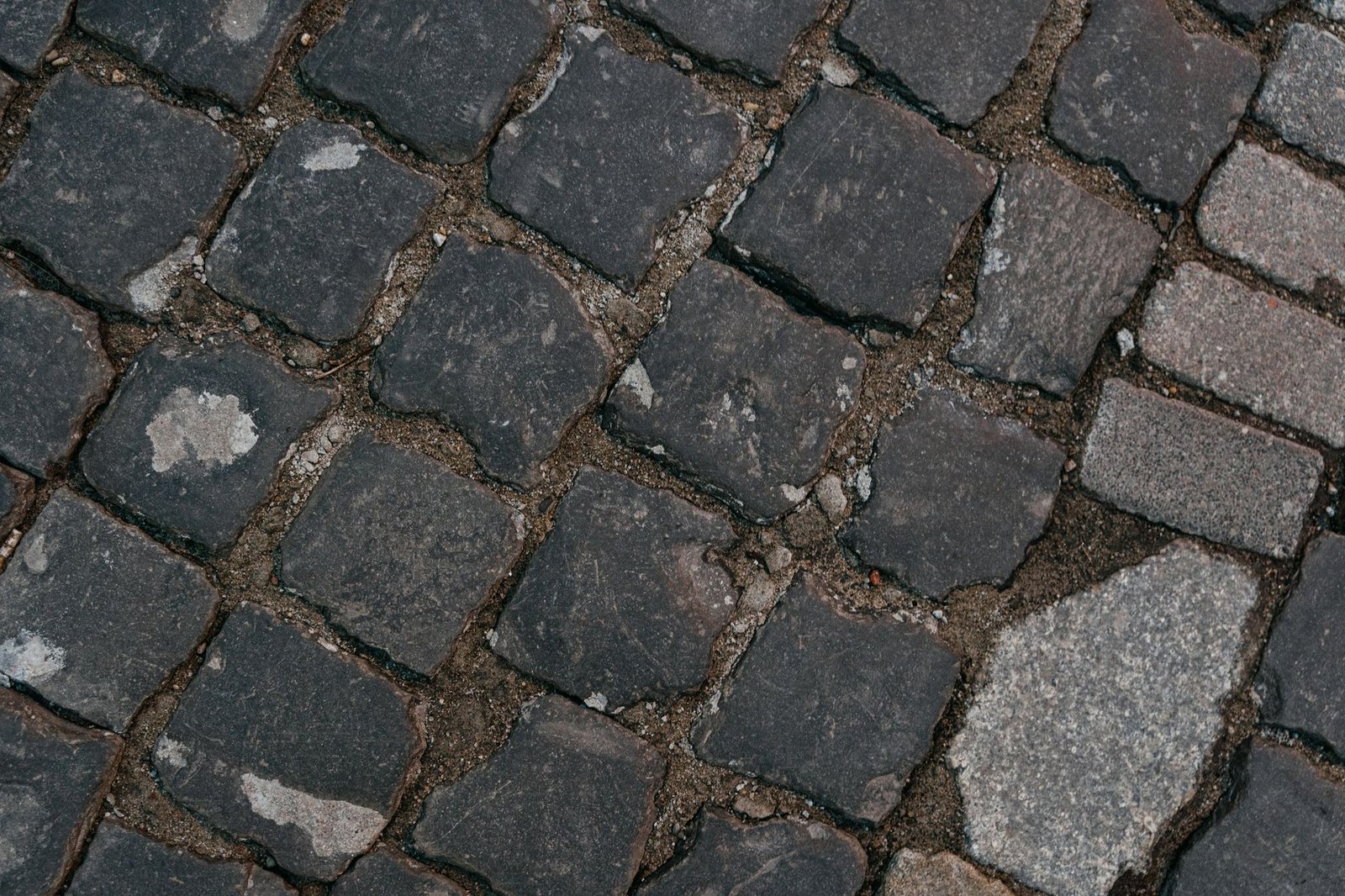
The original cobbles were rounded river stones. The "cobblestones" you buy now are mostly granite setts: roughly squared blocks with split or sawn sides and a rough or flamed top. (I spent longer than I'd like to admit on the cobble-versus-sett distinction. Nobody at the stone yard will care.) Granite is the common choice in North America. Belgian block is the related, longer granite block often set on end as curbing along driveways.
Why people pay for granite:
- Durability. Granite is one of the hardest common building stones. It resists freeze-thaw cracking and doesn't scratch or wear smooth easily, as Landscape Design Advice notes in its cobblestone driveway guide.
- Color that doesn't fade. The color is the stone itself, not a pigment in the surface.
- Traction. The split, rough faces stay grippy when wet.
- Reclaimed stock. Salvaged cobbles from old streets carry real history and usually cost more than new granite. You are paying for the horses that wore them smooth.
The trade-offs: granite cobbles are heavy, irregular and expensive, and slow to lay, because each stone varies in depth and is set one at a time.
Concrete cobblestone pavers
Most products sold as "cobblestone pavers" are concrete. Nicolock, Techo-Bloc, Mutual Materials and others make cobblestone lines: small units, often tumbled for worn edges, in multi-color blends. Some brands sell permeable versions with wider joints.
Concrete cobbles have real advantages:
- Uniform thickness. Every piece is the same height, so they go down on a standard base and screeded sand bed, and a plate compactor can bed them.
- Lower cost than new or reclaimed granite, in material and in labor.
- Consistent sizes, often in mixed-size bundles.
- Color choice. Blends can match brick or trim.
The downsides are age and wear. Landscape Design Advice points out that concrete pavers can crack and fade over time. The colored surface is usually a thin layer, so decades of tires and de-icing salt eventually expose the aggregate. A concrete cobble is sold as a patio or a driveway product, so check the thickness. CMHA Tech Spec 10 recommends 2 3/8 inches (60 mm) for patios and residential driveways and 3 1/8 inches (80 mm) for heavier vehicular pavements, and ASTM C936 asks for an average 8,000 psi either way.
How each type is laid
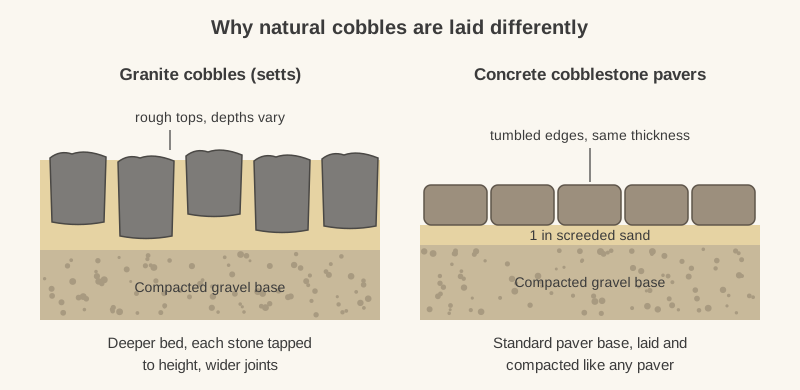
The base is the same for both: excavate, compact the subgrade, and build a compacted crushed-stone base. Historical Bricks gives 7 to 10 inches of excavation for a cobblestone driveway; other guides give 8 to 12. Measured against ICPI Tech Spec 2, that works out to a 6-inch compacted base as the driveway minimum, and 8 to 10 inches where the ground is wet, weak or freezes, before sand and stone.
Here is my one strong opinion on cobbles: compact that base in lifts, not in one go. Lift depth follows the compactor: the spec's 4 to 6 inches is written around a heavy 7,000 lbf reversible machine; anything lighter needs thinner layers. Dump eight inches and run a rental plate over the top, and you get a firm crust over loose stone that ruts under the first delivery truck.
Concrete cobblestone pavers install exactly like other interlocking pavers. Screed a loose 1-inch bed of ASTM C33 concrete sand (not stone dust), lay the units, cut the edges, compact with a padded plate, and sweep in joint sand. The full sequence for vehicle traffic is in our paver driveway installation guide.
Granite cobbles can be laid two ways:
- Dry-laid (flexible). Each sett is bedded in a deeper layer of sand or fine grit, tapped down to string lines, then compacted and joint-filled. The bed has to be thick enough to take up the stones' varying depth, and joints are wider.
- Mortar-set (rigid). The setts go into mortar on a reinforced concrete slab. It is weed-free but needs control joints, and cracked joints need repointing. See mortar paver joints for the trade-offs of rigid joints.
Both need a solid edge. Granite curbing or Belgian block set in concrete is traditional and holds up well against tires.
Is a cobblestone driveway a good idea?
Cobblestone for a driveway is one of the most durable surfaces you can build, and one of the most demanding. True Grid's cobblestone driveway pros and cons calls natural cobblestone one of the most expensive paving materials available, and notes that the sand or mortar joints need regular upkeep.
What works in its favor:
- It carries heavy loads on a proper base, and stones can be lifted and reset if something settles.
- Traction is excellent on a slope.
- It looks right on older houses in a way asphalt never will.
What to weigh up:
- Ride and walking comfort. Rough, split granite is bumpy under tires and hard on heels, strollers and wheelchairs. Sawn-top granite or tumbled concrete is much smoother.
- Snow removal. Plow blades catch on raised edges, so use a rubber-edged blade.
- Weeds and joints. Wide sand joints grow weeds unless you use polymeric sand or stabilized joints.
- Cost. A full granite driveway is a premium build.
A popular middle path is granite only at the apron or as a border, with concrete pavers or asphalt for the main area. Our guide to driveway border pavers covers the border option.
Cobblestone patterns
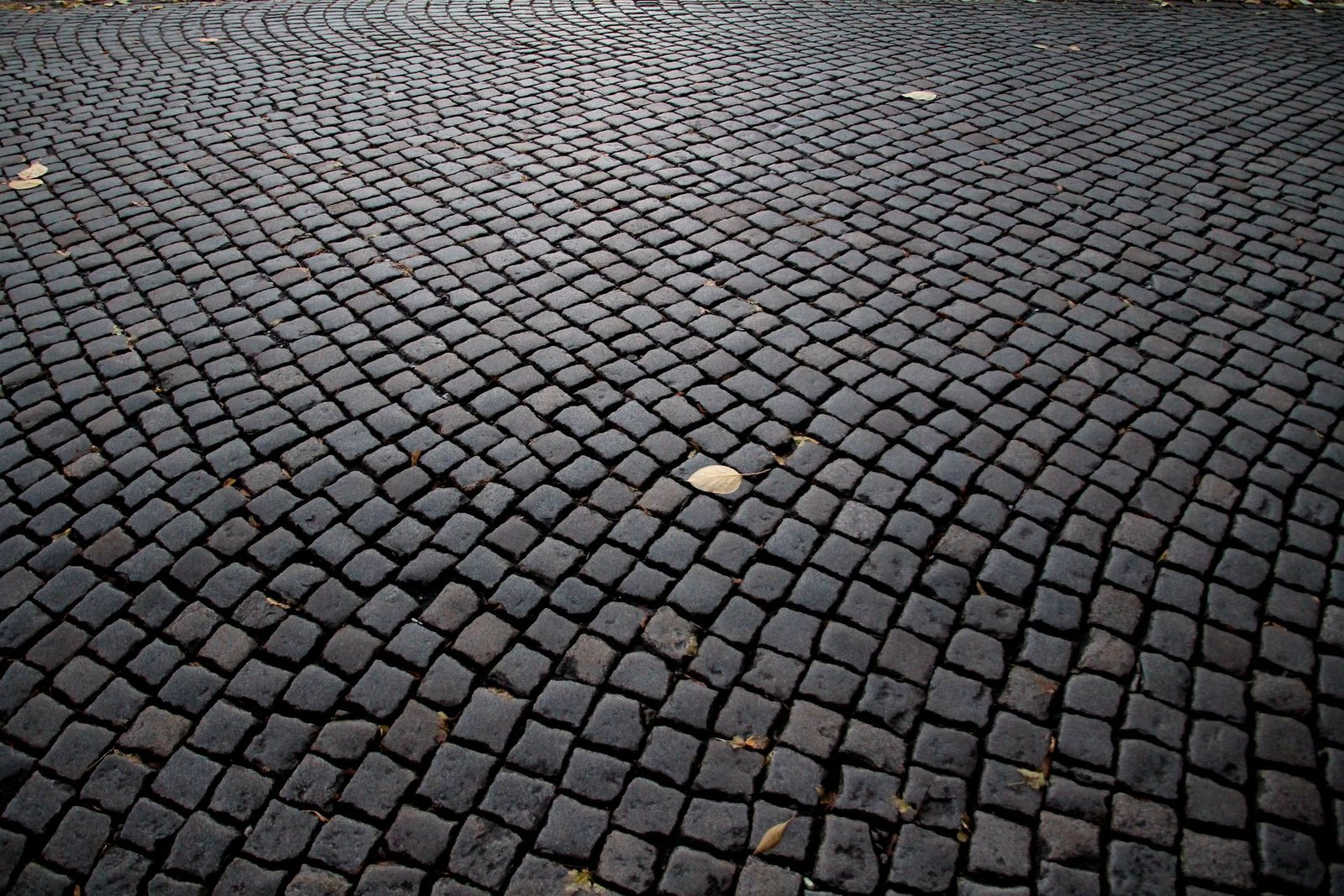
Small cobbles suit patterns that larger pavers can't manage:
- Fan or segmental arc. Rows of setts in overlapping arcs, the classic European street pattern. It looks superb and is skilled work.
- Running bond rows. Straight courses with staggered joints. It's the simplest pattern and works for concrete and granite.
- Random mixed sizes. The standard pattern for concrete cobblestone bundles, laid by mixing sizes from several bundles.
- Circles. Rings of setts radiating out from a center, often used as a feature in a patio or a turnaround.
For driveways, patterns that stagger joints both ways resist tire shove best.
Choose granite for centuries, concrete for value
Cobblestone pavers are a question of budget and patience. Real granite cobbles give a surface that outlives the house, with color that never fades, but they cost more and each stone is set by hand. Concrete cobblestone pavers give much of the same old-world look at a fraction of the effort, as long as you buy a vehicle-rated thickness for a driveway. Either way, build the base first and argue about the stone afterward; the stone is the part that forgives you.
FAQ
What is the difference between cobblestones and pavers?
Cobblestones are natural stones, today usually granite setts, cut or split to rough blocks of varying depth. Pavers are manufactured units, usually concrete or clay, made to a uniform size and thickness. "Cobblestone pavers" often means concrete pavers made to look like cobbles.
Are cobblestone driveways bumpy?
Split-face granite cobbles are noticeably rough under tires and underfoot. Sawn or flamed-top granite and tumbled concrete cobblestone pavers are much smoother, and a well-bedded surface with tight joints feels close to a standard paver driveway.
How long do cobblestone pavers last?
Granite cobbles can last for centuries; many old streets are still paved with them. Concrete cobblestone pavers last for decades on a proper base, but their surface color can fade and wear over time.
How deep should the base be for a cobblestone driveway?
Excavation is usually 7 to 12 inches, depending on the soil, the climate and the thickness of the cobbles. Most of that depth is compacted crushed stone, laid and compacted in lifts.
Can you mortar cobblestones?
Yes. Granite cobbles can be set in a mortar bed over a concrete slab with mortared joints. It gives a rigid surface with no joint sand to wash out, but it needs a sound slab, and cracked joints must be repointed over time.