Last Updated on September 23, 2026 by Umar Farooq
The right diamond blade for pavers is a segmented, laser-welded blade rated for concrete and masonry, sized to your saw, with a maximum RPM above the saw's speed. That's the whole answer for most patios, which is a little awkward for the store wall with forty blades on it. For ordinary concrete pavers a general-purpose (medium) bond works well. Granite, clay brick and porcelain need a softer bond; asphalt and fresh concrete need a harder one. If the label allows dry cutting you can run it wet or dry, but water keeps it cooler and keeps silica dust down.
How a diamond blade cuts without teeth
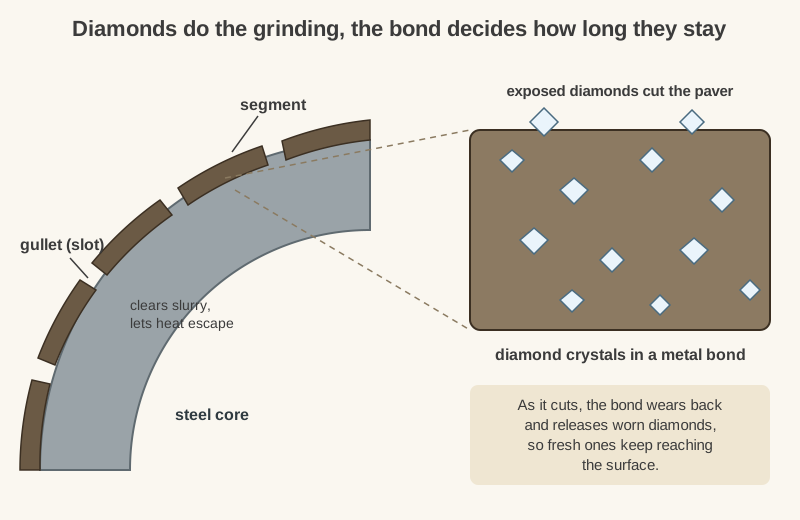
What is a diamond blade? It's a steel disc with a cutting rim made of industrial diamond crystals held in a metal matrix called the bond. It has no teeth. The exposed diamonds grind the paver away, and water or air carries the grit off as slurry or dust. (Yes, real diamonds. No, it will not impress anyone at dinner.)
The bond is meant to wear: as surface diamonds go blunt, the paver's grit wears the bond back and fresh diamonds take over. A properly matched blade sharpens itself until the rim is used up, which is more than most tools in the garage can say.
Three parts matter when you're buying:
- Steel core. A good core stays flat under heat. On segmented blades, the slots (gullets) clear slurry and let heat escape.
- Rim or segments. The diamond-and-bond cutting edge. Taller segments give more usable life.
- How the rim is attached. Laser welding survives dry-cutting heat. Sintered or brazed segments are often wet-only.
Segmented, turbo or continuous rim?
| Rim type | Looks like | Cut speed | Edge finish | Wet or dry | Best paver use |
|---|---|---|---|---|---|
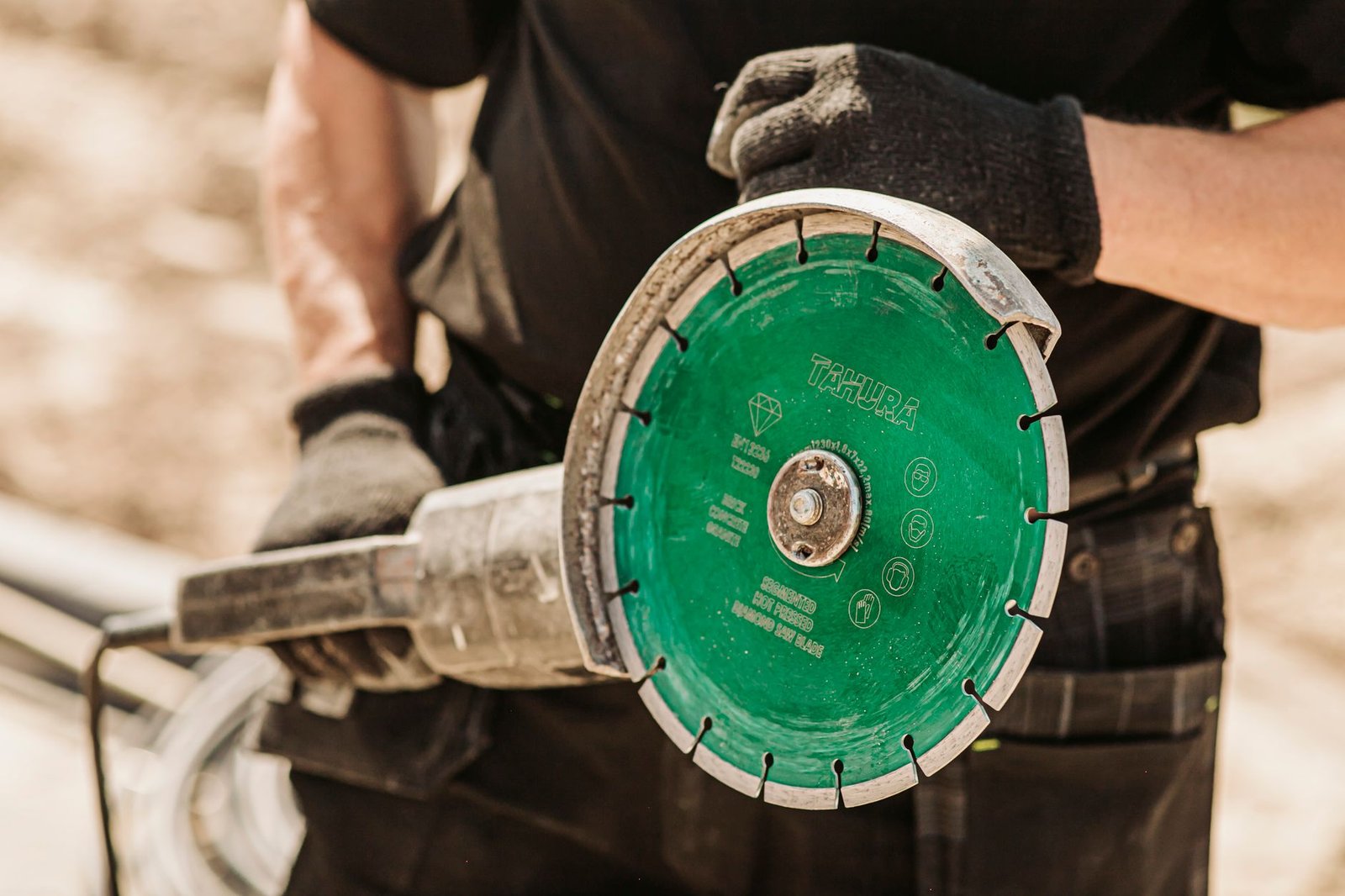
| Segmented | Separate segments with slots between them | Fast | Rougher, some chipping | Dry or wet (if laser welded) | Concrete pavers, brick, block, wall caps: the default paver cutting blade |
| Turbo | Solid rim with serrated or wavy edges | Fast | Cleaner than segmented | Usually both | Grinders and smaller saws, harder pavers, natural stone where chipping matters |
| Continuous rim | Smooth, unbroken rim | Slowest | Cleanest, least chipping | Mostly wet | Porcelain pavers, tile, delicate natural stone |
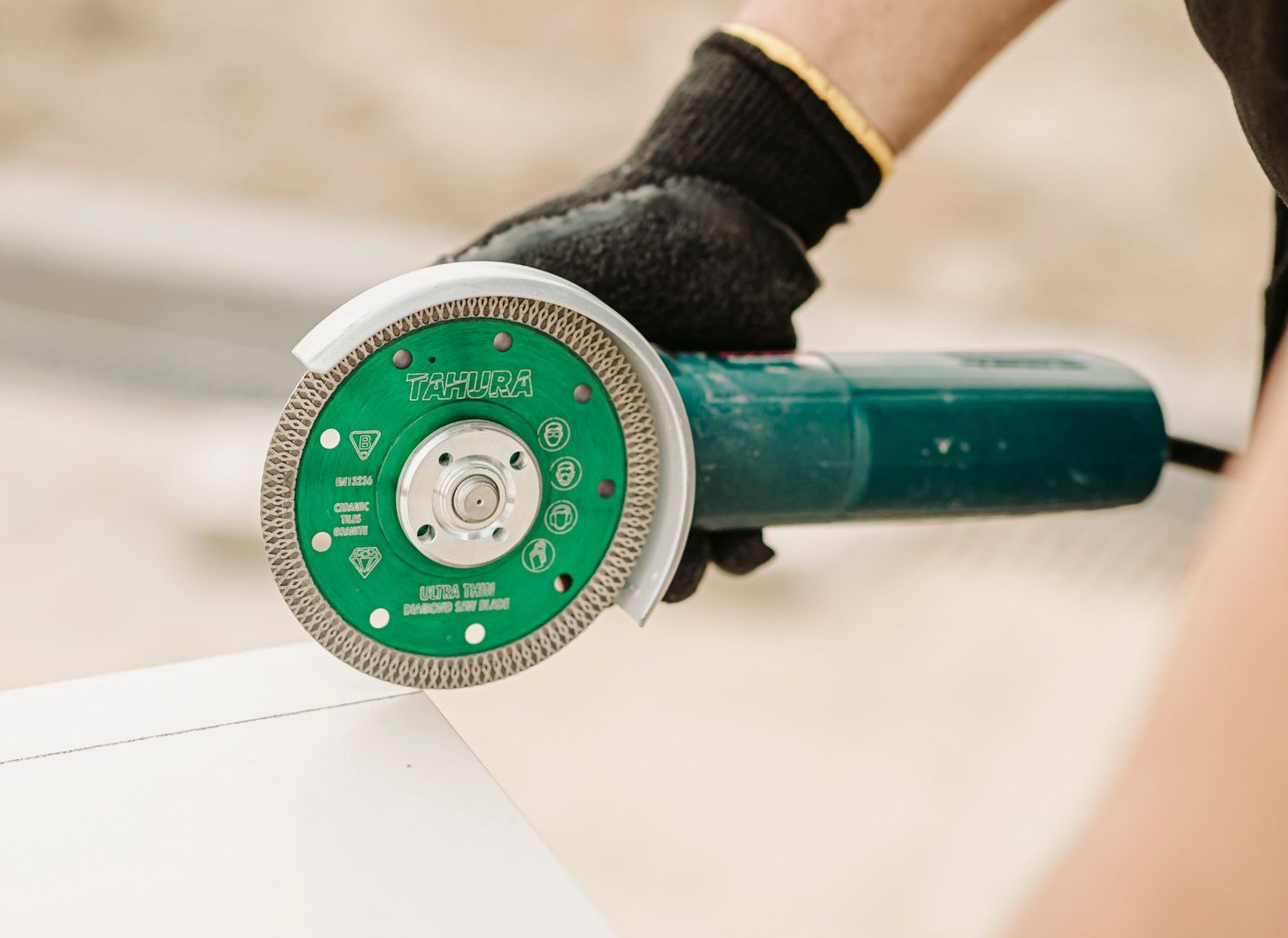
For a normal concrete paver patio, a segmented diamond blade for pavers is the right choice: the slots let air through for dry cuts, and it's fastest through a thick, gritty paver. Choose turbo for less chipping on a visible cut or on a small grinder. Save continuous rim for porcelain and thin stone, which chip at the edge of a segmented cut.
Bond hardness decides whether the blade cuts or glazes
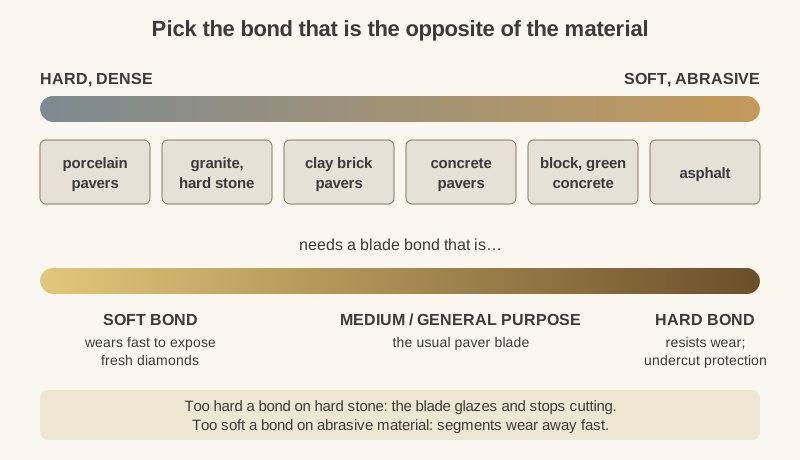
The rule sounds backwards: the bond should be the opposite of the material.
- Hard, dense material needs a soft bond. Granite and dense clay brick wear the bond slowly, so only a soft bond wears fast enough to expose fresh diamonds. A hard bond doesn't wear, so the diamonds go blunt and the blade glazes.
- Soft, abrasive material needs a hard bond. Asphalt, concrete block and green (fresh) concrete are full of loose, sharp grit that eats the bond. With a soft bond, the segments wear away quickly.
Blades Direct's explanation of diamond blade bond types lays out the same principle. I went hunting through blade packaging for an actual bond rating and mostly found a list of materials instead, so read that list. It's the manufacturer telling you the bond without using the word.
| Material | Hardness and abrasiveness | Blade to look for |
|---|---|---|
| Concrete pavers | Moderately hard, moderately abrasive | General-purpose or "paver" segmented blade, medium bond |
| Clay brick pavers | Hard, dense, less abrasive | "Hard brick" or hard-material blade, softer bond |
| Granite and other hard stone | Very hard, low abrasion | Blade sold as the best diamond blade for cutting stone or granite: soft bond, often turbo |
| Sandstone, bluestone, limestone, travertine | Softer to medium; sandstone is abrasive | General-purpose or stone blade; turbo or continuous rim for chip-free edges |
| Porcelain pavers | Very hard, brittle | Continuous-rim porcelain blade, used wet |
| Asphalt, block, green concrete | Soft and very abrasive | Asphalt or abrasive-material blade, hard bond |
If a job mixes materials, choose for the one you will cut most.
Asphalt blades and the driveway edge
A diamond blade for cutting asphalt is built differently from a paver blade, and the difference matters if you're cutting back an asphalt driveway to add pavers. Asphalt slurry is so abrasive it can wear the steel core right under the segments. Asphalt blades add undercut protection: extra segments or teardrop-shaped wear protectors near the core. They also use a hard bond so the segments don't disappear in the first few feet.
A paver blade on asphalt wears out fast; an asphalt blade on dense pavers is slow and glazes. Neither is happy doing the other's job. Use two blades, or a combo blade designed for both on a one-off driveway edge. For the thicker pavers and deeper base a driveway needs, see our paver driveway installation guide.
Wet-rated vs dry-rated blades
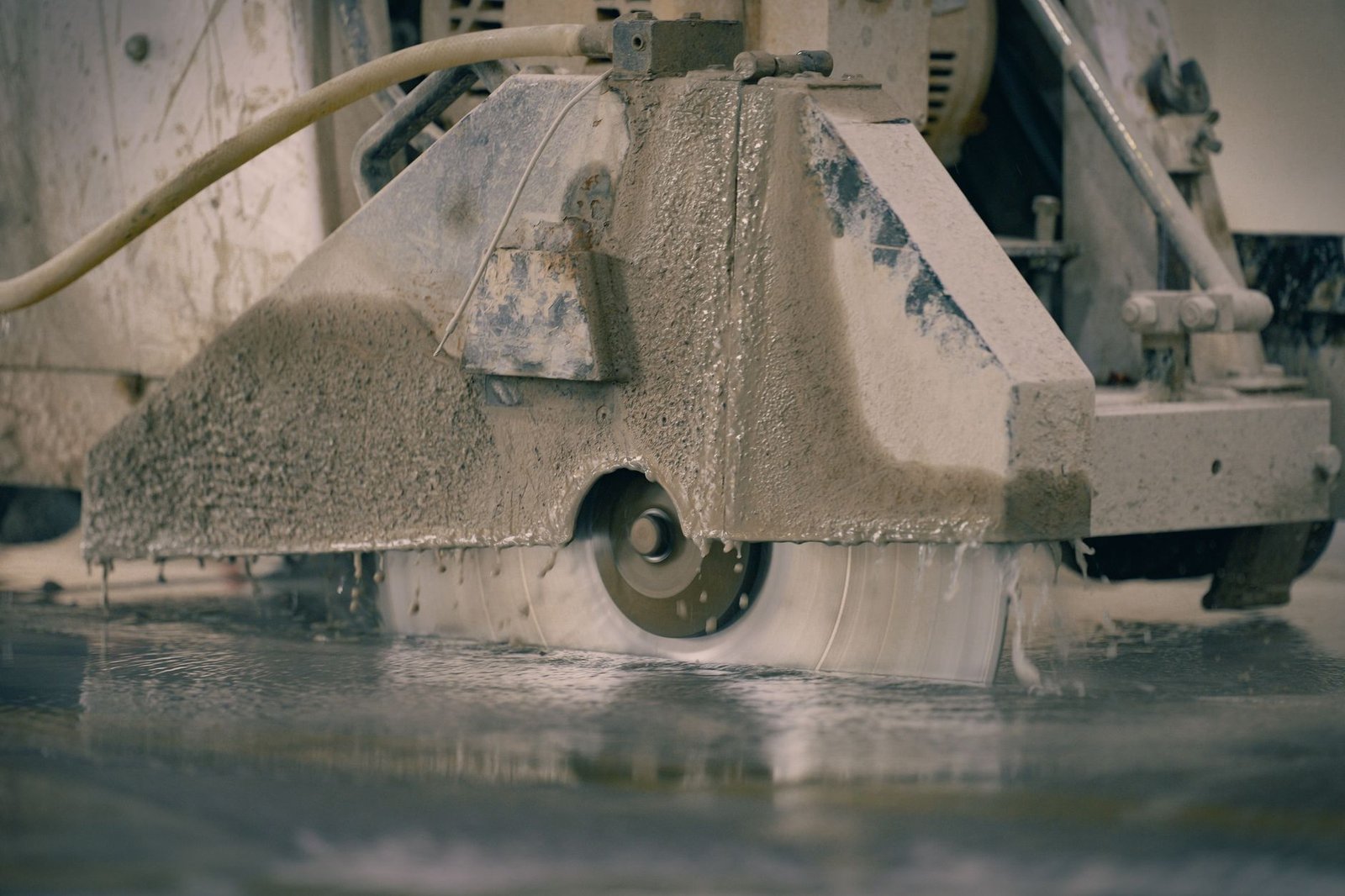
- Wet-only blades need water the whole time; running them dry overheats the rim and can loosen segments. Common on continuous-rim tile and porcelain blades and large walk-behind blades.
- Dry-rated blades (usually laser-welded segmented or turbo) can cut without water, but still last longer and run cooler with it. The standard advice for dry cutting is short bursts, backing out every so often to let the blade spin free and cool.
Pavingexpert's guide to cutting with diamond blades notes that water is a balance. Too much water can polish the blade instead of letting it wear. Too little leaves a thick paste that makes the blade stick.
Whatever the blade allows, cutting concrete pavers releases silica dust, so wet cutting is the better habit. The dust rules and saw setup are covered in our guide to the cut off saw.
Diameter, arbor and RPM: fitting the blade to the saw
Three numbers must match the tool:
| Tool | Common blade size | Common arbor |
|---|---|---|
| Small angle grinder | 4 1/2 or 5 in | 7/8 in |
| Large angle grinder | 7 or 9 in | 7/8 in |
| Battery cut off saw | 9 in (some larger) | 7/8 in |
| Wet tile saw | 7 to 10 in | 5/8 in |
| Gas cut off saw or masonry table saw | 12, 14 or 16 in | 1 in or 20 mm |
- Diameter sets the cut depth. A 4 1/2-inch blade on a grinder won't get through a 2 3/8-inch paver in one pass. A 14-inch blade clears it easily.
- Arbor must match the spindle. Many blades include a 1-inch or 20 mm bushing or knockout. Never run a loose blade.
- Maximum RPM printed on the blade must be higher than the tool's top speed. Small blades are rated much faster than large ones. I checked PaverMaster's published specs: 13,300 rpm for its 4 1/2-inch blade, 6,100 rpm for its 10-inch.
Mount it so the arrow on the blade points the way the spindle turns. A backward blade glazes fast and can lose segments.
Making a diamond blade for pavers last longer
Every product page promises blade life and none show their working: I found claims in cuts and feet, and no test behind them. Life depends on material, bond match, saw power and technique. Habits that stretch it:
- Let the saw's weight do the cutting. Pushing hard overheats the rim and can crack the core.
- Keep the cut straight. Side-loading bends the core and wears segments unevenly.
- Make shallow passes in hard or thick material instead of plunging to full depth at once.
- Use water, or back out often when cutting dry. Heat kills diamond blades.
- Keep the saw's flanges clean, and run the engine at full speed. An underpowered or bogging saw glazes blades.
Glazing is the most common complaint. The blade spins but barely cuts, sparks more than usual, and the segments look shiny and smooth, like a blade that has retired without telling you. It usually means the bond is too hard for the material or the saw is underpowered. To fix it, dress the blade: make a few cuts in something abrasive, such as a concrete block, soft brick or a dressing stone, to wear off the glazed layer and expose fresh diamonds. If it keeps happening, switch to a softer bond for that material.
Retire the blade when the segments are worn almost to the core, a segment is missing or cracked, the core is cracked or warped, or the steel shows blue heat marks. A damaged diamond blade can come apart at full speed, so don't try to squeeze out one more cut.
One segmented general-purpose blade covers most paver jobs
Buy one blade, not a set. For a standard concrete paver patio, walkway or driveway, a laser-welded, segmented, general-purpose diamond blade for pavers is all you need, because concrete pavers sit mid-scale on bond hardness. Size it to the saw, check the arbor and RPM, and cut wet when you can. Only add a second blade when the material changes: soft-bond or turbo for granite and clay brick, continuous rim for porcelain, hard bond with undercut protection for asphalt. If you're renting the saw, ask whether a blade comes with it before you buy one at all. For the saws these blades go on, see our guide to paver cutting tools. Check the arrow, open the water, and let the diamonds do the grinding. That's what you paid them for.
FAQ
What is a diamond blade used for?
Cutting hard, gritty materials that would destroy a toothed blade: concrete pavers, brick, block, natural stone, tile, porcelain, slabs and asphalt. Rim types and bonds are matched to the material.
Can you use a diamond blade dry?
Only if the blade is rated for dry cutting, usually a laser-welded segmented or turbo blade. Cut in short bursts and let it spin free to cool. Wet-only blades always need water. For concrete pavers, wet cutting also keeps silica dust down.
What is the best diamond blade for cutting stone?
For hard stone like granite, a soft-bond segmented or turbo blade labeled for granite or hard materials. For softer or chip-prone stone like travertine and limestone, a turbo or continuous-rim blade gives a cleaner edge. Using it wet improves the finish and blade life.
How long does a diamond blade last?
There's no fixed number of cuts, and I couldn't find an independent test that gives one. Matching the bond to the material, using water and never forcing the cut make the biggest difference.
Why is my diamond blade not cutting anymore?
It has probably glazed: the bond is too hard for the material, or the saw is bogging down. Dress it by making a few cuts in an abrasive material such as a concrete block, and check that it's mounted with the arrow in the direction of rotation. If it glazes again on the same material, use a softer-bond blade.