

Last Updated on October 20, 2026 by Umar Farooq
Here is how to use a concrete saw in short: mark the line, check for utilities and rebar, fit the right diamond blade and connect water, start the saw with the blade clear of the slab, let it reach full speed, then lower it into the line and score a shallow first pass. Deepen the cut about 1/2 inch per pass until you reach depth, keeping both hands on the saw, the water running and your body to the side of the cut line, never behind it. Cut outdoors if the saw is gas, and wet every time. The outdoor bar dimensions guide covers this in more depth.
That covers a handheld saw, the kind rented as a "concrete saw" or cut-off saw. The steps below explain each one and where people get hurt, because the saw is simple and the forces it produces are not.
Match the saw and blade to the slab first
Most homeowner slab cuts are made with a 14-inch handheld saw. Bob Vila's concrete cutting guide puts a 14-inch wet-cutting blade at about 4 5/8 inches of depth, against about 2 1/4 inches for a 7-inch circular saw with a masonry blade. That means:
- Slab up to about 4 1/2 inches: a 14-inch handheld saw cuts through in several passes.
- Thicker slab, or long straight cuts: a walk-behind saw is easier and straighter; see our guide to the walk behind concrete saw.
- Indoors or in a garage: an electric saw, not a gas one.
Choosing between gas, electric and battery saws, and blade diameters, is covered in our cut off saw guide. Here we assume the saw is already in your hands.
Before the engine starts: inspect, mark and clear
Ten minutes of prep prevents most of the problems.
- Inspect the blade. Look for missing segments, cracks and warping. CPWR's cut-off saw fact sheet says to test a newly mounted blade at normal operating speed for 30 seconds, guard in place, before cutting.
- Check the direction arrow. The arrow on the blade must match the rotation arrow on the guard.
- Mark the line. Snap a chalk line, then mark it again a few inches away as a reference, because slurry covers the first line within a minute. Bold marker or crayon lasts longer than chalk on wet concrete.
- Find what's inside and under the slab. Utility lines, sprinkler pipes, conduit, rebar and wire mesh. CPWR tells operators to make sure there are no gas or electric lines embedded in the cutting zone. Rebar matters for another reason, covered below.
- Support what you're cutting off. A section that sags or drops as the cut finishes closes the kerf on the blade. Block it up or cut so the free piece falls away from the saw.
- Clear the area. Sparks and debris travel. Move anything flammable, and keep people and pets well back.
- Check your clothing. Tuck in shirts, remove dangling cords and hoodies. One of CPWR's case examples involves a shirt caught in a cut-off saw blade.
Water, dust and the silica rule
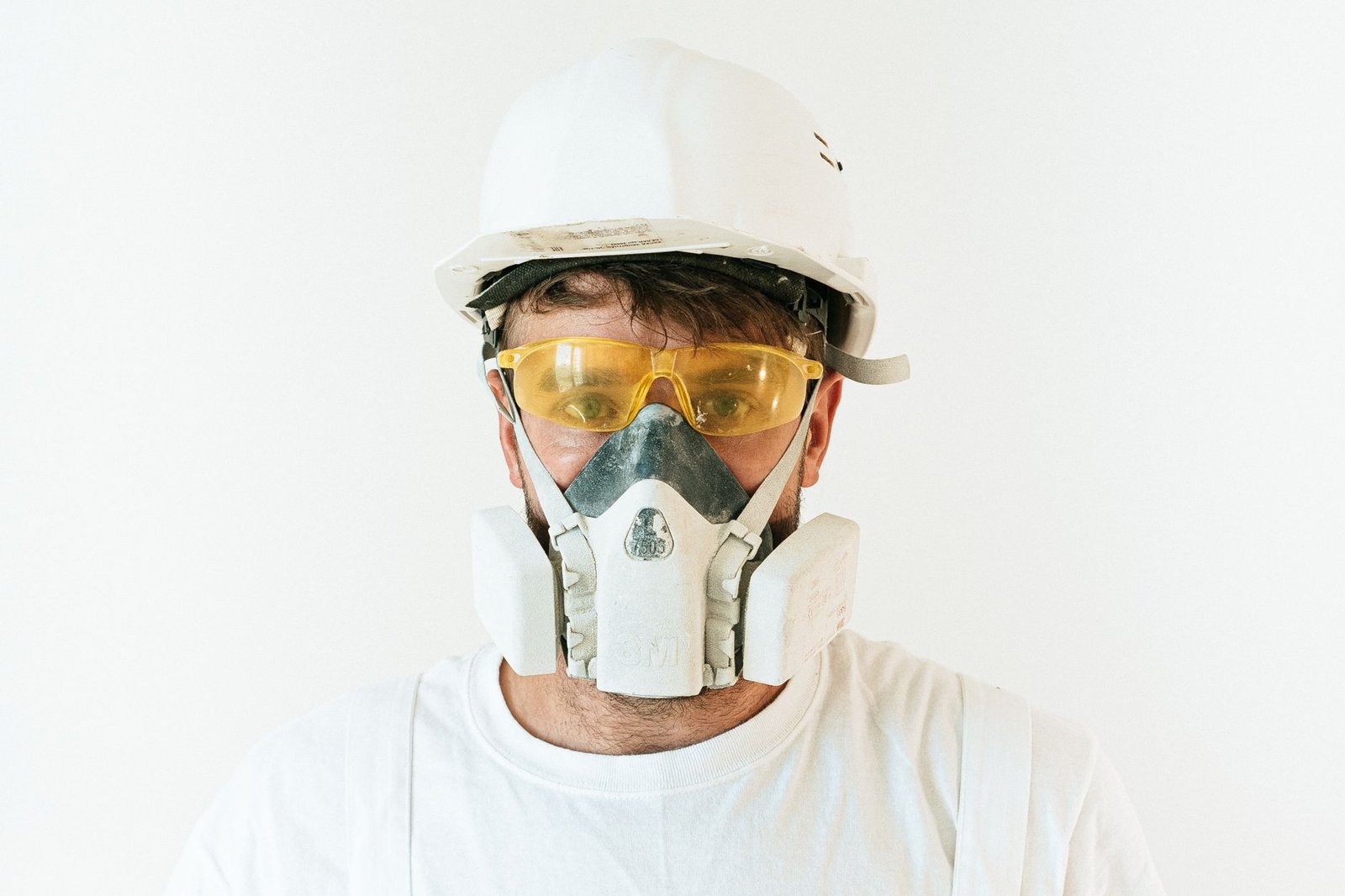
Concrete contains crystalline silica, and cutting it dry puts the respirable fraction right in your breathing zone. OSHA's silica standard for construction (29 CFR 1926.1153, Table 1) lists one control for handheld power saws cutting masonry of any blade size: a saw with an integrated water-delivery system that feeds water continuously to the blade. The Table 1 text then sets respirator levels:
| Where | Up to 4 hours a shift | Over 4 hours |
|---|---|---|
| Outdoors, water on the blade | none required | APF 10 respirator |
| Indoors or enclosed | APF 10 respirator | APF 10 respirator |
The rule is written for employers, but the lungs it protects are the same as yours. Practical setup:
- Connect the hose to the saw's water kit and open it before the blade touches the slab.
- Use enough water to turn the dust into slurry, not so much that it floods your footing.
- Wear safety glasses or goggles, hearing protection, gloves and boots; the saw is loud and the slurry is caustic.
If you are forced to cut dry for a short cut, Family Handyman suggests letting the blade cool every 30 to 45 seconds. Treat that as the exception, not the method.
Three ways the saw fights back
CPWR's fact sheet on hand-held cut-off saws describes three reactive forces, and knowing them is most of the safety training:
- Pull-away: the saw drives forward, away from you. Controlled with a firm grip and good footing.
- Climbing: the blade tries to ride up onto the surface. Same fix.
- Rotational kickback: the blade suddenly jumps up and back toward the operator. This is the dangerous one.
Kickback happens when the blade is suddenly slowed or stopped, usually by pinching or binding in the cut. CPWR also lists sideloading (twisting the blade), using the wrong tool for the material, and cutting with the upper quadrant of the blade, just under the front of the guard.
The same fact sheet records 39 severe cut-off saw kickback injuries in construction in OSHA's Severe Injury data from 2015 to 2023. One of them, in May 2020, is the most likely scenario on a residential slab: a worker cutting a section of concrete hit a rebar rod, and the saw kicked back onto his foot, leaving a laceration. Slabs hide steel. When the sound changes or the saw jumps, you have found it. The winterizing pavers guide covers this in more depth.
My one hard rule for this whole job follows from that mechanism: stand beside the cut line, never behind it. If the saw kicks back, it comes up and back along the line of the blade. With your body off that line, a kickback costs you a fright and a restart. Standing directly behind the saw, it puts a spinning blade on a path toward you.
How to use a concrete saw on a slab, pass by pass

With the line marked, water connected and the area clear:
- Take your stance. Feet apart, to the side of the cut line, both hands on the handles. Keep the cord or hose trailing away from the cut.
- Start with the blade clear. Start the saw with the blade off the slab, and let it reach full speed before it touches concrete.
- Score the line. Lower the blade gently and make a shallow first pass, about 1/2 inch deep, pulling along the line. This groove guides every pass after it.
- Deepen in steps. Bob Vila recommends increasing depth by about 1/2 inch per pass. Each pass should sound steady; if the engine bogs, you're pushing too hard.
- Keep the blade straight. Don't twist or lean the saw to steer it. Sideloading pinches the blade. If you drift off the line, back up and re-enter the kerf slowly rather than bending the cut.
- Re-enter carefully. CPWR singles out re-entering a cut as a moment for extreme caution. Let the blade reach full speed before it touches the existing kerf.
- Watch the kerf as you finish. If the cut begins to close, stop, support the piece, and continue.
- Release and let it stop. Lift the blade out, release the throttle and keep both hands on the saw until the blade has stopped spinning.
(A saw that sounds strained is giving you the most useful feedback you'll get all day. It is also free.)
On a 4-inch slab with a 14-inch blade, expect several passes along the full length. For a slab thicker than the blade reaches, cut from the top as deep as possible and break the rest out, or turn the piece and finish from the other side if it's small enough.
Flush cuts, corners and tight spots
A handheld saw can cut closer to a wall than a walk-behind, but not all the way. The guard and flange keep the blade a small distance from the wall, and the blade's curve leaves an uncut wedge at the bottom of any cut that ends against an obstruction.
- At a wall: cut as close as the guard allows, then finish the last strip with a chisel and hammer, or with a flush-cutting saw if you have many such edges.
- Inside corners: the round blade overcuts on top before it reaches full depth at the corner. Stop short and finish with a chisel, or accept a small overcut in a spot that will be covered.
- Overhead or on a ladder: don't. CPWR's guidance is explicit, because a kickback at height means losing control of the saw and a fall at the same time.
Breaking out the concrete after the cut
Once the line is cut, the rest is demolition.
- Bob Vila suggests staying 1 to 2 inches away from the cut line when swinging a sledgehammer, so you don't chip the edge you want to keep.
- Break from the side being removed toward the cut, so the crack runs to the kerf.
- Pry pieces up with a digging bar and remove them before breaking the next section.
- Rinse the slurry off anything you want to keep clean before it dries.
If pavers are going where the slab was, the base underneath the old concrete is rarely what a paver patio needs. Plan to dig out and rebuild it rather than laying on what's left.
Where not to run a gas concrete saw
Gas cut-off saws produce carbon monoxide. CPWR's sheet notes it can accumulate in basements and other enclosed work areas and lists switching to electric or pneumatic saws and proper ventilation as the prevention. For a homeowner that simply means: garage floor, basement slab, enclosed porch or any room with walls and a roof gets an electric saw. Also let a gas saw cool before refueling, and fuel it away from the cutting area.
Cutting pavers themselves is a slightly different job, usually done with the same saw on a stable support. That technique is covered in how to cut pavers.
Score it, step it, stand aside
How to use a concrete saw comes down to a short list: prepare the slab and the blade, run water the whole time, score a shallow line and deepen it in steps, never twist the blade, and keep yourself off the line the blade would travel in a kickback. Work outdoors with gas, indoors only with electric. The cut is the easy part to watch; your stance is the part worth thinking about before you pull the cord.
FAQ
How deep should each pass be with a concrete saw?
About 1/2 inch per pass. Score the line with a shallow first pass, then lower the blade in steps until you reach full depth. Forcing a deep cut in one pass overloads the saw and raises the risk of binding and kickback.
Should you cut concrete wet or dry?
Wet. OSHA's silica standard lists water fed continuously to the blade as the control for handheld saws cutting masonry. Water keeps silica dust down and cools the blade. Dry cutting should be limited to very short cuts, with rests to cool the blade.
What causes concrete saw kickback?
The blade being suddenly slowed or stopped, usually by pinching or binding in the cut, hitting rebar, twisting the saw sideways, or cutting with the upper front quadrant of the blade. Stand to the side of the cut line so a kickback misses you.
Can you cut through rebar with a concrete saw?
A diamond blade made for reinforced concrete will cut through it, but hitting rebar unexpectedly can make the saw jump. Slow down when the sound changes, keep a firm two-handed grip, and use a blade rated for reinforced concrete.
How thick a slab can a handheld concrete saw cut?
A 14-inch blade reaches about 4 5/8 inches. For thicker slabs, cut as deep as the blade reaches and break out the rest, or rent a walk-behind saw with a larger blade.


