

Last Updated on October 20, 2026 by Umar Farooq
Winterizing pavers comes down to six chores that you finish before the ground freezes: send water away from the patio, clear the surface, reset anything loose, refill the joint sand, seal only if the sealer is actually due, and decide how you will clear snow. Do them in that order on a dry weekend in fall. None needs special tools, and most cost nothing.
I read four winterizing guides from paver makers and installers. They agree on the chores and quietly disagree on one thing, sealing. First, the part that gets the least attention and does the most good.
Winterizing pavers starts with sending the water somewhere else
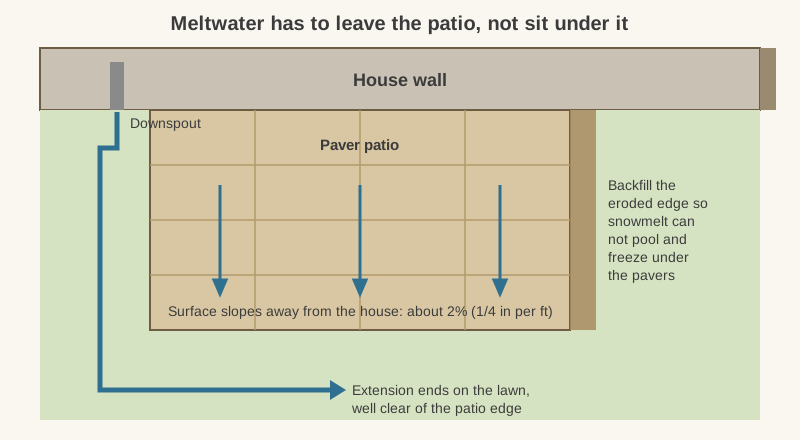
Water is what freezes, so water is what you manage. Belgard's winterizing advice is to look at where your gutter downspout empties during the next rain, because water on pavers can turn to ice and damage pavers or joints. A downspout extension that ends on the lawn is the fix. Oldcastle APG goes further and calls standing water a leading cause of frost heave.
Check three things with a garden hose:
- The downspout. Run water through it and watch where it lands.
- The surface. The IRC model code asks for at least 2% slope away from the house on hard surfaces within 10 feet of the foundation (IRC R401.3), about 1/4 inch per foot. Check your local code. Pour water on the patio and see whether it runs off or sits.
- The edges. Pavestone says to backfill eroded patio edges so snowmelt cannot pool and freeze under the pavers. Topsoil does it.
If a low spot holds water, that is a base problem, and patio drainage covers the options.
Clear the surface and move the heavy things
Sweep off sticks, wet leaves and pine needles. Belgard says organic debris can stain pavers if left, and Pavestone says trapped moisture under debris can expand in freeze-thaw cycles. Then clear what sits on the pavers: heavy furniture, planters and big pots can leave rings, stains and sunken spots in wet or freezing weather (Belgard).
Stack or store furniture. If it has to stay out, APG suggests breathable covers and lifting the legs off the surface on wooden blocks for airflow. Bring terracotta planters in, since they crack in the cold (Pavestone).
Walk the patio and fix what is loose now
Walk it slowly, looking for rocking units, cracked pavers, uneven spots and empty joints. APG and Western Interlock both make the same argument: a few repairs now are cheaper than the same repairs plus frost damage in spring. A single loose paver is an easy fix in October and a bigger one after a thaw.
Refill the joints while the weather still allows it
Empty joints let water into the bedding sand, and that is where frost works on the patio. Polymeric sand has a temperature floor: Techniseal's HP NextGel data sheet asks for above 32°F for 48 hours, and Alliance Gator's SuperSand G2 asks for above 32°F as well. Rain limits are tighter, from 15 minutes for G2 to 60 minutes for NextGel. So fall is a window, not a season.
Pick a stretch of dry days, refill only the joints that lost sand, and follow your bag. If you already missed the window, plain joint sand is better than empty joints, and you can redo it in spring.
Sealing before winter: only if it is already due
All four guides I read tell you to seal before winter: clean, dry, then a sealer to keep out water, ice and salt. Unilock's spring guide, by contrast, calls sealing optional on its own pavers. Belgard says to seal every three years, which means in any given fall most patios are not due.
My view: winterizing is not a reason to seal. Do the water test first. If drops bead, you are protected. If they soak in and the weather allows it, go ahead. The weather is the catch. Techniseal's natural-look sealer needs 50 to 85°F on the day and for the next 24 hours, with no rain forecast, and Alliance Gator's wet look sealer needs 60 to 85°F after 48 hours of dry conditions. In a lot of northern states those conditions are gone by November (my reading of those ranges, not a manufacturer claim). A rushed coat on damp pavers is worse than none. The full reseal cycle is in how often should pavers be sealed.
Decide the snow plan before the snow
Buy the plastic shovel now, while the shelves are full. Metal blades scratch and chip pavers (Belgard, APG). Then settle the de-icer question, which the experts do not agree on: Belgard and APG say to avoid rock salt, while the trade association CMHA says rock salt is the least damaging option for concrete. Salt on pavers sets out the sources side by side, and snow removal on pavers covers shovels, blowers and what to tell a plow driver. If your patio sits in a freezing climate, pavers in cold climates goes deeper on base, slope and joint design.
Finish before the ground freezes, and skip the sealer if water beads
Winterizing pavers is a few unglamorous hours: water away, surface clear, loose units reset, joints full, a sealer only when the drip test asks for one, a plastic shovel by the door. The patio will not thank you, but it also will not heave a corner in March and blame you for it.
FAQ
Do pavers need to be winterized?
Not in a strict sense, since pavers are built to take freeze and thaw. But a few fall chores reduce winter damage: moving water away, clearing debris, fixing loose units and filling empty joints. Sealing is optional.
Should I seal pavers before winter?
Only if the sealer is due and the weather allows it. Belgard recommends sealing every three years, and the sealer data sheets I opened need 50 to 85°F or 60 to 85°F plus dry days. If water beads on your pavers, they do not need it yet.
When should I winterize my pavers?
Before the first hard freeze, on a dry stretch of days. Polymeric sand needs temperatures above 32°F for 48 hours, and sealers need warmer, so aim for early fall.
Can I leave patio furniture on pavers over winter?
Heavy furniture can leave rings and stains and press into the surface in wet or freezing weather, according to Belgard. Store it, or cover it with breathable covers and lift the legs on wooden blocks.


