Last Updated on September 23, 2026 by Umar Farooq
Good patio drainage comes from slope first and hardware second, which is bad news for anyone hoping to solve it with one trip down the drain aisle. Pitch the patio surface at least 1.5% (about 3/16 inch per foot), and ideally 1/4 inch per foot, away from the house. Grade the soil so water keeps moving, and pipe downspouts past the patio. Add a drain only where slope alone can't get the water out, such as a patio boxed in by walls or sitting below the yard.
Water is patient. It will find the one spot where the patio is a quarter inch low and hold a meeting there every time it rains. For a drain inside a paver surface, including grate height, see our guide to paver drains.
Where the water on a patio comes from
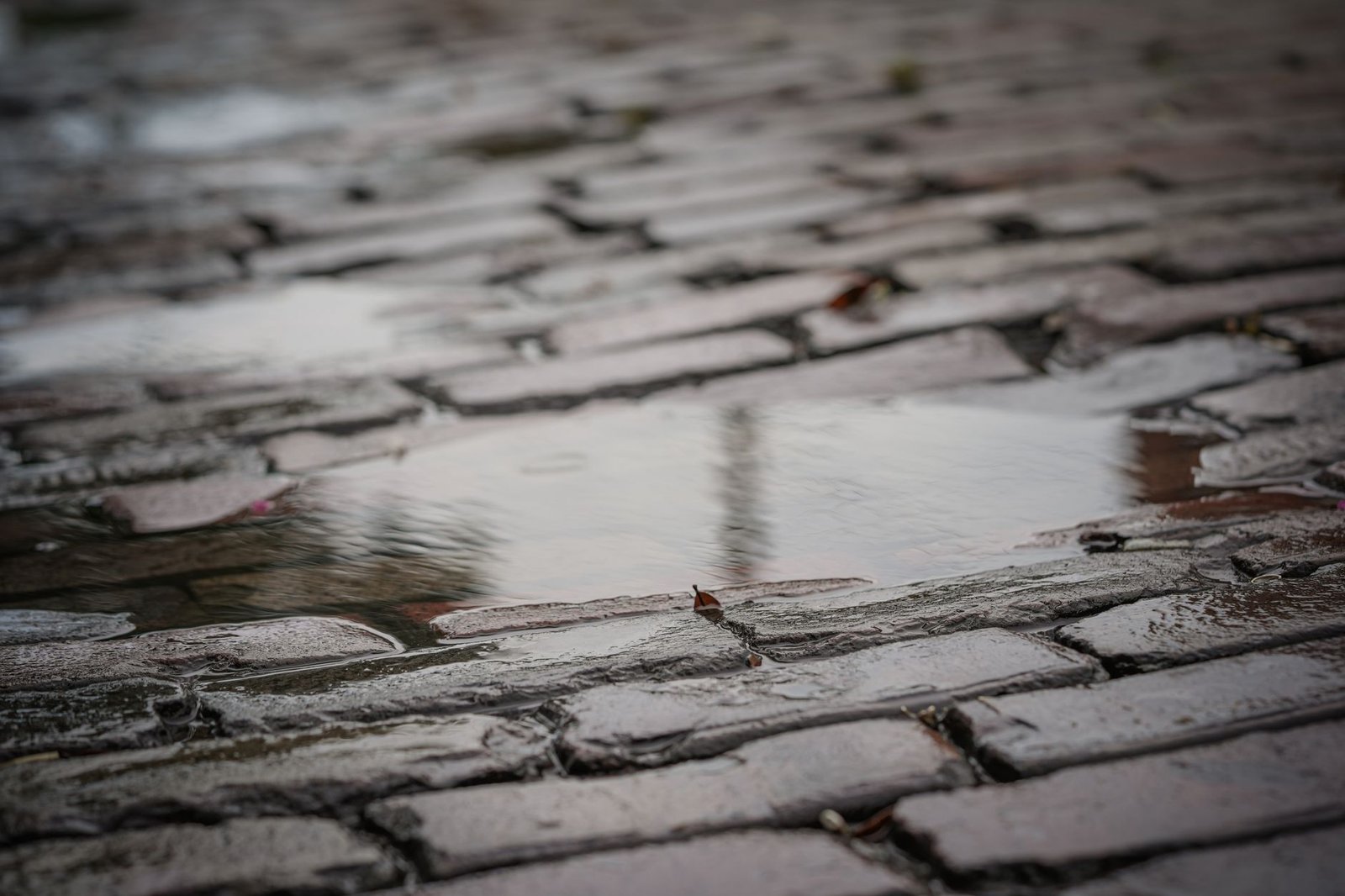
Identify the source first:
- Rain falling on the patio itself. The smallest volume; slope handles it.
- Roof water from downspouts. Often the biggest source by far. A 1-inch rain on 1,000 square feet of roof is about 620 gallons, all of it leaving through a few downspouts, usually aimed at the corner you care about most.
- Runoff from higher ground. If the yard slopes toward the patio, the fix is upstream of the patio, not on it.
- Groundwater. A high water table or spring shows up as soft ground even in dry spells. That calls for subsurface drainage, sometimes a professional.
The warning signs: puddles that sit for hours, moss in one area, joint sand washed out along one edge, sunken pavers at the low side, or a damp basement wall. Run a hose on the patio for ten minutes on a dry day and watch where the water goes. (It is the cheapest diagnostic tool in this article, and the neighbours will assume you're very thorough about rinsing.)
Build paver patio drainage into the slope
Every patio needs a fall, even if it looks flat. I traced the popular "1/4 inch per foot" back through a dozen patio guides, and the firmest anchor I found is the building code's 2% near the house, which works out to roughly a quarter inch per foot. ICPI Tech Spec 2 sets the floor for a paver surface at 1.5%, roughly 3/16 inch per foot, so treat that as the minimum. How to Hardscape's guide to paver patio slope agrees: the full 1/4 inch for textured pavers or heavy runoff.
| Patio depth (house to far edge) | Fall at 1.5% (about 3/16 in per ft) | Fall at 1/4 in per ft |
|---|---|---|
| 8 ft | 1 1/2 in | 2 in |
| 12 ft | 2 1/4 in | 3 in |
| 16 ft | 3 in | 4 in |
| 20 ft | 3 3/4 in | 5 in |
I have read IRC Section R401.3 more times than a person should: impervious surfaces within 10 feet of a foundation must slope at least 2% away from the building. Treat the patio as impervious, and ask your local building department, because adoption varies.
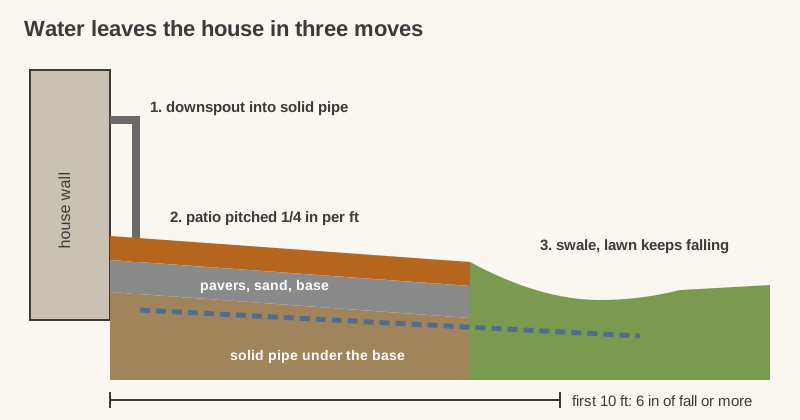
The slope lives in the base, not the bedding sand. Shape it into the subgrade, carry it through every lift of gravel, and keep the 1-inch layer of loose ASTM C33 sand the same thickness everywhere. Sand thickened at one end to fake a slope compresses unevenly, and by the second spring the puddle has found the thick end.
Pick the direction deliberately. If the far edge drains toward a neighbor, a fence or a flower bed, pitch the patio to one side, or split it so both halves fall toward a drain line.
Grading the yard so the water keeps going
A pitched patio only moves water to its edge; the ground beyond does the rest.
The same code section wants the ground to fall at least 6 inches within the first 10 feet, or drains and swales where a lot line or hill makes that impossible. Apply the same idea around a patio:
- Keep the lawn lower than the patio edge. Set the finished pavers about 1/2 inch above the adjacent turf, so water can leave the patio and isn't dammed by the grass. Lawns creep upward over the years, and they never ask.
- Cut a swale on the uphill side. A shallow, grassed swale along the high edge carries runoff around the patio.
- Don't trap water against the house. A patio higher than the soil can create a bathtub against the foundation. Pavers against the house must meet it below the siding and weep holes and fall away from it.
- Give the water a destination. A swale or pipe needs an outlet: lower ground on your own lot, a dry well, a rain garden, or a storm connection where your town allows it.
On a real grade change, see paver patio on a slope for cut and fill, terraces and walls.
Downspouts are usually the real problem
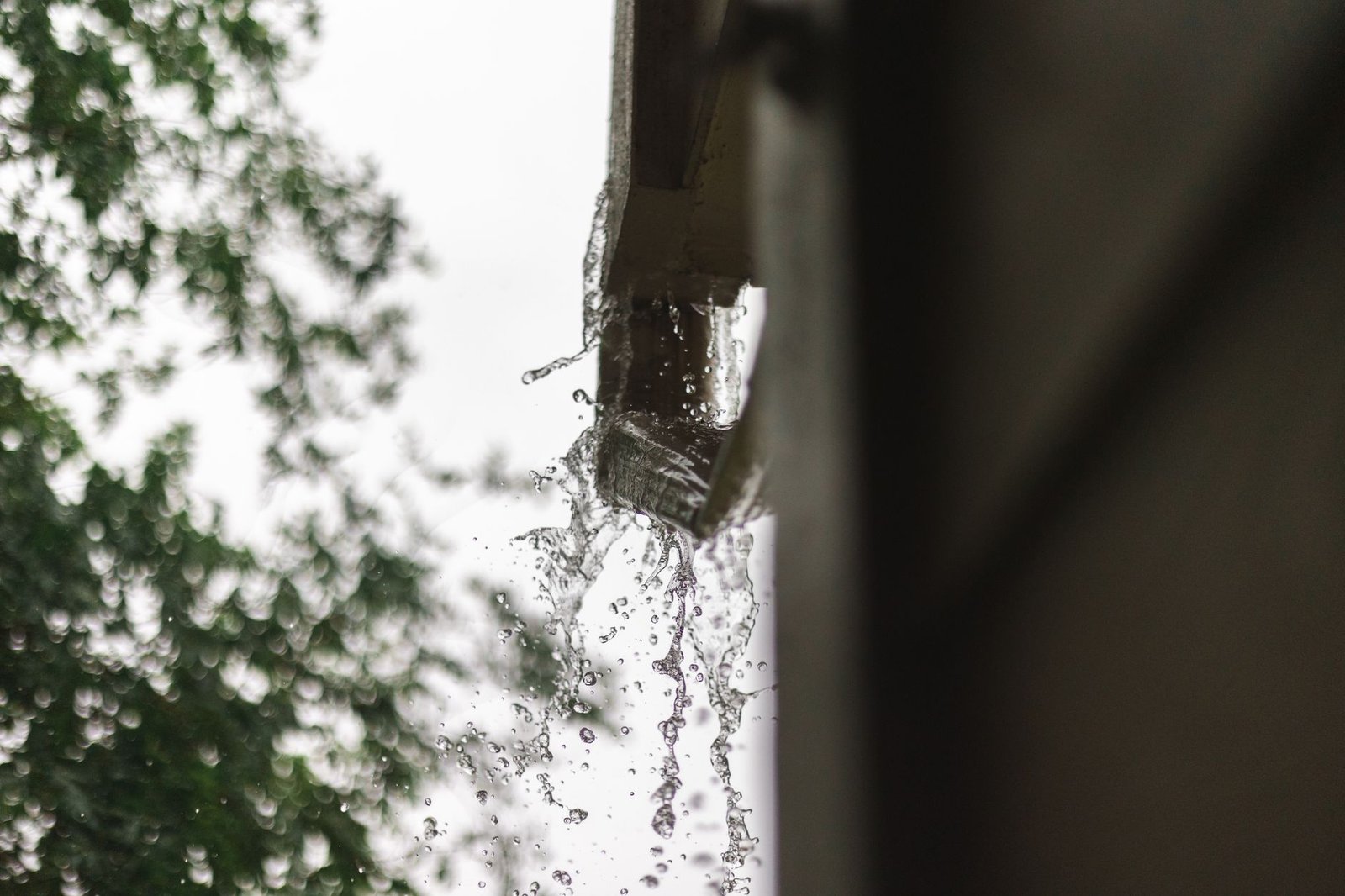
If one corner of your patio floods every storm, look up. A downspout emptying onto or beside the pavers washes out joint and bedding sand, and nearby pavers sink.
Here is the opinion I'll defend: fix the cheapest thing first, and on a patio that is almost always the downspout. A plastic extension costs less than one drain grate, and it removes hundreds of gallons per storm at the source, while a channel drain only catches that water after it has crossed your pavers. From simplest to most involved:
- Extend it past the patio. An extension discharging onto lawn well beyond the edge solves many problems.
- Run it under the patio in solid pipe. For a new patio, the cleanest answer. Lay 3- or 4-inch solid (not perforated) PVC in a trench below the base, pitched to an outlet, before any gravel goes down, and end it at a pop-up emitter, a dry well or daylight.
- Send it to a dry well or rain garden. For soil that absorbs water and no lower ground to drain to.
Never tie a downspout into a perforated French drain pipe beside the house. It releases roof water right where you are trying to keep the ground dry, which is a bit like fixing a leak by moving the bucket closer.
Patio drainage options compared
When slope and grading aren't enough:
| Option | What it does | Best for | Watch out for |
|---|---|---|---|
| Channel (trench) drain | Catches surface water in a grated channel and pipes it away | Patios that can't fall away from the house, such as a patio against a wall or at a garage door | Needs an outlet lower than the channel; grate must sit just below the pavers |
| Catch basin or point drain | Collects water at one low point | Courtyards and patios enclosed on all sides | The surface has to be warped toward the point, which means more cuts |
| French drain | Gravel trench with perforated pipe that intercepts water in the soil | Soggy ground along the uphill edge of a patio | Carries water in the ground, not surface sheets; needs fall and an outlet |
| Dry well | Underground chamber or stone pit that lets water soak in slowly | Downspout and drain outlets where there's no lower ground | Useless in heavy clay or with a high water table |
| Permeable pavers | Lets rain pass through wide joints into an open-graded stone base | New patios on reasonably draining soil | Different base, more stone, higher cost |
The key distinction: channel drains and catch basins collect surface water, French drains collect water moving through the soil, and dry wells are a destination, not a collector. Most patio drainage systems pair a collector with a dry well or daylight outlet. I compared a pile of drain product pages for this, and most go quiet on the part where the pipe needs somewhere lower to go.
Permeable pavers: letting the patio drain itself
Permeable pavers let water through instead of shedding it. The pavers have wider joints, filled with small washed chip stone instead of sand. Underneath, CMHA's permeable spec calls for 2 inches of No. 8 stone bedding over 4 inches of No. 57 base, over a No. 2 subbase, all without fines, so the stone holds water in its voids and lets it soak into the soil below. A permeable patio still gets a slight surface slope as a backup, but in normal rain the water just vanishes.
It suits patios that can't be pitched anywhere useful, and towns that limit impervious surface. On heavy clay it needs a perforated underdrain and becomes an engineered project. Choose it before you dig, because the base is completely different and deeper.
Fixing drainage on an existing paver patio
Not every patio needs to come up, whatever the quote in your inbox says. Match the fix to the hose test:
- Water pools in one low spot. The base settled or was never sloped properly there. Lift that section, correct the base, and relay it. Re-leveling the sand alone won't last.
- The whole patio falls toward the house. Rebuild the base or cut a channel drain along the house side. The drain is usually faster; the rebuild is usually better.
- Water runs onto the patio from the yard. Regrade the lawn or cut a swale above the patio.
- One corner floods in storms. Check the nearest downspout before you do anything else.
Because pavers are individual units, you can lift a strip, add a drain or fix the base, and relay the same pavers. A poured slab doesn't offer that.
Pitch it first, pipe it second
Most patio drainage problems are solved before the first paver goes down. Build a 1/4-inch-per-foot fall into the base, keep the ground beyond the patio falling, and get the downspouts off the pavers. Add hardware only where the site leaves no other way out. A drain installed to make up for a patio that was never sloped is fighting the patio for the rest of its life. So go run the hose, see where the water wants to go, and then give it somewhere better to be.
FAQ
How do I get water to drain off my patio?
Make sure the surface falls at least 1.5% (about 3/16 inch per foot), and ideally 1/4 inch per foot, away from the house, and that the ground beyond the patio keeps falling. Redirect any downspouts that discharge onto or beside the pavers. If the patio still holds water, add a channel drain at the low edge and pipe it to lower ground or a dry well.
What is the best drainage for a paver patio?
Correct slope in the base is the best drainage, and nearly free if built in from the start. After that, the best add-on depends on the problem: a channel drain for surface water that can't run off the edge, a French drain for wet soil on the uphill side, and permeable pavers for new patios where you want the water to soak in.
Do paver patios drain through the joints?
A little. Sand-filled joints let some through, especially when new, but most rain runs off the surface. Polymeric sand reduces joint drainage further. Only permeable pavers, with wide chip-stone joints and an open-graded base, are designed to drain through the joints.
How much slope does a patio need for drainage?
Aim for 1/4 inch per foot, about a 2% slope, which matches the IRC's rule near the house. A 12-foot-deep patio drops about 3 inches from the house to the far edge. ICPI's minimum for a paver surface is 1.5%, about 3/16 inch per foot.