Last Updated on September 23, 2026 by Umar Farooq
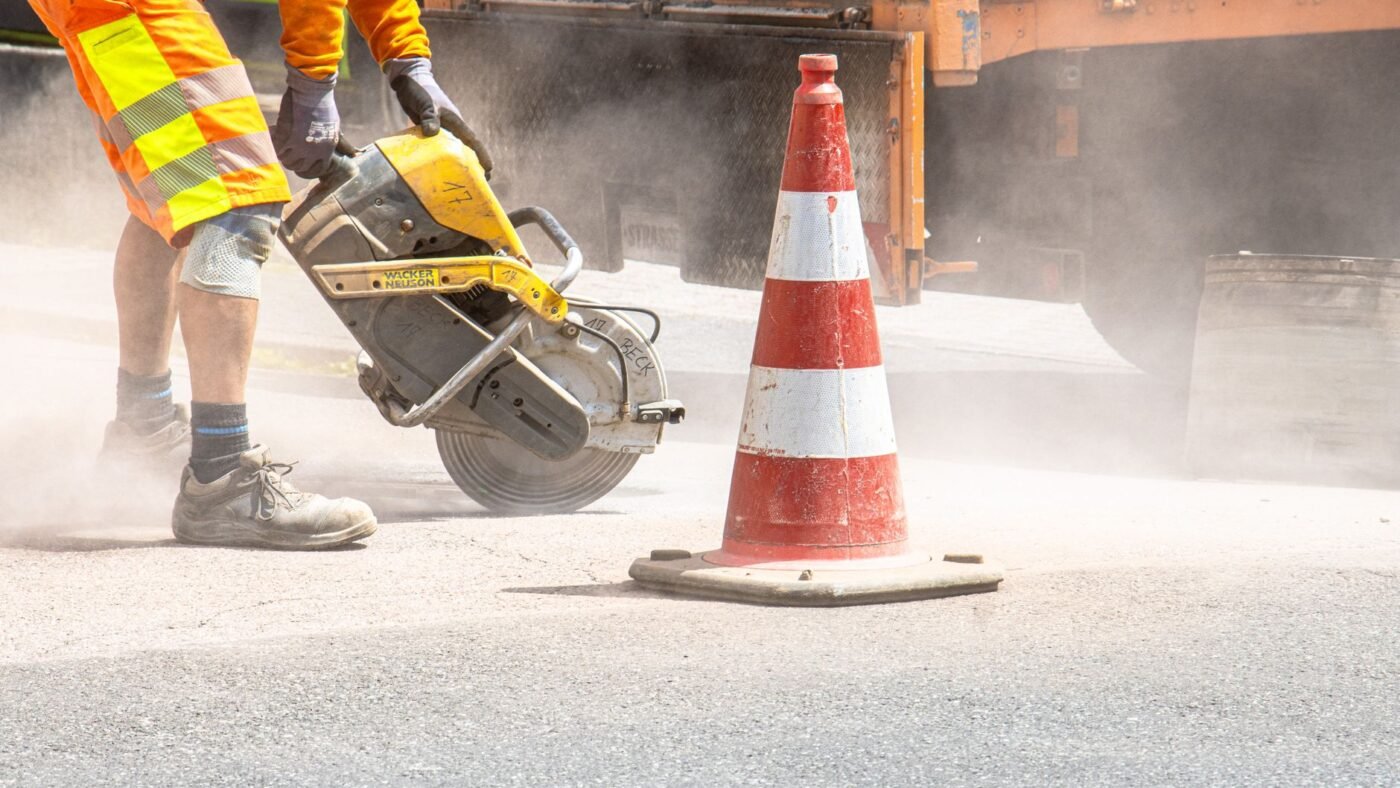
A cut off saw is a handheld power saw that spins a 12- to 16-inch diamond blade (or an abrasive wheel) fast enough to slice through concrete, pavers, block, stone, asphalt and steel. It also answers to concrete saw, power cutter, demo saw and "quick cut," which I suspect is how the rental counter keeps you from finding the manual. For paver work, the standard setup is a 14-inch gas cut off saw with a diamond blade and a water hose attached. It cuts about 5 inches deep, enough for any patio or driveway paver in one pass.
This guide covers the machine itself: what it is, which power source to pick, blade size, wet cutting, renting versus buying, and how to run one with all your fingers still attached. For how it stacks up against a wet saw, grinder or splitter, see our comparison of paver cutting tools.
What a cut off saw is, and what it isn't
The name causes confusion, because "cut off saw" and "chop saw" also describe two unrelated shop tools:
- A metal chop saw is a bench tool with an abrasive wheel on a hinged arm. You pull it down onto steel held in a vise. It stays on the bench, and so should your plans to cut pavers with it.
- A miter saw is a woodworking tool for trim and framing.
The tool in this article is the handheld version, sometimes called a cut off concrete saw. You carry it to the work and cut freehand, or on a cart for long straight cuts in slabs. On a hardscape job it almost always wears a diamond blade. Nor is it any of its neighbours:
| Tool | Blade | Typical job |
|---|---|---|
| Handheld cut off saw | 12 to 16 in, diamond or abrasive | Pavers, wall block, curbs, slab openings, asphalt edges |
| Angle grinder | 4 1/2 to 9 in | Notches, scoring, small cuts, trimming around drains |
| Walk-behind (flat) saw | 14 to 30 in and up | Long, deep cuts in slabs and roads |
| Masonry table saw | Usually 14 in | Precise cuts on a bench, with water |
Parts of a handheld power cutter worth knowing
You don't need to be a mechanic, but knowing these parts makes the rental counter walkthrough sound less like a foreign language:
- Engine or motor. A two-stroke gas engine on most saws, or a brushless electric motor on corded and battery models.
- Cutting arm and belt. A belt drives the blade at the end of an arm. On most saws the arm flips to the other side so you can cut closer to a wall or curb.
- Blade guard. It covers the upper rear half of the blade and throws slurry away from you. Rotate it a little; never take it off.
- Arbor and flanges. Most 12- and 14-inch saws take a 1-inch or 20 mm bore. Battery and 9-inch saws commonly use 7/8 inch. A worn or dirty flange lets the blade wobble.
- Water kit. A valve and small hose feed both sides of the blade from a garden hose or pressurized tank.
- Decompression valve and choke (gas saws). Press the valve before pulling the cord so the engine turns over more easily.
- Air filter. Concrete dust clogs it fast. A gas saw that eats dust loses power and wears out early (the engine, it turns out, would also prefer not to breathe it).
Gas, corded electric or battery cut off saws
All three kinds of cut off saws will cut a paver. The choice is where you're cutting, how much, and whether you want to mix fuel.
| Gas | Corded electric | Battery | |
|---|---|---|---|
| Blade sizes | 12, 14 and 16 in | Usually 12 to 14 in | Usually 9 to 14 in |
| Power and run time | Most power, runs as long as you have fuel | Steady power, limited by cord and circuit | Strong, but limited by the batteries |
| Weight | Heaviest | Medium | Lightest at the small sizes |
| Noise and fumes | Loud, exhaust | Quieter, no fumes | Quieter, no fumes |
| Maintenance | Fuel mix, air filter, spark plug | Minimal | Minimal |
| Wet cutting | Standard | Only models built for water, on GFCI protection | Many models have a water hookup |
| Best for | Full patios and driveways, remote sites | Indoor or garage work near power | Small jobs, occasional cuts, cutting close to the house |
I read a couple of spec sheets side by side to see the spread. The STIHL TS 420, a common 14-inch cut off saw gas model, lists a cut depth of up to 4.9 inches and a weight of 21.2 lb without the water attachment (STIHL). Milwaukee's M18 FUEL 9-inch battery saw lists a 3.4-inch cut depth and 10.6 lb as a bare tool. Lighter, with less depth to spare.
Corded electric saws need care with water. Water and a plugged-in motor don't mix. Only run water on an electric saw the maker designs for wet cutting, on GFCI protection. Otherwise, cut dry with a vacuum shroud where the manual allows it, or pick a gas or battery saw.
Gas saws stay outside. Always. California's workplace-fatality investigators wrote up what happens when someone runs one indoors, and it is the most matter-of-fact document I've read this year. In February 2017 a 34-year-old laborer cut trenches in a concrete slab inside a closed, vacant storefront with a 13-horsepower gas saw. He was wearing a respirator, but it had organic-vapor cartridges, which filter dust and vapors, not carbon monoxide. He was found about five hours after he started, with a carboxyhemoglobin level of 69% (CDPH FACE report 17CA001). The saw had no CO warning label. The report's recommendation is short: electric saws only in enclosed spaces. If there's a roof and walls, including a garage with the door up, the saw is electric or the job waits.
For a typical DIY patio outdoors, gas is still the default at rental counters. Battery saws suit the homeowner who cuts a few pavers a year and has feelings about two-stroke engines.
Blade diameter and cut depth for pavers
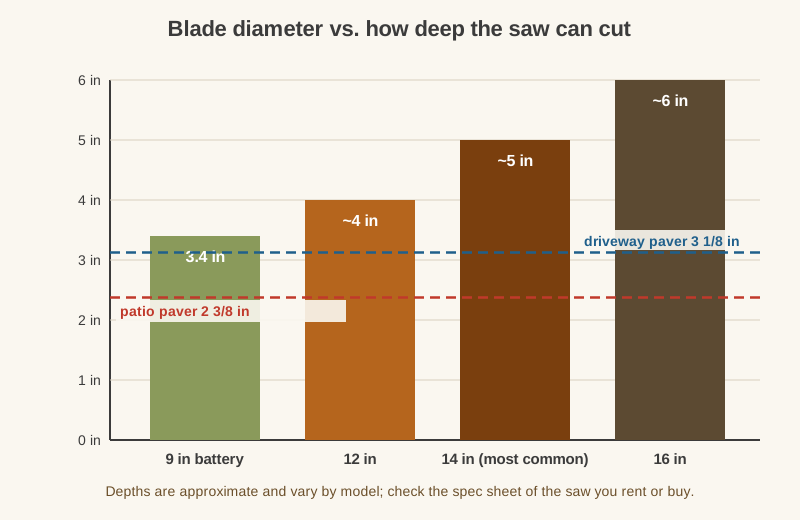
As a rough rule, a handheld saw cuts a little over a third of its blade diameter deep. The rest is busy inside the guard and flanges.
- Patio and walkway pavers are usually 2 3/8 inches (60 mm) thick. Any cut off saw clears them in one pass.
- Driveway pavers are usually 3 1/8 inches (80 mm). A 12- or 14-inch saw clears them easily. A 9-inch battery saw clears them with little margin, so the blade has to be fairly new.
- Retaining wall block and wall caps can be much thicker. A 14-inch saw makes a full-depth cut in most wall caps. For deep block, cut from both sides or step up to a 16-inch saw.
The 14-inch size is the sweet spot for hardscaping. It's the most common rental, blades are easy to find, and it has the depth for everything from pavers to wall caps.
Cut off saw blades. For pavers you want a segmented diamond blade rated for concrete and masonry. Abrasive wheels also fit these saws. They cut concrete and steel, but they wear fast, shrink as they go (so every cut is a little shallower than the last), and throw more dust. Use a diamond blade. Choosing between segmented, turbo and continuous-rim blades, and matching the bond to the material, is covered in our guide to the diamond blade for pavers. Whatever you buy, check two numbers: the bore must match the arbor, and the blade's maximum RPM must be higher than the saw's spindle speed. The TS 420 above, for example, spins at up to 5,350 rpm.
Run it wet: water, slurry and the silica rule
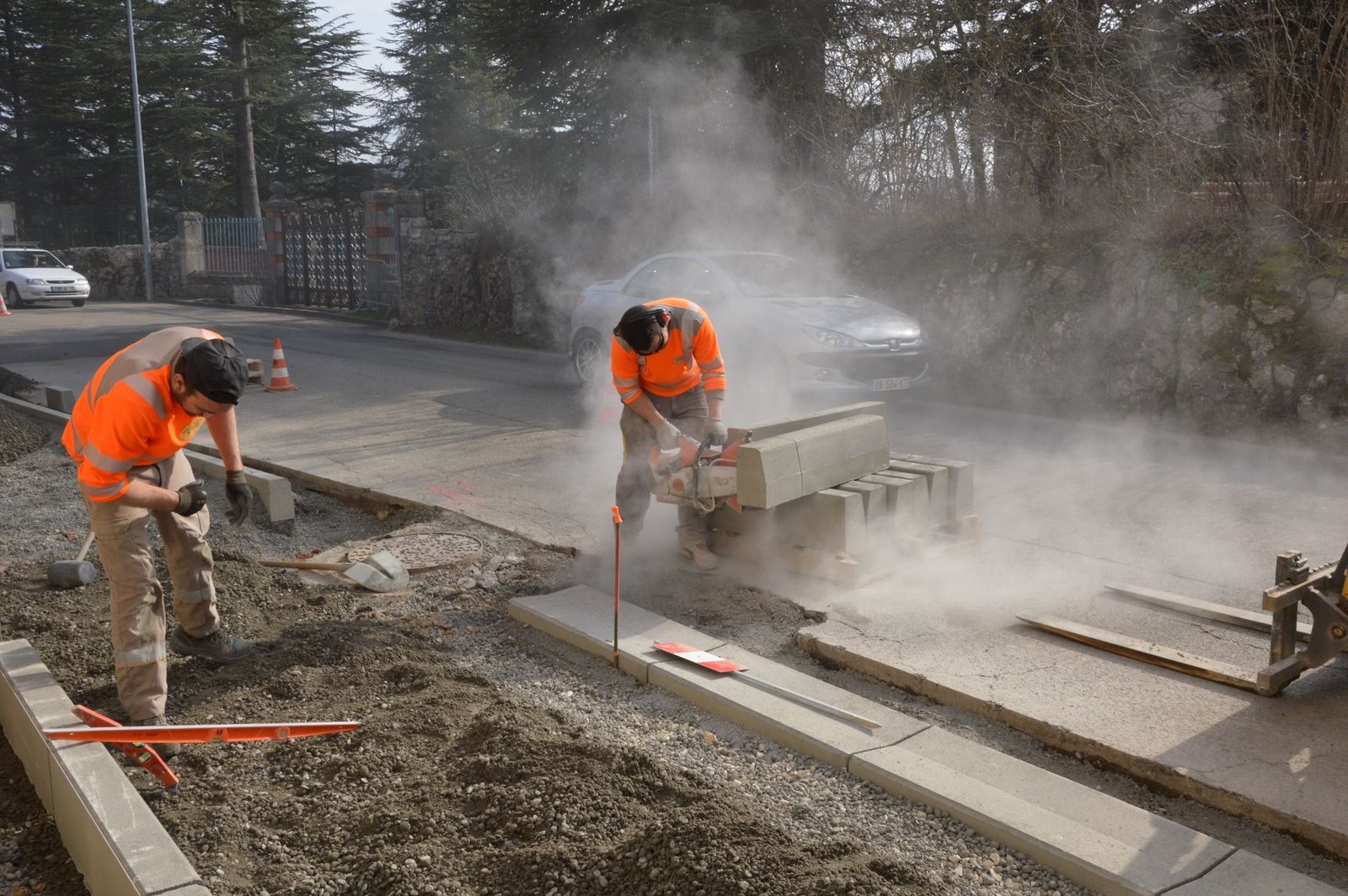
Concrete pavers contain crystalline silica. Dry-cutting them raises the kind of dust cloud in the photo above, and breathing that dust over time causes silicosis, which doesn't reverse. Water is the simplest control, because it turns the dust into slurry before it gets airborne.
I read OSHA's construction silica standard expecting a wall of exceptions. Table 1 of 29 CFR 1926.1153 is surprisingly blunt: handheld power saws cutting masonry use an integrated water delivery system that continuously feeds the blade. Outdoors, that means no respirator for up to 4 hours of cutting a shift, and an APF 10 respirator beyond that. The rule is written for crews, but your lungs don't know whether you're being paid.
Practical wet cutting:
- Make slurry, not a flood. A steady flow from the valve is enough; too little leaves a paste that binds the blade.
- Turn the water on before the blade touches the paver and leave it on until the cut is finished.
- Cut off the finished surface. Slurry dries into a stubborn gray film. Cut on the lawn, plywood, or the base beyond the edge, and rinse splash straight away.
- Keep bystanders and open windows upwind, even cutting wet.
- Wear a respirator anyway if you're cutting for hours or can't keep water on the blade. Eye and hearing protection, every time.
Rent a cut off saw or buy one?
Rent it. For one patio or walkway, buying a gas cut off saw makes no sense to me, and the reason is mechanical: a two-stroke saw that sits for a year comes back with stale fuel and a gummed carburetor. A rental arrives serviced, with a water kit, and goes back to someone whose job is keeping carburetors clean.
Rent when:
- It's a single project, or the cuts fit into a day or a weekend.
- You need a 14- or 16-inch gas saw for depth.
- You'd rather not deal with fuel mix, air filters and carburetor upkeep.
Buy when:
- You have several projects lined up, or you do hardscaping often.
- A battery saw fits your tool platform and your cuts are small; there's no carburetor to gum up.
- Rental access is poor where you live.
At the rental counter, ask for a start-up demonstration and check before you leave:
- The guard is intact.
- The diamond blade has segment height left and no cracks or missing segments.
- The water kit fits a standard garden hose.
- You know which fuel mix it takes.
- How the blade is charged. Some shops include it, some sell you one, and others measure blade wear on return (bring your reading glasses to that conversation).
Plan the cutting so you only rent the saw once. Lay the whole field first, then do all the edge cuts in one session.
Starting and cutting without kickback
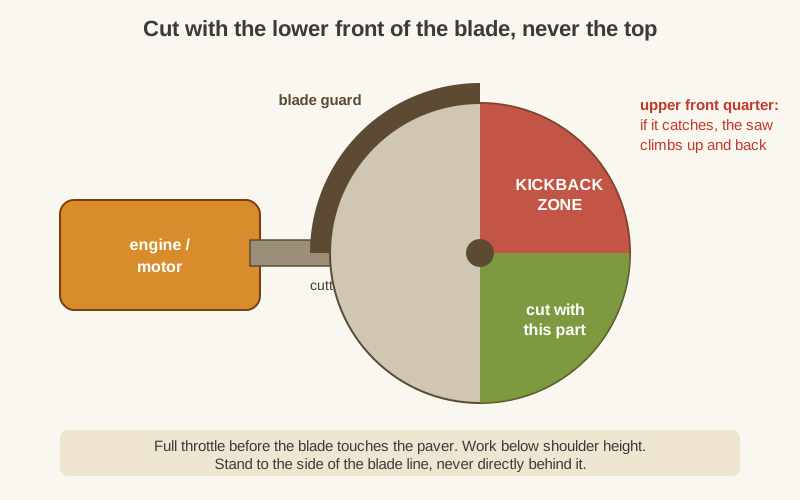
Kickback happens when the upper front quarter of the blade catches the work. The spinning blade climbs out of the cut and throws the saw up and back toward the operator, and it has no opinion about what it lands on. With a blade this size, that's a serious injury. Nearly every rule below exists to keep that quarter of the blade out of the cut.
Starting a gas saw
- Place the saw on firm, clear ground with the blade touching nothing.
- Put your foot through the rear handle and hold the front handle firmly.
- Press the decompression valve, set the choke if the engine is cold, and pull the cord.
- Let it idle and warm up for a moment. Never drop-start it in the air.
While cutting
- Reach full throttle before the blade touches the paver, and cut with the lower front part of the blade.
- Let the saw's weight do the work. Don't force or twist it; side pressure can shatter a blade or tear off a segment.
- Stand to the side of the blade line, never directly behind it, with a firm footing.
- Keep the work below shoulder height. No ladders, no reaching over the saw.
- Support the paver so the cut opens as you go. A cut that closes pinches the blade, and a pinched blade is how kickback starts.
- Release the throttle and let the blade stop before you set the saw down.
Gear: safety glasses or a face shield, hearing protection, gloves, boots and long pants. Add a respirator when you're dry-cutting or cutting for a long time.
Read the manual for the specific saw before you start. I've read several, and belt tension, guard adjustment and fuel ratios really do vary from model to model.
For a paver job, rent a 14-inch gas saw and cut it wet
On an outdoor paver project, a rented 14-inch gas model with a diamond blade does everything: depth for driveway pavers and wall caps, power to trim a whole patio edge in one session, and a water kit that keeps silica down. Battery saws suit small jobs. Corded saws belong where there's power and no water. Whichever you use, keep water on the blade, keep the upper front quarter out of the cut, and let the saw's weight do the work. The cutting sequence itself is in our step-by-step guide on how to cut pavers. Mark the line, open the water, and remember the saw is heavier at the end of the afternoon than it was at the start of it.
FAQ
What is a cut off saw used for?
A cut off saw cuts concrete, pavers, brick, block, natural stone, asphalt and, with the right wheel, steel. In landscaping it trims paver edges, cuts wall block and caps, and opens slabs and asphalt.
Is a cut off saw the same as a chop saw?
Not in hardscaping. The name is shared with bench-mounted metal chop saws and even miter saws. The concrete cut off saw is a handheld tool with a 12- to 16-inch blade that you carry to the work.
How deep can a 14-inch cut off saw cut?
About 5 inches, depending on the model. The STIHL TS 420, for example, lists 4.9 inches. That's enough to cut any standard paver, and most wall caps, in one pass.
Can you use a cut off saw dry?
Many diamond blades are rated for dry cutting, but dry-cutting pavers releases silica dust. OSHA's Table 1 approach for handheld saws uses water fed to the blade. If you must cut dry, wear a proper respirator, work outdoors, and keep people away from the dust.
What fuel does a gas cut off saw use?
Most gas cut off saws have two-stroke engines. They run on gasoline mixed with two-stroke oil at the ratio in the owner's manual, commonly 50:1. Using straight gasoline will ruin the engine.