Last Updated on September 23, 2026 by Umar Farooq
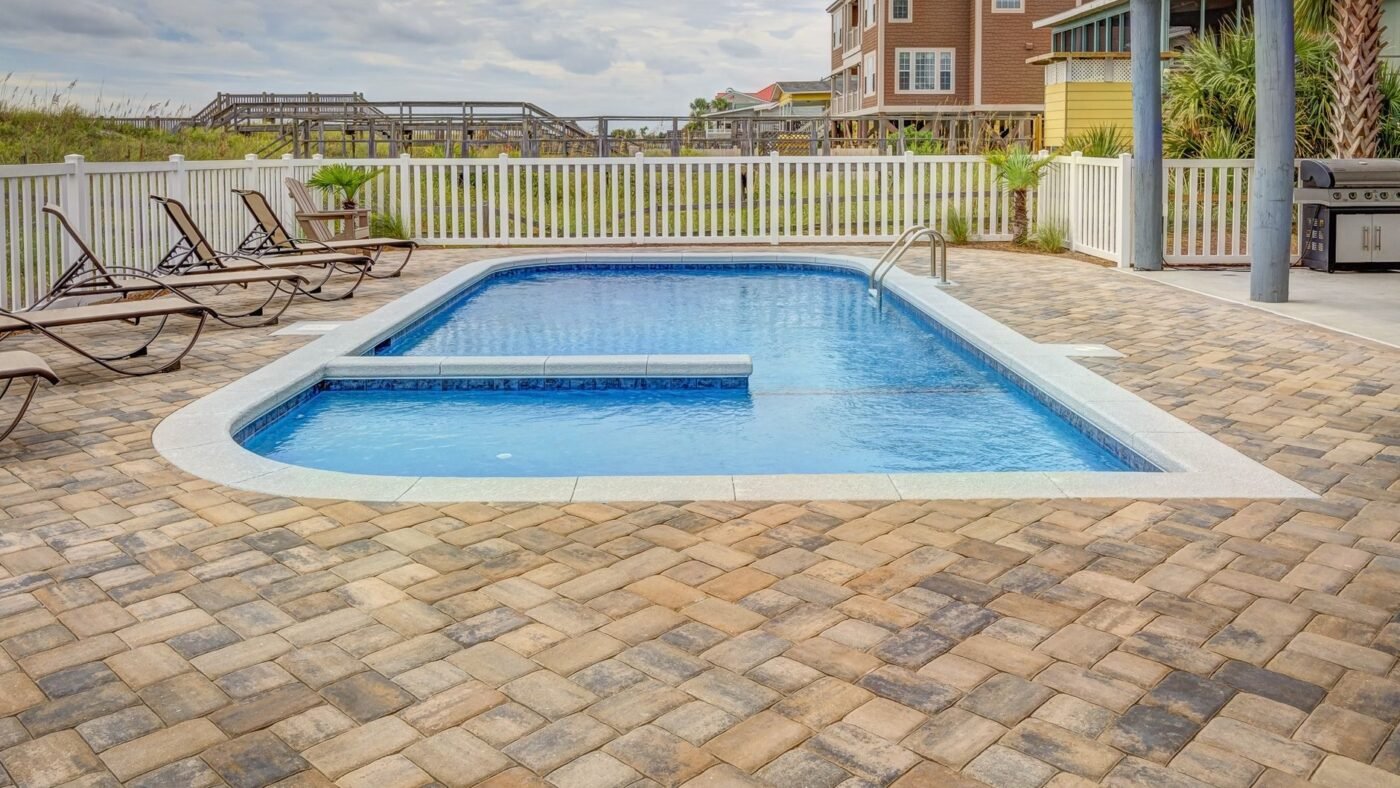
The best pool deck pavers have a textured, slip-resistant face and a light color that stays cooler in sun, because nobody wants a pool deck that makes the kids cross it like it's hot coals. They also need to handle chlorine or salt water and constant wetting. Concrete pavers, travertine, porcelain and clay brick all work if you choose the right finish. The deck lasts only if the base beside the pool is compacted properly and the surface slopes away from the water. Poorly compacted backfill around the pool shell is the most common reason a paver pool deck sinks.
Below: choosing the material and finish, the details that make a pool deck different from a patio (coping, slope, joints), and how pavers compare with poured concrete.
Choosing pool deck pavers by material
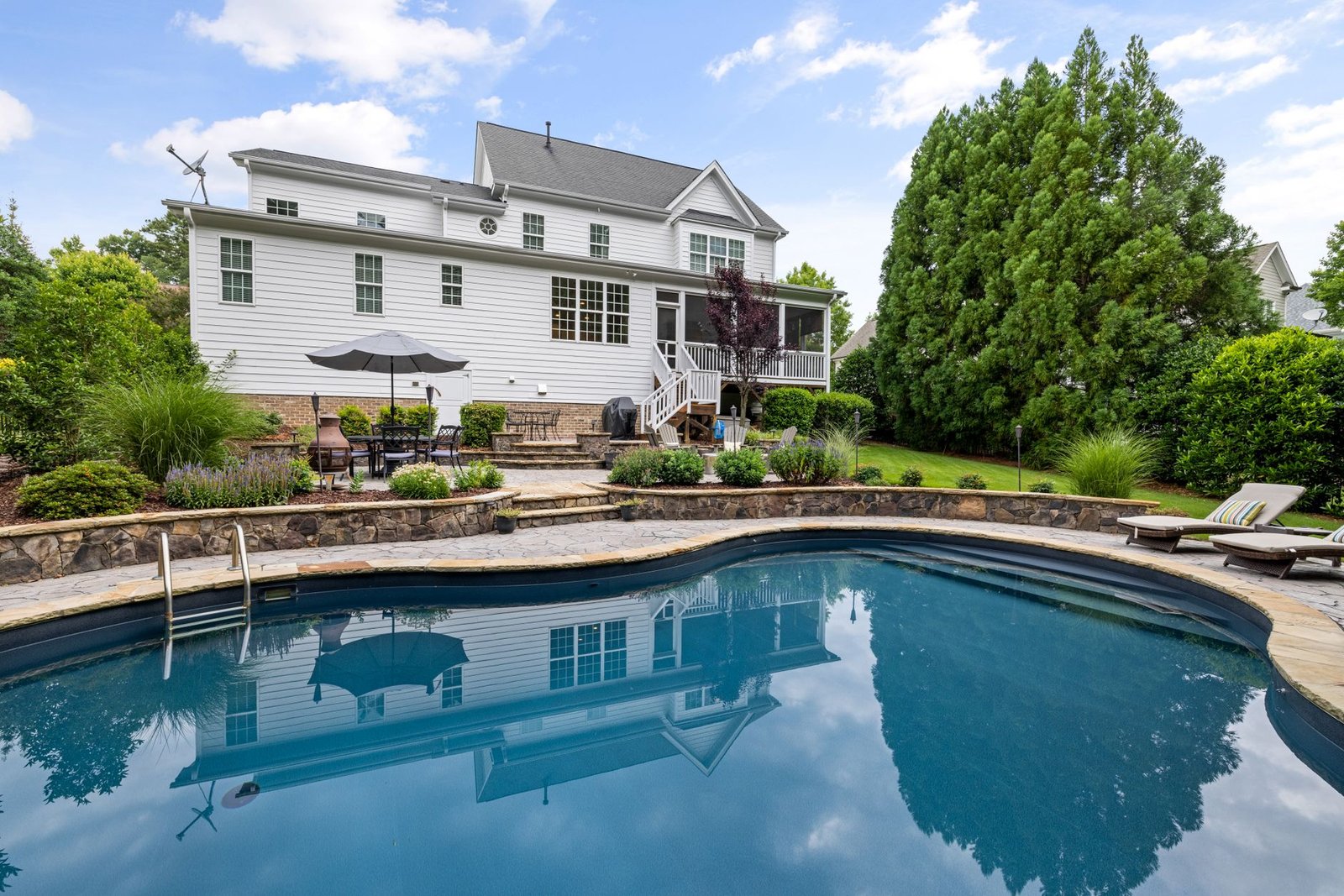
Each common material handles water, heat and chemicals differently. Here's how they compare:
| Material | Wet traction | Heat underfoot | Chemicals and water | Notes |
|---|---|---|---|---|
| Concrete pavers | Good with a textured or tumbled face | Depends on color; light shades run cooler | Good; color is usually mixed through the unit | Widest range of shapes, colors and coping pieces |
| Travertine | Good when tumbled or brushed | Stays relatively cool | Porous; usually sealed | Classic pool material, softer than concrete |
| Porcelain pavers | Varies a lot by finish; check the rating | Light colors stay comfortable | Very low absorption, stain resistant | Thinner units, often 2 cm; skilled install |
| Clay brick | Good when textured | Can hold more heat than light stone | Durable; may need periodic cleaning or sealing | Traditional look, limited shapes |
| Other natural stone (limestone, sandstone, bluestone) | Depends on finish | Dark stone heats up | Varies by stone; many need sealing | Check each stone's porosity and hardness |
Concrete pavers are the most common choice. They come with matching bullnose coping, in dozens of colors, and can be lifted and reset if a section settles. Choose a textured, tumbled or slate-like face, not a polished one.
Travertine is popular around pools because it stays relatively cool and grips well when tumbled. It's porous, so it's usually sealed, and its softer surface can chip at edges.
Porcelain pavers absorb very little water and resist staining and fading. Many are 2 cm (about 3/4 inch) thick and are installed on sand, gravel or pedestals, so the installer needs to know the method. Traction varies more between porcelain finishes than with any other material, so check the rating. Our porcelain pavers guide covers the install.
Brick gives a traditional look with good grip when textured. Dark red brick can run warmer than pale stone in full sun.
JDesigns' guide to pool deck pavers makes a good point: driveway-grade pavers are usually unnecessary around a pool. Nobody is parking a truck on the diving board. Choose pedestrian-rated units and put the budget into texture, comfort and the base.
Wet traction: texture beats looks
A pool deck is wet most of the summer, and people walk on it barefoot. The face finish matters more than the material:
- Grippy: tumbled, brushed, sandblasted, slate-textured and split faces.
- Riskier: polished, honed-smooth and glossy sealed surfaces.
Two things can turn a grippy surface slippery:
- Sealer. A high-gloss film sealer fills the texture and can make any paver slippery when wet. If you seal, use a matte or natural-look product, and some installers add an anti-slip grit to the sealer.
- Algae. A shaded corner that stays damp grows a slick film. Keep it clean, and fix the drainage that keeps it wet.
Slip ratings. Some manufacturers publish a wet DCOF (dynamic coefficient of friction) figure tested under ANSI A326.3. The familiar 0.42 figure is that standard's threshold for level interior floors that get wet. I read enough tile marketing to notice how often 0.42 gets quoted as if it were a pool rating. It isn't. Look for a product the manufacturer specifically lists for pool decks.
Heat underfoot and color
Color affects comfort more than almost anything. Light beige, cream and pale gray reflect more sunlight and stay cooler than charcoal or dark red, which is why manufacturers point pool buyers to their lighter colors.
Material matters too. Pale travertine and light porcelain tend to stay comfortable. Dense, dark concrete or stone can get hot enough in direct sun that people hop across it (the pool-deck dance, familiar to anyone who has forgotten flip-flops). If you want a dark accent, keep it to a border away from the main walking routes.
Texture helps too: a rough face has less skin contact.
Coping: the edge that meets the water
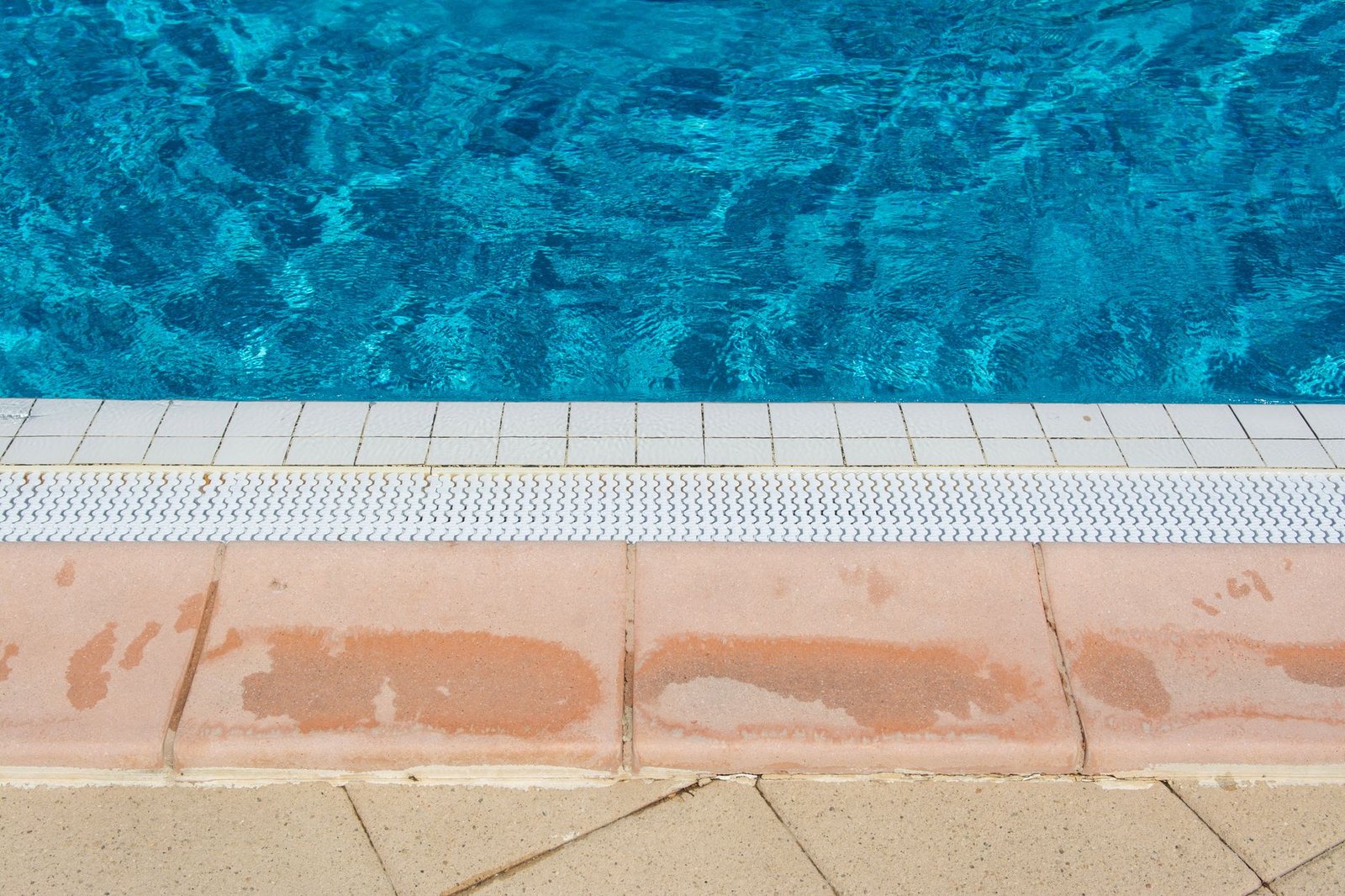
Coping is the cap that sits on top of the pool wall. It's the edge people sit on, push off from and grab when climbing out. With a paver deck, the coping is usually a bullnose unit, with a rounded edge facing the water, in a color that matches or contrasts with the deck.
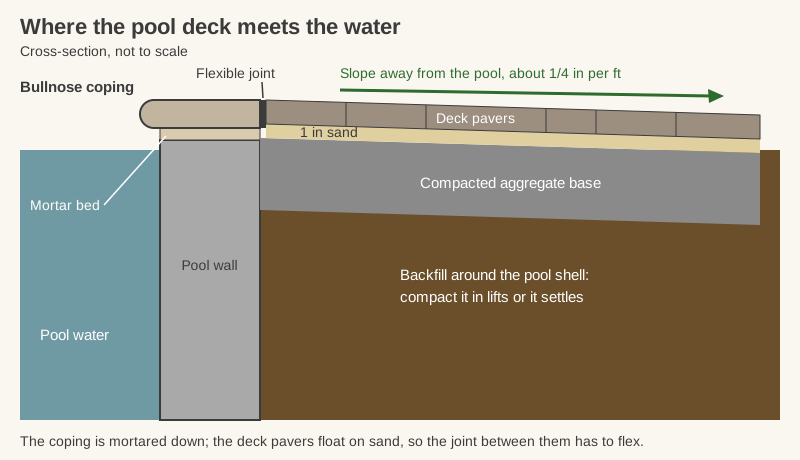
- Set it in mortar. Coping is mortared to the top of the pool wall (the bond beam). It isn't laid on sand like the deck, because it has to stay put when people haul themselves out.
- Overhang the water slightly. The rounded nose projects a little past the wall so splash-out drips into the pool, not down the wall.
- Leave a flexible joint behind it. The deck pavers float on sand and move slightly, while the coping is fixed. A flexible, sealant-filled joint between them lets each move without cracking the other. Pool builders often call it the expansion joint.
- Follow the curve. On curved pools, use radius coping pieces or cut and fit straight units. Rounded corners look better than a sawtooth of short straight pieces.
Our guide to bullnose pavers covers profiles and setting coping in more detail.
Slope the deck away from the pool
Water on a pool deck has to go somewhere, and that shouldn't be back into the pool. Deck runoff carries dirt, fertilizer and sunscreen, and it can wash joint sand into the water.
- Slope away from the pool, at least 1.5%, ICPI Tech Spec 2's minimum for pavers. Build the slope into the base, not the sand bed. Local pool codes may set their own figure, so check.
- Send the water somewhere useful: a lawn, a planting bed or a drain. On a deck enclosed by house walls, a channel drain or deck drain collects runoff.
- Keep water away from the house as well as the pool. A deck squeezed between the two needs a planned low line.
Our patio drainage guide covers setting slopes and choosing drains.
A base that won't settle next to the pool
This is where most pool decks fail. When an in-ground pool is built, the soil dug out around the shell is pushed back as backfill. Loose backfill keeps settling for months or years, and pavers laid over it settle with it. The dip lands right at the coping, where it looks worst and trips people most easily. I hunted for a documented settling timeline and found only pool-builder blogs disagreeing, so I won't invent one.
What installers do about it:
- Compact the backfill in lifts. Thin layers, each compacted, not one deep dump topped off with a pass. Some pool builders backfill with gravel for this reason.
My one strong opinion for pool decks: a thick layer compacted once from the top is not compacted, it just has a crust. Most rental plates fall short of the 7,000 lbf machine ICPI pairs with 4 to 6 inch lifts, so build thinner ones.
- Give new backfill time, or confirm it was compacted during the pool build. Ask the pool contractor what they used and how they placed it.
- Build a proper aggregate base, at least 4 inches compacted in lifts (2 to 4 extra where soil stays wet, is weak, or freezes), topped with a loose 1-inch layer of ASTM C33 bedding sand rather than stone dust or mason sand. Same system as a patio, with extra care at the pool edge.
- Use geotextile over clay or soft soil. It keeps the base stone from pushing down into the soil.
- Fix the edges. The coping holds the pool side. On the outer edges, install edge restraint so the deck can't creep outward.
A paver deck that does settle can be lifted, re-based and relaid with the same pavers. That's one of the real advantages over a slab.
Joints, chlorine and salt water
Joint sand around a pool gets splashed, hosed and walked through barefoot, so choose it with care.
- Polymeric sand resists washout and weeds better than plain sand. Install it on a dry deck, and keep pool splash off it until it cures. Stray polymeric dust left on the pavers can dry into a haze.
- Salt-water pools are harder on some natural stones and on joint materials than chlorine. Ask the paver maker whether the product is rated for salt-water pool decks, and don't let salt build up on the surface.
- Keep sand out of the pool. A fully filled, well-compacted joint loses less sand to splash-out. Freshly swept decks shed some grains until they settle.
Pavers vs concrete around a pool
Poured concrete is the usual option:
| Pavers | Poured concrete | |
|---|---|---|
| Cracking | Joints between units absorb movement | Cracks are common; control joints limit where they go |
| Repair | Lift and reset the affected units | Patch or resurface, and the repair usually shows |
| Traction | Built into the unit's texture | Depends on the broom or texture finish; can wear smooth |
| Look | Many shapes, colors and patterns | Uniform; stamping and staining add variety |
| Upfront effort | More labor and base prep | Faster to place over a large area |
JDesigns makes the same trade-off: pavers usually cost more to build but can be repaired piece by piece, while a cracked slab often needs resurfacing. Over a sound concrete deck, pavers can sometimes be laid on top, if the drainage and the step at the coping work out.
For design ideas such as shapes, bands and mixing materials, Belgard's pool deck design gallery is worth browsing.
Keeping a paver pool deck clean
- Rinse chemical splash and sunscreen off regularly so they don't build up in the texture.
- Sweep sand back into the joints after the first few weeks, and top up low joints.
- Deal with green shaded areas early. Clean them with a paver-safe cleaner and improve airflow or drainage.
- Seal only with a non-slip, pool-rated sealer if you seal at all, and reapply as the product directs.
Texture, light color and a solid base make the deck
Choose pool deck pavers with a textured, non-slip face in a light color, and a material that handles your pool's water chemistry. Set bullnose coping in mortar with a flexible joint behind it. Slope the deck away from the water, and build it on backfill that was compacted in lifts. Get those right and the deck stays safe underfoot and flat at the edge for years. The only thing anyone will trip over is the pool noodle.
FAQ
What are the best pavers for a pool deck?
Textured concrete pavers, tumbled travertine and slip-rated porcelain are the most common choices. Choose a light color for comfort and a finish the manufacturer lists as suitable for pool decks, and avoid polished faces.
Are pavers slippery around a pool?
Textured or tumbled pavers keep good traction when wet. Polished units, glossy sealers and algae in shaded spots are what make a pool deck slippery.
Do pavers get hot around a pool?
Dark pavers can get uncomfortably hot in direct sun. Light-colored concrete, pale travertine and light porcelain stay noticeably cooler underfoot.
Is it better to have pavers or concrete around a pool?
Pavers handle movement at their joints and can be repaired unit by unit. Concrete is quicker to place but tends to crack, and repairs show. Pavers usually cost more to install and last well if the base is right.
Why do pavers sink next to a pool?
Usually because the backfill around the pool shell wasn't compacted in lifts and keeps settling. Lifting the pavers, compacting and rebuilding the base, and relaying them fixes it.