Last Updated on September 23, 2026 by Umar Farooq
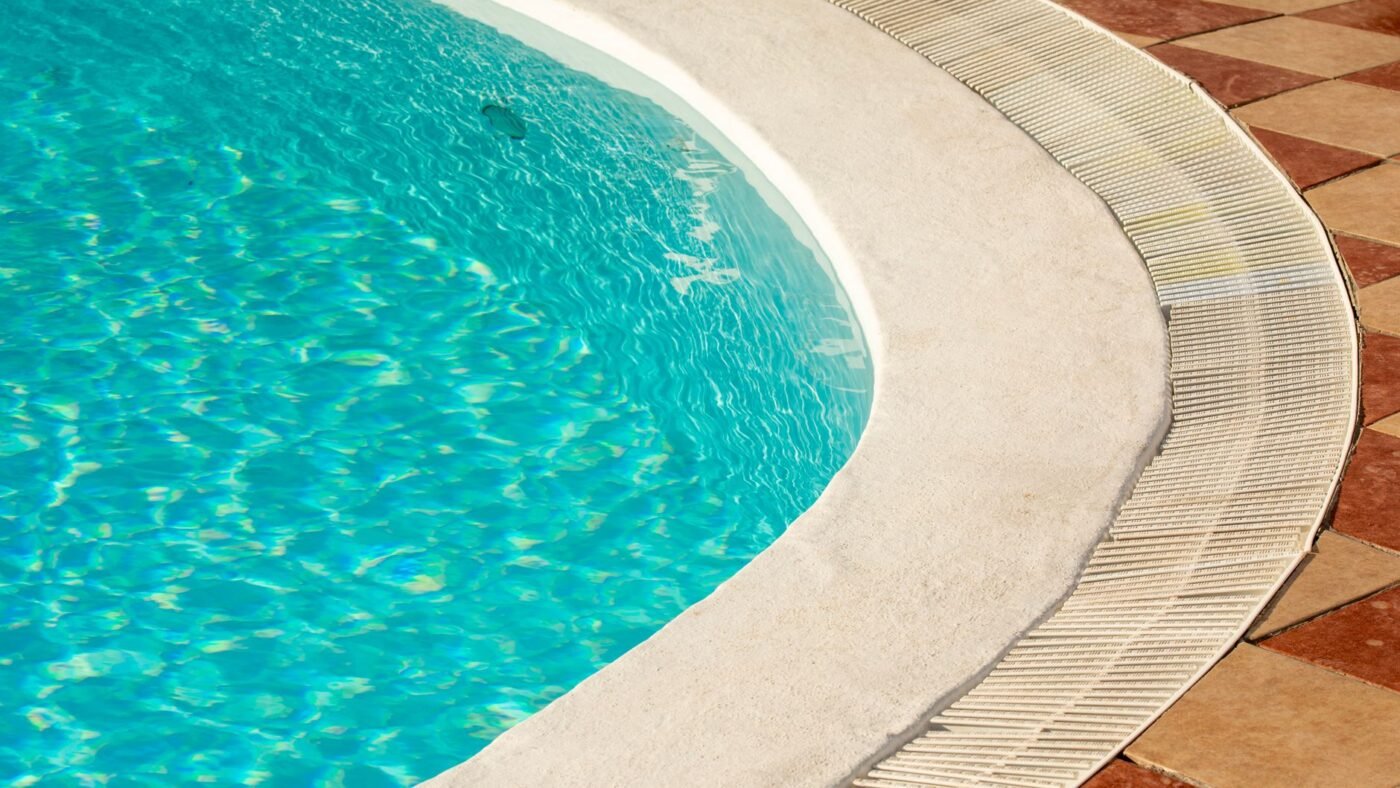
Bullnose pavers are pavers with one rounded edge instead of a square one. They finish the exposed edge of a pool, a step, a seat wall or a raised patio, where a sharp corner would chip and catch hands, feet and, eventually, somebody's shin in the dark. A typical concrete bullnose paver is 2 3/8 inches thick, in sizes such as 4 x 9 or 6 x 12 inches. On a pool, bullnose coping is set level in mortar with about a 1-inch overhang. On steps, the rounded nose overhangs the riser by 3/4 to 1 1/4 inches and is glued down.
Four bullnose profiles
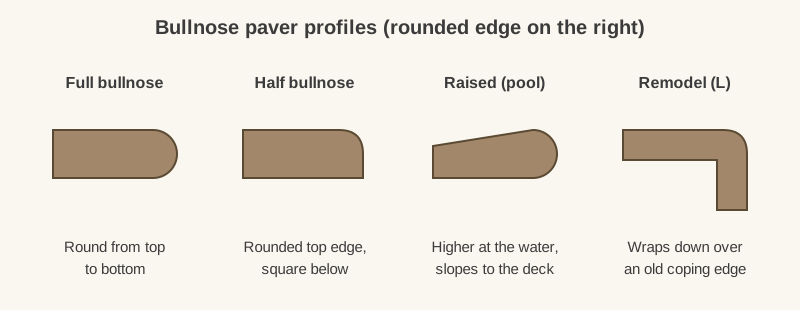
"Bullnose" covers several shapes:
- Full bullnose. The front edge is rounded from top to bottom, a full half-circle. Rochester Concrete Products describes its bullnose paver as a smooth surface with a full-radius front, sized 12 x 6 x 2 3/8 inches, for coping, step treads, wall caps and pool edging.
- Half bullnose. Only the top edge is rounded, which reads as a crisper edge.
- Raised bullnose. Made for pools: thicker at the water's edge, with a top sloping back so splash water runs to the deck drains.
- Remodel bullnose. An L-shaped unit that wraps over existing coping, so a pool can be updated without tearing out the old edge. Alexander and Xavier Masonry lists it in 2 3/4-inch and 4-inch thicknesses.
That last one is the option I'd look at first, and it's my one strong opinion here: most "rip it all out" advice is sales. If the old coping is sound and bonded to the beam, a cap over it fixes the look without disturbing the part that holds the pool edge together.
Belgard's bullnose coping comes in 4 x 9 x 2 3/8 inches, sized to match standard brick-style pavers.
Bullnose pavers as pool coping
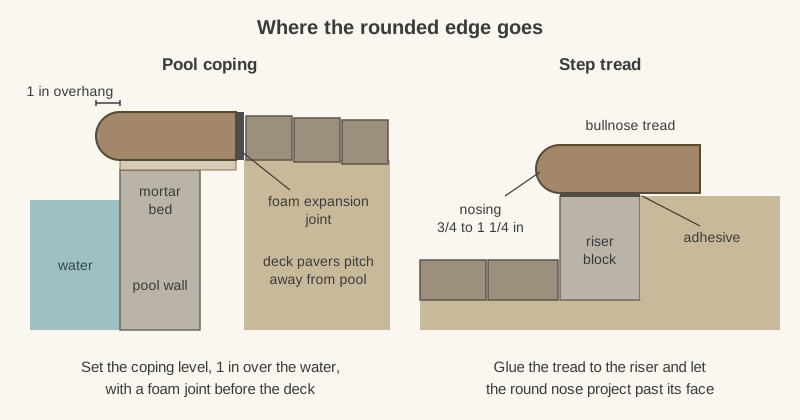
The coping caps the pool wall and is where people sit and hold on, so the rounded edge matters most here. Belgard's pool coping tips for contractors boil the installation down to a few rules:
- Keep a consistent 1-inch overhang past the pool wall on the water side.
- Set the coping level in mortar. Don't pitch the coping; the deck behind it is pitched.
- Put foam expansion material between the coping and the deck pavers, so the two can move independently without breaking the bond.
- At an automatic cover track, glue the coping to the track with construction adhesive and mortar only the back portion.
- Point the joints with mortar, or use polymeric sand on the deck pavers behind.
Mortar is the norm because coping sits on a concrete bond beam, not a gravel base, and gets climbed on by every wet child in the neighborhood. On curved pools, each piece is cut to a slight wedge. Our guide to cutting pavers for curves covers marking and cutting those tapers.
Bullnose pavers for steps
On steps, the bullnose is the tread's front edge, the part your foot lands on and your eye reads as the step:
- Build the riser first. Use wall block or pavers stacked on a compacted base, sized so each finished step, riser plus tread, comes out at the height you planned. Our guide on how to build steps with pavers covers the rise-and-run math.
- Dry-fit the bullnose row. Overhang the riser face by about 3/4 to 1 1/4 inches: a shadow line and toe room without a lip to trip on.
- Glue it down. Use two beads of paver adhesive on the riser top, or bed it in mortar. RF Paving's tutorial for natural stone steps uses a 4:1 sand-cement mortar bed. Loose sand under a step tread lets it rock and slide.
- Fill the tread behind the bullnose with field pavers on a compacted base, and slope it slightly forward so water drains off the step.
- Keep every step the same. Uneven step heights cause more trips than any edge profile. The IRC caps risers at 7 3/4 inches, wants treads of at least 10 inches, and allows no more than 3/8 inch of variation within a flight (R311.7.5).
One code note: on a regulated stairway, for example at an exterior door, the International Residential Code limits the nosing radius to 9/16 inch and the projection to 3/4 to 1 1/4 inch. A full bullnose on a 2 3/8-inch paver has a larger radius. So the roundest edge is sometimes the one the inspector likes least. Your local building department has the final word.
Sizes and matching bullnose paving stones to the field
Buy bullnose from the same product line as the field pavers, so color, texture and thickness match.
Count bullnose by the linear foot. A 4 x 9 unit laid along the edge covers 9 inches; a 6 x 12 covers 12 inches. Divide the edge length by that and add extras for corner and curve cuts. Corners take a mitered pair or a factory corner piece.
Round the edges people touch
Bullnose pavers belong wherever people grip, sit or step off an edge: pool coping, step treads, wall caps and raised patio borders. Choose the profile to match the job, set coping level in mortar with a 1-inch overhang and a foam joint, glue step treads to their risers, and buy from the same line as the field pavers. Then run a hand along the finished edge. If nothing catches, the rounded corner is doing the one job it was hired for.
FAQ
What is a bullnose paver?
A bullnose paver is a paver with one edge rounded into a convex curve instead of a square corner. It's used on exposed edges such as pool coping, step treads, seat wall caps and raised patio borders, where a rounded edge is safer and wears better.
How much should bullnose coping overhang a pool?
About 1 inch past the pool wall on the water side, kept the same all the way around. Set the coping level rather than pitched, and let the deck behind it carry the slope.
How do you attach bullnose pavers to steps?
Glue them to the riser with concrete paver adhesive, or bed them in mortar, with the rounded nose projecting 3/4 to 1 1/4 inches past the riser face. Don't set step treads on loose sand.
Can you cut bullnose pavers?
Yes. Cut them with a wet saw or a diamond-bladed cut-off saw. Cut the square back or sides and keep the rounded edge intact. On curves, cut each piece into a slight wedge so the joints stay even.