Last Updated on September 23, 2026 by Umar Farooq
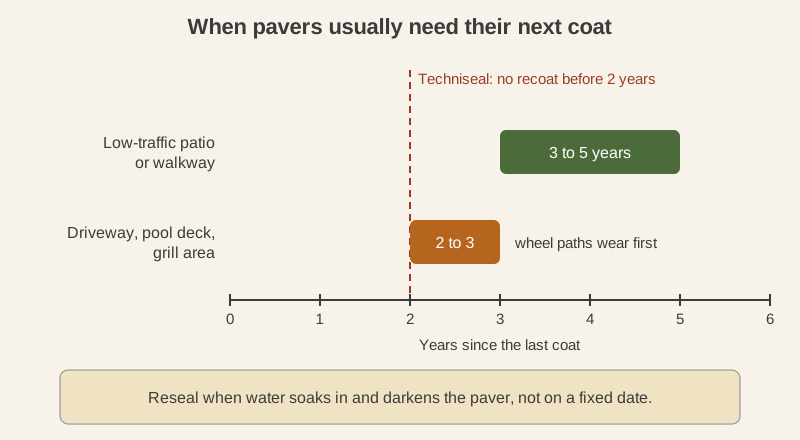
How often should pavers be sealed? For most patios and walkways, every three to five years, which is the one number everyone repeats and almost nobody tests. That's the interval given in Unilock's sealing tips and Belgard's sealant guide. Driveways, pool decks and grill areas wear faster and often need a new coat after two or three years. But the calendar is a guide, not a boss. Reseal when water stops beading and soaks into the paver. Sealing again while the old coat still works wastes product and builds the cloudy, peeling layers that end up needing a stripper.
How often should pavers be sealed with each sealer type?
What's already on the pavers decides how long it lasts and how you tell it's worn.
| Sealer on the pavers | Typical life | How you know it's worn | Minimum before recoating |
|---|---|---|---|
| Penetrating (silane, siloxane, fluoropolymer) | Often at the long end of 3–5 years; Belgard says non-film sealers "last a bit longer" | Water soaks in instead of beading | Techniseal: not before 2 years, and only once it's no longer water-repellent |
| Water-based acrylic film (matte, satin) | About 3–5 years on low-traffic areas | Dull patches, bare traffic lanes, water soaks in | Techniseal: 2 years |
| Solvent-based acrylic film (wet look) | Unilock says solvent-based sealers last 4–5 years with proper maintenance | Gloss gone in traffic lanes, patchy shine | Techniseal: 2 years |
| Unknown or DIY-store sealer | Varies | Water test | Strip it, or test compatibility first |
Techniseal's Natural Look (NS) data sheet puts the rule plainly: "Wait until the Protector is worn before recoating the surface (minimum 2 years)." Its penetrating sealer sheet says wait until the surface "is no longer water-repellent." I read both twice looking for a year number I could hand you. There isn't one beyond that 2-year floor, which is the honest answer: test first, then seal.
Traffic decides where the sealer wears first
The same sealer ages at different speeds across one property, like a family.
- Driveway wheel paths and turning spots. Tires scuff the film and pick up grit. Expect the short end of the range, often two to three years.
- Doorways, gates and steps. Every footstep passes through the same narrow strip.
- Grill and dining areas. Grease, cleaning and chairs dragged across the surface all wear the sealer.
- Pool decks. Constant wetting, splashing and cleaning chemicals.
- Low-traffic edges and side paths. These can keep the sealer for five years or more.
Tomahawk Power's schedule agrees: roughly two years for high-traffic areas, three for low-traffic ones in moderate climates.
You don't have to reseal everything at once if only the traffic lanes have failed. With a penetrating sealer, spot-treating the worn lanes blends in well. With a film, a patch usually shows as a sheen line (the patio equivalent of a tan line), so most people clean and recoat the whole surface.
Sun, freeze-thaw and pool water shorten the cycle
Every Techniseal data sheet I opened carries the same caution: "Extreme climate or heavy traffic could limit product longevity." In practice:
- Strong sun. UV breaks down acrylic films, and on south- and west-facing surfaces they lose their gloss sooner. Florida sealing contractors typically reseal every two to three years.
- Freeze-thaw and de-icing salt. Shovels, plows, grit and salt wear the film. Pavers that absorb less water suffer less from freeze-thaw, one reason sealing makes sense in snow country.
- Pool water and splash-out. Wet-dry cycles and pool chemicals are hard on a coating, so contractors put pool surrounds on a shorter cycle.
- Shade and damp. Algae and moss mean more cleaning, and every aggressive wash takes some sealer with it.
Five signs your pavers are ready for another coat
- Water soaks in. Sprinkle water on the surface. On sealed pavers it beads. If it soaks in and darkens the paver within a minute or so, the sealer is spent. Test in several places, including the traffic lanes.
- Color looks flat. The pavers look chalky or dull when dry, or the wet-look gloss has gone.
- Stains set faster. Spills that used to wipe off now leave marks.
- Joint sand is washing out. With a joint-stabilizing sealer, loose sand, new weeds or ant hills mean the binder has worn.
- The film is patchy. Shiny edges next to dull traffic lanes, or flaking in spots.
One thing that isn't a sign: sealed pavers can look darker for a while after rain. That's normal moisture, not failure. Worry when they stay wet noticeably longer than they used to.
Why resealing on a fixed schedule backfires
This is the part I'd underline. Most pavers don't need sealing at all, none need it in the first month, and a sealer recoated on a schedule builds up layers until they whiten and peel. Adding coats to a sealer that's still working causes the problems sealing is supposed to prevent:
- Build-up. Layers of film get thick, cloudy and prone to peeling. Techniseal warns that over-accumulation "could lead to surface whitening."
- Trapped moisture. A new film over an old one that is holding moisture shows up as white haze.
- Adhesion failures. A different brand or chemistry on top of the old coat may not bond. Techniseal only allows its sealers over bare pavers or over its own compatible products, and says to strip "any unknown coating" first.
So: clean, test, and reseal only the areas that fail. The calendar never has to know.
The first seal comes later than people expect
A new patio isn't on the same clock. Pavers must shed moisture and any efflorescence before the first coat. Unilock suggests 60 to 90 days, Techniseal says 30 days after polymeric sand, and some contractors wait a full year. After that first coat, the reseal intervals above apply. The whole prep and application process is in our paver sealing guide.
A reseal day, start to finish
Resealing uses the same prep as the first coat, with one extra check:
- Water test to confirm the old sealer has worn, and in which areas.
- Clean the surface and remove stains. Sealer seals in whatever's there.
- Top up the joint sand where it has dropped.
- Dry for 24 to 48 hours.
- Apply a compatible sealer in thin coats, back-rolled.
- Keep off it for 24 hours on foot and 48 to 72 hours with vehicles. How long paver sealer takes to dry has the full timings.
If you're switching from a gloss film to a matte or penetrating finish at reseal time, the old film has to be stripped first. Wet look vs natural paver sealer explains why the two don't mix.
Test every spring, reseal only when water soaks in
Three to five years is the usual answer to how often pavers should be sealed, and two to three for driveways, pool decks and grill areas. But the pavers tell you when. A water test each spring shows whether the sealer still works, and reapplying only where it failed avoids build-up, haze and stripping. If the water still beads this spring, congratulations: your reseal project is finished, and it took a cup of water.
FAQ
How long does paver sealer last?
Usually three to five years on patios and walkways. Unilock rates solvent-based sealers at four to five years with proper maintenance. Driveways, pool decks and sunny or icy sites often get only two to three years. Penetrating sealers tend to last longer than films, and they wear away less visibly.
Can you seal pavers too often?
Yes. Recoating a sealer that's still working builds up film thickness, which leads to cloudiness, whitening and peeling. Techniseal says not to recoat before the old sealer is worn, and not sooner than two years.
Do you have to strip pavers before resealing?
Not if you use the same or a compatible product and the old coat has simply worn thin. You do need to strip if the old sealer is unknown, peeling or hazed, or if you're changing from a film to a different type of finish.
How often should driveway pavers be sealed?
Plan on every two to three years, because tires wear the sealer in the wheel paths and turning areas. Test the wheel paths each spring and reseal when water soaks in there, even if the edges still bead.
Do you need to reseal pavers after power washing?
Not automatically. A careful power wash with a fan tip removes dirt, not a sound sealer. Do a water test afterwards. If the water still beads, leave it. If aggressive washing has stripped the sealer in patches, reseal those areas once the pavers are dry and the joints are refilled.