Last Updated on September 23, 2026 by Umar Farooq
Good paver cleaning is mostly gentle work, which is disappointing news for anyone who has been eyeing the pressure washer since March. Sweep off loose dirt, wet the pavers with a hose, apply a mild detergent or a dedicated paver cleaning solution, scrub with a stiff nylon brush, and rinse before the cleaner dries. Work in sections from the high side of the patio down. That routine handles the everyday grime that dulls concrete pavers without blasting out joint sand or scarring the surface.
Below: what to mix, which brush, how to handle sealed or natural stone, and when a machine earns its rental fee. Specific stains and the white bloom on new pavers have their own pages, linked near the end.
Paver cleaning starts with a dry sweep
Clear the furniture, grill and planters off first. Pots leave rings, and you'll want to meet whatever has been living under them anyway.
Then sweep. A stiff push broom or a leaf blower removes grit, leaves and pollen. Skip it and the first splash turns them into mud worked into the paver texture. Sweep diagonally across the joints, not along them, so the bristles don't drag sand out.
Pull any weeds in the joints now, roots and all. Scrubbing over a weed just smears green across the pavers. If a joint has lost a lot of sand, note it: you'll top it up once the patio dries.
Mixing a paver cleaning solution that won't hurt the surface
Start with the mildest option and step up only if it fails. Concrete pavers are cement-based, so strong acids eat into the surface paste and can change the color. Unilock's paver cleaning guide warns against harsh chemicals and wire brushes for exactly that reason, and it was the most sensible thing in the stack of care pages I compared.
| Solution | Mix | Good for | Watch out for |
|---|---|---|---|
| Dish soap and warm water | A squirt of mild dish soap in a bucket of warm water | Everyday dirt, foot traffic, light grease | Rinse well, or it leaves a soap film |
| Commercial paver cleaner (pH-neutral) | Per the label | Routine washing, sealed pavers | Buy one labeled for concrete pavers or your paver type |
| White vinegar, diluted | About 1 part vinegar to 3 parts water; leave 10 to 15 minutes | Light organic dirt and water marks on unsealed concrete | It's an acid. Test first and never use it on limestone or marble |
| Oxygen bleach (sodium percarbonate) | Per the label, in warm water | Green film, mildew, algae | Rinse well, and keep it off plants |
| Chlorine bleach, diluted | About 1 part bleach to 10 parts water | Stubborn mildew and algae | Never mix with vinegar or ammonia, and it can lighten colored pavers |
Two rules apply to all of them:
- Spot-test first. Try the solution on a paver in a corner or behind a planter and let it dry. Some cleaners shift certain pigments, and it's better to find out on one paver than on the whole patio.
- Protect the planting. Soak the lawn edge and beds with plain water before you start and again when you finish. Wet leaves and soil absorb less cleaner. (The hydrangeas did nothing to deserve this.)
A pressure-washer paver cleaner is a detergent made for the washer's soap injector. I read three of their labels looking for the secret ingredient; it's a delivery method, not a stronger chemistry, and the "mildest first" rule still applies.
Scrub in sections, rinse before it dries
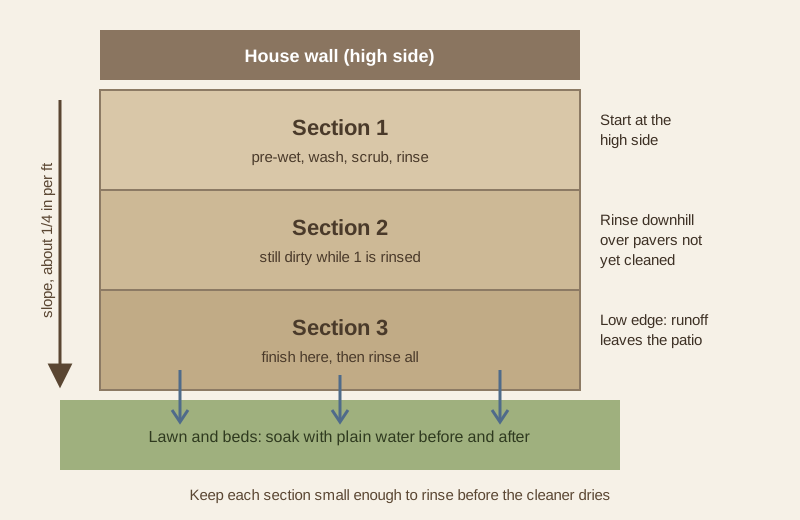
The most common mistake with any patio cleaning product is letting it dry on the surface. Dried detergent leaves a film, and a dried acid keeps working quietly where you can't see it, like a very small, very determined employee. Prosoco's patio paver cleaning walkthrough sets the order as pre-wet, apply, scrub, then rinse before the cleaner dries. Doing that across a whole patio at once is impossible, so split the job:
- Pick your sections. Divide the patio into strips you can clean and rinse in a few minutes. Start at the high side, usually the edge next to the house.
- Pre-wet the section. Wet pavers absorb less cleaner into the pores, so the solution stays on the surface where the dirt is.
- Apply the solution. Use a watering can, pump sprayer or mop, and keep the whole section wet.
- Scrub. Use a stiff nylon deck brush on a pole in overlapping strokes, and a hand brush for corners. No wire brushes: they scratch, and broken steel bristles leave rust spots.
- Rinse downhill. Flush with a garden hose, pushing the dirty water toward the next, uncleaned section and off the patio. Don't rinse back over the part you've already done.
Then move to the next section. When the whole patio is finished, give it one final top-to-bottom rinse.
Let it dry for a day and look at it in low sunlight, which is honest in a way midday sun isn't. Dull patches or streaks usually mean soap residue, and a second plain-water rinse fixes them.
Sealed, brick and natural stone pavers need gentler chemistry
The paver material changes what's safe to use.
- Sealed concrete pavers. Stick to pH-neutral cleaners. Strong alkaline degreasers and acids can soften or dull an acrylic sealer. If the sealer is already patchy or white, cleaning won't fix it; that's stripping and resealing, not more scrubbing.
- Clay brick pavers. Clay is harder and less porous than concrete and copes with mild cleaners well. Scrub gently, because brick patios often have narrow joints that lose sand easily.
- Natural stone. Limestone, travertine and marble dissolve in acid, so no vinegar and no acidic cleaners. Use a stone-safe, pH-neutral cleaner. Slate and bluestone may flake under hard scrubbing.
- Cement pavers and pressed concrete slabs. These clean the same way as concrete pavers. Their smooth faces show soap film more, so rinse twice.
When in doubt, check the manufacturer's care page for your paver line. Most list approved cleaners, and using one keeps warranty questions simple.
When is a paver cleaning machine worth renting?
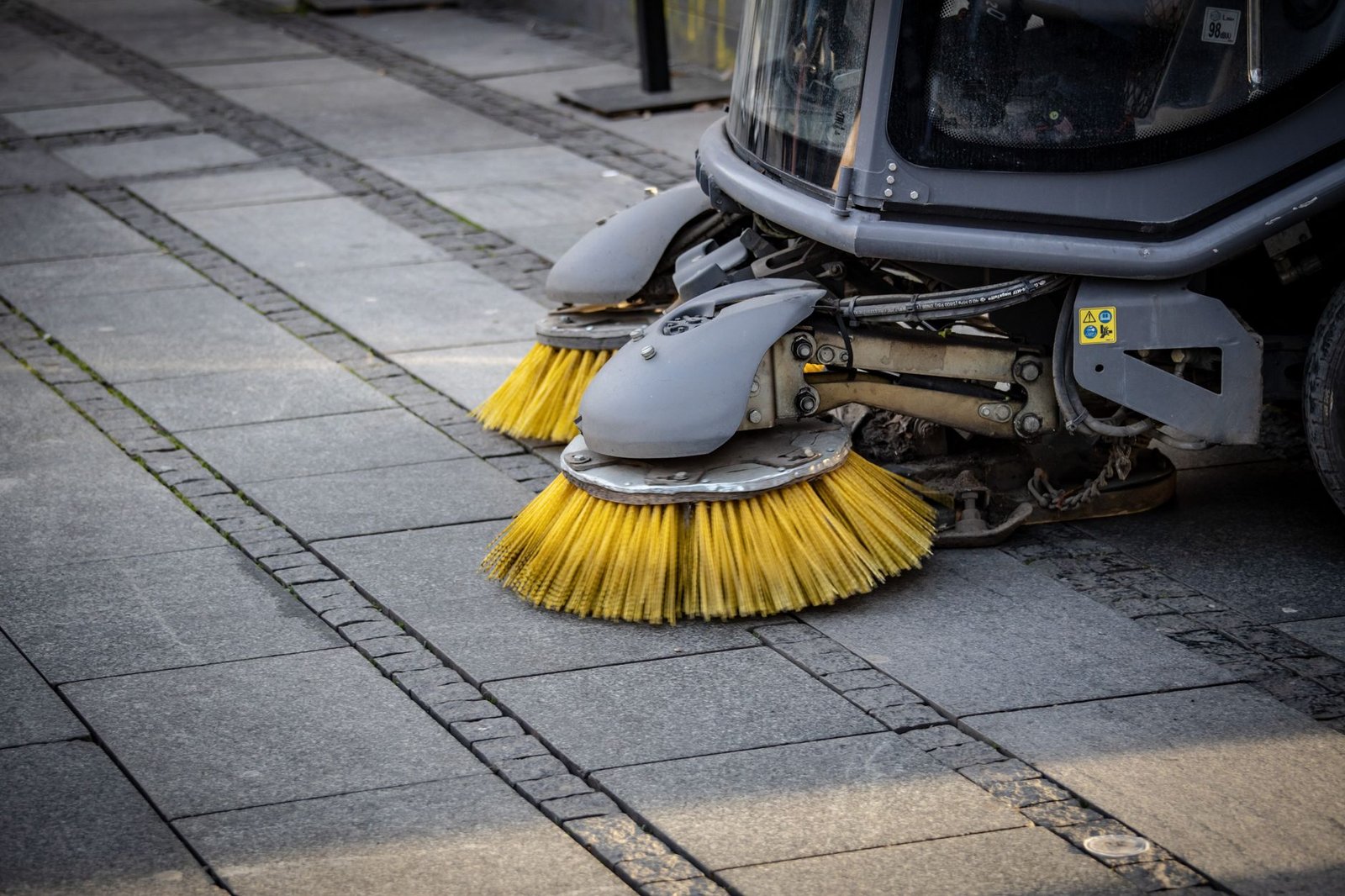
My opinion here: rent the machine, don't buy it. A bucket and brush is fine for a small patio or walkway, and you'll wash it twice a year at most. On a large patio, pool deck or driveway the scrubbing becomes the bottleneck and a machine makes sense for a day, but one you buy works about two days a year and spends the rest in the garage getting its cord tangled. Three kinds show up in rental stores:
- Surface cleaner attachment. A round hood that clips to a pressure washer, with spinning nozzles inside. It cleans evenly, without the stripes a wand leaves, and keeps spray off the joints better. It's the most common "paver washing" setup.
- Rotary deck scrubber. An electric floor machine with a nylon brush head. It uses little water and no high pressure, so it's the safest machine choice for delicate stone or for joints you don't want to disturb.
- Rotating brush attachment. A brush head for a pressure washer wand. Nicolock's patio cleaning guide suggests using the lowest pressure setting and a round brush attachment if you use a washer at all.
A machine doesn't change the chemistry: same cleaner, same rinse-before-it-dries rule. Any high-pressure method also pulls some joint sand, so plan to re-sand afterward.
Pressure washing, stains and white bloom: where this guide stops
Routine cleaning won't solve every problem, and some jobs need their own method:
- Pressure washing. PSI, tip choice and re-sanding are covered in the guide to power washing pavers.
- Oil, rust, tire marks, paint and leaf stains. Each needs a specific remover. See the paver stain remover guide.
- White powder on new or damp pavers. That's efflorescence, and scrubbing with soap won't shift it for long. The efflorescence on pavers page explains when to leave it and when to treat it.
After any cleaning, check the joints. If the sand has dropped below the paver chamfer, top it up once the patio is completely dry.
Clean little and often, with the mildest thing that works
Paver cleaning is easier when it's regular. A sweep every week or two and a soap-and-water wash in spring and fall stop dirt building into a stain. When you do deep-clean, sweep first, pre-wet, use the mildest solution that works, scrub with nylon rather than wire, and rinse each section downhill before the cleaner dries. Save acids and high pressure for the problems that need them. And if the patio looks good after the dish soap round, stop there; the rental counter will still be open next spring.
FAQ
What is the best way to clean pavers?
Sweep, pre-wet, apply a mild detergent or pH-neutral paver cleaner, scrub with a stiff nylon brush and rinse with a garden hose, one section at a time. It removes everyday dirt without damaging the surface or the joint sand. Save a pressure washer for jobs that really need it.
Can I clean pavers without a pressure washer?
Yes. For most patios a hose, a bucket of soapy water and a stiff deck brush are enough, and they're gentler on the joints. For a large area, an electric rotary scrubber gives you machine speed without high pressure.
Is vinegar safe for cleaning pavers?
Diluted vinegar is fine for occasional use on unsealed concrete pavers if you rinse it off within about 15 minutes. It's an acid, though, so test it first and never use it on limestone, travertine or marble. Don't treat it as an everyday cleaner.
What household products can I use to clean concrete pavers?
Mild dish soap in warm water handles most dirt. Oxygen bleach works on green film and mildew. Diluted chlorine bleach, about 1 part to 10 parts water, is for stubborn mildew only. Never mix bleach with vinegar or ammonia.
How often should patio pavers be cleaned?
Sweep every week or two, and more often under trees. A wash with soap and water once or twice a year, typically in spring and fall, keeps most patios looking good. Clean up spills such as grease and wine the day they happen.