Last Updated on September 23, 2026 by Umar Farooq
A pallet of pavers usually covers about 80 to 160 square feet and weighs roughly 2,500 to 3,500 pounds, depending on the paver's size, thickness and material. Small units such as 4 x 8 holland stones come several hundred to a pallet, while large slabs come in dozens. The exact numbers are set by the manufacturer, so read the pallet figures for the product you're buying rather than an average.
I spent an evening reading palletizing charts, which is a sentence I never expected to type. This page covers what a pallet holds, why two pallets of the "same" paver can cover different areas, and what to plan for when a 1.5-ton cube of concrete arrives in your driveway and declines to move.
How many pavers are on a pallet?
There is no single number, because manufacturers load pallets to a safe weight and height, not a fixed piece count. Small, thin pavers mean more pieces; big, thick ones mean fewer.
Here are real examples from one manufacturer's published chart, Artistic Pavers' palletizing data:
| Product | Thickness | Pieces per pallet | Sq ft per pallet | Pallet weight |
|---|---|---|---|---|
| 8 x 8 in paver | 1 5/8 in | 360 | 160 | 2,870 lb |
| 12 x 12 in paver | 1 5/8 in | 180 | 180 | 3,255 lb |
| 12 x 24 in paver | 1 5/8 in | 60–78 | 120–156 | 2,160–2,808 lb |
| 8 x 8 in Roadlock | 2 3/8 in | 264 | 117 | 3,208 lb |
Other suppliers land in the same range. JS Brick puts the average concrete pavers pallet at about 100 to 120 square feet, with 400 to 500 pieces of smaller units or 100 to 200 of larger formats. NT Pavers' coverage table lists 288 pieces (72 sq ft) of 6 x 6 pavers and 25 pieces (100 sq ft) of 24 x 24 pavers on a pallet.
The manufacturer above sells pavers by the square foot and coping by the piece, which is common. You order square footage, and the yard converts it to pallets.
Why thickness changes what a pallet covers
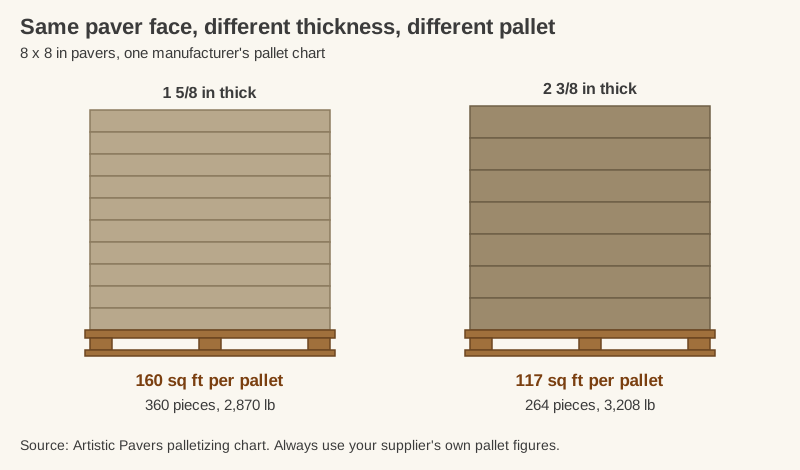
Weight is the limit, so thicker pavers mean fewer square feet per pallet. In the chart above, the 8 x 8 paver at 1 5/8 inches covers 160 square feet per pallet. The same face size at 2 3/8 inches, which is driveway grade, covers only 117 square feet, and the pallet is still heavier.
This catches people out when they compare prices. Two pallets with the same price tag can cover very different areas, which is how a bargain pallet turns out to be a bargain on air. Compare the price per square foot, not the price per pallet. For standard patio pavers at 2 3/8 inches (60 mm), expect less coverage per pallet than for thin wall caps or step treads.
Multi-size kits and patio-on-a-pallet packs
Three-piece and random-pattern pavers are packed in layers that hold the sizes in the right ratio. Some "patio on a pallet" kits hold exactly enough for one small patio, such as 100 square feet of 12 x 12 units. They are convenient, but check whether the pack includes any allowance for cuts. I read the fine print on several, and most do not.
How much does a pallet of pavers weigh?
Plan for roughly 1.25 to 1.75 tons per pallet. JS Brick says most pallets weigh 2,500 to 3,500 pounds. Eagle Pavers notes that a standard 48 x 40 inch US shipping pallet tops out at about 4,800 pounds, and that stacks taller than about 72 inches risk damaging the pavers. Its pallet weight guide also gives a handy rule: concrete weighs about 11 pounds per square foot for each inch of thickness.
That weight has practical consequences:
- You cannot move a full pallet by hand or with a hand-pallet jack on grass or gravel. It stays where the truck puts it until you unload it.
- A standard pickup cannot carry one safely. A half-ton truck's payload is often less than one pallet. Get it delivered. (The truck will say yes. The suspension will say something else.)
- Thin or old driveway slabs can crack under a point load this heavy. Ask for the pallet to be set on the lawn or on sheets of plywood if your slab is thin.
Delivery: getting the pallet where you need it
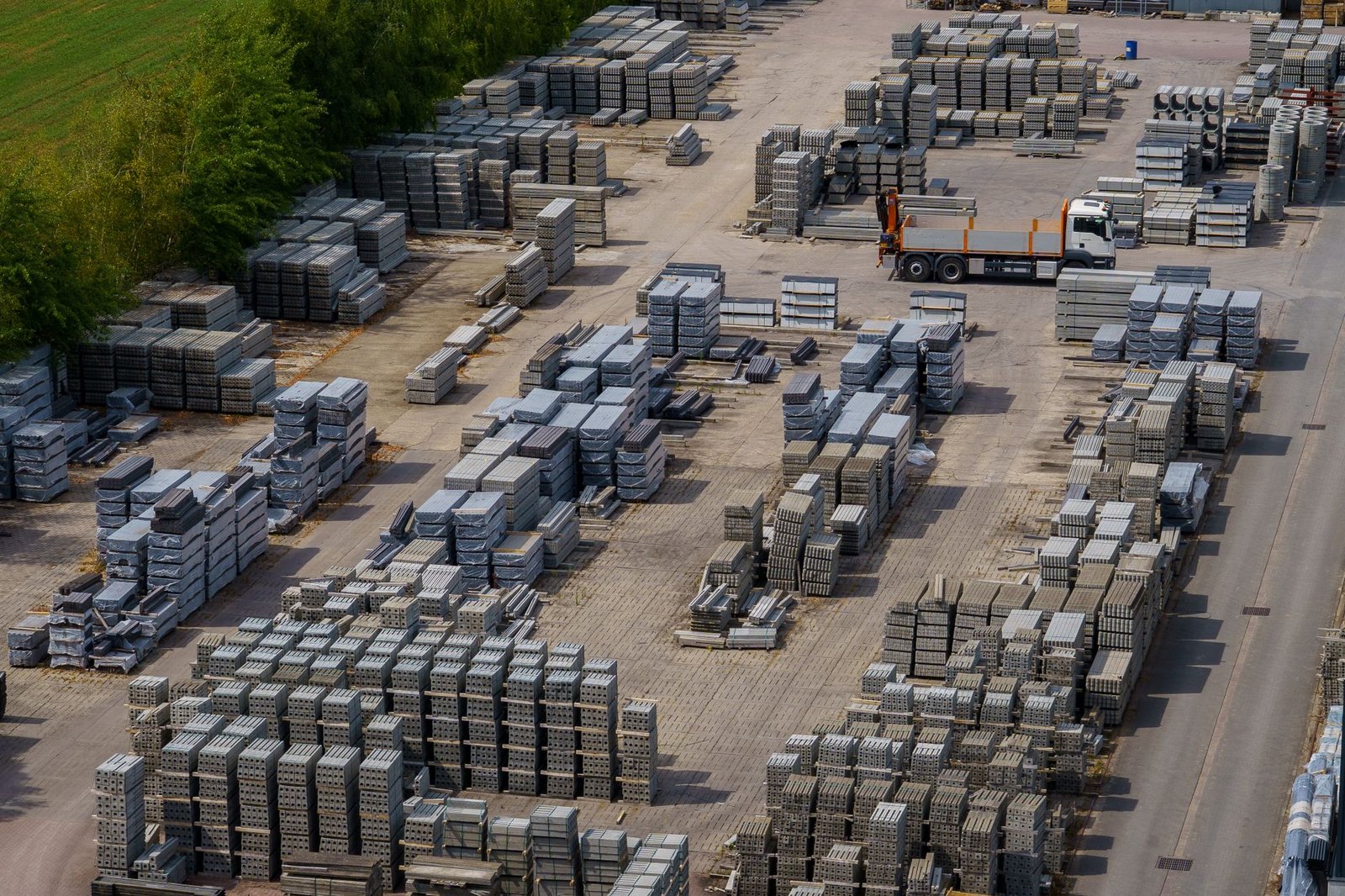
Most suppliers deliver on a flatbed with a truck-mounted forklift or a boom. A truck-mounted forklift can carry a pallet a short way across firm, flat ground. A boom can reach over a curb or a low fence. NT Pavers lists delivery fees of about $60 to $200, depending on distance and order size. Before the truck arrives:
- Choose the drop spot. Put the pallets as close to the patio as possible, but not on the area you will excavate.
- Measure the access. Gates, side yards and slopes decide whether a forklift can get through. Tell the yard about soft ground, low wires and overhanging branches.
- Ask about the drop. Some yards only drop at the curb. If you want it placed in the backyard, confirm that when you order.
- Be home for delivery, or mark the spot clearly with paint or stakes.
- Inspect before signing. Count the pallets, check the product and color codes, and note any broken layers on the delivery ticket.
Pallets left on a lawn smother the grass under them, leaving a perfect pale square like a crime-scene outline. Schedule delivery close to your install date.
Handling pavers once they are on site
Unwrap only the pallets you are about to use. The shrink-wrap and straps keep the stack stable and the pavers clean. Once opened, work across the pallet in layers rather than digging out one side, because a lopsided stack can tip.
Pull from three or four pallets at once as you lay the patio. Color varies slightly from pallet to pallet, even within the same production run, and blending prevents a visible patch where one pallet ended. Wear gloves and lift with your legs. Each pallet is well over a ton.
Pallet deposits, partial pallets and returns
The pallet itself is not free. Many suppliers add a pallet deposit to the invoice and refund it when the empty pallets go back. Others include pallets in the price, and some will collect them on a later delivery. Ask before you break the pallets up for firewood.
Other buying terms to check:
- Partial pallets. Many yards sell loose layers or cut pallets, often at a higher price per square foot. Buying a full pallet can cost less than buying 80% of one.
- Returns. Policies vary widely. Unopened full pallets of stock items are easiest to return; opened pallets, special orders and discontinued colors often can't be. Restocking fees are common, and the return delivery is usually yours.
- Overage. Do not return every last spare. Keep a few pavers from the same run for future repairs.
Order by the square foot, receive by the pallet
The number that matters is square feet per pallet for the exact product and thickness you chose. Work out area and waste first, divide by the supplier's coverage and round up; our guide to how many pavers you need walks through the math, and our patio pavers price breakdown covers cost by material. My one strong opinion: pay the delivery fee and don't try to be the delivery. At $60 to $200 (NT Pavers) against a 2,500-to-3,500-pound load on a half-ton truck, it's the cheapest line on the invoice. Pick the drop spot, be home when the truck arrives, and say goodbye to that square of lawn for a week or two.
FAQ
How many square feet are in a pallet of pavers?
Most pallets cover about 80 to 160 square feet. JS Brick puts the average for concrete pavers at 100 to 120 square feet. The exact figure depends on paver size and thickness, so use the coverage listed by the manufacturer.
How many 12×12 pavers are on a pallet?
It varies by manufacturer and thickness. One published chart lists 180 pieces of a 1 5/8-inch 12 x 12 paver, covering 180 square feet, while NT Pavers' table lists 56 pieces (56 square feet) of 12 x 12. Check the product's own spec.
How heavy is a pallet of pavers?
Typically 2,500 to 3,500 pounds. Thicker pavers and natural stone are heavier per square foot. Eagle Pavers puts the upper limit for a standard 48 x 40 inch pallet at about 4,800 pounds.
Can I pick up a pallet of pavers with my truck?
Usually not safely. A full pallet often weighs more than a half-ton pickup's payload rating. Paying for delivery with a truck-mounted forklift is safer, and it puts the pallet closer to the job.
Do I get money back for returning empty pallets?
Sometimes. Many suppliers charge a refundable pallet deposit and credit it when the empty pallets are returned. Ask at the time of order, and keep the pallets intact until you know.