Last Updated on September 23, 2026 by Umar Farooq
A paver base is the compacted layer of crushed stone, at least 4 inches thick under a patio and at least 6 under a driveway (and 2 to 4 inches deeper where the soil is wet, weak or freezes), that sits between the native soil and a 1-inch bed of sand. It carries the load, sheds water, and holds the pavers flat. It's also the one layer nobody asks to see at the housewarming. When a patio sinks, ruts or heaves, the cause is almost always a paver base that was too thin, too loose, or built on soft soil.
For which stone to buy, see our guide to paver base material.
What a paver base actually does under a patio
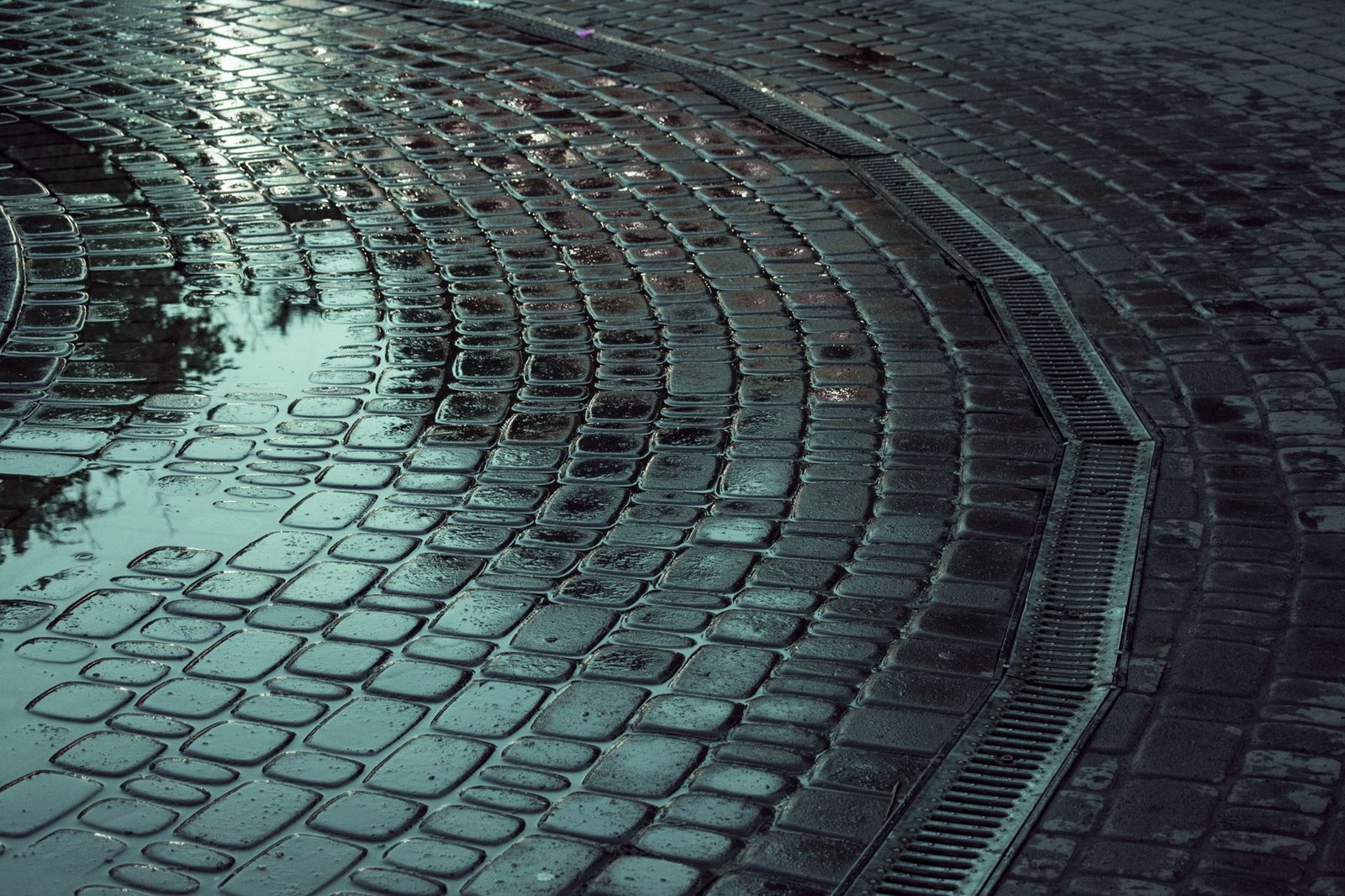
Concrete pavers are strong but small, so none of them can bridge a soft spot the way a poured slab can. The base spreads each footstep, grill leg or tire across a much wider area of soil, so the ground underneath never sees a concentrated load.
A good base does four jobs:
- Spreads the load. Compacted angular stone locks together and acts like a stiff mat.
- Drains water. Rain that gets through the joints needs somewhere to go other than the soil directly under the pavers.
- Resists frost. Well-drained stone holds little water, so there's less to freeze and expand in winter.
- Sets the final shape. The pavers can only be as flat and as well sloped as the surface they sit on.
That last point matters most. I read the Concrete Masonry & Hardscapes Association (CMHA, formerly ICPI) guide specification for pavers on an aggregate base with a highlighter, and the line I highlighted hardest says the installer "cannot correct deficiencies in the base surface with additional bedding sand." You can't fix a lumpy base with extra sand. Every hump and dip in the stone turns up in the finished patio, usually right where the table goes.
The three layers of a paver patio base
Every sand-set paver installation has the same stack, from the bottom up:
- Subgrade. The native soil after you remove the sod, topsoil and roots, firm and compacted. Organic soil keeps decomposing and settling for years, so it never belongs under a base.
- Aggregate base. The structural layer: crushed stone from about 3/4 inch down to dust, compacted in thin lifts until it takes no footprints.
- Bedding layer. 1 inch of coarse concrete sand (ASTM C33), screeded flat and left loose. The plate compactor vibrates the pavers down into it. Our guide to screeding sand for pavers covers this step in detail.
People call the whole stack "paver base," but installers mean layer 2, the one that decides whether a patio lasts.
On clay or silty soil, a fourth element sits between layers 1 and 2: a sheet of geotextile fabric. More on that below.
How deep should paver base be?
Base thickness depends on two things: what will walk or drive on the surface, and how well your soil drains. ICPI's Tech Spec 2 sets the floor at 4 inches for patios and walks and 6 for residential driveways on well-drained soil, then adds 2 to 4 inches for cold climates and wet or weak soils. Sandy soil takes the thin end of each range; clay needs the thick end.
| Use | Well-drained sandy or gravelly soil | Clay, poorly drained soil or new-build backfill |
|---|---|---|
| Walkway or patio (foot traffic) | 4–6 in compacted base | 8 in compacted base, plus geotextile |
| Patio with a hot tub, outdoor kitchen or heavy planters | 6–8 in | 8–10 in, plus geotextile |
| Residential driveway | 6–8 in | 12 in or more, plus geotextile |
Manufacturers tend to go deeper. Unilock's base depth recommendations call for 6 to 8 inches under pedestrian areas in established neighborhoods, at least 8 inches on clay, and 12 to 14 inches under driveways in new developments, where the backfilled soil around the house hasn't finished settling.
Go deeper on new construction, and in cold climates where local suppliers build deeper bases as standard. They've seen what winter does to shallow ones. Driveway details are in the paver driveway installation guide.
Digging out: base + sand + paver = excavation depth
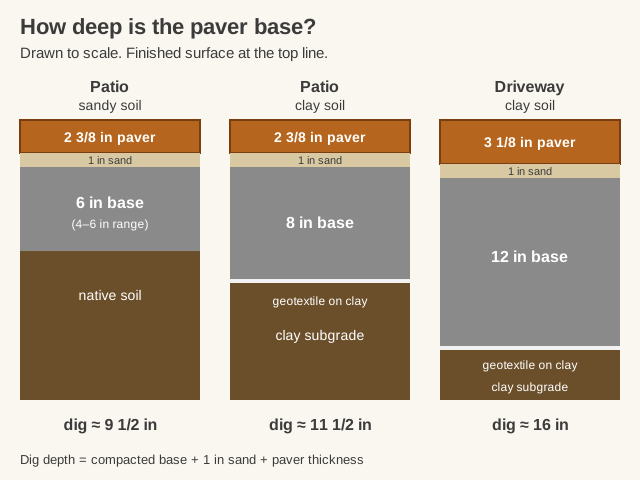
Add the compacted base thickness, 1 inch of bedding sand, and the paver thickness. Standard patio pavers are 2 3/8 inches (60 mm) thick, and driveway pavers are 3 1/8 inches (80 mm).
- Patio on sandy soil: 6 in base + 1 in sand + 2 3/8 in paver = about 9 1/2 inches below finished grade.
- Patio on clay: 8 + 1 + 2 3/8 = about 11 1/2 inches.
- Driveway on clay: 12 + 1 + 3 1/8 = about 16 inches.
Measure from the planned finished surface, not from the lawn. The finished surface usually sits about 1/2 inch above the surrounding grass so water runs off. Next to a house, it must sit below the door threshold and below any weep holes or siding.
- Dig wider than the patio. The base should run past the paver edge by at least 6 inches, so the edge restraint sits on compacted stone. Go wider for a driveway.
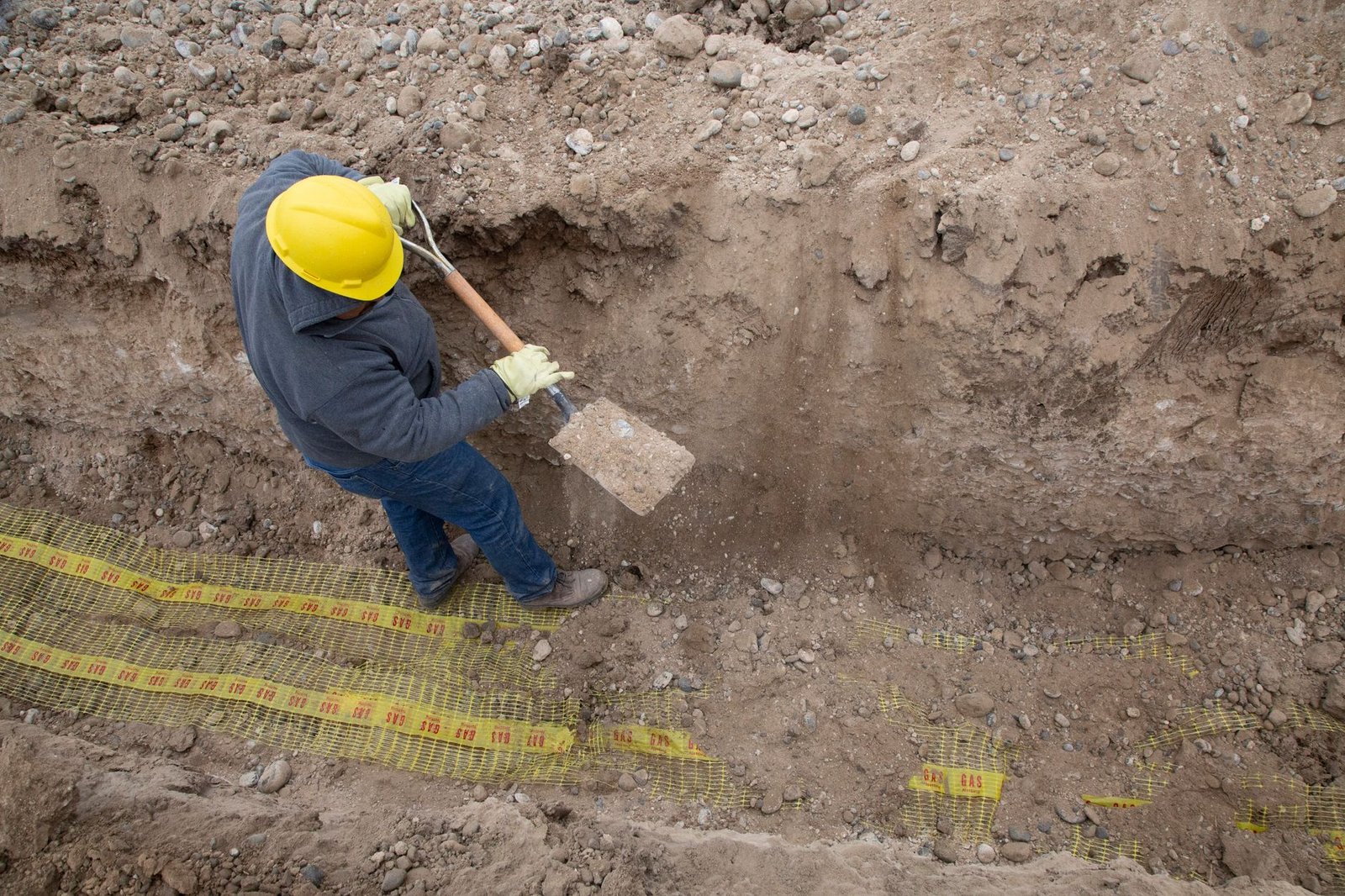
- Keep digging until you hit firm soil. If you find black topsoil, roots or old fill at the planned depth, remove it and replace it with compacted base stone. Don't bury it and hope.
- Compact the subgrade before any stone goes in. CMHA's specification calls for at least 98% of standard Proctor density for pedestrian areas and residential driveways. On a DIY job, that means the soil barely marks under your boot heel.
- Shape the slope in the soil. If the subgrade is already pitched, each layer of stone above it follows the same slope.
Compact the base in 2- to 3-inch lifts
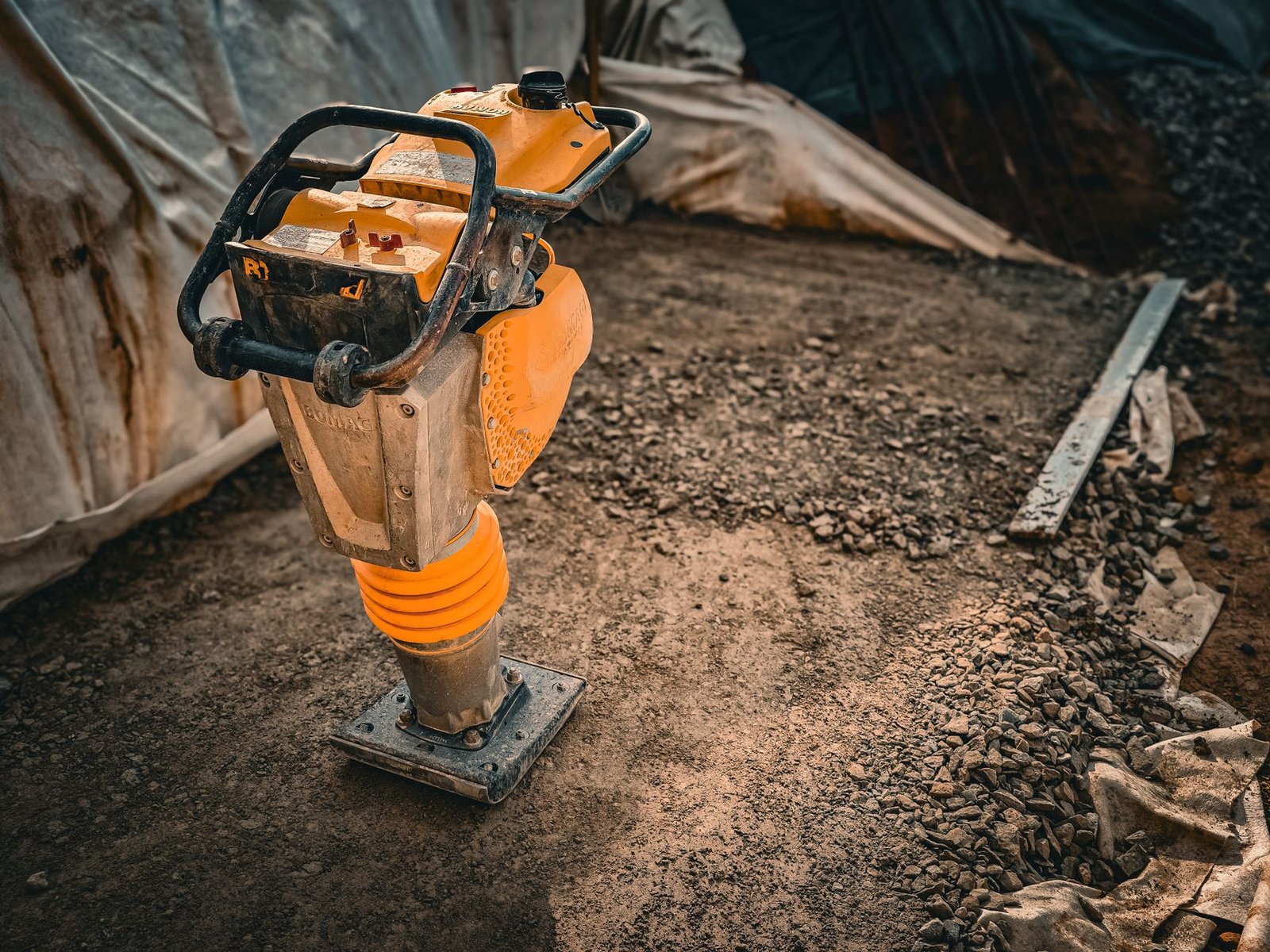
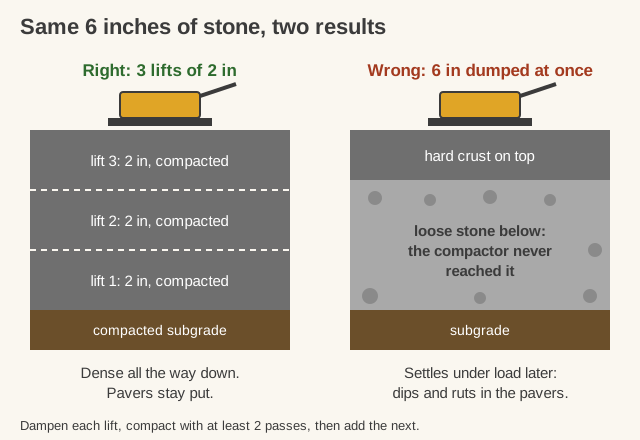
This is my one hill on this page: six inches of gravel compacted once from the top is only compacted at the top. The plate firms the upper couple of inches into a skin, and everything below it is still loose stone waiting for a reason to move. ICPI pairs its 4-to-6-inch lift with a reversible plate rated at 7,000 lbf, and the same sentence says "thinner lifts will be required for compactors in the 5,000 lbf (22 kN) range." The plate a rental yard hands a homeowner is usually one of the smaller ones, and that loose stone settles later, under the pavers.
The fix is to build the base in lifts:
- Spread 2 to 3 inches of loose base stone, raked to the planned slope.
- Dampen it with a light spray. It should look darker, but no water should pool or run off. Moist stone compacts much better than dry stone, while soaking-wet stone just pumps and squirts.
- Make at least two passes with the plate compactor over the whole area, the second at 90 degrees to the first.
- Check the surface with a straightedge and string lines, then add the next lift.
A sandy-soil patio takes two or three lifts; a driveway on clay takes four to six. It's slow, and it's the step that matters most. Rent the compactor; owning one mostly means finding somewhere to keep it.
How to tell when a lift is done: walk on it. Properly compacted base stone doesn't show boot prints, and the compactor stops "bouncing" and starts riding smoothly. Use a hand tamper or a jumping-jack rammer along walls and in corners the plate won't reach.
How flat the top has to be: CMHA sets a base tolerance of ±3/8 inch under a 10-foot straightedge before sand goes down. A long, straight 2×4 works as the straightedge. Fill low spots with base stone and compact them. Not with sand.
How much stone to order: loose stone shrinks as it compacts, so order more than the compacted volume. Multiply length × width × compacted depth in feet, divide by 27 for cubic yards, then add about 15 to 20% for compaction and waste. Most quarries figure crushed stone at roughly 1.4 to 1.5 tons per cubic yard, but ask your supplier. A 12 × 16 foot patio with a 6-inch base (0.5 ft) needs 96 cubic feet compacted, which is 3.6 cubic yards. Order about 4.2 cubic yards, or roughly 6 tons.
Should geotextile go under the paver base?
Use geotextile on clay and silty soils. On sandy, well-drained ground, you can usually skip it.
It solves contamination. Clay turns to paste when wet, and every load pushes a little of that paste up into the voids of the stone. Over a few seasons, the bottom of the base turns into muddy gravel that no longer drains or carries load. A separation fabric keeps the two apart, like a referee who never gets tired.
- Buy geotextile, not weed-barrier film. Use a non-woven or woven geotextile rated for separation. Thin landscape fabric tears under stone and equipment.
- Lay it on the compacted subgrade, not between the base and the sand.
- Overlap the seams by 12 inches or more, and run the fabric up the sides of the excavation so soil can't creep in from the edges.
- Don't drive on it bare. Spread the first lift from the edge you're standing on, pushing it forward over the fabric.
Family Handyman's patio base walkthrough also puts a non-woven fabric under the base layers, for the same reason.
Build the slope into the base, not the sand
A paver patio needs to shed water, and the slope belongs in the base. Within 10 feet of the house, the IRC (R401.3) wants paved surfaces sloped at least 2% away from the building, which is a quarter inch per foot, or 1 inch of fall every 4 feet. A 12-foot-deep patio drops about 3 inches from the wall to the lawn edge. Check with your local building department, since adoption varies.
Build the slope into every layer:
- Shape it into the subgrade.
- Carry it through each lift of base.
- Set string lines at the finished slope and measure down from them as you work.
The sand layer should stay a uniform 1 inch everywhere. Slope the sand instead and you end up with 2 inches at one end, which settles unevenly.
If the low edge drains toward a fence, a raised bed or a neighbor's yard, plan a swale or channel drain before the base goes down, not after the first storm introduces you.
Stone choice in one paragraph
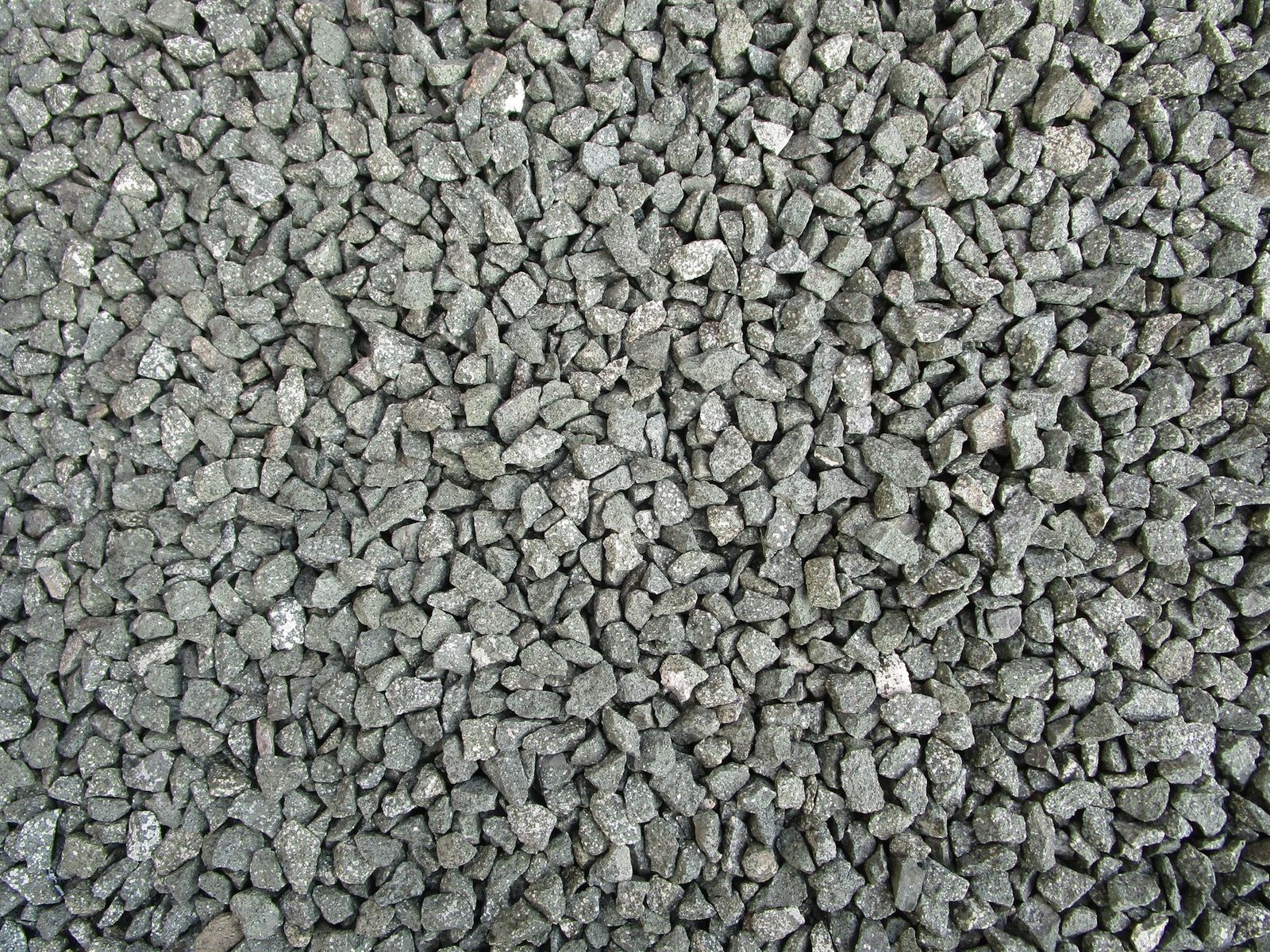
For a standard patio, the right base stone is angular crushed stone graded from about 3/4 inch down to fines. It goes by crusher run, quarry process (QP), road base, Class 5 or dense-graded aggregate, and the mix of sizes lets it compact solid. Rounded pea gravel, river rock and plain sand don't lock together, so they don't belong in the base. Permeable pavers are the exception: they use clean, open-graded stone with no fines. The material guide linked at the top compares all of these, including plastic base panels.
How a failing base shows up, and what it means
Base problems usually show within a year or two, and the symptoms help you judge a contractor's past work too:
- A dip in the middle of a patio usually means loose stone underneath: a base dumped in one thick layer, or organic soil left under it.
- Ruts in the wheel paths of a driveway mean the base is too thin for vehicle loads, or clay has pumped up into the stone.
- Pavers creeping outward at the edges mean the base stopped short of the edge, so the edge restraint had nothing solid to grip.
- Puddles that sit for hours mean the slope was built into the sand or never built at all.
- Humps after winter mean water was trapped in a poorly draining base and froze.
I searched for a real failure rate for thin bases, the kind of number contractor sites love, and every figure traced back to another contractor site rather than a study. The mechanism above is real; the percentages aren't sourced. What is certain is that none of these can be fixed by re-leveling sand. The pavers come up, and the base gets rebuilt. For the end-to-end sequence, see our paver installation guide.
Spend your effort below the sand
The pavers, the pattern and the joint sand are what people see, but the paver base decides how long the patio lasts. Dig to the depth your soil and traffic call for, remove anything organic, lay geotextile on clay, compact in lifts, and build the slope into the stone. If the stone is already sitting in the driveway, start with a 2-inch lift and the hose on mist. After that it's just repetition, the one construction skill nobody has to practice first.
FAQ
How deep should a paver base be for a patio?
For a patio on well-drained soil, compact at least 4 inches of crushed stone base, and 4 to 6 is typical. On clay or recently backfilled soil, go to at least 8 inches and add geotextile underneath. With 1 inch of sand and 2 3/8-inch pavers on top, that means excavating about 7 1/2 to 11 1/2 inches below finished grade.
Can you use too much paver base?
Extra base does no harm structurally, as long as it's compacted in thin lifts. The costs are more digging, more stone to haul, and a patio that may end up too high against the house. A thick base dumped in one layer is worse than a thinner base compacted properly.
Should paver base be wet when you compact it?
Damp, not wet. Lightly mist each lift until the stone darkens, then compact it. Moisture helps the fines coat the larger stones and pack tightly. Soaking-wet stone or muddy subgrade pumps under the compactor instead of densifying, so let a saturated site dry out first.
Do I need a plate compactor for a paver base?
For anything bigger than a small landing, yes. A hand tamper can't reach the density a base needs across a whole patio. Rent a plate compactor for the base lifts and for vibrating the pavers into the sand, and keep a hand tamper for corners and along walls.
Can I put paver base directly on grass?
No. Remove the sod and the organic topsoil first. Grass and roots rot and leave voids, and topsoil compresses under load. The base has to sit on firm, compacted mineral soil.
What goes between the paver base and the pavers?
A 1-inch layer of coarse concrete sand (ASTM C33). It's screeded smooth and left loose, and it gives the pavers a bed to settle into when they're compacted. Don't use it to fill low spots in the base, and don't substitute stone dust or mason sand.