Last Updated on September 23, 2026 by Umar Farooq
A paver joint compound is any material that fills and binds the gaps between pavers. When people search the term, they usually mean a resin jointing compound: a ready-mixed tub of sand coated in resin that you wash into the joints with water and that hardens as it air-cures. It is made for wide joints, 3/16 to 1/4 inch and up, and at least about 1 1/4 inches deep. It's at its best on natural stone and porcelain patios laid on a free-draining base, and most versions are rated for foot traffic only. On standard interlocking concrete pavers with narrow joints, polymeric sand is still the right paver joint material. The tub costs more than the bag, and the price is the least of the differences.
Below: the main types, which suits which joint and base, and how to apply a resin compound. Polymeric sand itself is covered in depth in our guide to what polymeric sand is.
What jointing compound is, compared with polymeric sand
Both products bind sand grains together in the joint, but they set in different ways.
- Polymeric sand has a dry binder that sets when misted. It is swept in dry onto a dry surface, and rain at the wrong moment can ruin it.
- Resin jointing compound is sand already coated with a resin binder, sold damp in a sealed tub or bag. It sets by curing in the air once opened and spread, so it is applied to a wet surface and washed into the joints with water. Western Interlock's comparison of jointing compound and polymeric sand describes it as an epoxy-resin product intended for joints wider than about 3 mm and at least 25 mm deep.
That difference drives everything else. A compound can go down in damp weather and doesn't haze the way badly watered polymeric sand can. (It is the rare paving product that actively wants the rain.) But it needs wide, deep joints to form a strong strip, and it costs considerably more per square foot.
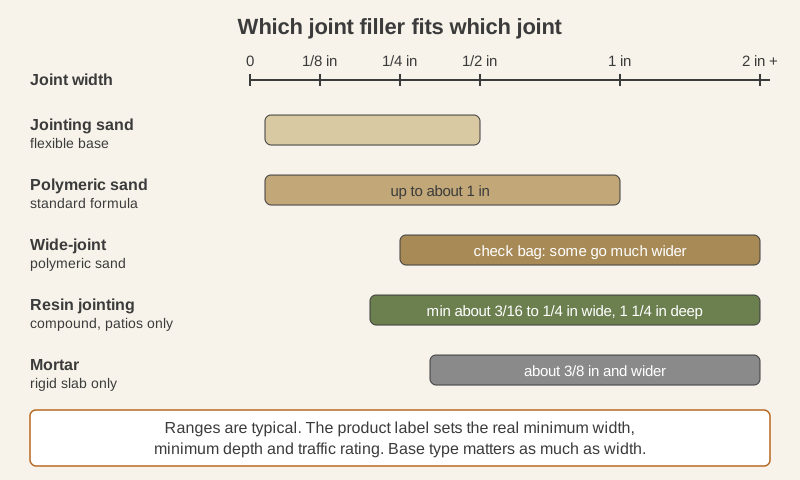
Five paver joint materials side by side
| Material | How it sets | Typical joints | Base | Traffic | Weak points |
|---|---|---|---|---|---|
| Jointing sand (plain) | Doesn't set; locks by compaction | Narrow, on interlocking pavers | Flexible sand and gravel | Foot and vehicle | Washes out, weeds, ants |
| Polymeric sand | Dry binder activated by water | Narrow up to about 1 inch (standard) | Flexible; sand-set overlays | Foot and vehicle | Needs dry weather; haze if badly watered |
| Wide-joint polymeric sand | Same, coarser grading | Wider joints, per bag | Flexible | Per bag | Same weather limits |
| Resin jointing compound | Air-cures after washing in | 3/16 to 1/4 inch minimum, 1 1/4 inch deep | Free-draining, or sloped concrete with permeable bedding | Mostly foot traffic | Cost; won't bond on shallow joints |
| Cement mortar | Hydrates, rigid | About 3/8 inch and wider | Rigid slab only | Foot and vehicle on slab | Cracks on any flexible base |
A sixth option, permeable jointing stone, is simply small angular chips (often ASTM No. 8 or No. 9) swept into the wide joints of permeable pavers. It doesn't bind at all, which is the point: the water drains through it. Cement mortar gets its own guide in mortar paver joints.
Premixed and ready-mixed jointing compounds
"Premixed jointing compound" and "ready-mixed patio jointing compound" describe the same product: a one-part resin compound ready to spread straight from the tub. There is nothing to mix and no water ratio to get wrong. The tub is sealed because air starts the cure, so the lid is the most important part of the purchase.
I went through the published specs expecting the products to agree on a minimum joint. They don't, so read the label before you buy:
- ROMEX Easy, a DIY resin jointing product, lists a joint width over 1/4 inch and depth of at least 1 1/4 inches. The application range is 41–86°F, curing is typically 72 hours, and full hardening can take up to 4 weeks. It needs a water-permeable base, or concrete with at least a 2% slope and a permeable bedding layer.
- EASYJoint (sold in the US by Pave Tool Innovators) listed a 3/16 inch joint or larger, wet installation above 37.4°F, and 27.56 lb buckets. It said pavers can be sealed before application but not after. Pave Tool now lists it as discontinued in favor of a newer Xtreme Easy version, so check current specs if you're shopping for "EASYJoint paving joint compound".
Two warnings apply to nearly every one-part compound. First, most are rated for patios and walkways, not driveways. How to Hardscape's guide to paving jointing compounds notes that resin compounds lack the bond to resist turning tires. Vehicle-rated systems exist, but they are usually two-part or specialist commercial products. Second, they can't be installed where water pools continuously, because the joint never gets the air it needs to cure.
Where a resin paver joint compound earns its cost
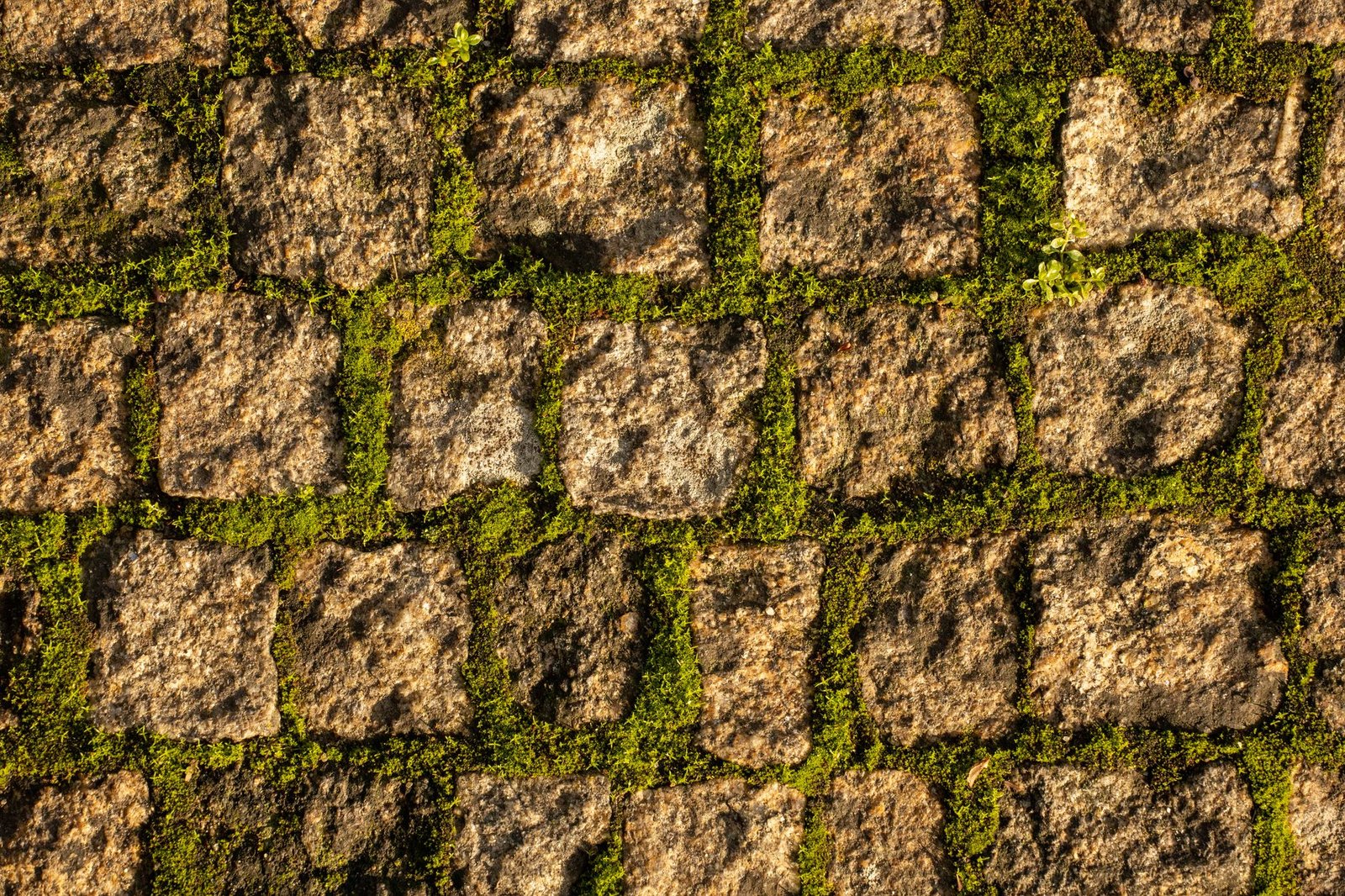
My opinion, and one the tub makers won't print: most patios don't need a resin compound. On narrow-jointed concrete pavers over a sand bed, a bag of polymeric sand does the job for less, and it is rated for cars where most one-part compounds are not. A resin paver joint compound is worth paying for in a handful of situations:
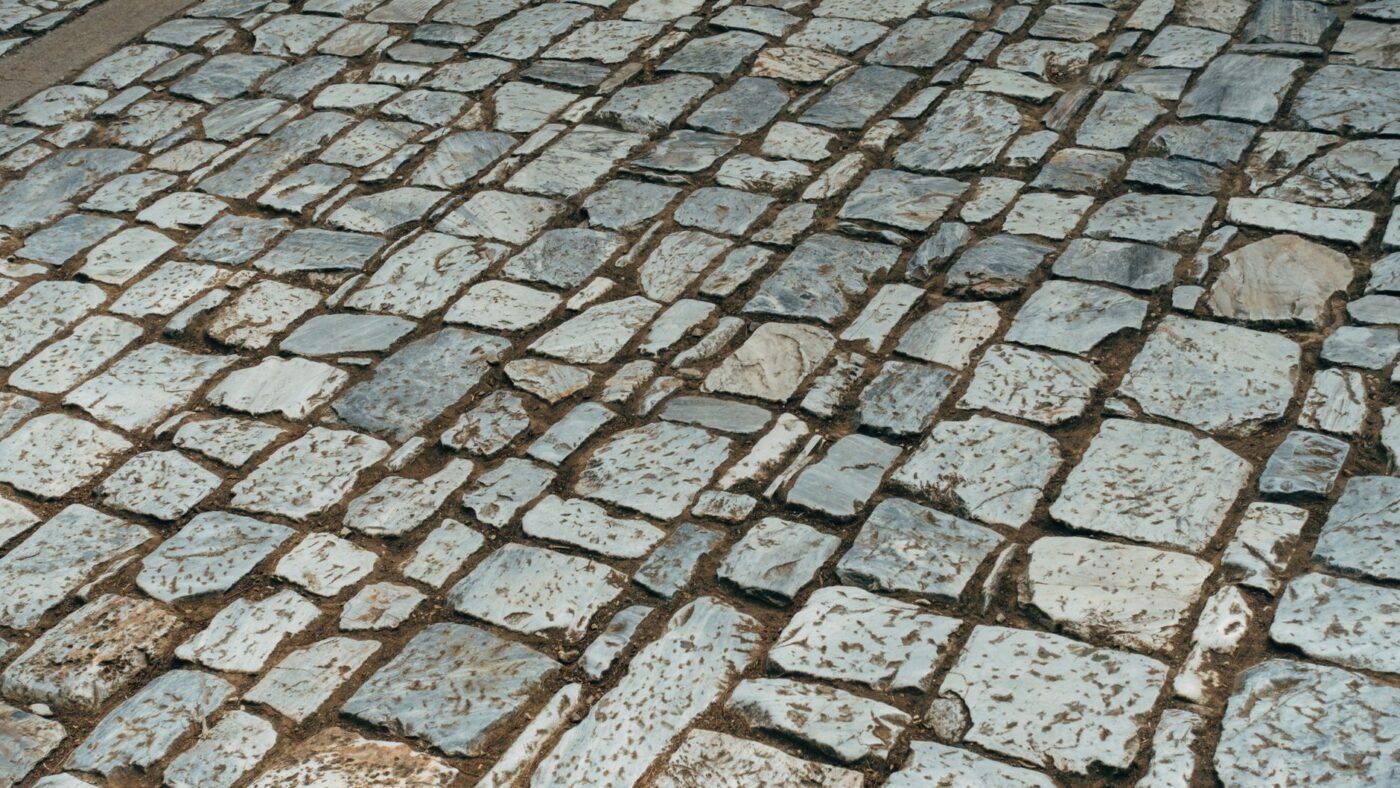
- Wide joints on natural stone. Irregular flagstone, sandstone and granite setts leave joints too wide for standard polymeric sand. Resin compound fills them to a solid, weed-resistant strip.
- Porcelain pavers. Thin, dense porcelain slabs are laid with even, open joints and a smooth face that shows every smear. A compound washes off that face far more easily than cement grout.
- Patios on open-graded or permeable bases. The compound is permeable, so water still passes down through the joints.
- Unpredictable weather. Because it's applied wet, a damp day that would rule out polymeric sand doesn't stop you.
Where it doesn't earn its cost: standard interlocking concrete pavers with narrow joints on a sand bed, and driveways.
Natural stone and wide joints: a closer look
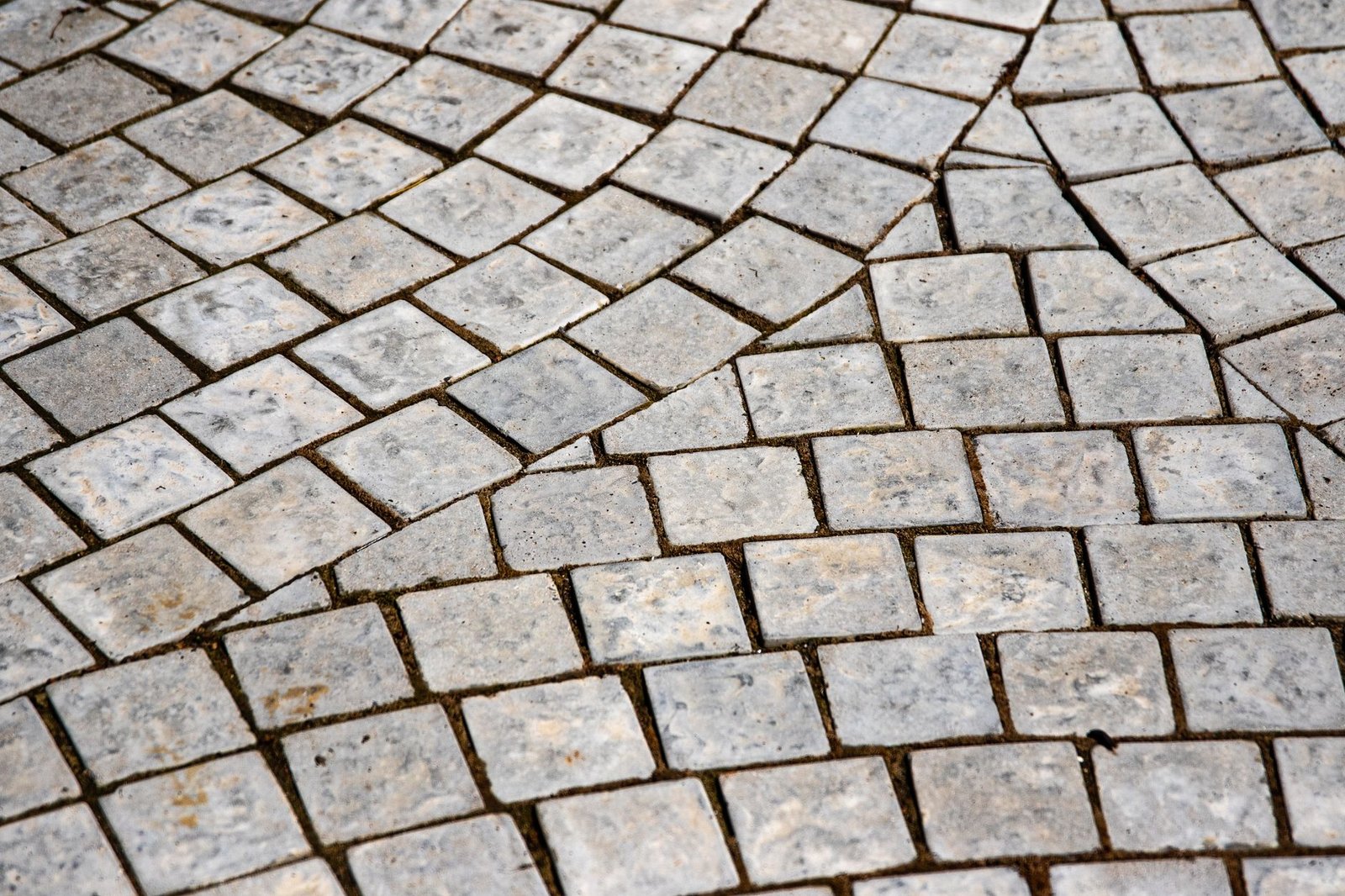
Natural stone raises two problems that concrete pavers don't, mostly because every stone has its own opinion about thickness.
Staining. Porous stone such as sandstone and some limestones can absorb resin or cement residue and darken around the joints. Soak the stone thoroughly before spreading any compound, keep it wet throughout, and remove every trace from the surface before it cures. If the manufacturer allows it, sealing the stone before jointing makes cleanup easier.
Joint depth. Stone of uneven thickness, set on a mortar bed, often leaves joints only 1/2 inch deep in places. A compound that needs 1 1/4 inches will crumble there. Rake out the bedding mortar to create depth, or choose mortar for those joints instead.
How to apply a resin jointing compound
Every brand's instructions differ, so treat this as the general sequence and follow the label:
- Clean out the joints to the required depth, at least 1 1/4 inches for most products. Remove old sand, weeds and loose mortar.
- Soak the whole surface with a hose. Wet pavers keep the resin from sticking to their faces.
- Empty the compound onto the wet paving in a small area and spread it with a squeegee or rubber broom, working diagonally across the joints.
- Keep spraying water as you work. The water floats the material down into the joints.
- Pack the joints full, pressing down with a jointing iron or the edge of a trowel on wide joints, and top up any low spots.
- Sweep off the surplus with a soft brush held at a shallow angle, sweeping diagonally so you don't drag compound out of the joints.
- Leave it to cure. Keep off it for the time on the label, often 24 to 48 hours for foot traffic. Full hardening takes longer, especially in cold weather.
Most products give you working time only once the tub is open, so reseal any leftover compound immediately.
What is the best patio jointing compound for your job?
Answer these in order:
- What's under the pavers? A rigid slab points to mortar or a compound approved for concrete. A flexible sand-and-gravel base points to polymeric sand. An open-graded or permeable base points to a resin compound or jointing stone.
- Will vehicles drive on it? If yes, rule out most one-part resin compounds.
- How wide and deep are the joints? Measure them. Narrow joints under about 3/16 inch are polymeric sand territory. Wider ones need a compound or wide-joint poly sand that lists your width.
- What are the pavers? Porous natural stone needs a product that won't stain it, and a test patch.
- What's the weather? If you can't count on a dry window, a compound that goes down wet removes the risk.
For most American concrete paver patios, the answer is polymeric sand, installed properly. The sweep, compact and mist steps are laid out in how to apply polymeric sand. Choose the compound when the joints are wide, the stone is natural or porcelain, and the traffic is on foot.
Match the compound to the joint, not the other way round
Paver joint compound isn't a better polymeric sand. It's a different product for a different joint. Resin jointing compounds are the answer for wide, deep joints on natural stone and porcelain patios with free-draining bases, and they go down in weather that would ruin polymeric sand. They are the wrong answer for narrow-jointed concrete pavers and most driveways. Measure your joints, check what's under them, and read the label for minimum width, depth and traffic rating before you buy. If the tape measure says 1/8 inch, put the tub back and buy the bag.
FAQ
Is paver joint compound better than polymeric sand?
Not in general. It's better for wide joints on natural stone or porcelain and for installing in damp weather. Polymeric sand is better for narrow joints on interlocking concrete pavers and for driveways, and it costs less.
Can you use jointing compound on a driveway?
Most one-part resin compounds are rated for foot traffic only, because they don't bond strongly enough to resist turning tires. Use polymeric sand on a sand-set paver driveway, or a compound whose label specifically lists vehicle traffic.
How wide do joints need to be for jointing compound?
The products we checked list a minimum of 3/16 to 1/4 inch of width, and ROMEX Easy asks for 1 1/4 inches of depth. Joints that are too narrow or shallow crumble because there isn't enough material to form a solid strip.
Can you apply jointing compound in the rain?
Many resin compounds can be applied in light rain, because they go on a wet surface and cure in the air. Heavy rain during application can wash the material out of the joints, and standing water stops it curing, so avoid downpours and puddles.
How long does paving joint compound take to cure?
It varies by product and temperature. Many allow foot traffic after 24 to 48 hours, and the joints keep hardening for days to weeks. ROMEX Easy, for example, lists 72 hours typical curing and up to 4 weeks to full hardness.
Will jointing compound stain my pavers?
It can stain porous stone if it's spread on dry paving or left on the surface. Soak the pavers before and during application, sweep off every trace before it cures, and test a small patch on natural stone first.