Last Updated on September 23, 2026 by Umar Farooq
Here is how to apply polymeric sand in one paragraph. Wait for a dry forecast and bone-dry pavers. Sweep the sand into the joints and vibrate it down with a padded plate compactor. Top it up until the joints are full to 1/8 inch below the paver surface. Blow every loose grain off the tops of the pavers. Then mist the joints in small sections in three light passes, so the water soaks in without flooding the sand out. Stay off it for at least a day. I have now read more polymeric sand bags than the people who wrote them, and every one is really a set of instructions about water.
Haze, crumbly joints and washouts nearly always come from water at the wrong time or dust left on the pavers. If you're still deciding whether it suits your pavers, start with what polymeric sand is and when to skip it.
How to apply polymeric sand starts with a bone-dry surface
Polymeric sand starts to activate the moment it touches moisture. On damp pavers the binder sets on the face and in the top of the joint too early.
- Forecast. No rain for the full period the bag asks for. For standard products, that's usually 24 hours. Alliance Gator's 10-step installation guide allows as little as 1 hour over a free-draining base but 24 hours otherwise, and fast-set products shorten this.
- Temperature. Above freezing (32°F) during installation and while it sets. In summer, work mornings or evenings so the mist soaks in before it evaporates.
- Surface. Fully dry, down into the joint. After power washing or a rainy spell, give the surface 24 to 48 hours of sun and wind. Dew counts as water, so wait until it has burned off. (The binder does not care whether the water came from the sky or the lawn.)
A quick test: rub a pinch of the sand across a paver. If it drags or darkens, the surface is still damp.
Clean out the joints to full depth
New patio? Skip this step.
On an existing patio, the old joint material has to come out, because polymeric sand needs depth to bond. Sakrete's guide to applying polymeric sand to an existing patio says to fill the entire depth of the paver. I compared two data sheets, Alliance Gator's SuperSand G2 and Techniseal's HP NextGel, and both set the minimum joint depth at 1.5 inches.
- Rake old sand, moss and dirt out with a joint scraper, an old screwdriver or a narrow wire brush.
- A pressure washer with a fan tip is faster, but then everything has to dry.
- Don't dig below the bottom of the pavers into the bedding layer.
A thin layer over old loose sand forms a crust that cracks and flakes out within a season.
Sweep polymeric sand into the joints
Pour the sand in small piles rather than one heap, and keep the bag closed between pours.
Use a stiff-bristle push broom and sweep diagonally across the joints. Sweeping along a joint just pushes sand down its length. Work until every joint looks full, then leave a light layer on top. The compactor will pull more in.
Vibrate the sand down, then top it up
Loose sand bridges and leaves hidden voids; vibration settles it into a dense column. Alliance Gator's G2 data sheet expects about 30 to 50 percent of the sand to drop after the first compaction, so the top-up is not optional.
Don't buy a plate compactor for this. Rent one, and if you're building the patio from scratch, plan the rental so the base, the pavers and the sand all fall inside it. A compactor bought for one patio spends the next decade being walked around in the garage.
- Fit the plate compactor with a urethane pad, or run it on an old rubber mat, so it doesn't scuff or chip the pavers.
- Make at least two passes, the second at 90 degrees to the first. The joints will drop.
- Sweep more sand in to refill the joints.
- Compact again, and sweep again. Stop when the joints no longer drop.
Gasper's installation walkthrough skips the compactor for large slabs and natural stone, which can crack under a plate; use the hand method below for those.
No compactor? Tamp and tap by hand
Installing polymeric sand without a compactor works on small patios, walkways and natural stone. It takes more time.
- Rubber mallet. Tap each paver or stone a few times after sweeping. The vibration settles the sand beside it.
- Hand tamper over a board. Lay a 2×6 across several pavers and strike it with a hand tamper.
- Rod the joints. Push a thin trowel edge or a paint stirrer down each joint to break up sand bridges, then sweep more in.
Repeat sweep–tap–sweep at least three times. Hand-settled joints are less dense, so expect slight settling after the first watering.
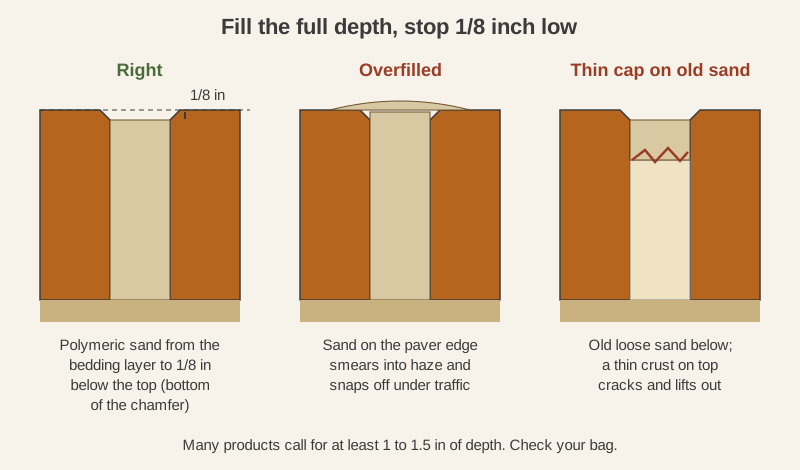
Set the fill line 1/8 inch below the paver top
The finished sand level should sit about 1/8 inch below the top of the paver. On pavers with a chamfered edge, stop at the bottom of the chamfer. Two reasons:
- Sand level with the surface gets scuffed by shoes and smeared by water, which is where haze starts.
- A thin lip of hardened sand on the paver edge snaps off under traffic and looks ragged.
Pull a soft broom lightly across the pavers, never along the joints, then sweep the surplus into a corner and bag it.
The blower pass that prevents haze
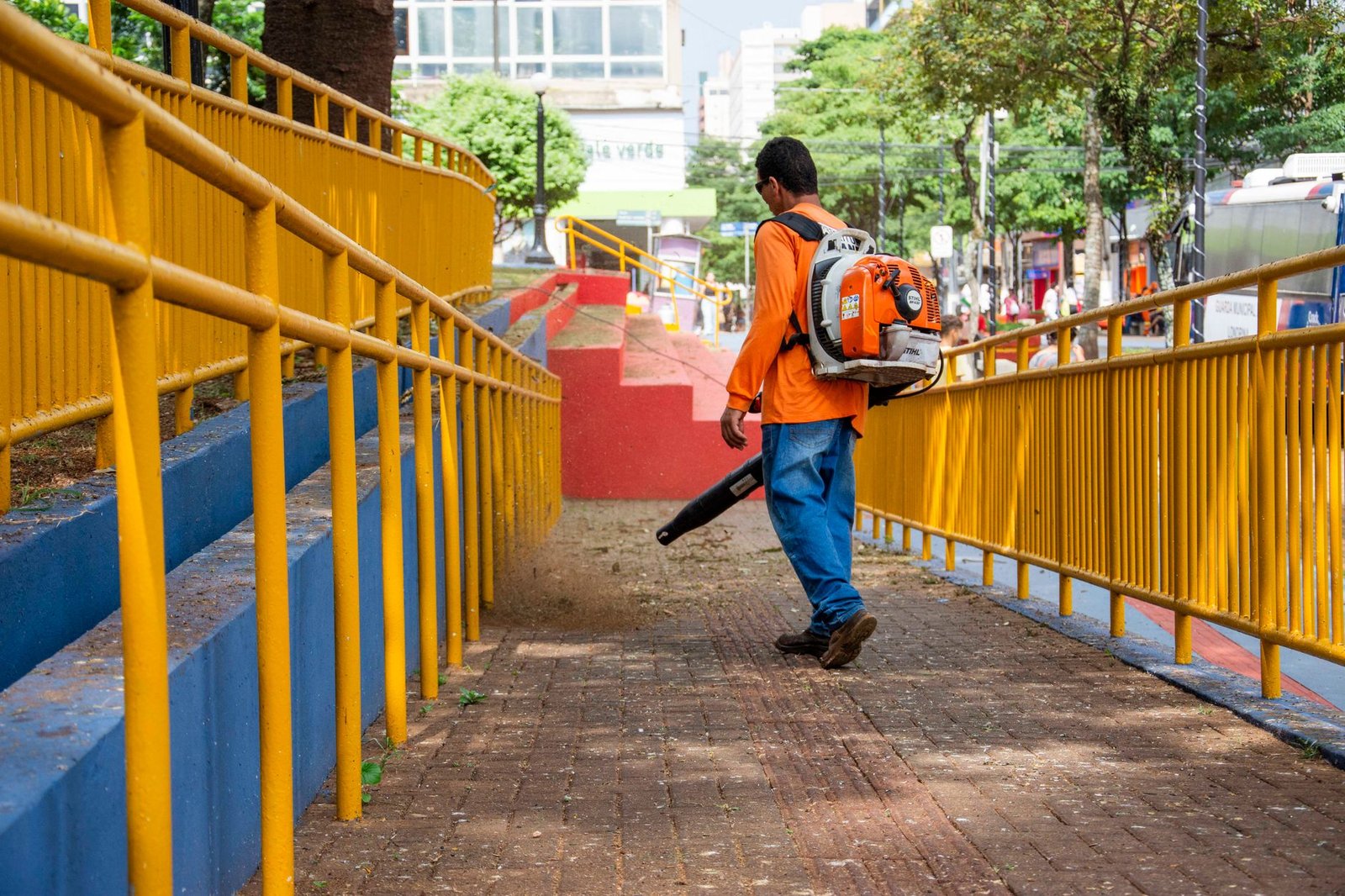
People rush this step. Nobody has ever regretted one blower pass too many. Polymeric dust left on a paver face activates when watered and dries as a grey film.
- Blower on low, nozzle almost flat, blowing across the joints, not down into them.
- Give textured or tumbled faces extra passes. Dust hides in the pits.
- If a joint drops below the 1/8-inch line, refill it and blow again.
- Work toward the edges and off the patio.
Any dusty sheen on the faces means another pass.
Mist in three passes, not one soak
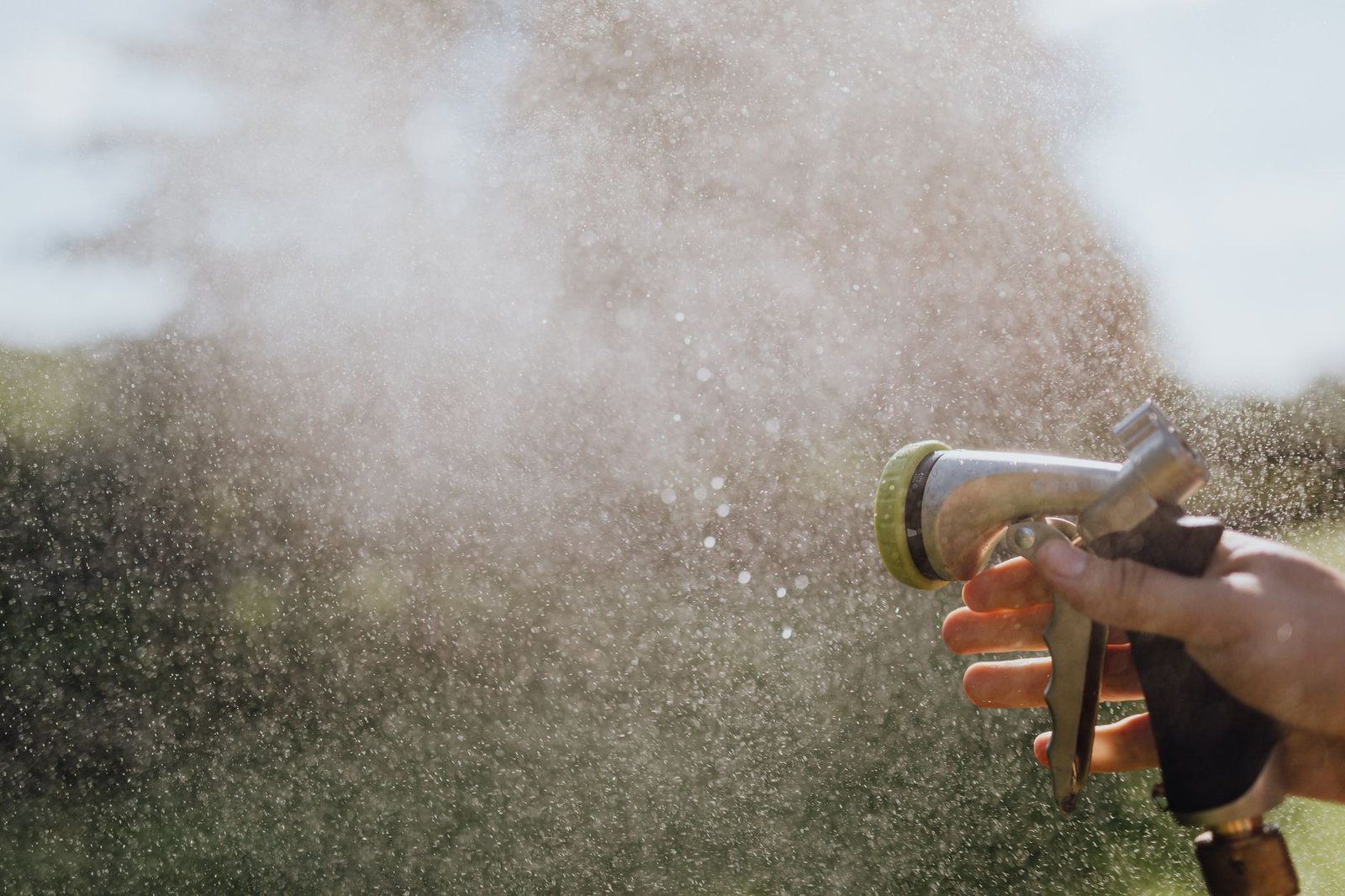
Too little water leaves a weak crust on top and loose sand underneath. Too much water floods the binder out of the joint and onto the pavers. Work in sections of about 10 × 10 feet.
- First pass: mist. Set the hose nozzle to a shower or mist pattern and hold it about 4 feet above the surface. Wet it just enough to settle the dust, without pooling.
- Second pass: soak. Return with the nozzle closer (about 2 feet). Move slowly and let the water soak down into the joints until they stop absorbing it.
- Third pass: rinse. A quick, light pass rinses any remaining film off the paver faces. Keep moving.
Then move on, overlapping the last section slightly. Some products are built around a single watering or signal when to stop with a light foam at the joint. Follow your bag where it differs.
Finally, blow standing water off the pavers on low; water left on the face can dry into a film.
Can you apply polymeric sand twice?
Yes, with conditions:
- Before the first watering: top up as many times as you like.
- Low spots right after the first watering, same day: wait until the surface is dry, then fill the low joints with fresh sand, blow the faces clean, and mist only those joints.
- After it has cured: new sand won't bond to cured sand. Scrape the joint out to at least 1.5 inches, ideally the full paver depth, and apply as if it were new.
Keep off it while it sets
Many standard products ask for about 24 hours before foot traffic and longer for cars. Techniseal's HP NextGel allows feet immediately but cars only after 48 to 72 hours, which is why the bag wins. Rain, traffic and weather windows are in how long polymeric sand takes to dry. For bag math, see how much polymeric sand you need.
Dry in, dust off, water slow
How to apply polymeric sand comes down to three habits: fill a bone-dry patio to full depth and settle it firmly, blow every grain off the faces before water touches them, and water gently in small sections until the joints stop drinking. If you're reading this with the bag already open and a cloud on the horizon, close the bag. It will keep. A rained-on joint won't.
FAQ
How deep should polymeric sand be in the joints?
Fill the full depth of the paver joint, down to the bedding sand, and stop 1/8 inch below the paver surface or at the bottom of the chamfer. The Alliance Gator SuperSand G2 and Techniseal HP NextGel data sheets both call for at least 1.5 inches.
Can you put polymeric sand on wet pavers?
No. Moisture activates the binder early, so sand sticks to the paver faces as haze and sets in the top of the joint before it fills. Wait until the pavers and joints are completely dry, usually 24 to 48 hours after rain or power washing.
Do you wet pavers before applying polymeric sand?
No. Water comes only after the sand is swept in, compacted, trimmed to 1/8 inch below the surface and blown off the paver faces.
What happens if you use too much water on polymeric sand?
The binder washes down or out of the joint and can spread across the pavers as a film. The joint may stay soft, crumble or crust over loose sand. Mist in light passes and stop when the joints stop absorbing water.
Can you use a hand tamper for polymeric sand?
Yes, for small areas. Lay a board across the pavers and strike it with the tamper, or tap each paver with a rubber mallet, then sweep in more sand. Repeat until the joints stop settling.