

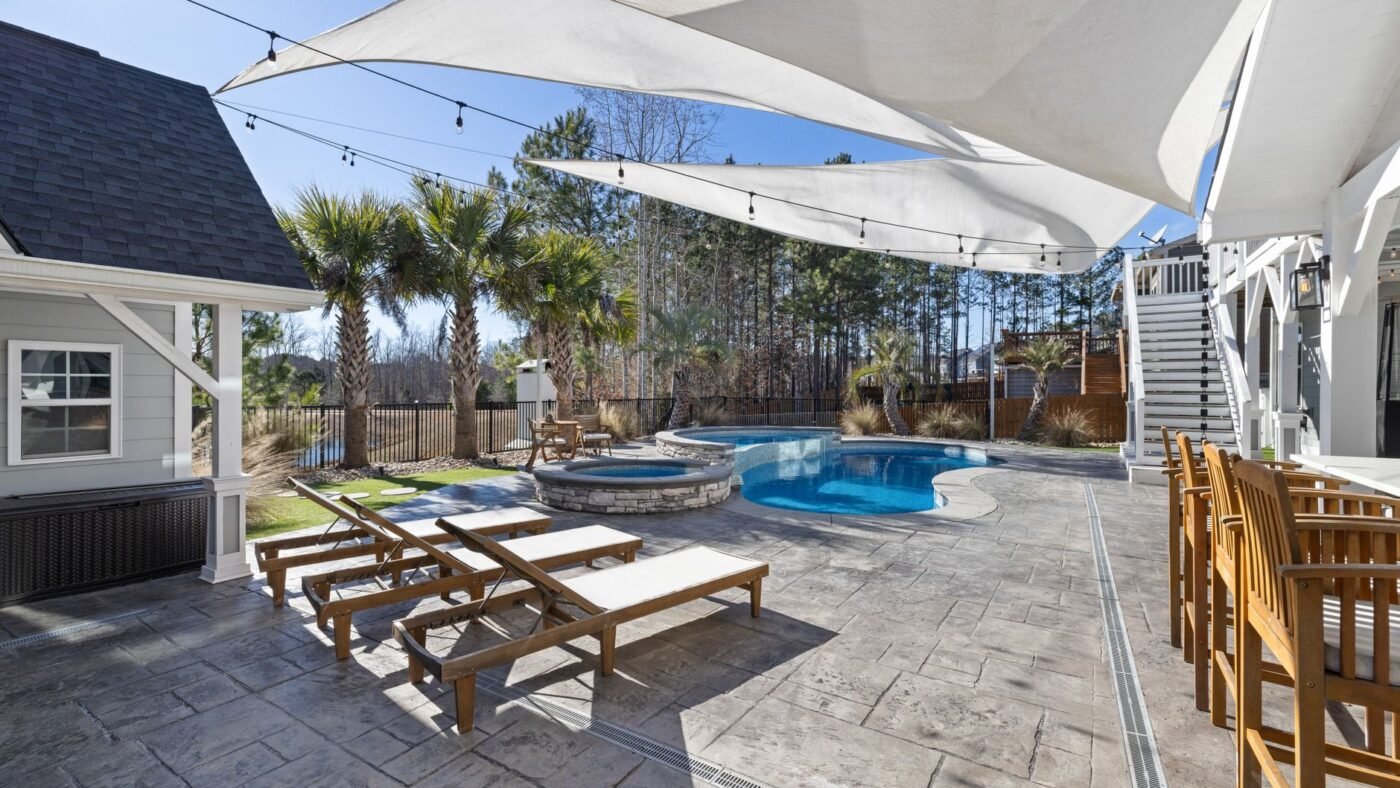
Last Updated on October 20, 2026 by Umar Farooq
Pavers for saltwater pool decks should be dense, low in water absorption and textured underfoot. Well-made concrete pavers and porcelain both fit that description. Soft, porous stone such as sandstone does not. The Concrete Masonry & Hardscapes Association (CMHA) says properly made and installed pavers are an excellent choice for saltwater pool decks, and that the salt itself mostly leaves a cosmetic white film you can rinse off. Acidic cleaners and freeze-thaw cycles are the bigger worries.
What salt actually does to a paver deck

CMHA's engineering VP, Robert Bowers, explains that saltwater pools use sodium chloride, which leaves white deposits as splash water evaporates. He calls this largely cosmetic and similar to efflorescence. A rinse with warm fresh water often restores the surface, and a sealer can enhance color and make stains easier to remove. Our efflorescence on pavers guide covers the look-alike problem.
He also says salt does not chemically react with the oxide pigments in quality pavers. Acidic substances, including some pool cleaners, are more damaging: they can permanently change color and eat into the concrete. So the first rule of a salt deck is to keep acid-based cleaners off the pavers.
Concrete pavers: fine if they are made right
The same CMHA article says pavers made to ASTM or CSA standards resist saltwater well. That fits what we know about ASTM C936: an average water absorption of 5 percent with no unit above 7 percent, and an average compressive strength of 8,000 psi. Lower absorption means less salt-laden water gets in.
Techo-Bloc says its HD2 line has absorption below 4 percent, which it credits with reducing pitting, scaling and discoloration. That is a manufacturer claim, so ask for the test report if it matters to you. The useful point is the one underneath: absorption is a number you can compare, so ask for it.
Techo-Bloc recommends sealing concrete pavers in saltwater settings, and says to wait 60 days before a deep clean and professional sealing on unsealed products. Our paver sealing guide covers the product waits, which vary by sealer.
Porcelain, travertine and sandstone
NT Pavers, a seller, names porcelain, travertine, limestone and high-quality concrete as the best choices. It rates porcelain excellent for salt resistance with very low absorption and no sealing, travertine good when sealed, limestone moderate to good, and concrete moderate. It says to avoid sandstone, which it calls too porous, as well as low-grade concrete, soft limestone and unsealed natural stone. Techo-Bloc agrees that limestone, travertine and sandstone are more porous and prone to salt damage unless sealed frequently.
Note the disagreement: CMHA is happy with standard concrete, NT Pavers rates it only moderate, and each seller ranks its own material highest. For more detail on each stone, see our porcelain pavers, travertine pavers and pool deck pavers guides.
My view: rank by absorption and by what you are willing to maintain. If you do not want to seal anything, porcelain is the straightforward answer. If you do, well-made concrete or sealed travertine can both work.
Slip, heat and the finish you choose
NT Pavers recommends textured, honed or matte finishes over smooth polished surfaces. That is common sense on any pool deck, and our slip resistant pavers page goes into the numbers. Light colors stay cooler underfoot, as covered in pavers that don't get hot.
Freeze-thaw is the part that changes the answer
CMHA warns that salt combined with freezing and thawing can speed up deterioration in cold climates. It adds that summer sprinkler use and fall rains dilute the buildup, so winter concentrations are lower, and warmer climates carry even less risk. If you freeze, choose pavers that meet the ASTM C936 freeze-thaw limit (no more than 225 g/m2 loss after 28 cycles) and keep salt rinsed off before winter. Our pavers in cold climates guide has the rest.
Keeping the deck clean
Rinse the deck with fresh water when salt film appears, especially before the first freeze. Skip the acid. If a stain does not rinse off, call the paver maker before reaching for any cleaner,.
Dense, textured and rinsed beats expensive
Choose the densest, lowest-absorption paver you can get in a textured finish, seal what needs sealing, and rinse the salt off. The material label matters less than the absorption number and the base. A deck that settles will crack no matter how salt-proof the surface.
FAQ
Are concrete pavers safe around a saltwater pool?
Yes, if they are made to ASTM or CSA standards and installed correctly, according to CMHA. Salt buildup is usually cosmetic and washes off with fresh water.
What is the best paver for a saltwater pool?
Dense, low-absorption pavers with a textured finish. Sellers favor porcelain, travertine, limestone and quality concrete, with porcelain needing the least upkeep.
Should you seal pavers around a saltwater pool?
Techo-Bloc recommends sealing concrete pavers, and NT Pavers says every paver except porcelain needs sealing. Follow the sealer's own instructions and waiting times.
What pavers should you avoid around a saltwater pool?
Sandstone, low-grade concrete, soft limestone and unsealed natural stone, according to NT Pavers. Techo-Bloc also names limestone, travertine and sandstone as more porous.
Can salt water damage pavers?
Mostly cosmetically, according to CMHA, but acid cleaners and freeze-thaw cycles with salt can cause real deterioration.


