

Last Updated on October 20, 2026 by Umar Farooq
No paver stays cool in full summer sun, but light-colored ones stay noticeably cooler than dark ones. The pavers that don't get hot, or at least get hot the slowest, are light travertine, light limestone, light-colored porcelain and light gray or tan concrete. Dark slate, basalt, red brick, charcoal concrete and dark granite are the ones that scorch. Color matters more than the material: a pale concrete paver will beat a dark travertine. I went looking for measured surface temperatures by paver type and found the same figures repeated from site to site with no study behind them. So the numbers here come from the EPA and a burn-center study instead. Worth a read next: basalt pavers.
Why some pavers burn your feet and others don't
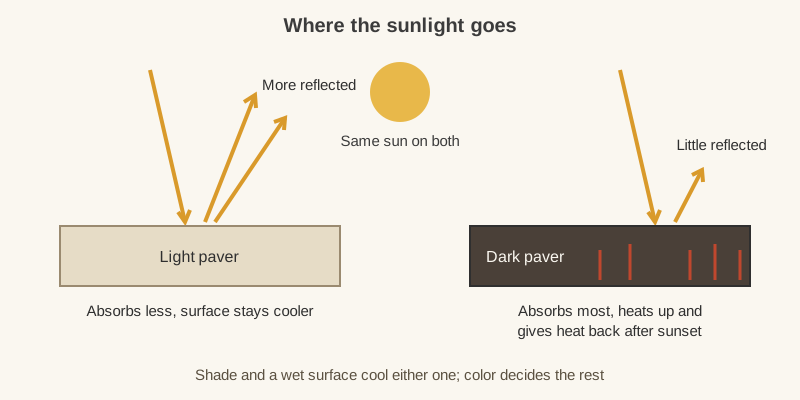
Four things decide how hot a paver surface gets.
- Color (solar reflectance). A light surface bounces a large share of the sunlight straight back. A dark one absorbs it. This is the big one. The EPA's page on cool pavements cites an Arizona pilot study where conventional paving such as asphalt reached up to 152°F at midday, while cool pavements stayed 10 to 16°F cooler.
- Density and mass. Thick, dense material stores heat and gives it back well into the evening. That's why a dark patio still feels warm at 9 pm.
- Moisture. A damp, porous surface cools as the water evaporates. That's part of why travertine around a splashing pool feels cooler than the same stone on a dry patio.
- Shade. A pergola, a tree or a sail beats every material choice.
Texture helps a little, because a rough face touches less of your foot than a smooth one. But nothing on the list overrides color.
Pavers that don't get hot, coolest first
| Material | Why it runs cooler | Watch out for |
|---|---|---|
| Light travertine (ivory, walnut-light) | Pale color, porous face that stays damp near water | Filled vs unfilled holes; sealing darkens it |
| Light limestone | Pale, reflective, matte | Softer stone; some types stain easily |
| Light porcelain | Light glazes reflect well; thin slabs store less heat | Check the wet slip rating near pools |
| Light gray or tan concrete | Reflective color, and the cheapest cool option | Dark blends and charcoal run hot |
| Exposed-aggregate light concrete | Light stones, textured grip | Dark aggregate cancels the benefit |
To avoid in full sun where people walk barefoot: black or charcoal concrete, dark slate, basalt, dark granite and red clay brick. They're lovely on a shaded path, and they're a problem on a south-facing pool deck.
For the pool-specific decision (texture, coping and chlorine), see our guide to pool deck pavers.
Color beats material
My view: pick the color first and the material second. Buyers often go wrong by choosing travertine for its cool reputation and then ordering a dark noce or chocolate blend. The reputation belongs to the pale stone, not the name. A light tan concrete paver costs a fraction as much and reflects nearly the same sunlight. Where budget matters, that's the cooler choice per dollar. For the full picture, see flagstone vs travertine.
Two ways people accidentally make pavers hotter:
- Wet-look sealer. It darkens the color, so the surface absorbs more sun. Around a pool, use a natural or matte finish.
- Dark borders on a light field. The border is where people step in and out. Keep the walkway edge light too.
Our paver colors guide has more on picking a shade that works with the house and still stays pale.
How hot is too hot for bare feet
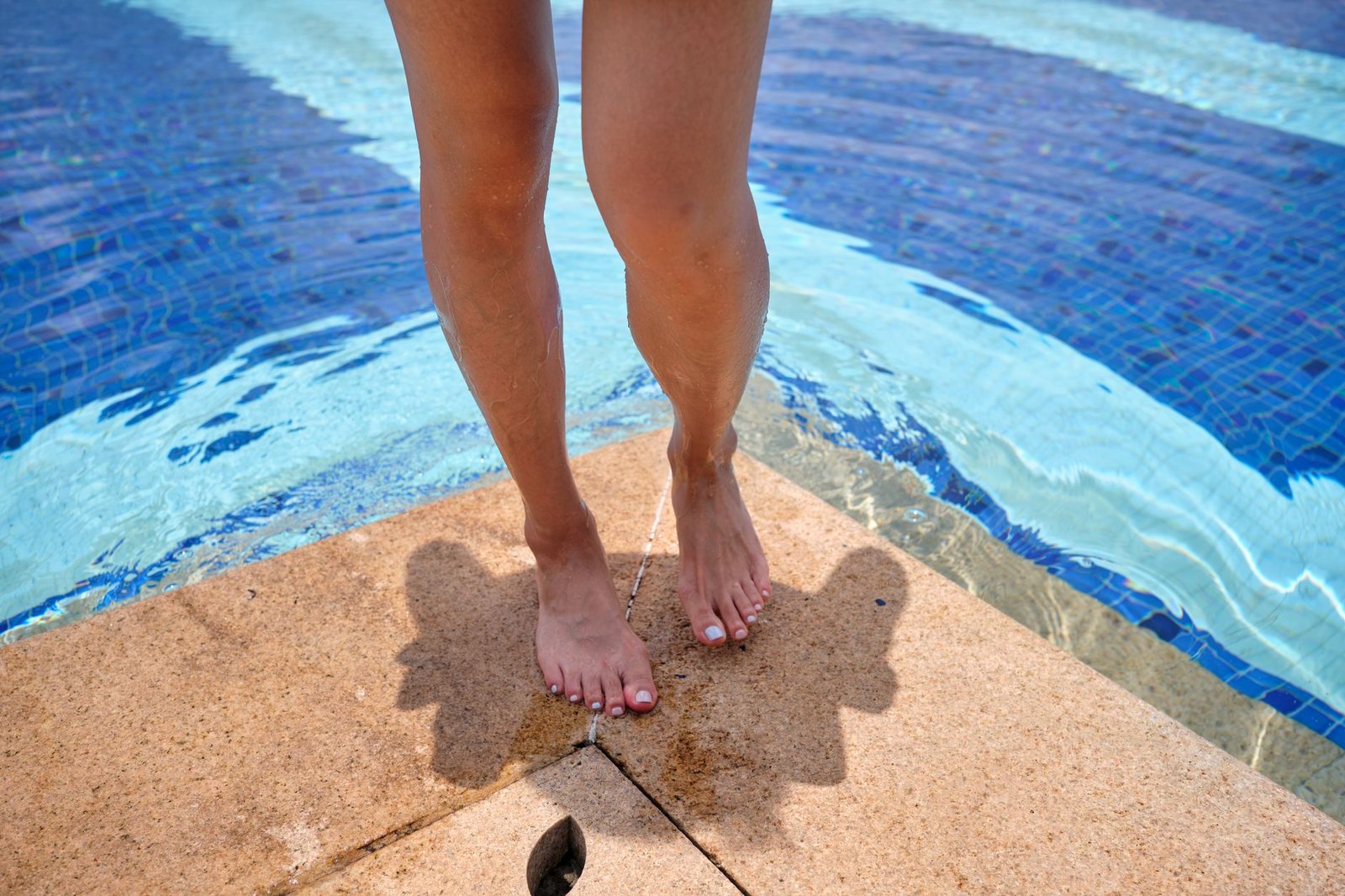
Hot pavement isn't just uncomfortable. UNLV surgeons reviewed five years of pavement-burn admissions at a Las Vegas burn center, and their study summary reports 173 cases between 2013 and 2017. More than 88% happened when the air was 95°F or hotter. On a 111°F day, the release notes, pavement in direct sun can reach 147°F, hot enough to cause second-degree burns within two seconds.
That study covered streets and sidewalks, not patios. The mechanism is the same, though, and small children, older adults and dogs are the ones who can't step off quickly.
A quick check before the kids or the dog go out: press the back of your hand flat on the surface. If you want to pull it away within a few seconds, it's too hot for bare feet or paws.
Cooling a patio that's already hot
You don't have to pull pavers up.
- Add shade where people actually walk: a pergola, sail shade, umbrella or tree.
- Rinse before use. A quick spray with the hose drops the surface temperature as the water evaporates. It won't last, but it works for a pool afternoon.
- Lay outdoor rugs or mats on the barefoot routes.
- Strip or skip wet-look sealer, and use a natural finish next time.
- Relay just the hot path. Replacing a dark walkway from the door to the pool with pale pavers is a weekend job, not a new patio.
Before you order stone for the heat alone, keep in mind that "heat resistant" is a different question. It's about pavers that survive a fire pit, and it's covered in heat resistant pavers.
Choose the palest paver you'll be happy looking at
If a surface gets full sun and bare feet, the coolest choice is the lightest color you like: ivory travertine, pale limestone, light porcelain or tan concrete, with a natural finish rather than a wet look. Then add shade to the busiest route. The material earns you a few degrees, the color earns you the most, and the tree earns you the rest.
FAQ
Do travertine pavers get hot?
Light travertine stays cooler than most pavers because it's pale and porous, especially near a pool where it stays damp. Dark travertine blends and wet-look sealed travertine get much hotter. It's still warm in full sun, just less painful than dark stone.
Do porcelain pavers get hot?
Light-colored porcelain stays relatively cool, while dark porcelain gets as hot as other dark materials. Porcelain is dense but usually thin, so it stores less heat than a thick stone.
Do concrete pavers get hot?
Yes, and how hot depends mostly on color. Light gray and tan concrete pavers stay much cooler than charcoal or dark red blends, and they're usually the lowest-cost cool option.
What is the coolest material for a pool deck?
A light-colored, textured surface: light travertine, light porcelain with a good wet slip rating, or light concrete pavers. Shade and a natural-finish sealer help more than any single material.
Does sealing pavers make them hotter?
A wet-look or color-enhancing sealer darkens the pavers, so they absorb more sunlight and get hotter. A natural or matte penetrating sealer changes the color very little.


