

Last Updated on October 20, 2026 by Umar Farooq
Heat resistant pavers come in two grades. Ordinary concrete, clay brick and natural stone pavers are non-combustible and handle the radiant heat around a fire pit or grill. Only firebrick (refractory brick), set in refractory mortar, is made to take direct flame. So pave around the fire with regular pavers, and put the flame on steel, firebrick or gravel, never on the pavers themselves. I read one fire pit kit's installation instructions line by line, and the most useful sentence in it was this: pavers or concrete can go around a fire ring, but not under it. We have a separate page on grill on pavers if you need the specifics. Worth a read next: fire pit burn marks on pavers.
"Heat resistant" also gets used for pavers that stay cool underfoot in summer sun. That's a different question, covered in pavers that don't get hot.
Non-combustible isn't the same as fireproof
Concrete, clay and stone don't burn, so a stray ember won't set the patio alight the way it could a wood deck. The real test is what happens when the surface itself gets very hot, fast.
| Material | Around the fire | Directly in the flame | What goes wrong |
|---|---|---|---|
| Concrete pavers and wall block | Yes | No | Cracks, blackening, chips popping off |
| Kiln-fired clay brick pavers | Yes | Short term, better than concrete | Can crack with rapid heating |
| Natural stone (granite, sandstone, bluestone) | Yes | No | Some stones crack or flake; varies by stone |
| Firebrick in refractory mortar | Yes | Yes | Built for it |
| Steel fire ring or insert | Holds the fire | Yes | Rusts over the years; replace |
Mutual Materials' overview of paver types describes concrete pavers as suitable "around fire features" and clay brick pavers as "a great choice for any outdoor fireplace or fire pit base". Both statements are about the area around and under the pit's structure, not the firebox. The paver patio for outdoor fireplace guide covers this in more depth.
Why pavers crack and pop in direct heat
Concrete holds water in its pores even when it looks dry. Wikipedia's entry on spalling names two drivers: thermal strain from rapid heating, and pressure from water leaving as steam. A paver under a fire gets both, and chips come off the face, sometimes with a bang.
Clay brick behaves somewhat better because it has already been through a kiln. Allbrick's kiln-fired vs non-kiln paver explainer makes the point that tiny air bubbles in unfired clay can expand under heat and crack or burst the paver. That's why only properly fired, refractory brick belongs in the firebox.
Even without spalling, pavers right beside a pit blacken with soot, and polymeric joint sand there tends to burn out and crumble.
What goes under a fire ring
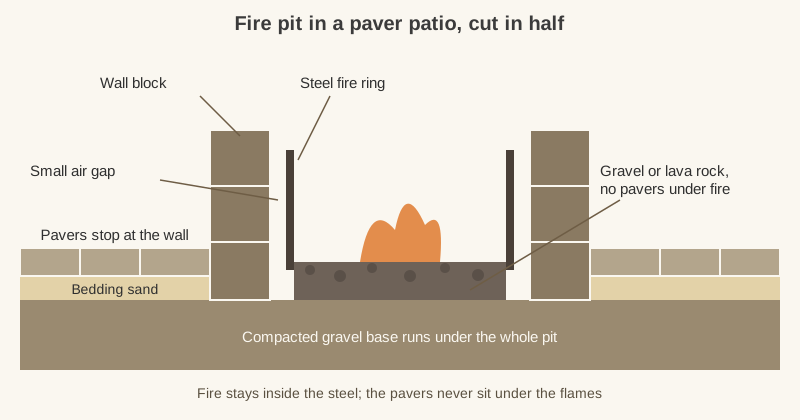
The installation instructions for a 46-inch round fire pit bundle sold through Menards say it plainly: fire rings should be placed on stone, dirt or sand, and pavers or concrete can go around fire rings but not under them. The same sheet warns that flames touching the concrete blocks may blacken or crack them, and asks you to wait at least two days after gluing the blocks before the first fire.
So for a pit built into a paver patio:
- Carry the compacted gravel base under the whole pit, so the pit and the patio settle as one.
- Stop the pavers at the outside of the wall blocks.
- Fill the floor inside the ring with gravel or lava rock, not pavers.
- Keep the fire inside the steel. The ring takes the flame, and the blocks and pavers only see radiant heat.
The block-by-block build, block choice and clearances are covered in our fire pit blocks guide.
Fire rated blocks for a fire pit
"Fire rated" on a kit usually means it includes a steel insert or refractory liner, not that the decorative block can sit in the flames. Check the kit includes a ring or firebrick liner and a fire pit adhesive; if it's only decorative blocks, add a ring.
Grills, outdoor ovens and fireplaces
- Freestanding gas and charcoal grills on legs are fine on concrete pavers. The heat mostly goes up. The bigger risk is grease. Put a grill mat under it and wipe spills before they soak in.
- Built-in grill islands hold the grill head in a steel cutout, so the block sees warm air, not flame. Follow the grill maker's clearance and jacket rules.
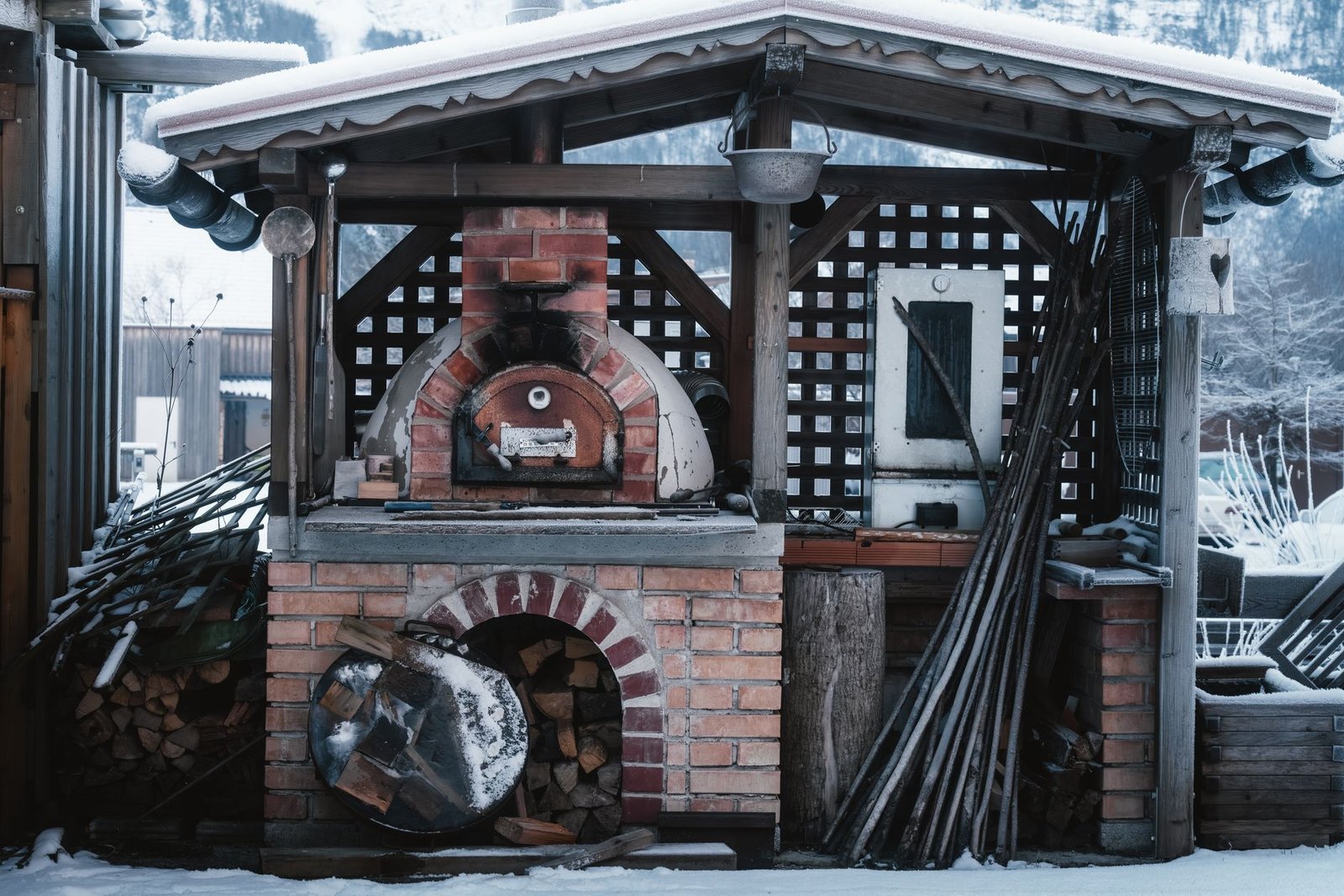
- Wood-fired pizza ovens need a refractory floor and dome. Firebrick handles temperatures far above any backyard fire; Wikipedia's fire brick entry puts silica fire brick at up to 3,000°F. The stand and the surrounding patio can be ordinary block and pavers.
- Outdoor fireplaces line the firebox with firebrick. The hearth extension in front can be pavers or stone, because it only catches radiant heat and the odd ember.
Heat resistant pavers matter less than the steel ring
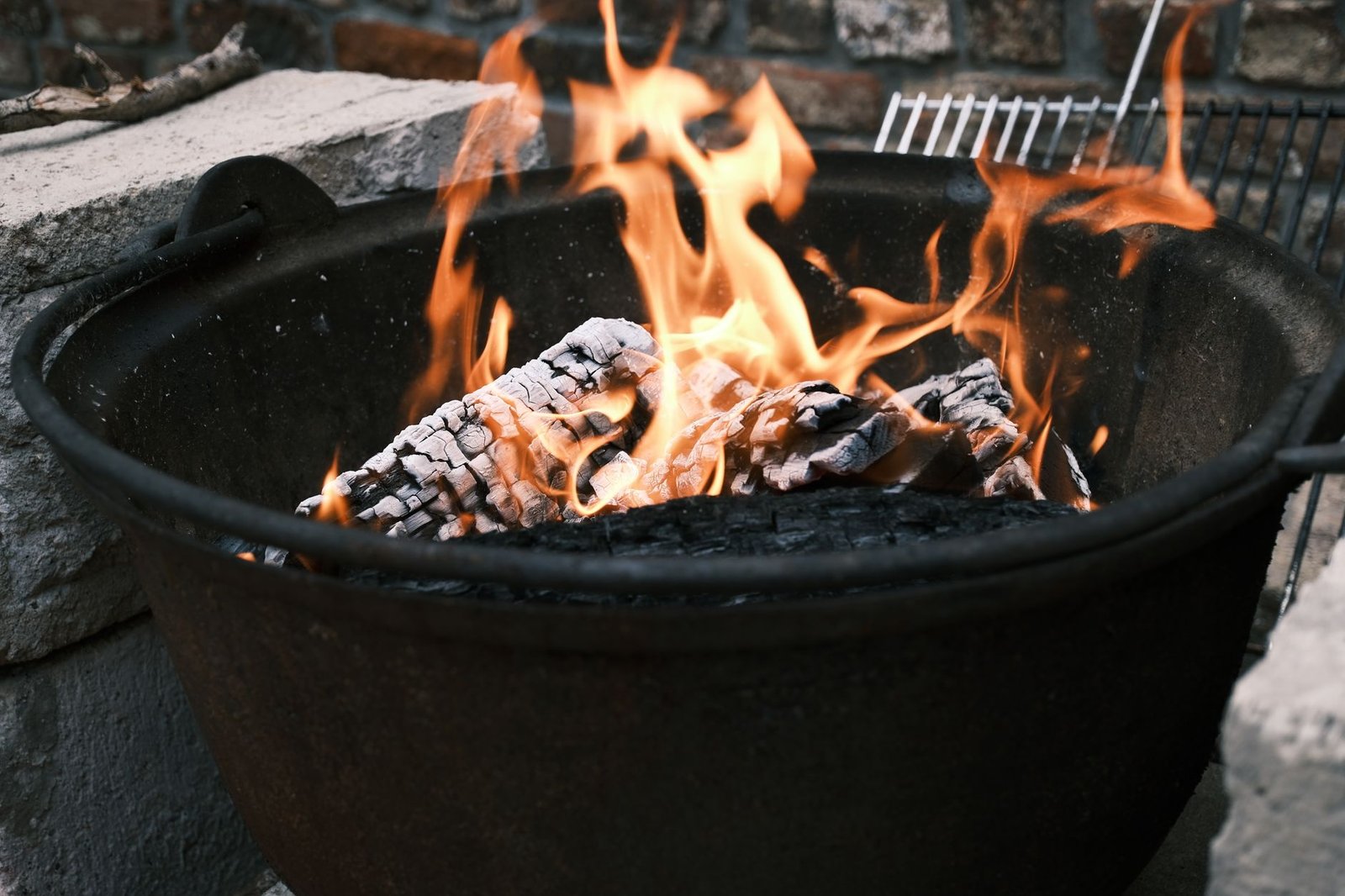
My opinion: don't spend money on special heat resistant pavers for a fire pit patio. Spend it on the steel ring and the gravel floor. The pavers around a pit only ever see radiant heat, and ordinary concrete, clay or stone pavers handle that. The flame itself has to meet steel or firebrick, because every other paver will spall once water inside it turns to steam. A good ring costs less than the upgrade from standard pavers to premium ones over the same area, and it protects both.
Put the flame on steel or firebrick, the pavers around it
Use any quality concrete, clay or stone paver around a fire pit, grill or oven, and keep direct flame on a steel ring, firebrick or a gravel floor. If a paver beside the pit does crack, lift it and swap it like any other. A patio that can be repaired one piece at a time is the whole point of pavers, and it's nice when that applies to the one you singed.
FAQ
Are pavers fireproof?
Concrete, clay and stone pavers are non-combustible, so they won't catch fire. They aren't flame-proof, though. Direct fire on them can crack, blacken or spall the surface. Only firebrick is made to take direct flame.
Can you put a fire pit directly on pavers?
A raised metal fire bowl on legs, with an air gap and a heat shield or spark mat underneath, is usually fine. A ring or open fire sitting directly on the pavers is not. Fire pit instructions typically say pavers can go around a ring but not under it. Use gravel, stone or firebrick under the fire.
What pavers do you use around a fire pit?
Any quality concrete, clay brick or natural stone paver works around the pit, set on a compacted gravel base. Keep the fire inside a steel ring or firebrick liner, and fill the pit floor with gravel or lava rock.
Is fire brick the same as a regular brick paver?
No. Fire brick is a refractory ceramic made to line fireboxes, kilns and ovens, and it's set in refractory mortar. Regular clay brick pavers are fired for strength and weather resistance, not for sitting in the flames.


