

Last Updated on October 20, 2026 by Umar Farooq
Can you seal wet pavers? Not if you want it to last. Sealing over wet pavers traps water under the film, and the usual results are white spots, a cloudy film or peeling. Wait until the pavers and their joints are completely dry, which Unilock puts at a minimum of 24 hours after washing, plus 24 to 48 hours of clear skies before you apply. The only exception is a product whose label explicitly says it can go on a damp surface, and even then dry is safer.
I looked for a source that says wet sealing is fine, on the theory that someone must have tested it. The manufacturer pages I opened all say the opposite, and the trade-magazine write-ups explain the mechanism. The mechanism is the useful part, so that is where we start.
What the water does once the film is on
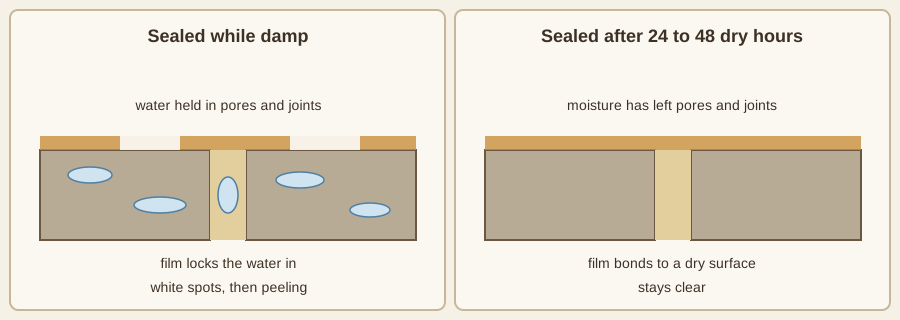
A film sealer is a skin. It keeps liquid water out, and it also holds in whatever was already there. Pavers are porous, so a surface that looks dry can still hold water inside.
Concrete Decor lists the pattern for a solvent-based sealer put over wet concrete: the sealer "will float on the trapped film of water," and moisture and air under a debonded film make it look white before it peels. Alliance Gator's troubleshooting page lists trapped moisture as the cause of white spots, which can appear days or even months after the job. Unilock says it more bluntly: "If you don't allow your pavers to completely dry, the sealant may peel off the surface."
So the damage is delayed. The patio can look perfect on Saturday and blotchy by spring, which makes it hard to connect the cause to the effect. The follow-up pages are paver sealer turning white and paver sealer peeling.
How dry is dry enough
Sources give slightly different windows, and the differences are worth reading.
| What | Wait | Source |
|---|---|---|
| After washing, before sealing | at least 24 hours; a few hours if warm and sunny, about 24 if cool and shaded | Unilock |
| Clear weather before application | 24 to 48 hours | Unilock; Alliance Gator advises at least 24 hours with no rain forecast after |
| After sanding joints, before sealing | possibly 24 hours | Nicolock |
| After sealing, before rain or sprinklers | at least 24 hours with no rain | Alliance Gator; Techniseal data sheet |
| After sealing, before walking | 24 hours | Nicolock |
The joints are the part people forget. Unilock says solvent-based sealers need "perfectly dry pavers and sand joints." Polymeric sand holds water longer than a paver face does, and the data sheet figures on how long polymeric sand takes to dry apply here too: Techniseal's HP NextGel, for example, says it can withstand rain after 60 minutes but needs 24 to 48 hours to dry fully, so a patio sanded this week is not ready this weekend.
The plastic test for hidden moisture
The face of a paver dries first. Moisture in the body and joints is what causes trouble. One simple check that needs no tools: tape a square of clear plastic, about a foot across, flat on the surface with all four edges sealed and leave it for several hours in sunshine. If the underside fogs or beads with water, the pavers are still releasing moisture, and the sealer needs to wait. If it stays clear, you are in decent shape.
This is a homemade check, not a manufacturer spec, so treat it as a sanity check. It beats guessing from how the surface looks, and costs a roll of tape.
After a power wash or a rain
Washing is the usual way pavers get soaked. After you power wash the pavers or clean them, count the dry time from when the surface looks dry, not from when the water stopped. Unilock's range is about a few hours in warm sun and about 24 hours in a cool, shaded spot, and then you still need the clear forecast.
Rain is the same. Even a light shower soaks into the joints. Rain on a freshly sealed surface is the worst timing, which is why the data sheets ask for no rain for 24 hours after. Turn the sprinklers off too. Unilock warns that sprinkler water on fresh sealer can leave white marks or be trapped under it.
Humidity and temperature count as well. Pavers in a damp shaded corner dry slower than the rest of the patio, and cool days stretch every number in the table. The temperature side is covered in sealing pavers in cold weather.
What if the label says damp is fine?
Some products are formulated differently, and the label is the final authority. If yours says it can go on a damp surface, follow the label and its stated limits. I did not open a data sheet that says this for a paver sealer, so I cannot name a product or a moisture limit for you. The solvent-based ones are the most sensitive: Unilock lists "perfectly dry pavers and sand joints" for them, and the water-based vs solvent-based sealer guide covers the difference.
My opinion, and it is a cheap one: even if the label allows damp, a dry surface costs you one extra day and removes the risk. Waiting is free. Stripping a failed sealer is not.
If you sealed wet already
Do not recoat to hide it. Wait a few warm, dry days and look again, because light haze sometimes clears. If the film has gone white or is lifting, the repair depends on the sealer type. Alliance Gator says xylene may be able to correct white spots, especially on solvent-based sealers, and anything that stays cloudy or peels needs stripping. The paver sealer stripper guide covers it. Then clean, dry fully and reseal in a thin coat.
Dry first, then seal: a day is cheaper than a stripper
Wet pavers do not take sealer well, and the evidence from every source I opened points the same way. Let the pavers and joints dry for a day or two beyond when they look dry, check the forecast, and put the sealer on thin. If your patio is damp today, the sealer can wait for tomorrow. The pavers have survived worse than a day without protection.
FAQ
Can you seal wet pavers?
No. Sealing pavers while they are wet traps moisture under the film, which leads to white spots, cloudiness or peeling. Let them dry completely, including the joints, before you seal.
How long should pavers dry before sealing?
Unilock says to wait a minimum of 24 hours after washing and to get clear skies for 24 to 48 hours before applying sealant. In warm, sunny weather the surface may dry in a few hours, but the joints and body of the paver take longer.
Can you seal pavers right after rain?
Not right after. Water soaks into the pavers and joints, so wait until everything has dried and the forecast is clear. Alliance Gator advises no rain for at least 24 hours after sealing too.
Can you seal pavers right after pressure washing?
Wait. Count the drying time from when the surface looks dry. Unilock's range is a few hours in warm sun to about 24 hours when it is cool and shaded.
Is any paver sealer made for damp surfaces?
Possibly, but I did not find a data sheet that says so for a paver sealer, so I will not name one. If your label allows damp application, follow it exactly. Otherwise, assume dry.


