

Last Updated on October 20, 2026 by Umar Farooq
The best stepping stones for walkway paths are flat, 18 to 24 inches across and at least 1.5 inches thick, in a material that suits your climate: precast concrete or concrete pavers if you want cheap and uniform, bluestone or sandstone flagging if you want natural stone, and large square pads if the path gets walked every day. Size decides whether the path is comfortable. Thickness decides whether it survives. Material mostly decides the price and the look. You can read more in the guide to patio size for dining table.
That's the short version. The longer one is below, because a stepping stone is the only building material people choose by standing on it in the store aisle with one foot, which tells you roughly nothing.
Installing and spacing them is its own job, covered in how to lay stepping stones. This article is about what to buy before you get there.
Size first: fit a whole foot, not half of one
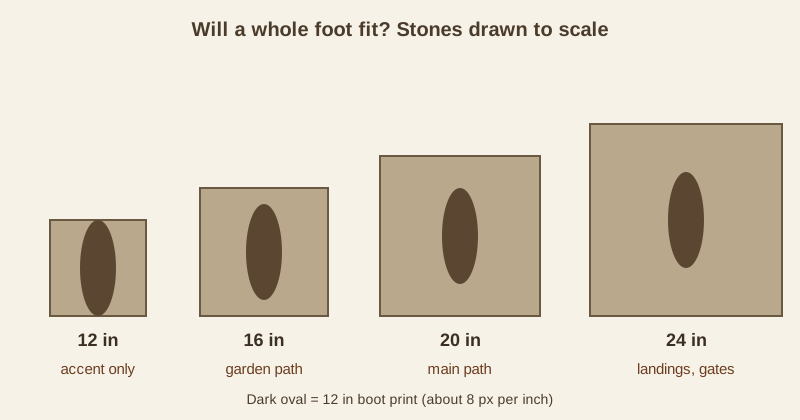
An adult shoe is roughly 11 to 13 inches long. Put it on a 12-inch stone and the toe or heel is already hanging over grass. That is fine for a decorative cluster in a flower bed and tiring on a path you use to carry groceries. The grass between pavers guide covers this in more depth.
A practical way to size them:
| Stone size | Where it works | What goes wrong |
|---|---|---|
| 12 in | Accents in beds, a short hop across mulch | Feet overhang; you watch your steps instead of walking |
| 16 to 18 in | Garden paths, low-traffic side yards | Fine for adults walking single file |
| 20 to 24 in | Main paths, gate to patio, kids and older walkers | Heavier to carry; costs more per stone |
| 24 x 36 in and larger | Landing pads at doors, gates and path ends | Two people needed to set them |
Rochester Concrete Products' stepping stone guide lands on the same range, recommending stones 18 to 24 inches wide. I'd go one size bigger than you think at every door, gate or turn, because that is where people pause, shift weight and put a second foot down.
I read Connecticut Stone's bluestone listing and Rochester's guide side by side, half hoping one of them would bless the cute 12-inch rounds. Neither did.
Shape matters less than people expect. Rounds and ovals look softer in a lawn and are easy to mow around. Squares and rectangles line up with a house wall or a fence, and look deliberate when the path is straight. Irregular flagstone reads as natural but gives you less flat area for the same weight, because the edges taper.
Thickness: the number that decides whether it cracks
A stepping stone isn't supported by its neighbours the way a patio paver is. It sits alone, and when someone steps on the edge, the whole load goes through one corner into soil that may have softened in the rain. Thin stones snap there.
- At least 1.5 inches for any stepping stone you walk on. Rochester's guide sets the same floor.
- About 2 inches for natural stone steppers over 18 inches across. Connecticut Stone lists its bluestone oval step stones at a nominal 2 inches, in about 12 x 18 and 18 x 24 inch sizes.
- 2 3/8 inches is standard concrete paver thickness, and a paver used as a stepper is about as sturdy as they come for its size.
Bigger stones need more thickness, not less. A 24-inch stone at 1 inch thick has a long lever arm from the edge to the middle, and it will crack across the middle the first time someone lands on a corner while the soil underneath is soft.
When the stone is natural, "nominal" means it varies. A pallet sold as 1.5-inch flagging can hold pieces at 1 1/4 and pieces at 2. That doesn't matter much, as long as you dig each hole to its own stone, but it does mean you should check the thin edges before buying and put the thinnest ones in the flower bed instead of the path.
Concrete steppers, pavers and pads compared
Concrete is the cheap and predictable choice for stepping stones for walkway paths, but "concrete stepping stone" covers three different products.
Precast garden steppers. The round, square or hexagon stones sold in stacks at garden centers. They are uniform, flat-bottomed and easy to set level. The catch is that they aren't pavers. ASTM C936, the standard concrete pavers are made to, requires a minimum thickness of 2 3/8 inches (CMHA Tech Spec 10), so a thinner garden stepper is simply not held to the paver standard for strength, absorption or freeze-thaw. Many hold up fine. Some flake at the surface after a few freezing winters. If you live where the ground freezes, look for a thicker, denser stone or a real paver.
Concrete pavers used as steppers. A single large paver makes a neat, modern stepping paver. Because it is made to the paver standard, it is the concrete option I'd trust in a freezing climate. Match the size to your stride: a 16 x 16 or larger unit, or two smaller pavers set together as one step.
Paver pads for walkway paths. Large square slabs, often 24 x 24 inches, sometimes sold as patio stones or pads. They make a clean, contemporary path with gravel or grass between.
For price, Stone Center's stepping stone ideas guide puts stepping stones at roughly $3 to $10 per stone. That range covers the smaller everyday stones; big natural slabs and 24-inch pads cost more, and I haven't seen a reliable nationwide price for those, so ask the yard for a per-piece quote.
Natural stone stepping stones: bluestone, flagstone and friends
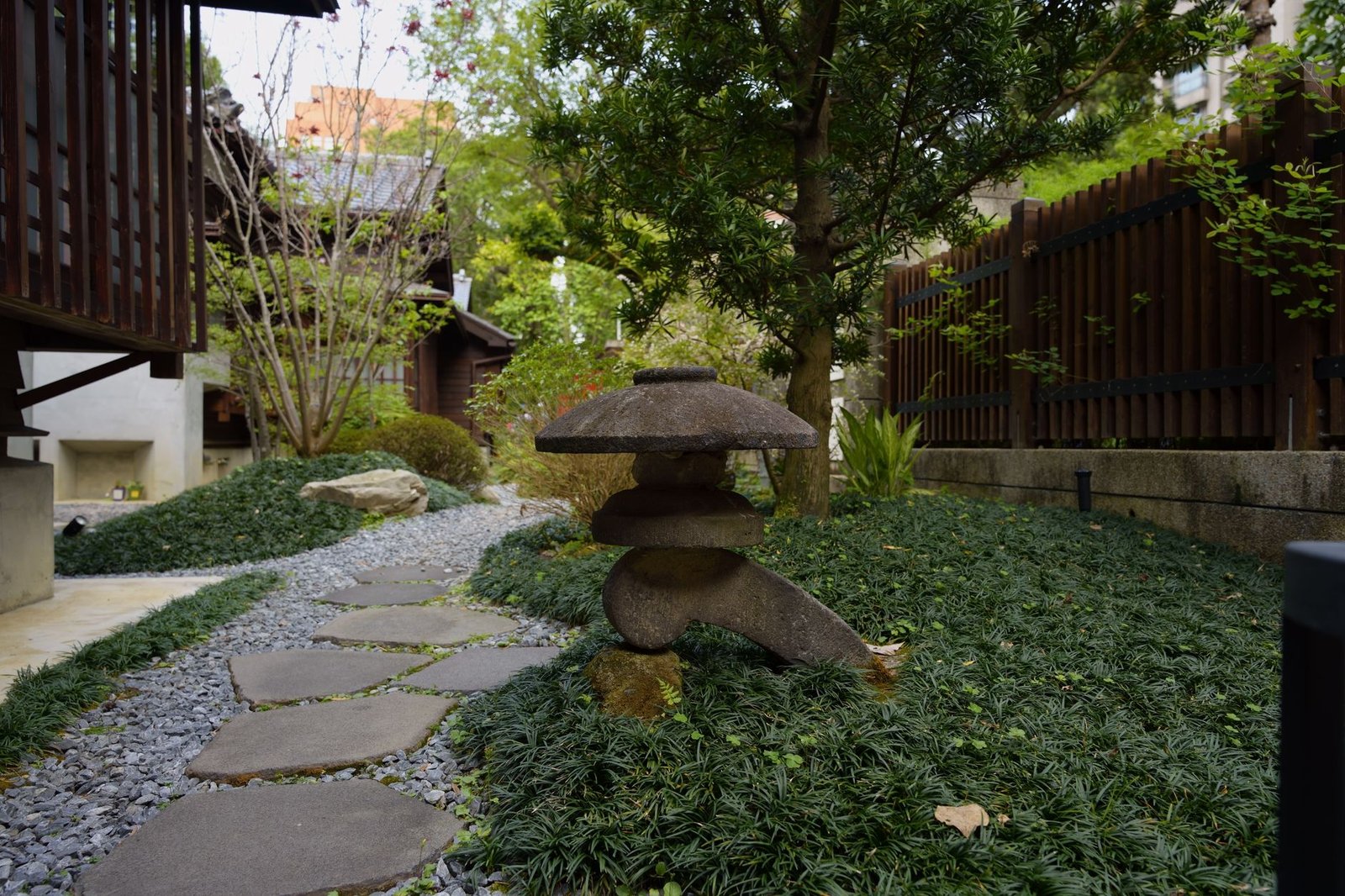
Natural stone costs more and weighs more, and in return every stone is different and the color goes all the way through, so chips don't show a grey core.
- Bluestone. A dense sandstone, mostly quarried in Pennsylvania and New York, sold as natural cleft (split along its bedding, slightly uneven) or thermal (flame-finished, flatter and more even underfoot). A bluestone stepping stone in thermal finish is the easiest natural stone to walk on. Natural cleft looks better in a cottage garden and holds a little water in its dips.
- Irregular flagstone. Random-shaped slabs of sandstone, limestone or quartzite. Cheapest per square foot of natural stone, but you need to pick through a pallet for pieces big and thick enough to be steppers. Our flagstones article covers the rock types in detail.
- Slate. Attractive and flat, but some slates split into layers where water gets in and freezes. Ask the yard whether a specific slate is sold for exterior paving in your climate before buying it for the path.
- Granite. Very hard and very heavy. Often sold as sawn slabs or reclaimed pieces with a price to match.
- River stones and boulders. Beautiful and almost impossible to walk on, because nothing about a river stone is flat. Use them as the fill between steppers, not as the steppers.
Natural stone is also the one choice where the yard matters more than the shop. Big-box stores rarely stock step-sized natural stone. Landscape supply yards do, by the piece or the pallet, and letting you pick your own stones is worth the trip.
Cheaper and softer options: rubber, plastic and wood rounds
Online listings are full of rubber and recycled-plastic steppers with ground stakes. They are light, can't crack, and are soft to land on, which makes them useful around a play area or across a lawn that will be dug up next year. They don't look like stone for long, they can be slippery with algae in shade, and a stake-down stepper can lift at the edges once the lawn around it settles.
Wood rounds cut from a tree trunk look charming for exactly one season. After that the end grain soaks up water, the round grows moss on top and rots from underneath. If you use them, treat them as temporary and put them in full sun on free-draining ground.
Match the stepping stone path to the setting
Walkway stepping stones look best when they borrow something from what's already there.
- Formal front yard or modern house: square or rectangular pads in a straight line, with crisp gravel or tight lawn between. Grey concrete or thermal bluestone.
- Cottage or woodland garden: irregular flagstone or natural-cleft bluestone on a gentle curve, with ground cover or mulch between.
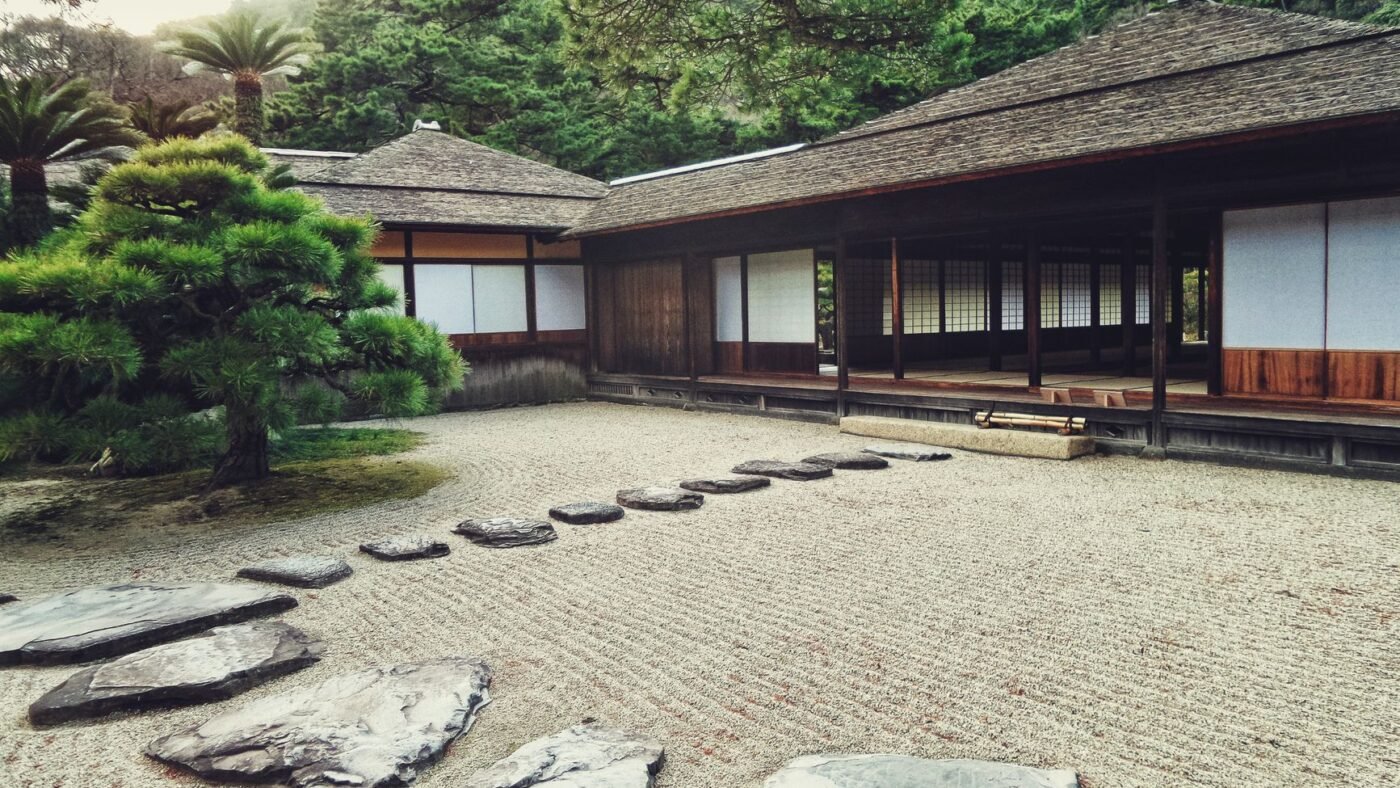
- Japanese or gravel garden: large flat stones slightly raised above raked gravel, set at an easy, deliberate spacing.
- Across a lawn to a shed or gate: the flattest, largest stones you can afford, set flush so the mower rolls over them. Round or oval shapes make trimming easier.
Color follows the same logic. Pick up one tone from the house trim, a wall or an existing patio, and the path looks planned. Buy a fourth color just because it was on sale, and the yard starts to look like a sample board.
How many step stones do you need?
Measure the path length along its curve, not in a straight line. Then:
Stones = (path length in inches ÷ center-to-center spacing) + 1
At 24 inches center to center, a comfortable adult stride, a 30-foot path is 360 ÷ 24 = 15, plus 1, so 16 stones. At 20 inches (a path used mostly by children) the same path needs 19. Buy one or two spares: stones chip in transport, and a matching replacement from a different batch or quarry rarely matches.
Add the landing stones separately. A 24 x 36 inch pad at each end, where the path meets a patio, driveway or door, takes the heaviest wear and makes the whole route feel intentional.
You'll also need about 1 inch of coarse sand under each stone. For a 20-inch square stone, that's a little under 2 1/2 cubic feet per ten stones, so a couple of bags covers a short path. Stone dust or gravel is fine too, as long as it's compacted in the hole.
When stepping stones are the wrong walkway
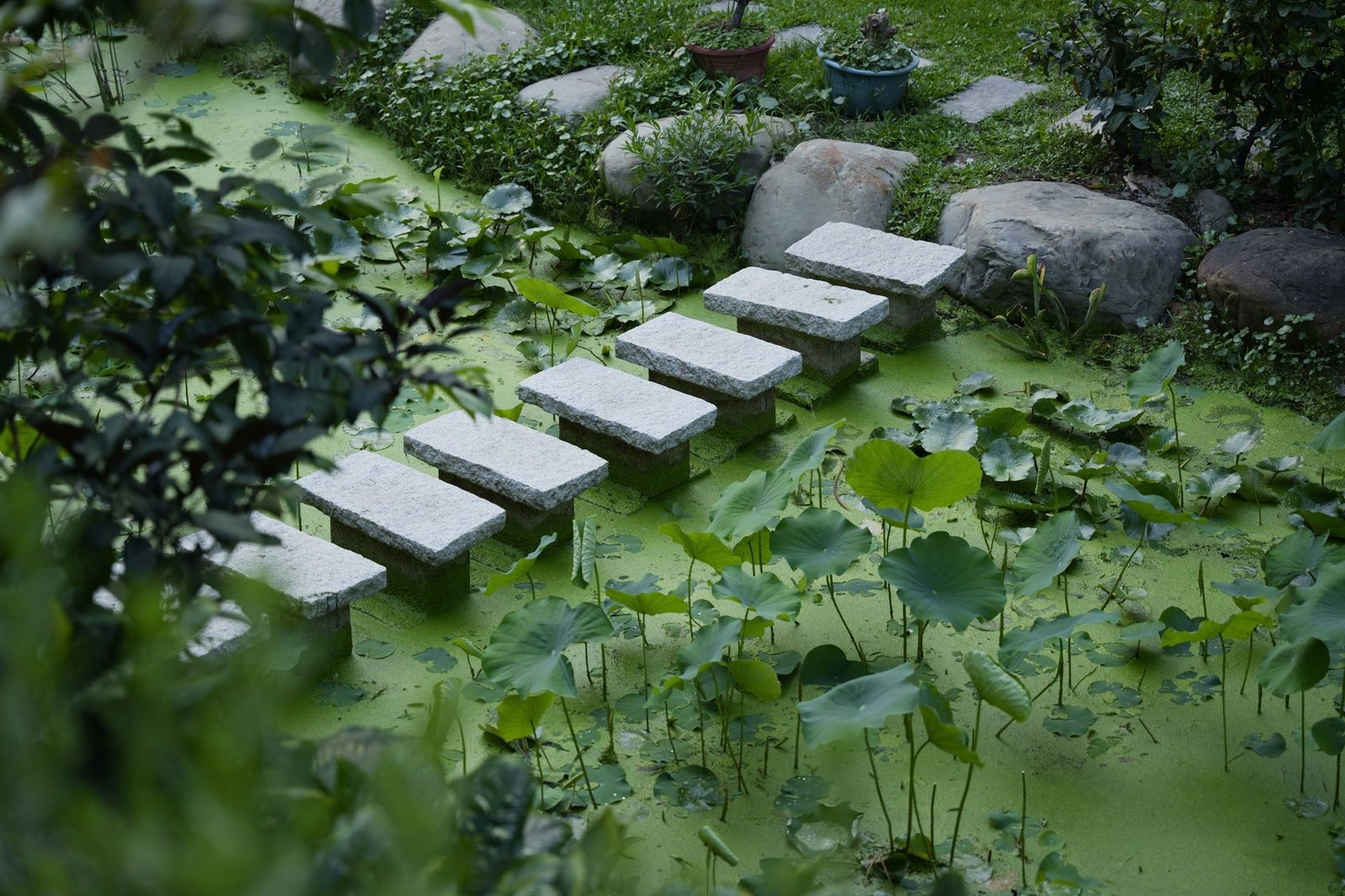
Here is my opinion, and it saves some people a whole project: stepping stones are for routes walked a few times a week, not for the path from the driveway to the front door.
The mechanism is simple. Every stepping stone path forces one stride length on everyone. Somebody taller than the spacing takes small shuffling steps; someone shorter makes little jumps. Wheelbarrows, strollers, rolling bins and suitcases drop into the gaps. Snow shovels catch on every edge. And in wet weather, the gaps become the muddy part you were trying to avoid in the first place.
So the dividing line I'd use:
- Walked daily, used with wheels, or used in the dark: build a continuous paver walkway at least 36 inches wide. Our paver walkway designs page shows options.
- Walked a few times a week, on foot, in daylight: stepping stones are cheaper, quicker, and look better in a garden.
(There is a middle ground. Big pads set close, with 3 to 4 inches of gravel between them, walk almost like a solid path and still drain between every stone.)
If your "path" is really a flat stone patio in a garden, and the pieces are irregular, look at irregular pavers as well. Flagstone-look concrete gives a natural look with uniform thickness.
Pick for the stride, then the style
Choose stepping stones for walkway paths in this order: size (18 to 24 inches, bigger at landings), thickness (1.5 inches minimum, about 2 inches for large natural stone), then the material that suits your climate and budget, then the look. Get the first two right and even the cheapest concrete stepper works. Get them wrong and the prettiest bluestone becomes a row of small, expensive tripping hazards. And if the path is the one everyone uses to reach the door, stop choosing stepping stones and start pricing a walkway.
FAQ
What is the best material for stepping stones?
For most yards, thick concrete pavers or bluestone. Concrete pavers are made to ASTM C936 and are cheap and uniform. Bluestone is dense, flat and looks natural. Precast garden steppers are the cheapest but can flake in freezing climates, and irregular flagstone looks great but needs picking for thickness.
How thick should stepping stones be?
At least 1.5 inches for any stone you walk on, and about 2 inches for natural stone over 18 inches across. Thinner stones crack when someone steps on an edge over soft soil.
What size stepping stones are best for a walkway?
18 to 24 inches across for a main path, so a whole foot fits with room to spare. Use 12-inch stones only as accents in beds, and put larger pads at doors, gates and turns.
How far apart should stepping stones be for a walkway?
About 24 inches center to center for adults, and 18 to 20 inches for a path used mostly by children. Measure center to center, not the gap, and walk the layout before setting anything.
Are stepping stones cheaper than a paver walkway?
Usually, yes. You buy far less material, dig only a hole per stone and need no compacted base under the whole path. The trade-off is comfort: stepping stones suit foot traffic in daylight, not wheels, snow shovels or the main route to the front door.


