


Last Updated on October 20, 2026 by Umar Farooq
Travertine pavers are slabs of natural stone, a type of limestone laid down by mineral springs, cut into patio and pool-deck units in cream, ivory, walnut and silver tones. They stay comfortable underfoot, they grip when wet, and they look expensive for good reason. The catch is that travertine is porous and calcium-based, so it needs sealing, it is etched by acids, and it needs a frost-suitable grade anywhere that freezes. Pick the grade for the job, seal it with a breathable product, and keep citrus and acidic cleaners away from it.
I read three travertine guides (FreshPatio, Pool Research and StoneHardscapes) that disagree with each other on cost, sealing intervals and even whether chlorine matters, then checked what the stone standards actually cover. This is what holds up. If you are still choosing between stones, our guide to natural stone pavers puts travertine next to granite, bluestone, slate and limestone.
What travertine is, and why it has holes
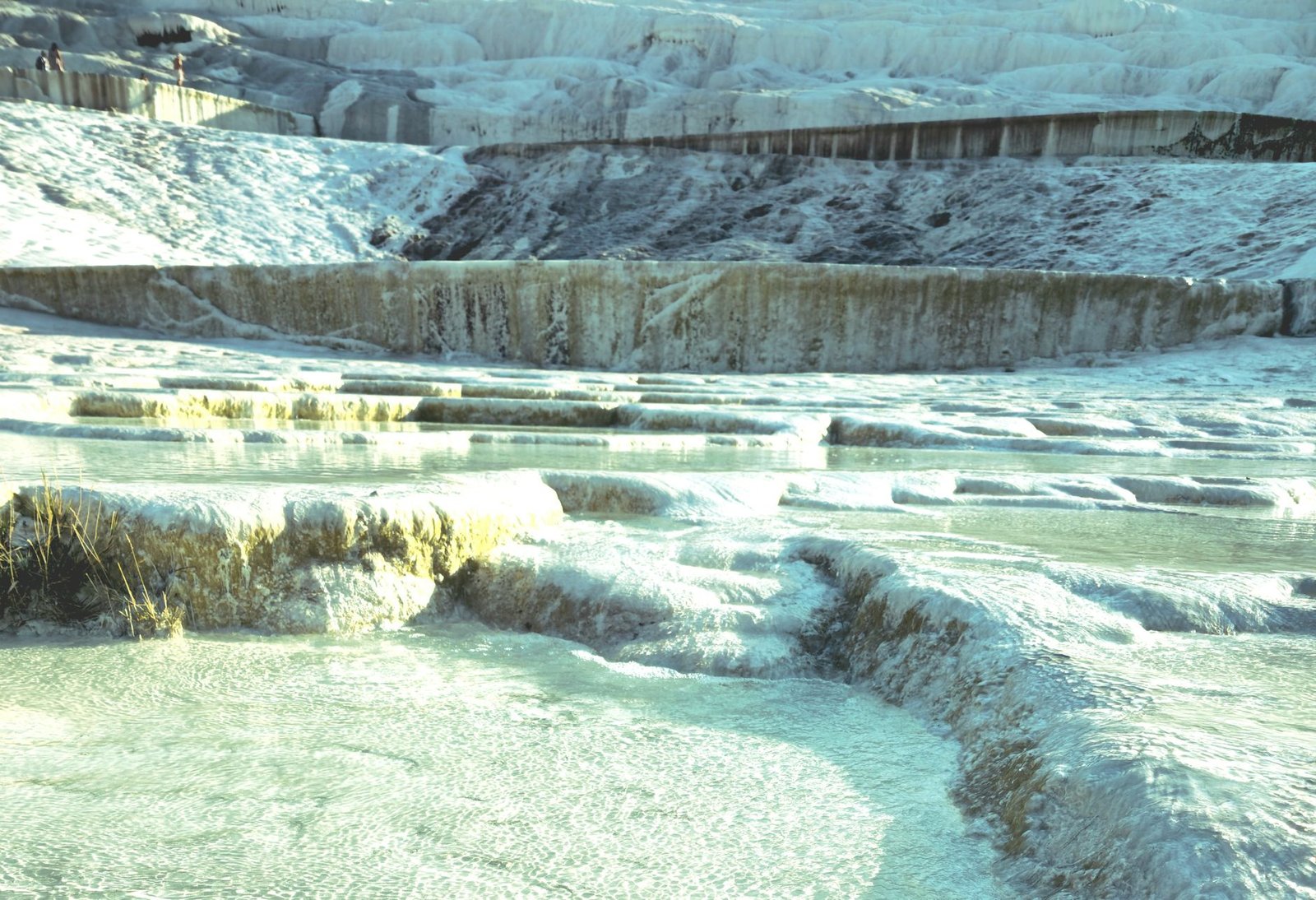
Travertine forms where hot or mineral-rich spring water runs over rock, drops its dissolved calcium carbonate and builds up layers of stone. Gas bubbles escape through the soft deposit as it forms, which leaves the elongated holes you see in a finished paver. Those holes are not defects. They are the stone's signature, and they are also why it behaves differently from a dense stone such as granite.
Three things follow from that structure:
- It is calcium-based. Acids dissolve a little of the surface, which shows as dull spots (etching).
- It is porous. Water, oil and red wine can soak in, which is why sealing comes up in every guide.
- It is textured. The pitted face grips bare feet and wet shoes, and the holes break up puddles.
ASTM C1527 is the standard for travertine dimension stone. It sets limits on water absorption, density, compressive strength, modulus of rupture and abrasion resistance. It does not tell you which grade will survive your winter, which is why a supplier's test sheet matters more than the colour name.
Filled, unfilled and tumbled: reading the finish and grade
Most of the confusion in the showroom is about two separate choices: the grade and the finish.
Finishes change the look and the grip:
| Finish | What it looks like | Best use |
|---|---|---|
| Tumbled | Rolled with sand and water so edges are rounded and the face is textured | Pool decks, patios, anywhere wet |
| Brushed | Wire-brushed for a slightly rough, matte face | Rustic designs, walkways |
| Honed | Ground smooth and matte, holes often filled | Covered or dry areas |
| Polished | Honed further to a gloss, usually filled | Indoors only |
Skip honed and polished faces for any wet outdoor surface. A smooth face is slick when wet, and polished stone is a skating rink with better marketing.
Grades describe how clean the stone is. FreshPatio's guide sorts them into premium (even thickness, tight edges, consistent colour), standard (more filler and the odd open hole) and commercial (more defects and colour variation). Grading is a supplier convention, not a legal standard, so ask each seller what theirs means. In practice:
- Premium is worth it around water features and pools, where you will see and feel every flaw.
- Standard suits most patios.
- Commercial suits paths where a rustic look is the point.
Outdoor travertine pavers are typically cut about 1 1/2 inches thick or more, thicker than indoor tile, so they can sit on a sand bed without cracking. Ask for the exact thickness and whether it is calibrated, because a calibrated stone lays flat far more easily.
Why travertine stays comfortable on bare feet
The pool-deck guides all make the same claim: light-coloured, porous travertine stays cooler than most paving. The mechanism they give is reasonable. Pale tones reflect sunlight rather than absorbing it, and the porous body does not store heat the way a dense, dark surface does. Pool Research and StoneHardscapes both lean on this, and both note beige and ivory shades work best.
I would hold that claim loosely. None of the three guides gives a surface temperature, and a dark walnut travertine will certainly run hotter than ivory. The sensible rule is the one that applies to every paver: the lighter the colour, the cooler the surface. Our guide to pavers that don't get hot compares the options, and the pool deck pavers guide covers the rest of a pool surround.
Cold winters: ask for frost data or choose another stone
This is where most guides go quiet, and it is the question that decides whether your money lasts. FreshPatio says travertine is durable in harsh weather. StoneHardscapes does not mention freeze-thaw at all. Pool Research does not either.
Here is the mechanism that matters. Water soaks into pores, freezes and expands, and over many cycles the surface flakes. Salt makes it worse. Porous stone is more exposed to this than dense stone, and travertine is porous by nature.
My position: in a climate that freezes, do not buy travertine on the strength of a showroom sample. Ask the supplier for water absorption and freeze-thaw test results for the specific product, and ask which installs in your region have been through several winters. If they cannot answer, treat the answer as no. Dense granite or bluestone is the safer choice for northern patios, and our natural stone pavers comparison explains the split.
Where travertine does well is warm and mild climates, covered terraces and pool surrounds that rarely see ice.
Building the layers under a travertine deck

Travertine can be set two ways, and both appear in the guides:
- Dry-set (sand-set). Excavate, compact a crushed-stone base, screed about an inch of sand, set the pavers and sweep sand into the joints.
- Mud-set. Bond the stone with mortar to a solid concrete slab. This is common over an existing pool deck, and it needs a sound, sloped slab underneath.
For the sand-set version, the numbers come from the paving industry rather than the stone trade. ICPI Tech Spec 2 calls for at least 4 inches of compacted base under a patio or walkway on well-drained soil, with 2 to 4 inches more on wet or weak ground. The bedding sand is a nominal 1 inch, screeded and left loose, and CMHA's guide spec says it in four words: "Do not disturb screeded sand." Use ASTM C33 concrete sand, not stone dust or mason sand. The base should be flat to within 3/8 inch over a 10 foot straightedge before the sand goes on.
The pavers are the finish. The base is the patio. A thin base under premium travertine buys you expensive wobble, and stone this thick will not hide a dip the way a thick concrete paver can.
Slope matters around water. ICPI's minimum surface slope is 1.5 percent, so the deck should fall away from the pool and away from the house. The paver base guide covers depth and compaction.
Cutting travertine is dusty work. Use a wet saw or a blade with water delivery, because OSHA's rule for masonry saws is water on the blade, every time (29 CFR 1926.1153). If you are choosing a blade, see diamond blades for pavers.
Sealing travertine: breathable, and only when it stops beading
Every guide says to seal travertine, and they are right that unsealed travertine stains. They disagree on how often. FreshPatio says to reseal every 3 to 5 years, especially on pool decks. Pool Research says 3 to 5 in one section and 3 to 4 in its FAQ.
Here is my one strong opinion on sealing: do not follow a calendar. Reseal when water stops beading on the surface. A sealer is a coating that wears at different rates under sun, pool splash and foot traffic, and adding coats on a schedule stacks sealer until it clouds and peels. Then you are stripping stone you paid to protect.
What to do:
- Let the stone dry for a few days first. FreshPatio makes the same point. Sealing damp stone traps moisture.
- Choose a breathable, penetrating sealer made for natural stone. A film-forming coating can turn cloudy and slippery.
- Test on a spare paver or a hidden corner for darkening.
- Apply thin coats and follow the product's own data sheet for dry times.
Our paver sealing guide covers the general method and compares products. Check each data sheet, since sealers are written for specific stones.
What not to put on travertine
Travertine is calcium carbonate, and acids eat calcium carbonate. The common offenders:
- Vinegar and lemon-based cleaners. FreshPatio warns against vinegar, bleach and ammonia on travertine.
- Muriatic acid. Pool Research says it can dull or etch the stone, which matters at pool edges where people use it on tile.
- Citrus and wine spills. These etch unsealed stone quickly. Rinse them off promptly.
- Pressure washing at high pressure. FreshPatio advises low pressure.
Use a neutral, stone-safe cleaner and a soft brush. Pool Research says chlorine does not damage travertine, but that unbalanced water can leave stains, so keep the pool chemistry in range. Travertine is a stone with opinions about your margarita, and the opinion is that it would rather be left alone.
Fill small cracks promptly with a water-resistant material so sharp edges and standing water do not build up. For general stain advice see paver cleaning.
What travertine costs, and why the guides disagree
The cost figures I found do not agree, and that is itself useful information. FreshPatio puts pavers at roughly $5 to $40 per square foot depending on style, grade and finish. Pool Research gives $5 to $30 per square foot for the stone alone, and says marble runs $15 to $40. Those are material prices; installation is on top, and both guides cite labour of about $50 to $70 per hour. FreshPatio also adds about 20 percent for irregular pool shapes.
Treat these as ranges, not quotes. Grade, thickness, finish, region and freight all move the number. Concrete pavers will usually cost less, so compare it with concrete before you commit. Get two or three local quotes, and ask for installed price per square foot including base, sand and sealer.
Pay for premium at the pool, standard on the patio
Travertine pavers are the right call where heat, bare feet and a warm-weather look matter: pool decks, courtyards and covered terraces in mild climates. Spend on premium grade and a tumbled or brushed finish where the stone meets water. Use a standard grade on a patio. Build a flat, 4 inch compacted base, keep the sand to 1 inch, slope the surface, seal it with a breathable product once it is dry, and keep acids away. In a freezing climate, get frost test data first or choose granite. A stone that took thousands of years to form can wait a weekend for a proper base.
FAQ
Are travertine pavers good for a pool deck?
Yes, they are the classic choice. Light colours stay comfortable underfoot, and a tumbled or brushed face grips when wet. Seal the stone, keep pool chemistry balanced, and avoid honed or polished finishes around the water.
Do travertine pavers need to be sealed?
Yes. Travertine is porous and stains, so a breathable, penetrating stone sealer is recommended. Let the stone dry first, and reseal when water stops beading rather than on a fixed schedule.
Can travertine pavers be used in cold climates?
Only with care. Travertine is porous, and freeze-thaw cycles and de-icing salt can flake the surface. Ask the supplier for absorption and freeze-thaw test data for the exact product. Granite or bluestone is a safer choice in hard winters.
What is the difference between tumbled and honed travertine?
Tumbled travertine is rolled so its edges are rounded and the face is textured, which grips well outdoors. Honed travertine is ground flat and matte, and is slicker when wet, so it suits covered or dry areas.
How thick should travertine pavers be?
Outdoor travertine pavers are typically cut about 1 1/2 inches thick or more for a sand-set patio. Thinner stone should be bonded with mortar to a solid concrete slab.
What damages travertine pavers?
Acids, including vinegar, citrus, wine and muriatic acid, etch the surface. Bleach, ammonia and high-pressure washing can also harm it. Use a neutral stone cleaner and low pressure.


