

Last Updated on October 20, 2026 by Umar Farooq
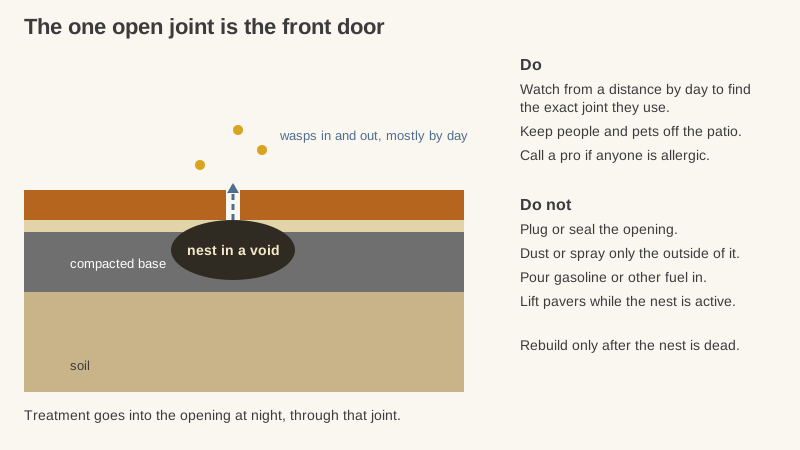
If wasps keep flying in and out of one joint in your patio, you have yellow jackets in pavers: a nest in a void under the surface, with that joint as its front door. Do not plug it, flood it or poke it. Stay off that stretch, watch the joint from a distance by day so you know exactly which one it is, and either treat the entrance at night or call a pest professional. If anyone in the house is allergic to stings, call the professional.
What yellow jackets in pavers are doing down there
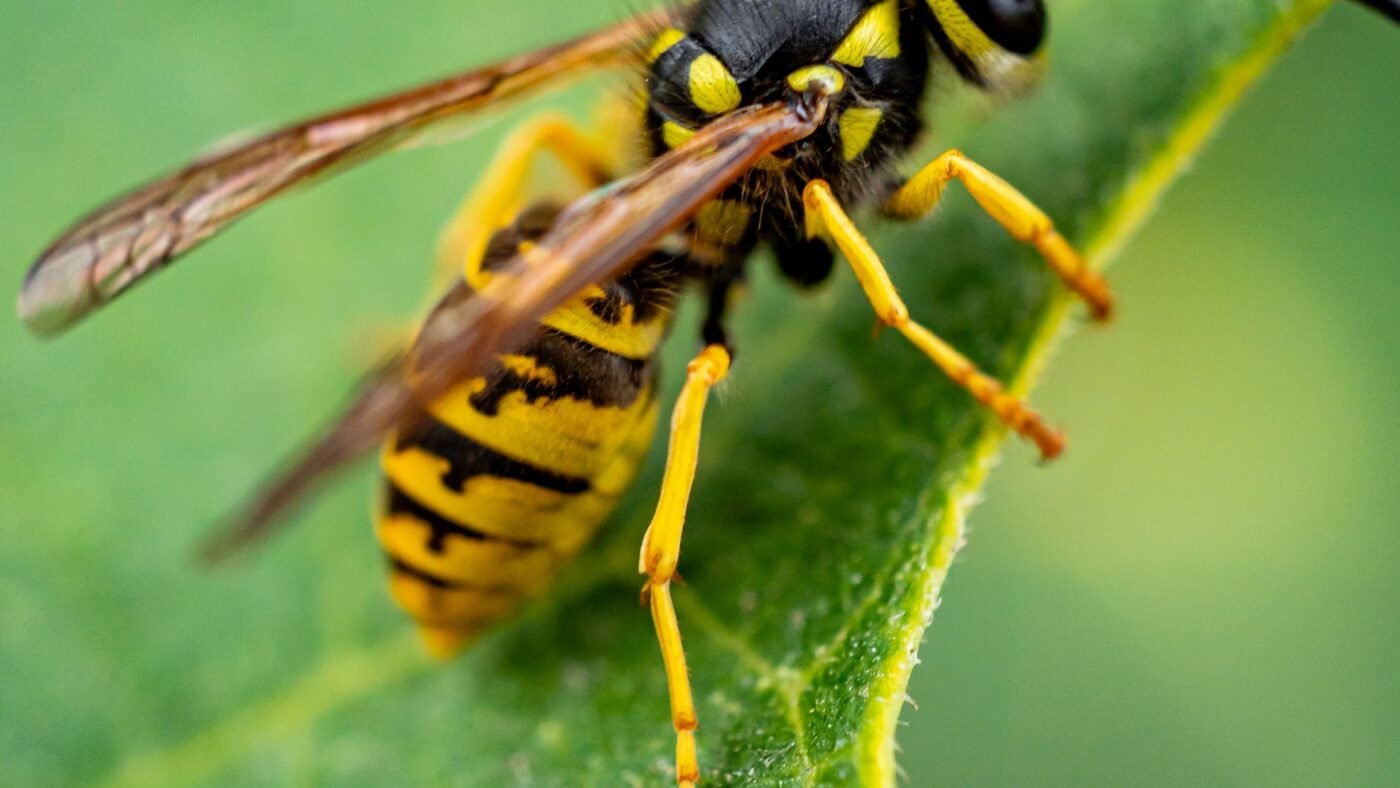
Penn State Extension describes the eastern yellowjacket as a ground-nesting species and lists lawns, rock walls and the forest floor among its nest sites, plus sometimes the inside of structures. A void under pavers is sheltered ground, so it is no surprise one gets used. A university Q&A on Ask Extension covers a homeowner with a nest under a concrete step that could not be moved.
The colony does have an end date. Virginia Tech's extension publication says nests "will begin to fail in the fall as the developing brood mature," that remaining workers die with cold weather and that abandoned nests are not reused the next year. Waiting is a fair option only if nobody uses that patio meanwhile.
Find the entrance from a distance
Virginia Tech says to locate nests by day, when workers fly in and out regularly, and to treat them late at night after the workers return. So daytime is for looking, not doing.
- Watch from several feet away until you see wasps using one joint or crack.
- Note it with a photo or a marker placed well back from the joint.
- Keep children and pets off the patio.
- Mow, sweep and run blowers elsewhere. UF/IFAS Extension says mowing over a nest provokes an attack, and vibration near a nest is a bad idea on any surface.
Treat it or hand it off
- If anyone is allergic: Penn State says people with known sensitivities to wasp and bee stings should have nearby nests removed by professionals. Skip the rest of this section.
- If the nest is in a wall or the house: the extension sources say a pro, and Virginia Tech notes wall nests can be far from the visible holes.
- If it is under the patio and nobody is allergic: Penn State says a person without medical concerns can kill a colony by dusting the opening at night, after scouting in daylight. Dusting only the outside of the entrance "will anger the colony" and raise the risk of stings. It calls for a stealthy approach, protective clothing, dust applied directly into the opening and a shower afterwards. The Ask Extension answer adds a Clemson tip to skip the flashlight, since yellow jackets are attracted to light, and says traps reduce foragers but do not eliminate a big colony.
Which product to use is a label question. I am not giving a product, dose or time, because the label on what you buy is the rule.
My one strong opinion: paying a pest professional for a nest under a patio is not an extravagance. You would be working in the dark, beside a colony you cannot see, under a surface you cannot lift without waking it.
Four things that make it worse
- Plugging the opening. Virginia Tech says never plug a nest entrance in a wall, because workers may chew a new exit. I found no source testing it on a ground nest under pavers, so call this my inference: not worth finding out.
- Dusting or spraying outside the entrance. Penn State says it angers the colony.
- Gasoline. UF/IFAS Extension says it contaminates the soil and possibly the water. I also saw it suggested on a tractor forum, and it is not a documented treatment.
- Lifting pavers to look. Also my inference: you would be opening an active nest.
After the nest is dead: restore what they used
Wait until you see no flying activity at the joint for several days. That waiting period is my judgment, not a published number.
Then look for the void: a rocking paver, a dip or a soft spot where joint sand has been carried out. Our ants between pavers guide covers the same hollows, and rodents under pavers helps you tell a burrow from a settled base. If the surface has dropped, how to fix sunken pavers walks through lifting, rebuilding the base and relaying. CMHA's guide spec says to screed about 1 inch of loose bedding sand and set pavers 1/8 to 1/4 inch proud. Refill the joint sand last, since that gap is what they used.
Leave the door open and treat it at night
Yellow jackets in pavers are a nest you cannot see, under a patio you cannot lift without waking them. The university advice is to find the entrance by day, leave it open and treat it at night if you treat it yourself. Call a professional when anyone is allergic, when you cannot find the opening or when the nest is in a wall. Then fix the void so the next queen finds a patio, not a bedroom. The patio will still be there in the morning.
FAQ
Can I pour boiling water or gasoline down a yellow jacket nest under pavers?
No. UF/IFAS Extension advises against gasoline because it contaminates soil and possibly water. The extension pages I opened do not recommend boiling water for a nest like this.
Should I seal the hole yellow jackets are using?
No. Virginia Tech says not to plug entrances to nests in walls, because trapped workers may chew a new way out. For a ground nest I found no tested guidance, so do not try it.
Will yellow jackets in my patio go away on their own?
The colony will. Virginia Tech says nests begin to fail in the fall and remaining workers die with cold weather. That is a long wait if the patio is in daily use.
When is it safe to dust a yellow jacket nest at night?
Only for someone without known sting sensitivity, after finding the entrance in daylight, with dust applied into the opening and following the product label. Penn State and Virginia Tech both describe treating at night. If in doubt, call a professional.
How do I know it is yellow jackets and not ants?
Watch the joint from a distance. Wasps fly in and out in numbers by day. I found no reliable way to confirm species from photos alone, so a pest professional or county extension office can identify them.


