Last Updated on September 23, 2026 by Umar Farooq
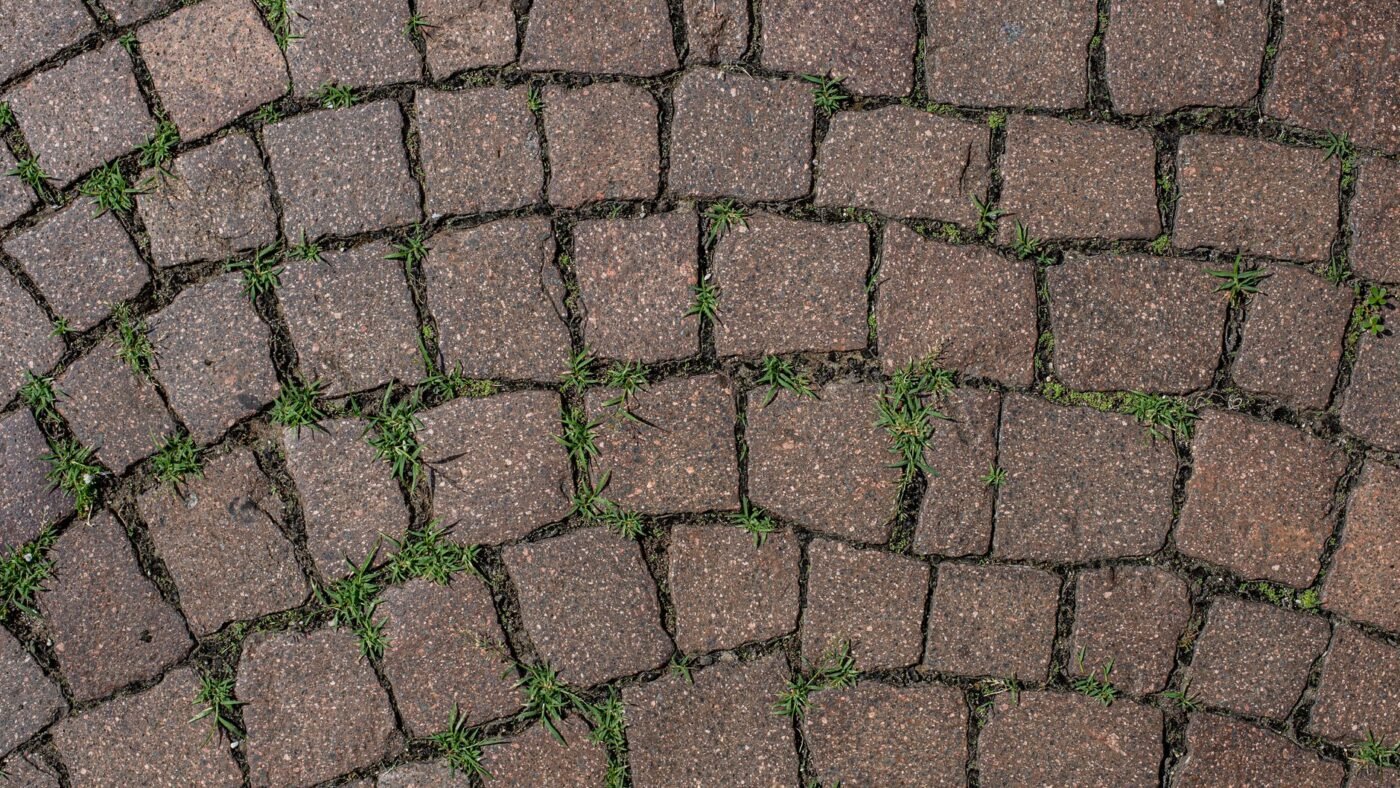
Tumbled pavers are concrete or natural stone pavers that have been rolled in a drum after they're made, so their edges chip and round off and their faces look worn. Few building products are beaten up on purpose before sale. The result looks like old cobblestone or reclaimed brick from the day it's laid. Compared with standard pavers, tumbled pavers have softer edges, wider-looking joints and a forgiving, rustic surface, minus the crisp lines modern designs need.
The top results for this term are mostly store pages selling by the pallet, so this sticks to what you need to decide: how they're made, how they differ from standard pavers, and what to watch when laying them.
How pavers are tumbled
The process depends on the material.
- Tumbled concrete pavers are made in the usual molds, cured, then fed through a rotating drum where they knock against each other. Corners break and edges round. Unilock describes its Brussels Block, introduced in 1993, as the original tumbled paver in North America. It's a 2 3/4-inch-thick unit rated for patios, walkways and driveways.
- Tumbled stone pavers (travertine, marble, bluestone, limestone) go into a barrel with abrasive grit and water. World of Stones, a stone supplier, says the drum turns slowly for three to five weeks depending on the finish, which softens every face and edge.
Either way, no two come out alike, and that's the point.
Tumbled vs standard pavers
| Standard pavers | Tumbled pavers | |
|---|---|---|
| Edges | Crisp, with a small chamfer | Rounded, irregular, chipped |
| Surface | Uniform texture | Worn, pitted, varied |
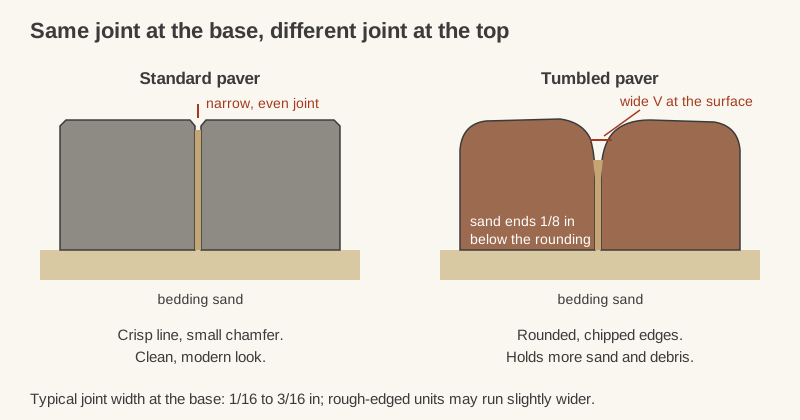
| Joint at the surface | Narrow, even line | Looks wider, varies along its length |
| Style | Clean, contemporary | Old-world, cottage, farmhouse |
| Chips and scuffs | Show clearly | Blend into the look |
| Snow shovels and plows | Can catch a raised edge | Rounded edges catch less |
Pros of tumbled pavers
- They look aged and settled from day one.
- Chips, scuffs and small color differences disappear into the texture.
- Rounded edges snag fewer shovels and toes.
- Textured tumbled stone grips well when wet.
Cons of tumbled pavers
- The wider, uneven joints hold more debris, and weeds and moss move in more easily.
- Chairs and tables sit less flat on a heavily tumbled face. (Every patio table has one short leg. Tumbled pavers help it find out which.)
- They don't suit sleek, modern designs. For that look, see our guide to modern pavers.
Joints need more attention on tumbled pavers
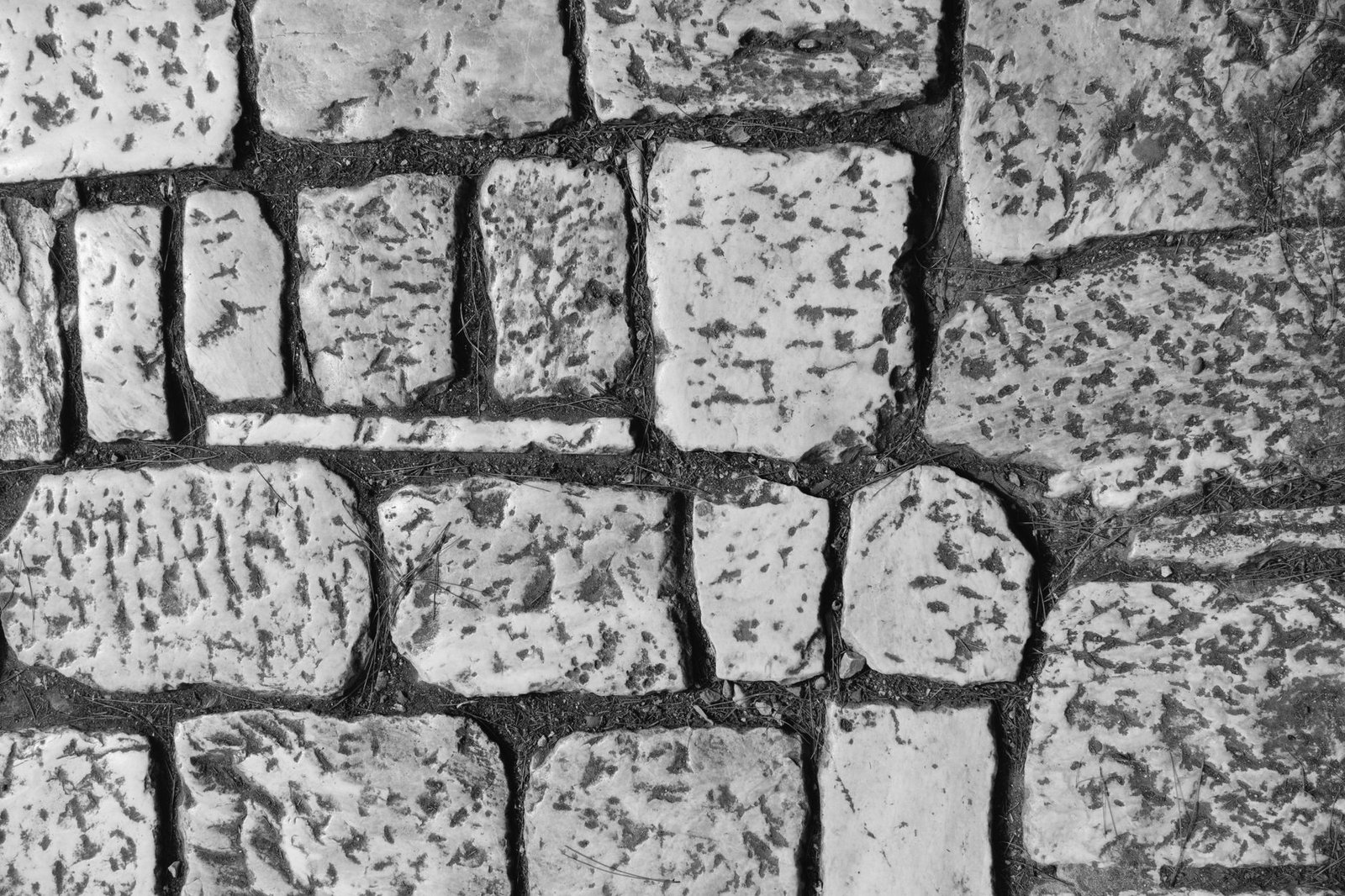
Rounded edges mean the joint is narrow at the bottom but opens toward the surface. I checked the Concrete Masonry & Hardscapes Association (CMHA) application guide: typical paver joints run 1/16 to 3/16 inch, and units with rough, stone-like edges can run 1 to 2 mm wider.
That wider top changes how you fill it:
- Sweep in more sand. The flared top of each joint holds more than a standard chamfer. Budget extra.
- Stop short of the edge. Unilock's Brussels Block guidance keeps sand about 1/8 inch below the chamfer, which on tumbled edges means below where the rounding starts.
- Use polymeric sand in most yards. It resists washout and weeds better in those open joints. Blowing every grain off the rough faces before misting is part of the method in how to apply polymeric sand.
- Compact with a pad. A urethane pad under the plate compactor stops it grinding the worn faces' high points.
Tumbled stone: travertine, marble and bluestone
Natural stone behaves differently.
- Tumbled travertine is the most common. It's rougher and less slippery than polished or honed travertine, hence its popularity around pools. Texas Travertine's guide to tumbled travertine points out that it's porous and needs sealing to resist stains.
- Tumbled marble looks softer, but it's porous and sensitive to acidic spills.
- Tumbled bluestone keeps its blue-gray color but softens a usually formal stone.
Stone pavers vary in thickness more than concrete, and it's tempting to let the sand bed soak up the difference. Don't. My firm view: bedding sand is a screeded, loose, nominal inch of concrete sand to ASTM C33, never a leveling layer. Two inches under one stone compresses more than one inch under its neighbour, and a year later you'll see which. Buy gauged stone where you can, and fix dips in the base, not the sand.
Choose tumbled for character, not crisp lines
Tumbled pavers suit patios, garden paths, cottage and farmhouse homes, and anywhere you want the hardscape to look settled rather than new. They forgive chips and wear. Choose standard pavers for sharp lines, flat furniture footing and the tightest joints. If you go tumbled, plan for more joint sand, keep it stabilized, and pad the compactor. After that, every new chip is just the paver staying in character.
FAQ
Are tumbled pavers good for driveways?
Tumbled concrete pavers rated for vehicles work on driveways. Unilock lists its 2 3/4-inch Brussels Block for driveways, for example. Check the maker's rating and thickness, and build the base to driveway depth: ICPI's 6-inch compacted minimum, or 8 to 10 inches on wet, weak or frost-prone soil.
Are tumbled pavers more expensive than regular pavers?
Usually a little, because tumbling is an extra manufacturing step. Tumbled natural stone costs more than tumbled concrete. Check with a local supplier, since prices vary widely by region and brand.
Do tumbled pavers need to be sealed?
Tumbled concrete pavers don't need sealing, though sealing can deepen the color and help the joints. Porous tumbled stone such as travertine and marble should be sealed to resist stains.
Do tumbled pavers have bigger gaps?
The joint at the base is similar, but it looks wider at the surface because the edges are rounded. That flared top holds more sand and more debris, so stabilized joint sand is worth it.
Are tumbled pavers slippery?
No more than other pavers, and usually less. The worn, textured faces give decent grip, which is why tumbled travertine is common around pools.