


Last Updated on October 20, 2026 by Umar Farooq
Cleaning pavers with vinegar works on light mildew, some mineral marks and rust stains, but it is an acid, so it is a spot treatment rather than an everyday cleaner. Mix white vinegar with an equal amount of warm water, test it on one paver, leave it 10 to 15 minutes, scrub with a nylon brush and rinse thoroughly. Skip it on natural stone, on sealed pavers whose sealer you want to keep, and on any surface you are about to seal.
The rest of this page covers the ratios the sources actually give, which ones disagree, the steps, and the places where vinegar goes wrong. For the general routine around it, see paver cleaning.
When cleaning pavers with vinegar helps, and when it does not
The sources I compared agree on a short list of jobs it suits, and a longer list of surfaces where it needs care.
| Situation | What the sources say |
|---|---|
| Mold and mildew on unsealed concrete | Unilock's cleaning page calls white distilled vinegar "excellent for killing mold" and says to leave it on for 10 to 15 minutes. |
| Rust stains | Hunker's paver guide quotes a paving expert who rates vinegar as good for rust stains. |
| Natural stone, sealed pavers, unknown coatings | Prosoco says vinegar "should not be treated as a universal patio paver cleaner" and calls for careful testing first. |
| Pavers about to get a solvent sealer | Hunker warns vinegar may react with the sealer and leave a permanent milky residue. |
There is a reason for the caution. Concrete pavers are cement-based, and acids act on cement. Prosoco's page says some surfaces tolerate acidic cleaners when the product is designed for that surface, and treats everything else as a test-first job. The test is a single paver in a corner, let dry, before anything touches the field.
Mixing white vinegar for pavers: ratio, dwell time and the right bottle
The ratios differ between sources, so here is the spread:
- Equal parts warm water and white vinegar. Family Handyman's guide uses this for heavy stains and leaves it 10 to 15 minutes, then rinses thoroughly so no acidic residue is left behind.
- Straight vinegar poured on mold. Unilock's page says to pour it directly on mildew spots for 10 to 15 minutes.
- Undiluted, soaked for an hour. Hunker's guide soaks the pavers with straight vinegar for one hour, then scrubs with soap and water.
My pick is the first: start at 1:1 and 10 to 15 minutes. The National Pesticide Information Center says household vinegar is generally 4 to 6 percent acetic acid, so 1:1 with water roughly halves that. Try it on the least conspicuous paver, and only step up to stronger or longer if the weak mix fails. An hour-long dwell is the kind of thing you do to a paver you are prepared to replace.
Use plain white vinegar. Both Family Handyman and Hunker warn that darker vinegars, such as balsamic or red wine, can stain pavers, which is a sentence I did not expect to type.
Five steps for vinegar on a paver patio
- Sweep and test. Clear loose dirt, then try the mix on one paver and let it dry. Check for a color change before you commit.
- Protect the edges. Wet nearby plants and lawn with plain water first. It is an acid and plants are not on the approved surface list.
- Apply and wait. Spray or pour the 1:1 mix over a small section and leave it 10 to 15 minutes. Keep it wet; do not let it dry on the surface.
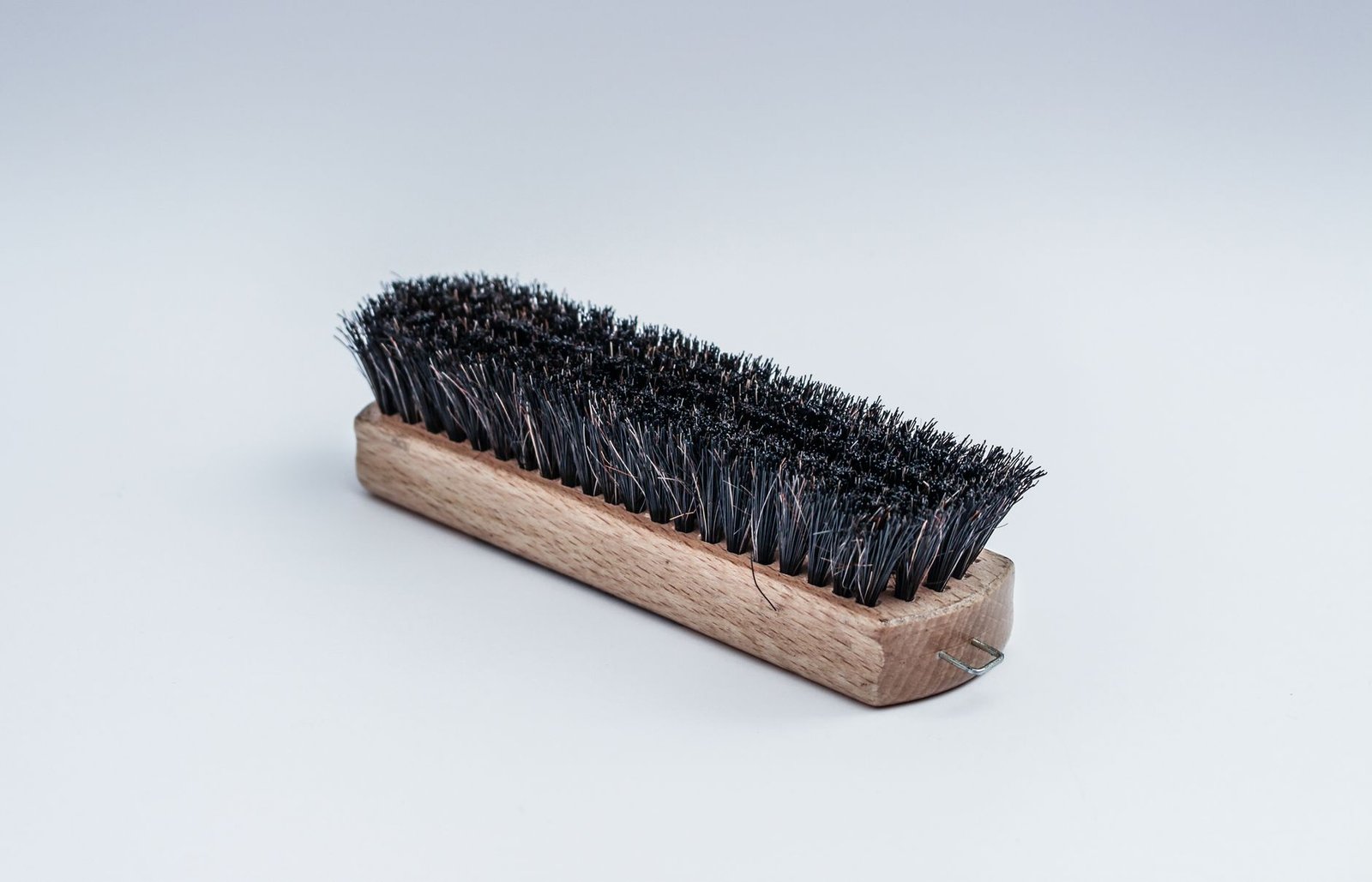
- Scrub with nylon. A stiff nylon brush is fine. Unilock warns against wire brushes, which can leave metal particles that cause rust staining, even though one guide I read suggests them.
- Rinse well. Flood the section with a hose, and rinse again. Family Handyman says to rinse thoroughly so no acidic residue is left.
Work in sections, from the high side of the patio down. Wear gloves, since a vinegar bath is not good for hands.
Natural stone, sealed pavers and fresh sealer: where vinegar goes wrong
This is the section that decides whether vinegar was a good idea or a very small mistake you will see for years.
- Natural stone. Prosoco lists natural stone among the surfaces that need careful testing before any acidic cleaner. Use a stone-safe, pH-neutral cleaner instead. Limestone pavers and travertine pavers are the ones to be most suspicious about.
- Sealed pavers. Prosoco puts sealed pavers on the same caution list. If a sealer is already peeling or cloudy, see paver sealer turning white rather than reaching for acid.
- Pavers you plan to seal. Hunker says not to clean with white vinegar before applying a solvent sealer, because it may react and leave a milky residue. If sealing is next, rinse well and read the sealer's prep instructions; our paver sealing guide covers the order of work.
- Unknown history. If the patio came with the house and nobody remembers whether it was ever sealed, treat it as sealed.
Vinegar on efflorescence, weeds and rust: quick answers
Diluted vinegar is often suggested for other paver problems too, so here is the short version:
- White haze. It can dissolve light efflorescence, but a buffered remover is more predictable. See efflorescence on pavers.
- Rust. One source rates it for rust; for stubborn rust stains see remove rust stains from pavers.
- Weeds. The National Pesticide Information Center says weed-killer vinegar is 20 percent acetic acid or more (household vinegar is 4 to 6 percent), that registered products at that strength carry the signal word DANGER, and that it can permanently damage corneas. That is not a kitchen product, and removing weeds from pavers has safer routes.
Keep vinegar away from bleach
Do not mix vinegar with bleach to make a stronger cleaner. Concrete Network's bleach guide says never to mix bleach with ammonia, vinegar or other household cleaners, because the combination can produce toxic fumes. If you used one, rinse it off completely before trying the other, and read bleach on pavers for the bleach side of the story.
Test one paver, rinse everything, and stop at one round
Cleaning pavers with vinegar is a reasonable first try for light mildew and the odd stain on bare concrete pavers, and a poor choice for natural stone, sealed surfaces and anything about to be sealed. Use plain white vinegar at about 1:1, wait 10 to 15 minutes, scrub with nylon and rinse until nothing is left. If one round does not work, do not escalate to a longer soak. Change tools. A pH-neutral paver cleaner or a stain-specific remover is cheaper than a patio that has been etched pale in patches.
FAQ
Is vinegar safe to use on pavers?
Diluted white vinegar is commonly used on unsealed concrete pavers for mildew and light stains, but it is an acid. Prosoco says it should not be treated as a universal paver cleaner, and recommends testing first, especially on natural stone and sealed pavers.
What is the ratio of vinegar to water for cleaning pavers?
Family Handyman uses equal parts warm water and white vinegar for heavy stains. Unilock pours vinegar directly on mildew, and Hunker uses it undiluted. Starting at 1:1 and testing first is the cautious route.
How long should vinegar sit on pavers?
Family Handyman and Unilock both say 10 to 15 minutes. Hunker leaves undiluted vinegar on for an hour, which is a lot of acid time for a porous surface.
Does vinegar damage pavers?
It can, on surfaces that do not tolerate acid. Prosoco flags natural stone, sealed pavers and unknown coatings, and Hunker says vinegar may react with a solvent sealer and leave a milky residue. Test one paver and rinse thoroughly.
Can I use vinegar before sealing pavers?
Hunker advises against it before a solvent sealer, because of the risk of a permanent milky residue. Rinse well and check the sealer's own prep instructions.


