


Last Updated on September 27, 2026 by Umar Farooq
Decorative pavers are the accent pieces that turn a plain paved area into a designed one: medallions and compass roses, circle and fan kits, contrasting inlay bands, patterned or embossed pavers, custom-engraved units and pebble mosaics. Used well, they create one focal point where the eye naturally lands, such as the center of a seating area, the front door or a path junction. Used everywhere, they cancel each other out.
Six kinds of decorative paver
| Type | What it is | Rough effort and cost |
|---|---|---|
| Medallion | Pre-assembled round or square design, dropped into the field | Highest price; minimal skill |
| Circle or fan kit | Wedge-shaped pavers laid in rings | Moderate; laid center-out |
| Inlay banding | A contrasting row or two inside the field | Low cost; careful string lines |
| Patterned pavers | Multi-color blends or embossed faces | Same as normal pavers |
| Engraved or custom pavers | Names, dates or logos cut into the face | Per-piece price |
| Pebble or glass mosaic | Small stones set in mortar on a slab | Cheap materials, slow labour |
Borders frame the edge rather than decorate the middle; see paver border. Unilock's border, banding and accent guide puts the difference nicely: "Inlays are the brushstrokes inside the canvas."
Medallions: the instant focal point
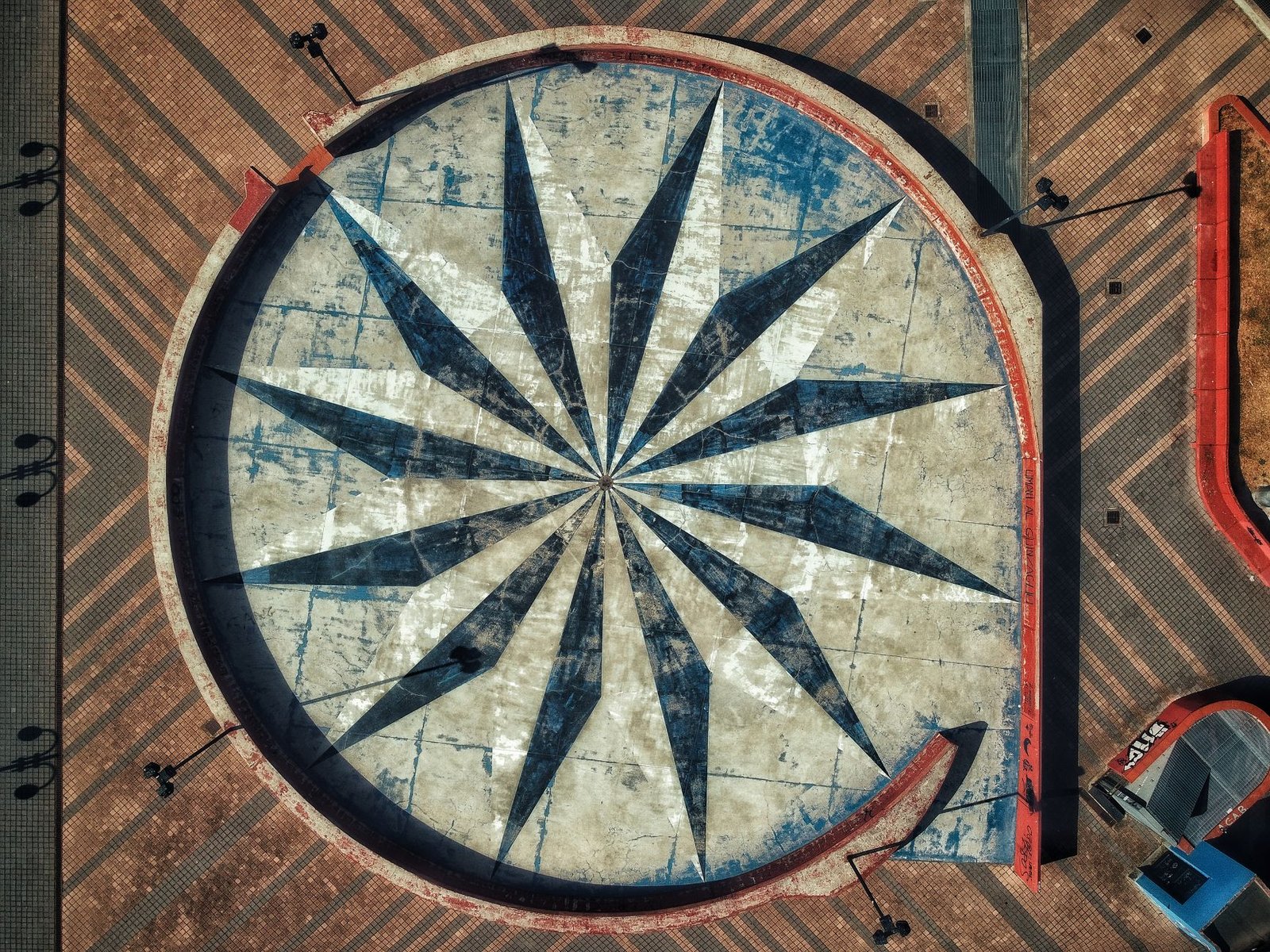
A paver medallion is a finished design (compass rose, star, geometric motif) made from pavers cut and assembled at the factory. USA Inlays' exterior paver medallions are typical of the specialist ones: made from pigmented concrete pavers 2 3/8 inches thick so they match standard landscape pavers, up to 48 inches across, and listed at $2,595 each with a five-to-eight-week lead time for made-to-order pieces.
Setting a medallion into a laid field

Mark the circle on the laid field, cut out the pavers inside it, set the medallion on the same bedding sand at the same height as its neighbours, and fill the joints. The ring around it is where the job looks good or doesn't. A soldier course of whole pavers laid around the circle hides the ragged ends of the field, and the small cut pieces between that ring and the field should be no thinner than about a third of a paver, or they'll work loose.
Cheaper ways to a focal feature
Most decorative effects cost far less:
- Circle and fan kits make a round focal area from standard-thickness wedge units. Our circle pavers guide covers how they're laid.
- Inlay banding. A single row of a darker or lighter paver across the field, or a rectangle of contrasting pavers under the dining table, costs little more than the pavers themselves.
- Pattern changes. Switching from running bond to herringbone inside a defined zone is decorative without any new product at all. The main bonds are in paver patterns.
- Patterned pavers. Multi-color blends and embossed faces (fans, scales, stone textures) carry the decoration in the unit itself, so the laying is ordinary.
Custom pavers: engraved, colored and one-off designs
"Custom pavers" usually means one of three things: engraved pavers carrying text or a logo (common for memorials and fundraising walks), a special color run made above a manufacturer's minimum order, or a custom layout of standard units cut and arranged by the installer.
For a custom paver driveway, one rule overrides the design: every decorative unit must be driveway-rated and the same thickness as the field around it. A thin accent paver in a driveway either sits low or cracks under the first tire, and a medallion in the wheel path takes the most punishment on the whole surface.
Pebble and glass mosaics

The oldest decorative paving is small stones set on edge in mortar. Ask the Builder's Tim Carter describes making one on an existing slab with a cement stucco mix of 3 parts sand to 1.5 parts Portland cement, laid 3/4 inch thick in roughly 1-foot squares, with colored gravel, glass beads or tile pressed in. A reader under his decorative pavers column reports river rock popping out over time from weather, which matches how these fail: pebbles need to be set deep, mostly below the surface, on a sound concrete base.
One focal point per space
Here's my opinion, and it's the most useful decorating rule in this article: one decorative feature per space. Decorative pavers work by contrast, and contrast is a budget. A medallion in a plain field stops the eye; add a double border, three bands and a herringbone zone, and the patio reads as a showroom floor.
Put it where people already look: a seating area's center, the landing at the main door, or a path junction. Not where furniture or the grill will sit on it. (A $2,595 compass rose under a dining table is a very expensive way to decorate the underside of a tablecloth.)
Pick the spot, then the piece
Choose the one place the eye should land, then the cheapest decorative paver that marks it: a band or pattern change is often enough, a kit is the middle ground, and a medallion is for the entry that deserves one. Match thickness and rating to the field, frame it cleanly, and let the rest stay plain on purpose.
FAQ
What are decorative pavers?
Pavers used to create a focal point or pattern rather than just a surface: medallions, circle kits, contrasting inlay bands, patterned or embossed pavers, engraved custom pavers and pebble mosaics.
How much does a paver medallion cost?
Specialist pre-assembled medallions are expensive. One US maker lists its exterior paver medallions at $2,595 each, up to 48 inches across. Circle kits and inlay bands made from standard pavers cost far less.
Can decorative pavers be used on a driveway?
Yes, if every decorative unit is rated for vehicles and matches the thickness of the surrounding pavers. Keep large medallions out of the wheel paths where possible.
How do you add a decorative inlay to an existing paver patio?
Mark the shape on the patio, lift or cut out the pavers inside it, check the base and bedding sand, set the inlay at the same height, then cut and fit the surrounding pavers tight to it and refill the joints.


