Last Updated on September 23, 2026 by Umar Farooq
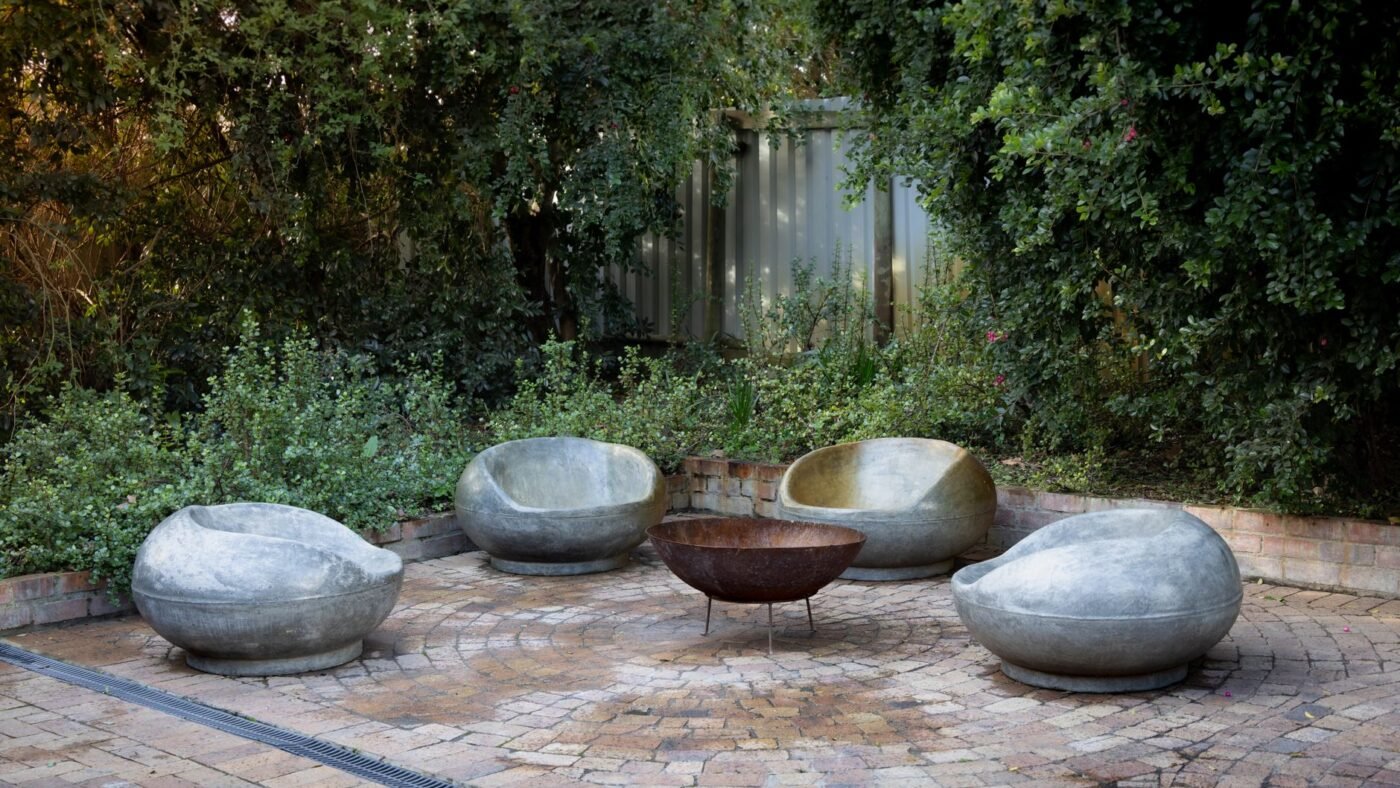
Circle pavers are tapered, wedge-shaped pavers designed to be laid in concentric rings around a center stone, so you can build a round patio, fire pit pad or medallion without cutting every piece. Nobody wants to cut three hundred wedges by hand. Most are sold as a circle kit: a pallet with a center stone and the wedges for each ring, sized to make a circle of a set diameter. Add-on kits extend the circle with more rings, and "square-off" pieces fill the corners if you want the circle inside a square.
I searched this term expecting guides and got a wall of store listings, so this sticks to what those listings leave out: how the kits are sized, how to lay one, and how to fit a circle into a larger patio.
How a paver circle kit works
A circle kit contains every piece for one circle, pre-sorted by ring. Each ring uses slightly wider wedges than the one inside it, so joints stay even as the circle grows. You build outward from the center stone, one ring at a time, following the pallet tag or instruction sheet.
A typical example is RCP's concrete paver circle kit. One kit holds 62 square feet of pavers: a centerpiece, large and small wedges, and rectangles. The same kit can be laid three ways:
| Layout | Kits needed | Diameter | Area |
|---|---|---|---|
| Full circle | 1 | 7 ft 9 in | 47 sq ft |
| Full circle | 2 | 12 ft 6 in | 123 sq ft |
| Half circle | 1 | 12 ft 6 in | 62 sq ft |
RCP notes that because the kits suit several layouts, you will have unused pieces. A leftover stack does not mean you laid it wrong. (It does mean you now own a small pile of very specific wedges.)
Other brands differ, so check the kit's own sheet for its diameter, ring count and whether add-on rings or square-off corners exist in the same line.
Round pavers vs circle kits
"Round pavers" usually means something else: single round concrete pavers in various diameters, used as stepping stones or in gravel. Each is a complete circle, not a wedge.
- Circle kits make one large round surface for a patio or fire pit area.
- Round concrete pavers make a path or a decorative pattern of separate circles set in grass, gravel or mulch.
Round pavers are laid like stepping stones: each on its own compacted pad, spaced to a natural stride. They do not interlock, so they cannot stand in for a circle kit on a patio.
How to lay circle pavers from the center out
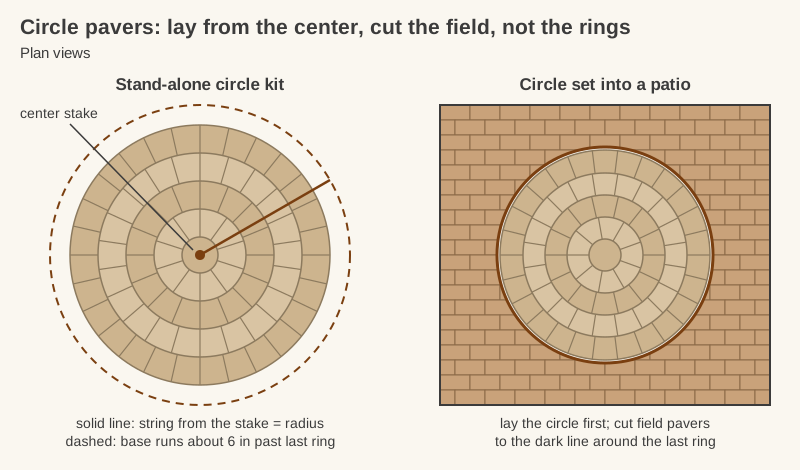
The base is the same as for any sand-set patio, but you work from the center outward instead of from a straight edge.
- Mark the center and outline. Drive a stake at the center, tie a string to it at the finished radius, and spray-paint the circle. Western Interlock's circle patio tutorial adds 6 inches beyond the circle so the base extends under the edge restraint.
- Dig and build the base. Excavate, compact the subgrade, and build a crushed-stone base no thinner than 4 inches once compacted (ICPI Tech Spec 2 adds 2 to 4 on wet, weak ground or where it freezes), sloped at least 1.5%. Keep the center marked, or reset it after.
- Screed the sand. Spread an inch of coarse ASTM C33 concrete sand (stone dust and mason sand don't qualify) and screed it flat. Do not compact the sand.
- Lay the center stone, then each ring. Follow the kit sheet ring by ring. Keep each ring tight and round. A slightly oval inner ring gets worse with every ring outside it.
- Restrain the edge. Use flexible plastic edging made for curves. Western Interlock cuts the back web of the edging every third hole so it bends to the circle, then spikes it down.
- Compact and sand the joints. Run a plate compactor over the circle, sweep joint sand in, and compact again until the joints are full.
Pull pavers from each ring's bundle as you go and keep the leftovers until the job is done. In a circle kit, unlike field pavers, every piece has exactly one home.
My one firm opinion: never "adjust" a ring by opening the joints. A wedge joint that's wider on the outside holds less sand at the bottom, washes out first, and lets the ring go oval. If a ring won't close, pull it and re-seat it from the last good ring, however annoying that is at 4 pm.
Fitting circle pavers into a patio
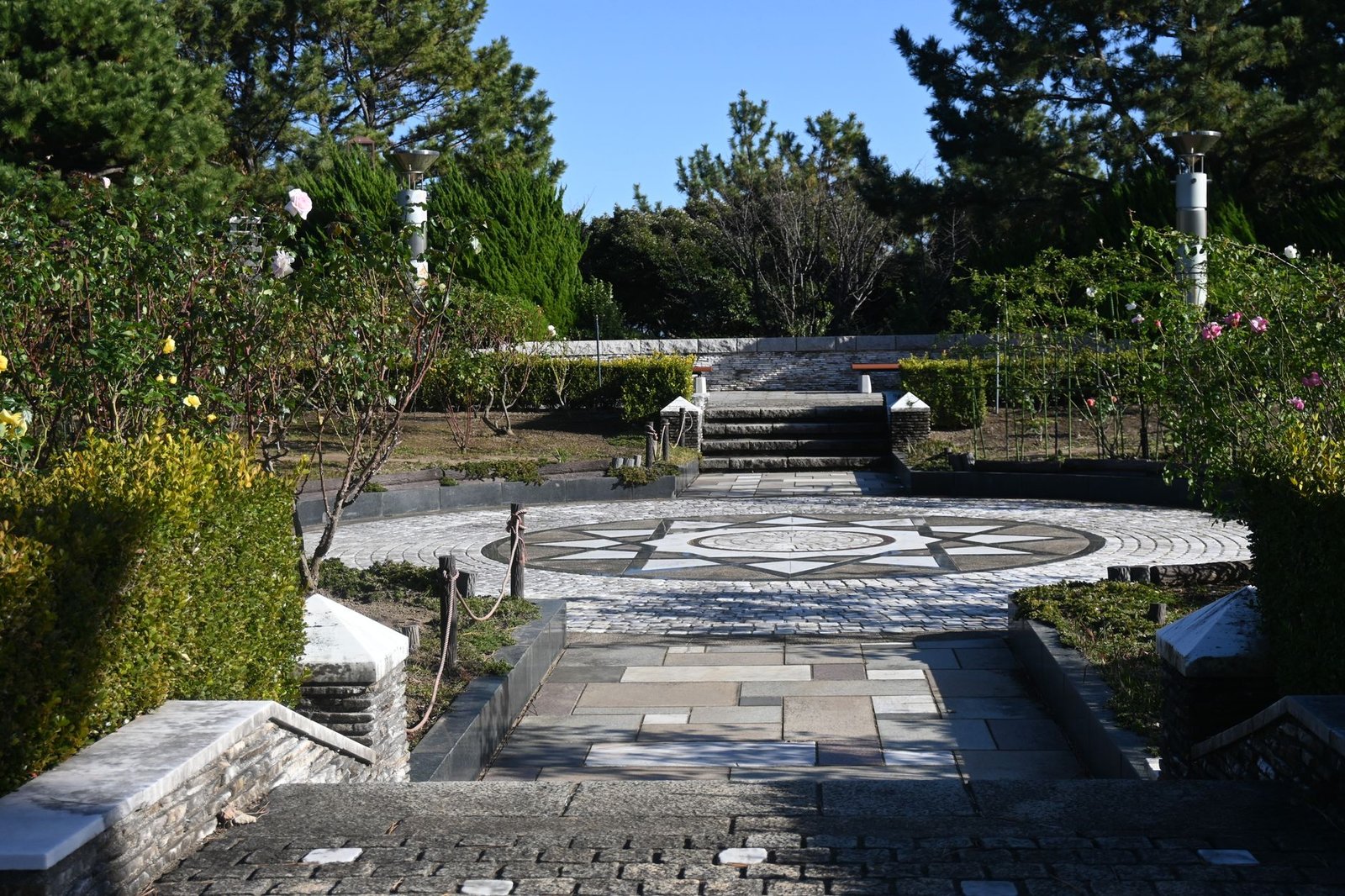
A circle makes a focal point inside or beside a larger patio:
Circle inside a rectangular field. Lay the circle first. Then lay the field pavers (running bond or herringbone) up to it and cut them along the outer ring. The ring pieces stay whole; all the cuts happen in the field, where they are easy. A single row of border pavers around the circle hides the cut ends neatly.
Square the circle. Many kit lines sell square-off corner pieces that fill the four corners and turn the circle into a square. That square then drops into a patio laid in any pattern with only straight cuts.
Circle attached to a patio. A round fire pit area joined to a rectangular dining patio, sharing one base, with the field cut where it meets the circle.
Where circle and field meet, the curve needs many short facet cuts; the guide on how to cut pavers for curves covers marking and cutting them. For where a circle fits in the layout, see the ideas on paver patio designs.
Fan patterns and paver circles without a kit
A fan (or European fan) pattern uses small cobble-type pavers laid in overlapping arcs. It gives a similar old-world look over a larger area, but each arc is laid by eye to a template, which takes practice and a certain calm.
You can also build a circle from rectangular pavers, letting the joints open into wedges or cutting each paver to a taper. Tapering is slow, and wide wedge joints wash out, which is why circle kits exist.
Buy the kit and lay it center-out
For a round patio or fire pit pad, a circle kit is the right way to build a paver circle. It costs more per square foot than field pavers, but it removes hundreds of tapered cuts. Pick a diameter that suits the furniture, lay it ring by ring from a staked center, and keep the cutting in the field.
And if ring three is already looking a bit egg-shaped, stop now and fix it. It is much easier to argue with one ring than with seven.
FAQ
What size circle does a paver circle kit make?
It depends on the brand. As one example, RCP's kit makes a 7 ft 9 in circle (47 sq ft) from one kit or a 12 ft 6 in circle (123 sq ft) from two. Check the kit's sheet for its diameter and whether add-on rings are sold.
Do you need to cut pavers for a circle kit?
Not inside the circle, if you follow the kit layout. Cuts are only needed where a surrounding patio meets the outer ring, or where the circle meets a wall or step.
How big should a fire pit circle be?
Big enough for chairs to sit fully on the pavers with room to walk behind them. Measure the fire pit, add the depth of your chairs and a walking path, and pick the kit diameter that covers that.
Can you put a paver circle on dirt?
Not if you want it to stay round. A paver circle needs the same compacted crushed-stone base and 1-inch sand bed as any paver patio. Laid on soil, the rings settle unevenly and the joints open.
What are round concrete pavers used for?
Mostly stepping stones and decorative paths set in grass, gravel or mulch. They are single round stones, not interlocking wedges, so they suit paths rather than solid patios.