

Last Updated on October 20, 2026 by Umar Farooq
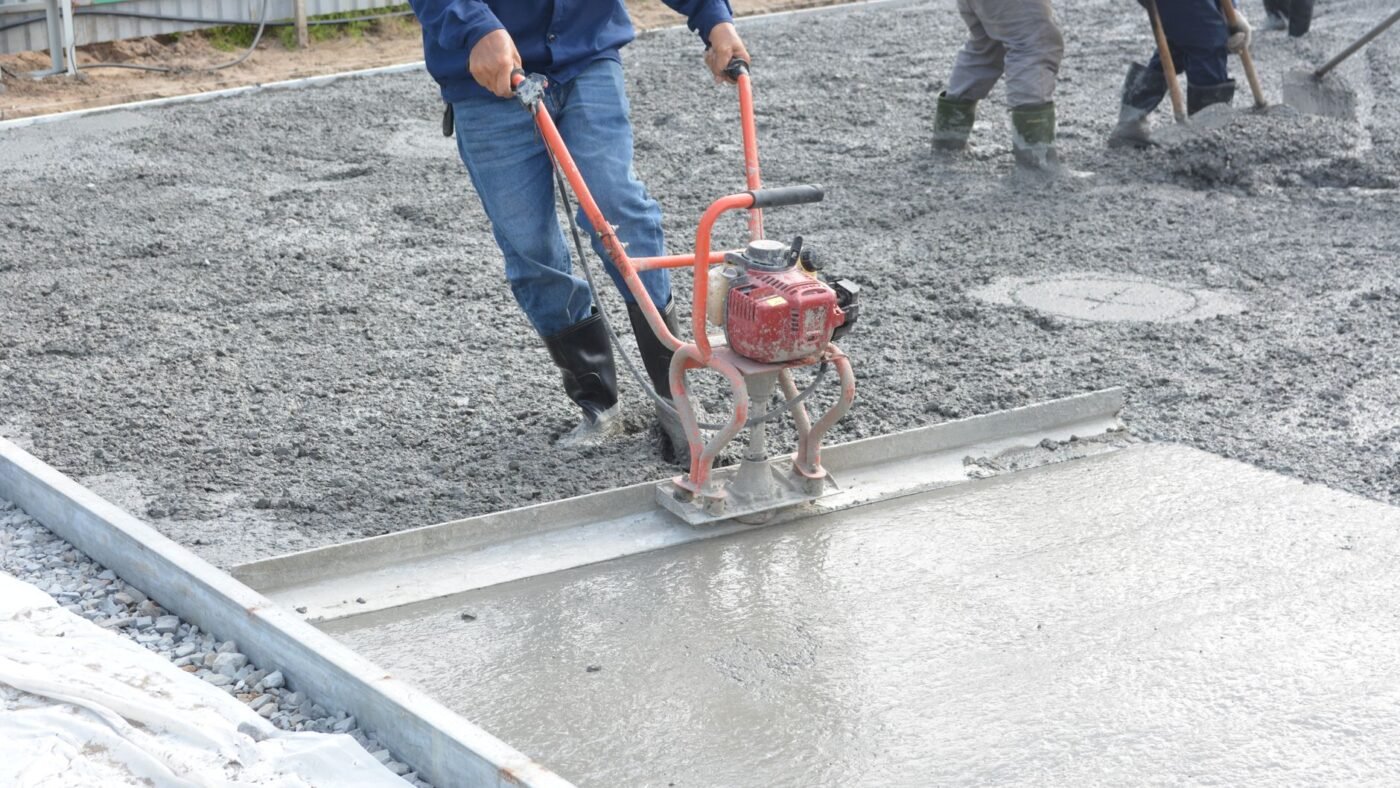
A vibratory screed is a straight blade, or a pair of beams, with a motor that shakes it while you pull it across fresh concrete. In one pass it strikes the concrete off flat to the forms and consolidates it, knocking coarse aggregate down and working out trapped air. It's the tool for pouring a patio slab, sidewalk, driveway or garage floor. It is never used on the sand bed under pavers, which has to stay loose until the pavers are on it. Worth a read next: paver patio pros and cons.
Page one for this search is mostly product and rental listings, so this guide is built from the consolidation guidance concrete contractors work to and the how-to pages that sit just below the shops.
What a vibratory screed actually does

Hand screeding with a straight 2×4 does one job: it strikes the surface flat by sawing the board along the forms. A vibratory screed adds a second job. Wacker Neuson's vibratory screed page puts it as spread, level and consolidate in one operation.
The consolidation part matters more than most DIY guides let on. Fresh concrete is full of entrapped air, and stiffer mixes hold more of it. Vibration liquefies the top layer briefly, so the stone settles, the air rises out, and a thin layer of paste ("cream") comes to the surface for finishing. The result is a denser slab and a surface that's easier to float.
I read ACI 309R, the American Concrete Institute's guide to consolidating concrete, for the numbers behind the sales copy. It describes vibrating screeds as single or double beams riding on the forms or rails, so "it acts not only as a compactor but also provides the final finish." Its guide for slabs is specific:
- Thickness. Surface vibration, which is what a screed does, is recommended for slabs up to 6 inches thick, unreinforced or with light mesh. Slabs 6 to 8 inches can use either surface or internal vibration. Above 8 inches, or with heavy reinforcement or conduit, use an internal (poker) vibrator.
- Slump. 1 to 2 inches is the recommended range for concrete consolidated by a vibrating screed. Above 3 inches, use it "with care," because wet concrete ends up with a layer of mortar on the surface after vibration.
- Frequency. Low-frequency, high-amplitude units (3,000 to 6,000 vibrations per minute) are preferred for real consolidation. High-frequency, low-amplitude ones are fine when the screed is only helping finishing.
- Slopes. Vibrating screeds suit flat or nearly flat surfaces; ACI advises caution on slopes.
The preview of the current ACI 309R is on the American Concrete Institute site; the full guide is a paid document.
Types of vibratory screed
| Type | What it looks like | Suits |
|---|---|---|
| Hand-held power screed | One blade on a handle frame, small gas engine or battery vibrator on top | Patios, walks, driveways, garage floors |
| Truss screed | Long triangulated truss spanning the forms, engine-driven, often winched | Wide commercial pours, roads |
| Roller screed | Spinning tube riding the forms | Plastic mixes, irregular areas, some sidewalks |
| Laser screed | Ride-on or boom machine guided by a laser | Large warehouse floors |
For a homeowner or a small crew, "vibratory screed" almost always means the hand-held power screed: an engine or battery vibrator on a frame, with interchangeable blades. Tomahawk Power's power screed guide puts small-job blades at 4 to 8 feet and larger pours at 10 to 12 feet and up. The blade has to span from form to form, or from a form to a wet screed rail, so the blade length you can rent decides how you lay out the pour.
When a vibratory screed is worth it
This is where I'll plant my one flag: a power screed earns its rental only if you order the concrete stiff enough for it to work. Its advantage is consolidating and striking off low-slump concrete that's miserable to move by hand. Order a wet, soupy mix so the hand screeding feels easier, and you've thrown that advantage away. Now the vibration just floats paste to the top, and ACI's guide warns that's where surface mortar layers come from, and a weak surface dusts and scales.
So the decision looks like this:
- Small pad (a landing or a slab for a trash can): a straight 2×4 and a helper. Nothing to rent.
- Patio, walkway or driveway slab 4 to 6 inches thick, with forms: rent a power screed with a blade that spans the forms, and order the mix at the slump your supplier recommends for machine screeding, typically toward the stiff end.
- Slabs over 8 inches or with heavy reinforcement: a screed alone isn't enough. Use an internal vibrator for consolidation and the screed for strike-off.
- Sloped surfaces such as steep ramps: screed carefully or by hand. Vibrated concrete wants to run downhill.
Most homeowners should rent, not buy. A screed is used for an hour or two on pour day and then needs cleaning before the concrete on it sets, which is not a problem you want to own between projects.
How to use a vibratory screed, step by step
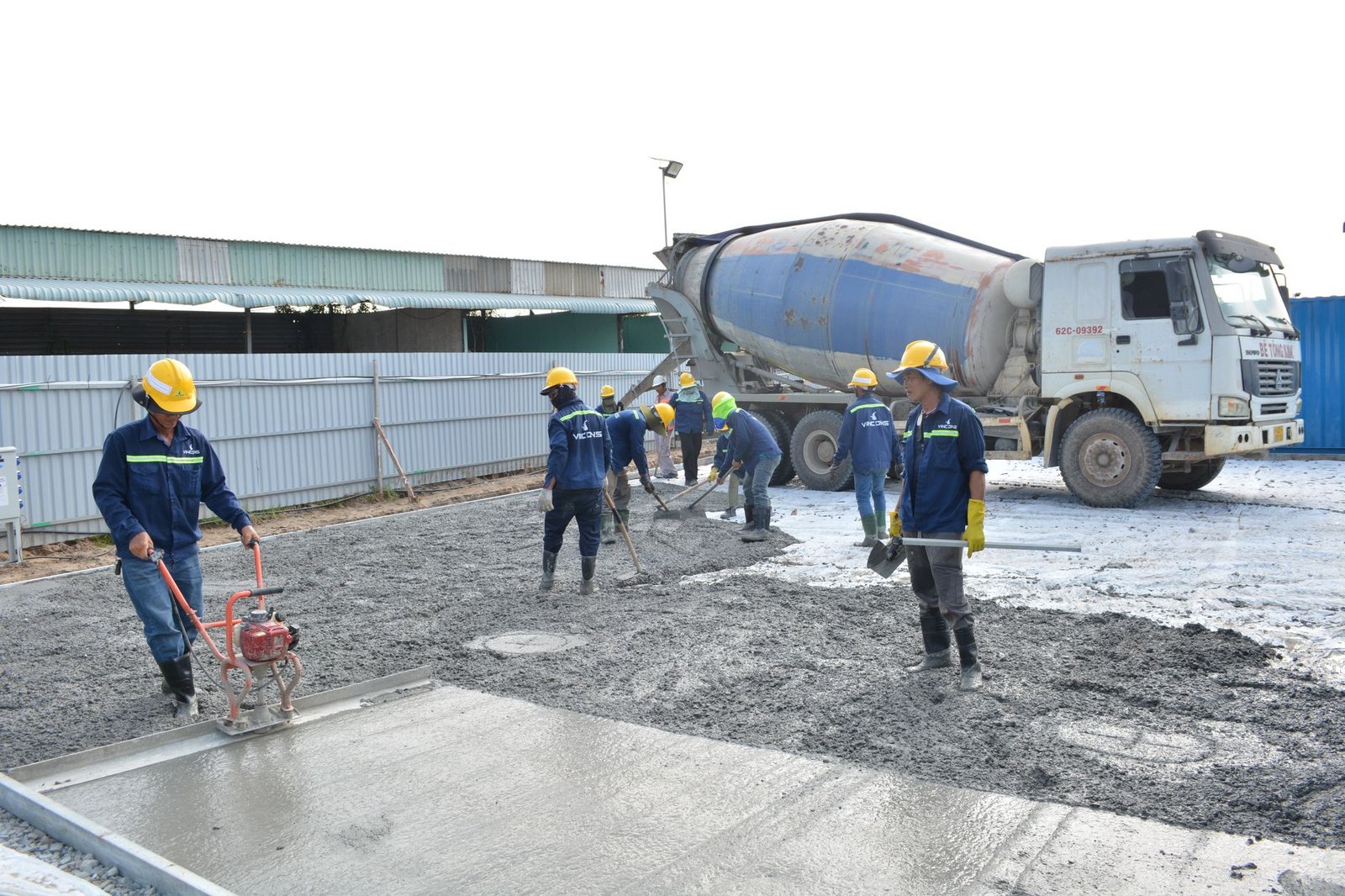
- Set forms rigid and to grade. The screed rides the forms, so the forms are the finished height. Stake them tight enough that a person leaning on the blade can't push them out. For wide pours, set a wet screed rail or intermediate form so the blade always has two supports.
- Check the blade length against the form spacing before the truck arrives. Assemble the blade, check it's straight, and start the engine or battery once as a test.
- Place and rake to a surcharge. Spread the concrete evenly with rakes or come-alongs, slightly above the form tops. ACI describes carrying a surcharge (extra height of uncompacted concrete) in front of the blade so the finished surface lands at grade. Too little and you leave low spots; too much and the blade bulldozes.
- Start the vibration, then set the blade on the forms with the leading edge tilted slightly up.
- Pull slowly backward at a steady pace. Tomahawk's guide says to let the vibration do the work and not push down, which is the most common beginner mistake. Pushing down gouges low spots and digs the blade in. (The machine already weighs enough to make its point.)
- Overlap each pass by 6 to 12 inches and keep the rakers just ahead of the blade, filling lows and pulling off highs. Screeding is a two-person job, and the raker decides the flatness more than the operator does.
- Make a second pass if needed, then stop the vibration before lifting the blade off, and clean it immediately.
After screeding, the slab goes on to bull floating, edging, jointing and finishing. Control joints are either tooled while the slab is plastic or sawn early; the early-entry saw used for that is covered in soft cut saw.
Where screeding goes wrong, and how to tell
- Humps and dips behind the blade. The surcharge in front of it was uneven. Watch the raker, not the blade.
- A shiny, soupy layer of paste. The mix is too wet or the screed stayed in one place too long. Keep moving, and next time order a stiffer mix.
- Blade chattering or bouncing. Throttle too high or blade loose. Most operators run below full throttle; check the rental's instructions.
- Low edges along the forms. The blade lifted off one form. Keep both ends riding the forms at all times.
- Voids along the forms. The screed doesn't reach the concrete against the form face. Tap the forms or run a hand-held internal vibrator along them.
Small gas engines produce carbon monoxide, and a joint NIOSH, CPSC, OSHA and EPA alert warns that operators "often believe mistakenly that they can avoid risk by opening doors and windows." Pouring a garage or basement floor with the doors shut is exactly that situation. Use a battery or electric screed indoors, or make sure the space is genuinely open.
Renting a vibratory screed
Rental yards usually stock hand-held power screeds with a choice of blade lengths. Before you pick one up:
- Ask for the blade length you need, based on your widest form spacing, and whether extra blades are included.
- Choose gas or battery. Gas is common and needs fuel; battery models are quieter and have no exhaust, which matters in enclosed spaces.
- Ask about the cleaning rule. Most yards charge for returning a screed with set concrete on the blade. Bring a bucket, a brush and a hose to the pour.
- Book it for pour day only. It's a one-morning tool that would otherwise spend years in the garage shaking nothing.
Why a vibratory screed never goes on paver bedding sand
This is the mistake that sends people to this page from a paver project. The sand under pavers is screeded too, but by hand, with 1-inch rails and a straight board, and it's left loose. CMHA's guide specification for pavers is blunt: "Do not disturb screeded sand," and ICPI's install guidance calls for a nominal 1-inch layer, uncompacted.
A vibratory screed on that sand would compact it before the pavers go down. The pavers then have nothing loose to settle into, the plate compactor can't vibrate them down to an even surface, and sand can't migrate up into the joints to lock them. You'd get a harder bed and a worse patio.
The paver process has its own vibration step, and it comes after the pavers are laid: a plate compactor run over the finished surface. For the sand itself, see screeding sand for pavers. And if you're wondering about pouring a slab over an old paver patio instead, can you pour concrete over pavers covers why that usually disappoints.
Stiff mix, straight forms, slow pull
A vibratory screed makes a concrete slab denser and flatter in less time, but only on its terms: forms set true, concrete ordered stiff (around 1 to 2 inches of slump), a slab 6 inches or thinner, and a steady, unhurried pull with a good raker in front. Keep it on concrete and away from paver sand. The screed does the shaking; your job is to walk backward slowly, which is harder than it sounds with a ready-mix driver watching.
FAQ
What is a vibratory screed used for?
Striking off and consolidating freshly poured concrete in slabs such as patios, sidewalks, driveways and floors. It levels the concrete to the forms and vibrates out entrapped air in the same pass.
What slump is best for a vibratory screed?
ACI 309R recommends 1 to 2 inches of slump for concrete consolidated by vibrating screeds, and caution above 3 inches because wet mixes bring a layer of mortar to the surface.
How thick a slab can a vibratory screed consolidate?
ACI 309R recommends surface vibration for slabs up to 6 inches, unreinforced or with light mesh. Slabs 6 to 8 inches can use surface or internal vibration; thicker or heavily reinforced slabs need internal vibrators.
Can you use a vibratory screed on sand for pavers?
No. Paver bedding sand must be screeded by hand and left loose. Vibrating it compacts the bed before the pavers go down, which stops them settling and locking properly.
Is a power screed better than a 2×4?
For stiff concrete and slabs larger than a small pad, yes: it consolidates as it screeds and saves a lot of effort. For a small landing or pad with an easier mix, a straight 2×4 and a helper do the job.
Can you rent a vibratory screed?
Yes. Most equipment rental yards stock hand-held power screeds with a range of blade lengths, usually by the day. Clean it before the concrete sets to avoid cleaning charges.


