


Last Updated on October 20, 2026 by Umar Farooq
AC unit pad pavers are a good idea when they are done as a proper small paver pad: a few inches of compacted stone, an inch of sand, pavers that run a couple of inches past the unit on every side, and a surface that slopes away from the house. The unit needs to stay level and its service panels need to stay reachable, so the pad has to stay put for fifteen years or more. A few loose pavers dropped on bare dirt do neither, and they are the usual reason a condenser ends up leaning.
Is a pad even needed, and is a paver pad the best one?
Green Building Advisor's reader thread on a concrete versus plastic pad for a heat pump is useful because the answers come from people who live with the result. One experienced member prefers a regular 4 inch concrete pad, because the mass damps vibration and lightweight materials are worse for sound, and suggests large precast pavers for smaller units. Other members report no trouble after 18 months and six years on composite pads.
So the honest order of preference runs like this:
- A preformed plastic or precast concrete pad is the cheapest and quickest. For a typical home unit, it is often all you need, laid on a leveled and compacted bed.
- A paver pad costs more and takes longer, but it can match the patio, handle wider units and be re-leveled without breaking anything.
- A poured slab is best where you want mass for quiet or you are in a flood-prone area and want the unit elevated.
If you want a plain solution, choose number one. If the unit sits beside your patio and you want it to look planned, choose number two.
Check clearances before you size the pad
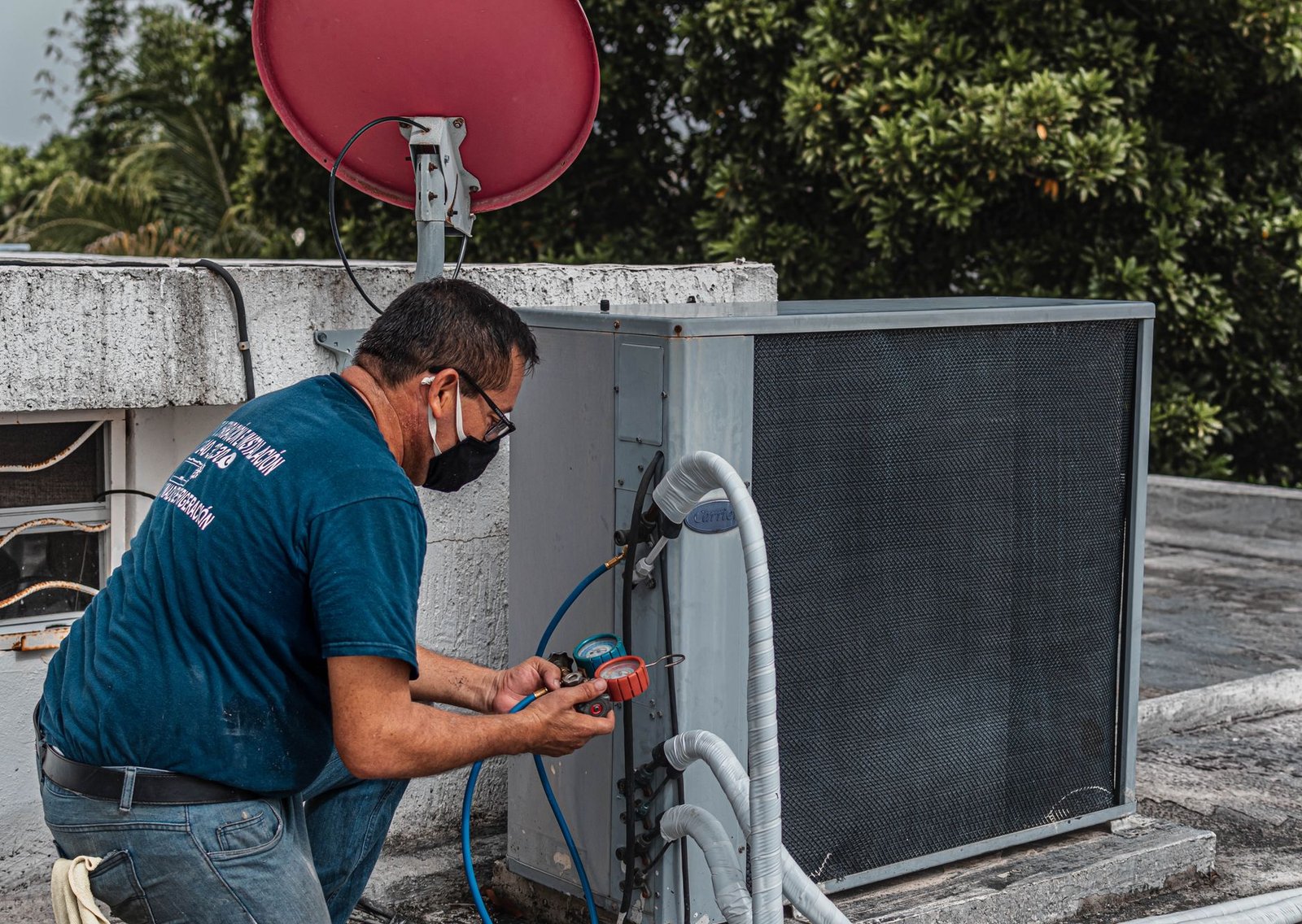

The pad size depends on the unit, but the surrounding clearances depend on the manufacturer. Outdoor unit installation manuals set minimum distances from walls, shrubs, other units and overhead obstructions, and those distances differ by brand and model. Some are as small as a few inches on one side while the service side is much larger. I could not find one number that fits all of them, and any article that gives you one is guessing. Pull the model number off the unit's data plate, find the installation manual online (the unit page on the manufacturer's site usually has it), and read the clearance diagram before you dig.
What the pad itself should do:
- Extend a couple of inches past the unit's base on every side. Manuals often specify a minimum pad extension. Lay out the pad accordingly, and extend it further on the service side so the technician stands on something level.
- Stay clear of the house structure. Some manuals say the pad should not be in contact with the building, so vibration does not travel into the wall. Leave a gap and fill it with gravel.
- Slope slightly away from the house. A tiny fall carries water away from the foundation. Keep it small, because the unit also has to be level; manuals specify a maximum tilt for the unit, so check yours.
Before digging, call 811. The free national before-you-dig service exists because refrigerant lines, gas lines and cables run exactly where people want to put equipment, and the wait before the marks arrive varies by state.
How to lay AC unit pad pavers: dig, compact, screed
The layers match any other small paver area, and the figures come from the same sources as the rest of the site. The ICPI Tech Spec 2 asks for at least 4 inches of compacted base under pedestrian pavements, with 2 to 4 inches more for cold climates or weak soils, and 1 inch of screeded, uncompacted bedding sand.
- Mark and dig. Excavate the pad footprint to base depth plus paver thickness plus 1 inch for sand. Remove the sod and keep the hole square.
- Compact the soil. A hand tamper is enough for a pad this small. Our how to test soil compaction guide shows how to check there are no soft spots.
- Add and compact the base. Spread dense-graded crushed stone, and compact it in thin lifts. A hand tamper or a rented plate works; see how to compact gravel.
- Screed 1 inch of sand. Uncompacted. Then lay pavers, tapping each one level.
- Restrain the edges. Even a tiny pad needs a restraint, or the outer row spreads. See paver edge restraint.
- Sweep in joint sand and compact. Check the whole pad with a level in both directions before you move the unit onto it.
Use pavers that are at least 2 3/8 inches thick; the unit is a static load, but a technician with a toolbox and a ladder is not. Square 12 x 12 inch pavers are fine because there are no tires involved. Heavy units, including some commercial ones, may need the thicker vehicle-grade pavers described in our paver thickness guide.
If you are unsure of the weight your pad must support, the unit data plate and the installation manual list it.
Keep water, weeds and leaves out of the equation

A condenser moves a lot of air through its coil, and what is on the ground gets pulled in. Green Building Advisor's thread notes that leaves blow under ground-mounted units and are hard to clear, and that dripping water can freeze. A paver pad helps in three ways:
- Joints stay tight. Polymeric sand in the joints keeps weeds from growing up into the coil. Check our notes on how to remove weeds from pavers if they get ahead of you.
- Drainage is built in. Heat pumps shed water during defrost. A base of open crushed stone lets it soak away rather than pool. Keep the pad from forming a bowl.
- Gravel margins catch debris. A band of washed stone around the pad is easier to rake than grass trimming around a unit.
In snow country, a snow stand lifts the unit above drifts so vents do not clog, and it also helps in flood-prone areas. Another member reports a stand held up under more than 8 inches of blown snow. If you use one, set each foot on its own paver on compacted base so you can re-level it if frost heaves the ground.
When the pad sinks, fix the base and not the shims
If the unit starts to tilt, resist the urge to wedge shims under one corner. Lift the pavers, find the soft spot, rebuild the base there and relay. Our guide to how to fix sunken pavers shows the process. Call your HVAC installer before moving the unit, because refrigerant lines should not be pulled, and a technician should disconnect and reconnect them.
Make the pad small, level and boring
The best pad for an AC unit is the one nobody notices: compacted base, 1 inch of sand, pavers a couple of inches wider than the unit, edges restrained, surface sloping gently away from the house. Check the manual for clearances, call 811 before you dig, and keep it level.
FAQ
Can you put an AC unit on pavers?
Yes, if the pavers sit on a compacted base and the pad is level. A few loose pavers on bare soil will settle and tilt the unit. Build a small paver pad with 4 inches or more of compacted stone and 1 inch of sand.
How big should an AC unit pad be?
Wider than the unit's base by at least a couple of inches on every side, and bigger on the side where a technician works. The exact clearances around the unit are in the manufacturer's installation manual, so check it for your model.
What is the best pad material for an air conditioner?
For most homes, a preformed plastic or precast concrete pad on a leveled bed is the cheapest. A 4 inch concrete pad is preferred where quiet matters, because mass damps vibration. A paver pad is the choice when you want it to match a patio.
Should an AC pad touch the house?
Some manufacturers say the pad should not be in direct contact with the structure. Leave a gap between pad and wall and check your manual.
Does an AC pad need to slope?
A slight slope away from the house keeps water off the foundation, but the unit itself must stay level within the limit in its manual. Keep the pad fall small.
How do you stop an AC pad from sinking?
Build the base properly: dig out the sod, compact the soil, add compacted crushed stone in thin lifts and screed a 1 inch sand bed. If it sinks later, rebuild the base under the low spot instead of adding shims.


