

Last Updated on October 20, 2026 by Umar Farooq
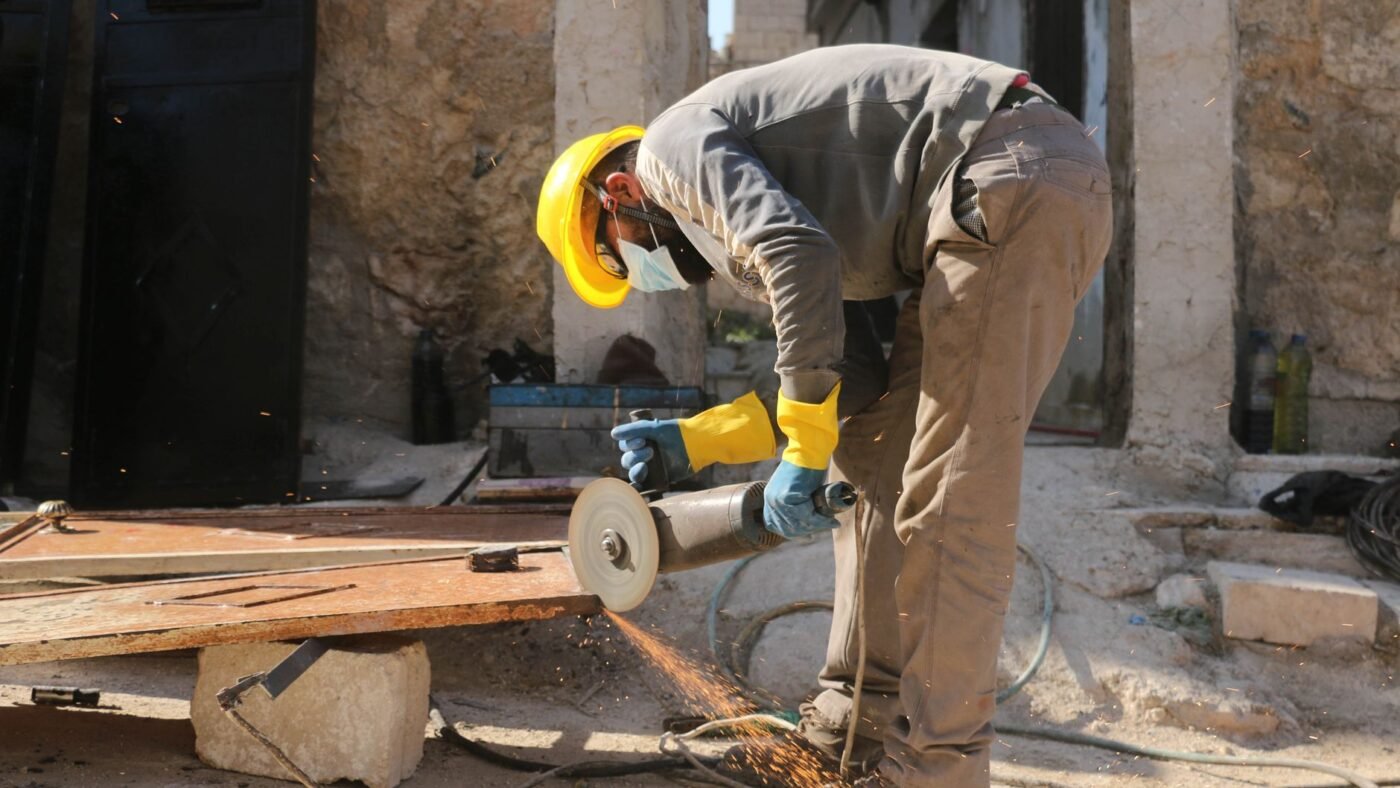
An angle grinder for pavers is a 4 1/2 inch grinder fitted with a diamond blade, and it is the right tool for notches, curves and the odd trim cut, not for a long run of straight cuts. A small grinder's blade only reaches about 1 1/4 inches deep, so you cut a standard paver from both faces and snap the waste piece off. Run it with water or a dust shroud, keep the guard on, and clamp the paver. A long cut list is a job for a rented saw.
What a 4 1/2 inch grinder is good at, and where it runs out of blade
Most people already own one, which settles the first question. Benchmark Abrasives suggests a 4 1/2 inch grinder for smaller bricks and pavers, and a larger grinder for big block pavers because it cuts deeper. That is the whole trade: small, light and easy to steer, but shallow.
The grinder shines where a saw is clumsy: notches around a drain or post, trimming an edge so it fits, and freehand curves (see how to cut pavers for curves).
It struggles on long straight edge cuts, where a cut off saw or a wet saw wins on depth and speed. For how the grinder stacks up against every other option, see paver cutting tools.
Cut a 2 3/8 inch paver from both faces

Standard patio pavers are at least 2 3/8 inches (60 mm) thick (CMHA Tech Spec 10). Bosch's 4 1/2 inch diamond blades for pavers are rated for a 1 1/4 inch cutting depth. One cut from one face cannot go all the way through, but two can: 1 1/4 plus 1 1/4 is 2 1/2 inches, which meets in the middle with about 1/8 inch to spare on a 2 3/8 inch unit. Benchmark Abrasives says the same thing in plainer words: thick pavers may need a second cut from the opposite side.
- Mark the line with a pencil or chalk, and carry it down both edges so you can find it on the flip side.
- Clamp the paver so it cannot walk.
- Cut from the top face, letting the blade do the work. Do not lean on the grinder. Benchmark Abrasives warns that downward pressure invites kickback.
- Flip the paver and cut along the same line from the bottom face.
- Tap the waste piece off with a hammer. If it clings, the cuts did not meet, so go back in along the ridge.
(Practice on a scrap paver. It is the only cheap lesson the job offers.)
Segmented, turbo or continuous rim: pick the blade by the paver
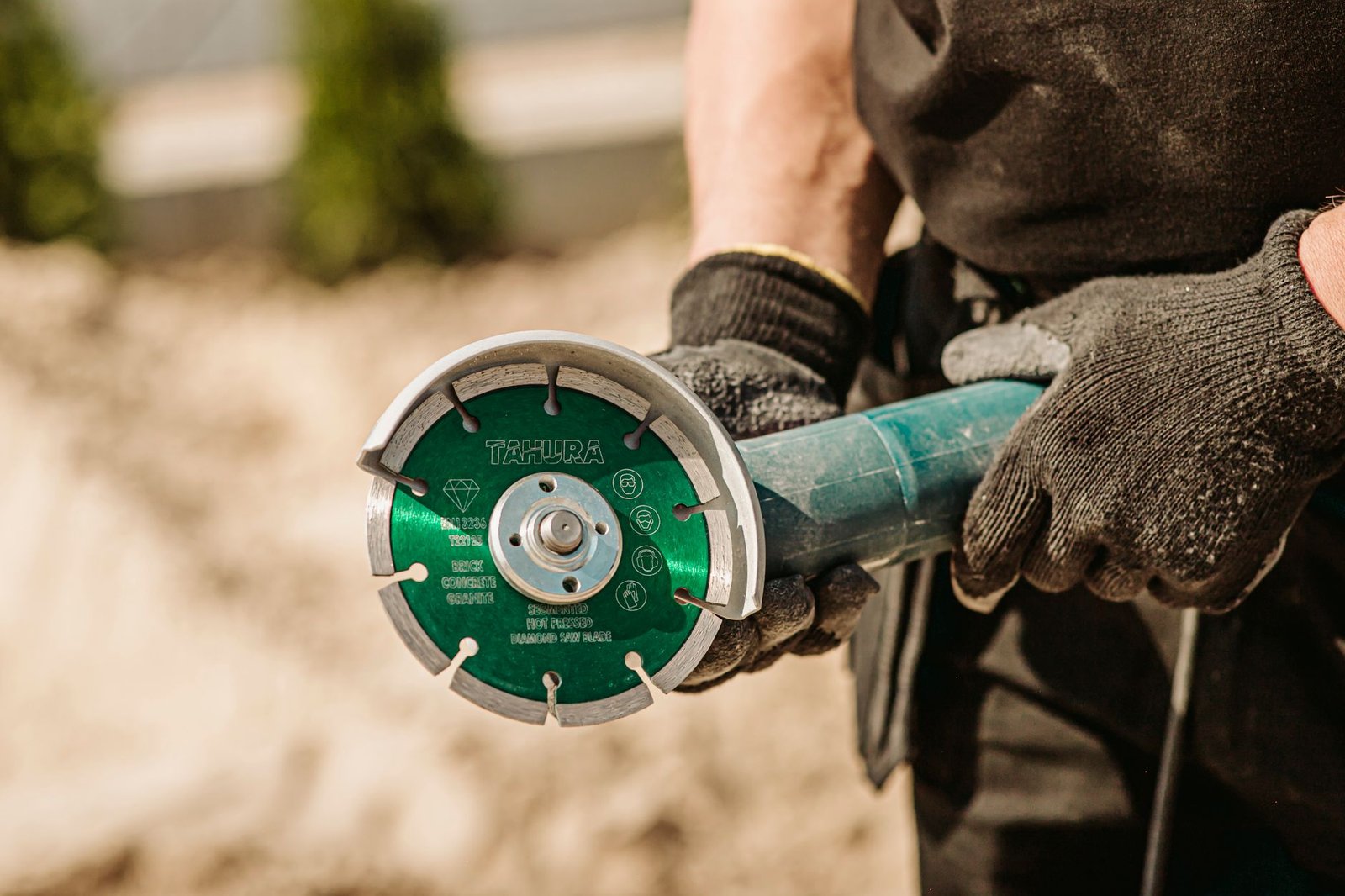

Blades Direct's diamond blade guide sorts the three rim styles like this:
| Rim style | Built for | Notes |
|---|---|---|
| Segmented | Concrete, brick, masonry, dry cutting | Gaps between segments clear dust and cool the blade |
| Turbo | Granite, marble, hard stone | Serrated rim, wet or dry |
| Continuous rim | Porcelain, tile, delicate stone | Smooth edge, designed for wet cutting |
For concrete pavers, a segmented blade is the match. Porcelain calls for a continuous rim and water. Blades Direct also says dry cutting needs pauses to avoid overheating, while wet cutting gives smoother edges and longer blade life.
One rule applies to every blade: never exceed the RPM rating printed on it. Check that the blade's maximum speed is at least what the grinder spins at, and that the arbor hole (the center hole) matches your tool.
Dust is the real hazard: use water or a shroud

Cutting concrete pavers makes respirable crystalline silica. NIOSH describes the result plainly: "Silicosis is a lung disease caused by inhaling excessive amounts of respirable crystalline silica. It is not reversible, but it is preventable."
For a handheld grinder cutting anything other than mortar, OSHA's Table 1 in 29 CFR 1926.1153 offers two routes. Outdoors, either a grinder with an integrated water delivery system that feeds water to the cutting surface, or a grinder with a commercially available shroud and a dust collector (25 cubic feet per minute or more per inch of wheel diameter, with a filter that is 99% efficient or better). Indoors or enclosed, the shroud route adds an APF 10 respirator beyond four hours a shift.
That rule is written for crews, but your lungs do not check payroll. The word that matters in OSHA's text is "integrated": a hose held in your other hand is not that. If your grinder has neither, my advice is a well-fitted respirator and eye protection before the first cut. ICPI's Tech Spec 2 says saws "should have equipment to reduce the dust created".
Guard on, paver clamped, nobody standing in line with the blade
Benchmark Abrasives lists the habits that matter: keep the safety guard in place, clamp or secure the paver, wear gloves, safety glasses and ear protection, and do not push down on the grinder, because it can kick back. Beginners should practice on a scrap paver first.
When the cut needs to be long and deep, switch tools rather than push the grinder harder. ICPI Tech Spec 2 lists a double-bladed splitter or a masonry saw as the usual ways to cut pavers, which is why cutting pavers without a saw is worth a look before you start the grinder.
Use the grinder you already own; rent a saw only for long cuts
The cheapest option comes first: if you have a 4 1/2 inch grinder in the garage, buy a segmented diamond blade and cut the handful of notches and curves with it. Cut from both faces, keep it wet or shrouded, and the job is done for the price of a blade. Rent a saw only when the cut list is long and straight, because a shallow blade turns every extra cut into two passes. (A grinder is also very good at making you notice how loud it is.)
FAQ
Can you cut pavers with an angle grinder?
Yes. A grinder with a diamond blade cuts concrete pavers, including notches and curves. A 4 1/2 inch blade reaches about 1 1/4 inches deep, so thicker pavers are cut from both faces and snapped.
What size angle grinder do I need to cut pavers?
A 4 1/2 inch grinder handles most patio pavers and is easiest to control. Benchmark Abrasives suggests a larger grinder for large block pavers because it cuts deeper. Fit only a blade whose RPM rating is at least your grinder's speed.
Can you cut pavers with an angle grinder dry?
You can, but OSHA's rule for a handheld grinder outdoors is an integrated water feed, or a shroud with a dust collector. Dry cutting with neither makes silica dust, so wear a respirator and eye protection at a minimum.
What blade is best for an angle grinder cutting pavers?
A diamond blade. Segmented or turbo rims suit concrete pavers, while a continuous rim suits porcelain and delicate stone and is designed to be used with water.


