


Last Updated on October 20, 2026 by Umar Farooq
Bleach on pavers is a reasonable fix for mildew, algae and moss, provided you dilute it, test it and rinse it off before it dries. The Concrete Network's bleach guide says bleach does not harm concrete itself when applied, but it may degrade sealers or coatings and can lighten color if the mix is too strong. Start weak, protect the lawn and beds, never mix it with vinegar or ammonia, and keep it off pavers you want to stay the exact shade they are now.
Below: the dilution ratios the sources give (they range from very weak to quite strong), the steps, and the situations where a different cleaner is the better call.
Does bleach on pavers harm the concrete or just the finish?
The sources agree on the broad picture and differ on the details:
| Source | What it says |
|---|---|
| Concrete Network | Bleach does not harm concrete when applied. It may degrade sealers or coatings, especially if not thoroughly rinsed. It can restore whiteness to plain, uncolored concrete. |
| Hunker | Too strong a concentration can excessively lighten the pavers or leave them splotchy. |
| Family Handyman | Test on an inconspicuous spot first to make sure it will not discolor the pavers. |
So the concrete is not the thing at risk. The finish is: the color of the pavers, and any sealer sitting on them. The Concrete Network page does not discuss colored or stained concrete, which is exactly the kind most patios use, so treat "restores whiteness" as a warning for colored pavers rather than a perk.
Bleach and water for pavers: ratios from about 1:48 to 1:3
Here is the spread, with the arithmetic done:
| Source | Mix | Works out to roughly |
|---|---|---|
| Concrete Network, mildew and disinfecting | 1/3 cup bleach per gallon of water, 10 minutes, then hose off | 1 part bleach to 47 parts water |
| Concrete Network, moss between pavers | 1 part bleach to 10 parts water | 1:10 |
| Hunker | 1/2 cup bleach in 1 quart warm water plus 1 teaspoon dish soap, at least 20 minutes | 1:8 |
| Family Handyman | 1 part bleach to 3 parts water for mold and stubborn stains | 1:3 |
A fourfold gap between the weakest and the strongest is a lot, so I would start at the weakest that fits the job: a gallon-bucket mix for ordinary mildew, and 1:10 only for moss or algae that the weak mix does not shift. The 1:3 mix may work, but a paver that has gone pale in patches cannot be un-bleached, and the cheaper mistake is the weak one.
One more line from the same family of sources: the U.S. General Services Administration's mildew guidance for concrete uses a bleach-based mix and says not to repeat the treatment on the same area unless the previous chemicals have been washed away. Rinse completely between attempts.
Killing mildew and algae with bleach, step by step
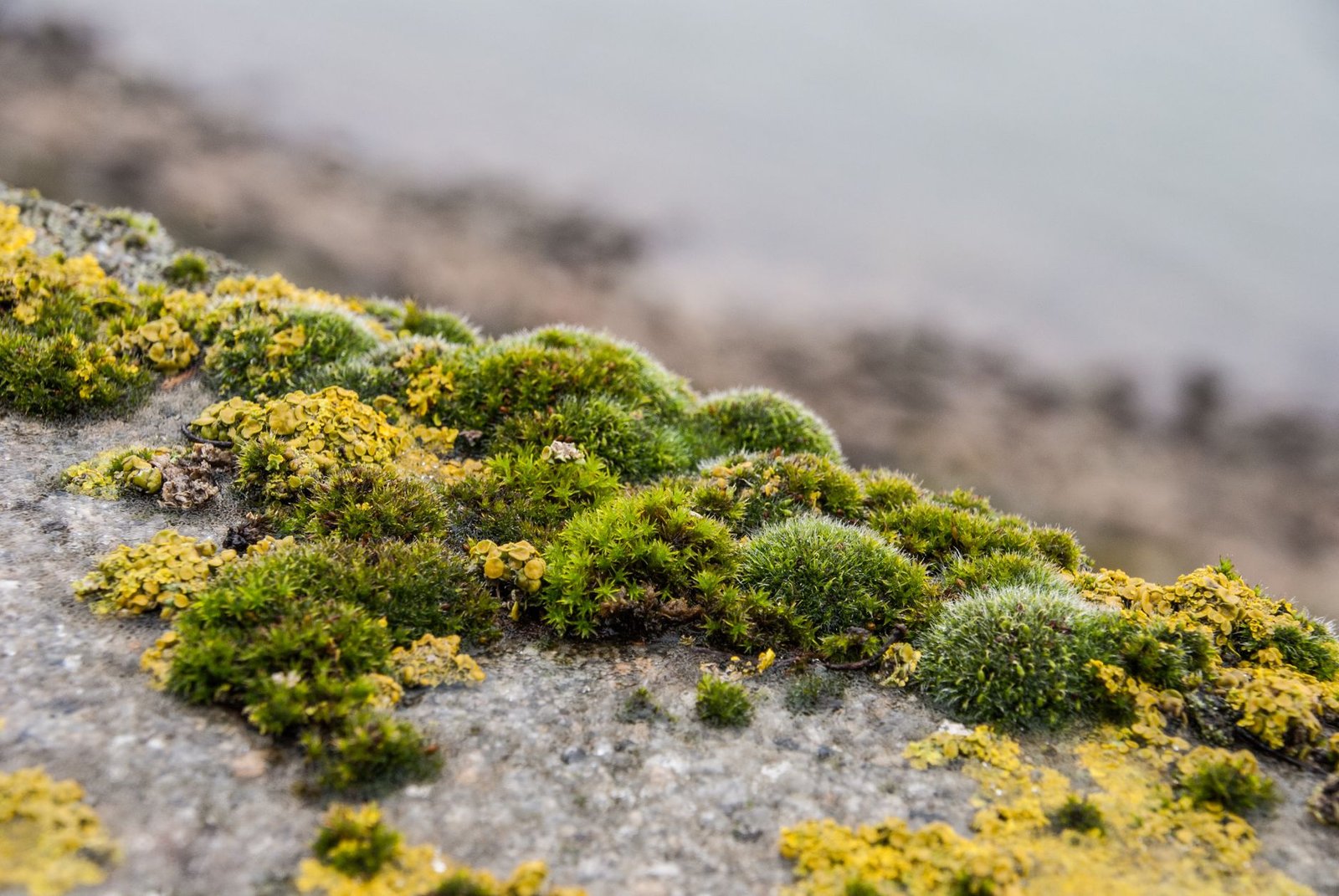
- Sweep first. Remove loose dirt and debris, then pull weeds out of the joints.
- Test. Dab the mix on a hidden paver and let it dry. Look for lightening or blotches.
- Wet the surroundings. The Concrete Network says to water nearby plants and landscaping before and after application.
- Apply to a small area. Use a sprayer or watering can. Keep the section wet; do not let it dry on the surface.
- Wait. Ten minutes for the weak mix; Hunker waits at least 20 for its stronger one.
- Scrub. Use a stiff nylon brush. Hunker warns off metal bristles, which can scratch most paver surfaces.
- Rinse well. Flush with a hose before the solution dries. The Concrete Network says to rinse before it dries to avoid residue.
- Let it dry fully, ideally on a dry day, before judging the result or walking furniture back on.
For a patio that is mostly moss, clean moss off pavers compares bleach with gentler options. For the general routine, see paver cleaning.
Colored pavers, sealed surfaces and the lawn next to the patio
- Colored pavers. Hunker warns about lightening and splotchy results when the mix is too strong. Test, and keep the mix weak.
- Sealed pavers. The Concrete Network says bleach may degrade sealers or coatings, especially if not thoroughly rinsed. If you have a good sealer, bleach is a poor choice; see paver sealing for what the sealer is protecting.
- Plants. Hunker says bleach will kill any plants it comes into contact with. The Concrete Network is milder: properly diluted, bleach will not kill grass or plants, but can cause leaf burn. Both say to protect the planting. Soak the beds with plain water first, and rinse any runoff off the lawn edge.
- Polished or painted concrete. The Concrete Network says to avoid bleach on polished concrete, where it can dull the finish, and on painted concrete, where it can cause paint to flake. If you have painted pavers, see how to paint pavers for what that finish needs.
Gloves, glasses and the never-mix rule
Bleach is corrosive. The Concrete Network says it can irritate or burn skin and eyes, and recommends rubber gloves, protective clothing and safety glasses, plus good ventilation. The GSA's mildew guidance adds that sodium hypochlorite must never be mixed with ammonia, because it produces chlorine gas, and the Concrete Network extends the warning to vinegar and other household cleaners.
That last point matters for paver cleaning in particular, because vinegar is the other thing people reach for on a patio. Use one or the other, rinse the surface completely in between, and do not combine them in a bucket. The vinegar side of the story is in cleaning pavers with vinegar.
When bleach is the wrong tool
Bleach is for biological growth. It is not the answer to every dark mark on a patio. Rust, oil, tire marks and similar stains need their own removers, listed in paver stain remover. White haze is not mildew either; see efflorescence on pavers. And if the patio is just dusty and dull, soap, water and a brush are cheaper, gentler and need no safety glasses.
Weak mix first, rinse before it dries
Bleach on pavers does a real job on mildew and algae and leaves the concrete itself alone. What it threatens is the color, the sealer and whatever is growing next to the patio. Pick the weakest mix that works, test one paver, work in small sections, keep the plants wet, scrub with nylon and rinse before anything dries. If the first round is not enough, rinse completely and change your approach rather than adding more bleach. Pale patches are permanent, and the next stronger bottle is not a fix.
FAQ
Is bleach safe to use on concrete pavers?
Generally yes for the concrete itself. The Concrete Network says bleach does not harm concrete when applied, though it may degrade sealers and can lighten color. Dilute it, test first and rinse thoroughly.
How much bleach should I mix with water to clean pavers?
Sources range widely: about 1/3 cup per gallon for mildew, 1 part bleach to 10 parts water for moss, and 1 part to 3 for stubborn mold. Starting at the weakest is the safer choice.
Will bleach kill the grass next to my pavers?
Hunker says bleach will kill plants it contacts. The Concrete Network says properly diluted bleach will not kill grass or plants but can burn leaves. Water the lawn and beds before and after, and keep runoff off them.
Can I mix bleach and vinegar to clean pavers?
No. The Concrete Network says never to mix bleach with ammonia, vinegar or other household cleaners, because the combination can produce toxic fumes.
Does bleach remove sealer from pavers?
It may degrade sealers or coatings, especially if not thoroughly rinsed, according to the Concrete Network. If the sealer is worth keeping, choose a gentler cleaner.


