

Last Updated on October 20, 2026 by Umar Farooq
A concrete vs paver driveway is a trade between a single slab and thousands of small units. Concrete is one piece, so when it cracks the crack runs through the whole slab. Pavers are many pieces, so movement is spread over the joints and a damaged one gets lifted out and replaced. Published prices overlap more than most people expect, and concrete needs about a week before you can drive on it. Pavers cost more in labor and less in repairs.
This guide skips the "pavers are always better" line and tells you where concrete wins. For the wider material choice, see our paver driveway guide.
Price: the ranges overlap
Concrete is not always the cheaper driveway. Fine Homebuilding lists poured concrete at $8 to $18 per square foot installed and concrete pavers at $5 to $20. That article is old, and other contractor and vendor sources put plain concrete lower. Fixr gives $865 to $1,085 for 120 square feet of concrete, which works out to roughly $7 to $9 per square foot (that division is mine, not theirs).
So you get a spread, not a verdict:
- Plain broom-finish concrete usually lands at the cheap end.
- Colored, stamped or exposed-aggregate concrete climbs toward paver prices.
- Pavers run higher in labor because every unit is placed by hand on a prepared base.
Put numbers on your own drive before you decide. Our paver driveway cost breakdown explains which line items actually move a quote.
One crack, or one paver
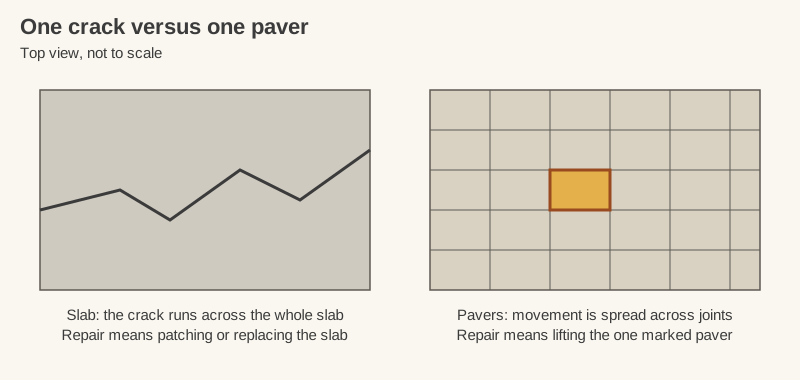
Concrete is rigid. When the ground under it moves, it either holds or it breaks. Truegrid, a permeable-paver vendor, says cracking is common in regions with unstable soil or fluctuating temperatures, and the Concrete Network says slabs may crack from tree roots and freeze-thaw cycles.
A paver surface is built to move a little. The joints are filled with sand, so a tire load passes from paver to paver and down into the base instead of building up in one stiff sheet. When a single unit is stained or cracked, you lift it, add sand and set a new one. A slab crack gets patched, and a patch on a gray driveway is an excellent way to learn what color gray your slab actually is.
Pavers still settle when the base is wrong, and that is a base job, not a surface job.
A week of staying off versus a few days
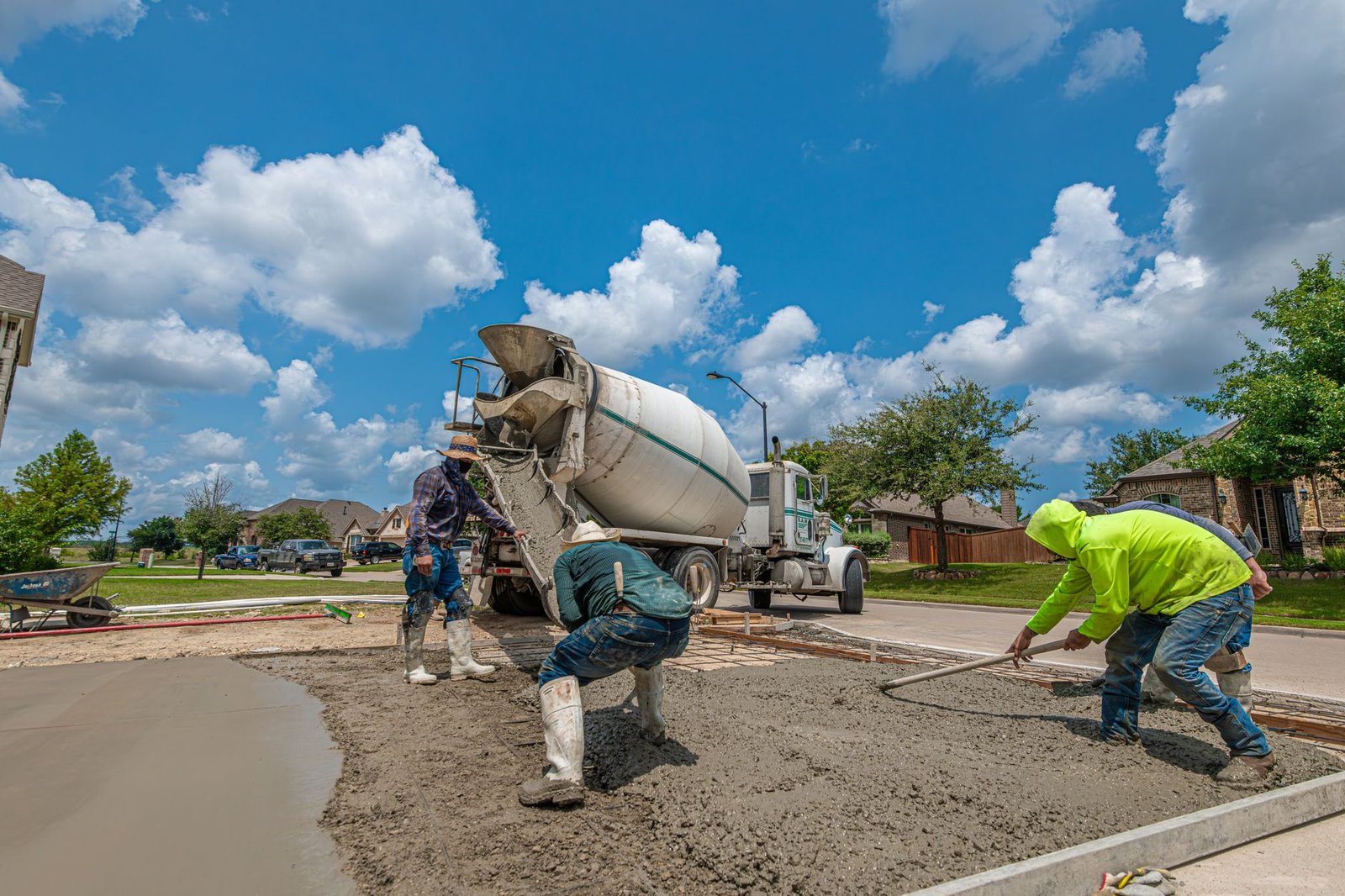
The Concrete Network says poured concrete needs at least 24 hours before foot traffic and 7 days before vehicles. Pavers wait on the joint sand, not the pavers: Techniseal says vehicles can drive on its HP NextGel polymeric sand after 48 to 72 hours. The same source puts a paver crew at about three days on average for a 2,000 square foot driveway, which is a vendor-sourced figure, not a promise.
If your driveway is the only way into the garage, that week matters. You park on the street, and the neighbors learn which one of you is the mystery car.
Strength numbers, and the rule that keeps big pavers off the drive
Both surfaces are made of concrete, so the comparison is about shape, not material. The CMHA guide specification for concrete pavers requires an average compressive strength of 8,000 psi with no unit under 7,200 psi, and average water absorption of 5% with no unit over 7%.
Shape matters as much as strength:
- CMHA Tech Spec 10 recommends 2 3/8 inch (60 mm) pavers for residential driveways and 3 1/8 inch (80 mm) for heavier vehicle traffic.
- Aspect ratio is length divided by thickness. At 4:1 or greater, a paver stays off the driveway. Between 4:1 and 3:1 is fine for residential use.
- A 12 by 12 inch paver at 2 3/8 inches thick is about 5:1, which is why the big square slab pavers look great on a patio and crack under a pickup.
Check the thickness stamped on the pallet before you fall for the paver, not after.
Salt, ice and a long winter
Slab surfaces and de-icing salt do not get along. The Concrete Network lists freeze-thaw cycles among the causes of slab damage, and TrueGrid says concrete is less suitable where temperatures swing often.
Pavers handle freeze-thaw because of how they are specified and built. The CMHA specification limits freeze-thaw loss to 225 g/m² after 28 cycles, and the base under them is built to drain. In cold climates ICPI Tech Spec 2 adds 2 to 4 inches of base to the 6-inch residential driveway minimum.
Upkeep, sealing and who does the work
Both surfaces want sealing if you care about stains. Fixr notes that a concrete sealer has to be reapplied regularly to keep working. Fine Homebuilding lists semiannual washing and sealing for both concrete and pavers, and adds regular weed control for pavers.
The chores differ in kind:
| Chore | Concrete | Pavers |
|---|---|---|
| Sealer | Reapply regularly | Optional, changes the color |
| Joints | Fill or caulk cracks and control joints | Top up joint sand |
| Weeds | Only in cracks | In joints where sand has washed out |
| Stains | Whole-slab cleaning | Clean one unit or swap it |
My one strong opinion: pavers are not the better surface, they are the more forgiving one. If the base under a concrete slab is good, it will last decades with a few patched cracks. If the base under pavers is bad, you will chase it every spring. In both cases the work is underneath, so ask how deep the base is before you ask about color.
Pick concrete for the budget, pavers for the repairs
Choose plain concrete if price and speed decide it, the ground is stable, and you accept a crack or two over its life. Choose pavers if you want a driveway you can repair in small pieces, you have freeze-thaw winters, or you like color and pattern. Compare quotes on the base depth first and the finish second. If asphalt is also on the list, see asphalt vs pavers, and if you are leaning toward a patterned slab, pavers vs stamped concrete covers that specific fight.
FAQ
Is a paver driveway better than concrete?
Pavers repair more easily and move with the ground instead of cracking as one piece, but they usually cost more in labor and need joint sand and weed upkeep. Concrete is quicker to install and plain concrete is often cheaper. Neither lasts without a good base.
Does concrete cost less than pavers for a driveway?
Plain concrete is usually cheaper, but the ranges overlap. Fine Homebuilding lists poured concrete at $8 to $18 per square foot and pavers at $5 to $20. Stamped or colored concrete narrows the gap further.
How long does it take before you can drive on concrete?
The Concrete Network says at least 24 hours before foot traffic and 7 days before vehicles. Pavers wait on the joint sand: Techniseal says 48 to 72 hours for vehicles on its HP NextGel product.
Do paver driveways crack?
Individual pavers can crack if they are too thin for a driveway or the base is weak, but the surface as a whole does not crack like a slab. CMHA recommends 2 3/8 inch pavers for residential driveways and keeps aspect ratios of 4:1 or higher off drives.
Can you put pavers over a concrete driveway?
Yes, in some cases, as long as the slab is sound, drains properly and has the height to spare. Our guide to pavers over concrete covers what has to be true first.


