


Last Updated on October 20, 2026 by Umar Farooq
Grass between pavers is possible, but only if the gaps are wide enough to hold soil, the pavers sit on a base that drains, and you choose a plant that tolerates being stepped on. In ordinary tight paver joints filled with sand, grass is just weeds with better PR. In a deliberately wide joint filled with soil, it becomes a design feature: a lawn path, a stepping-stone patio, a patio that looks half garden.
I went through the top guides on this, and most of them skip the question you hit first: is the grass intentional or is it already growing in your joints? The answer changes everything below.
Decide whether the grass is a plan or a problem
If you laid a standard patio with tight sand joints and green is now poking up through them, that is not a planted lawn. It is seed that landed in the joint sand, which is a different job. Our guide to removing weeds from pavers covers killing it and keeping it out.
If you want grass, moss or ground cover on purpose, you plan for it from the start, because the construction is different from a normal paver patio:
- The joints are wider, and they are filled with soil rather than sand.
- The pavers are set so they bridge the gaps without relying on tight interlock.
- The base still has to be compacted and drain well, or the green strip turns to mud.
That distinction is the whole article. A lot of "grass between pavers" advice fails because it describes the second job while the reader is standing in the first.
Five ways to grow green in the joints
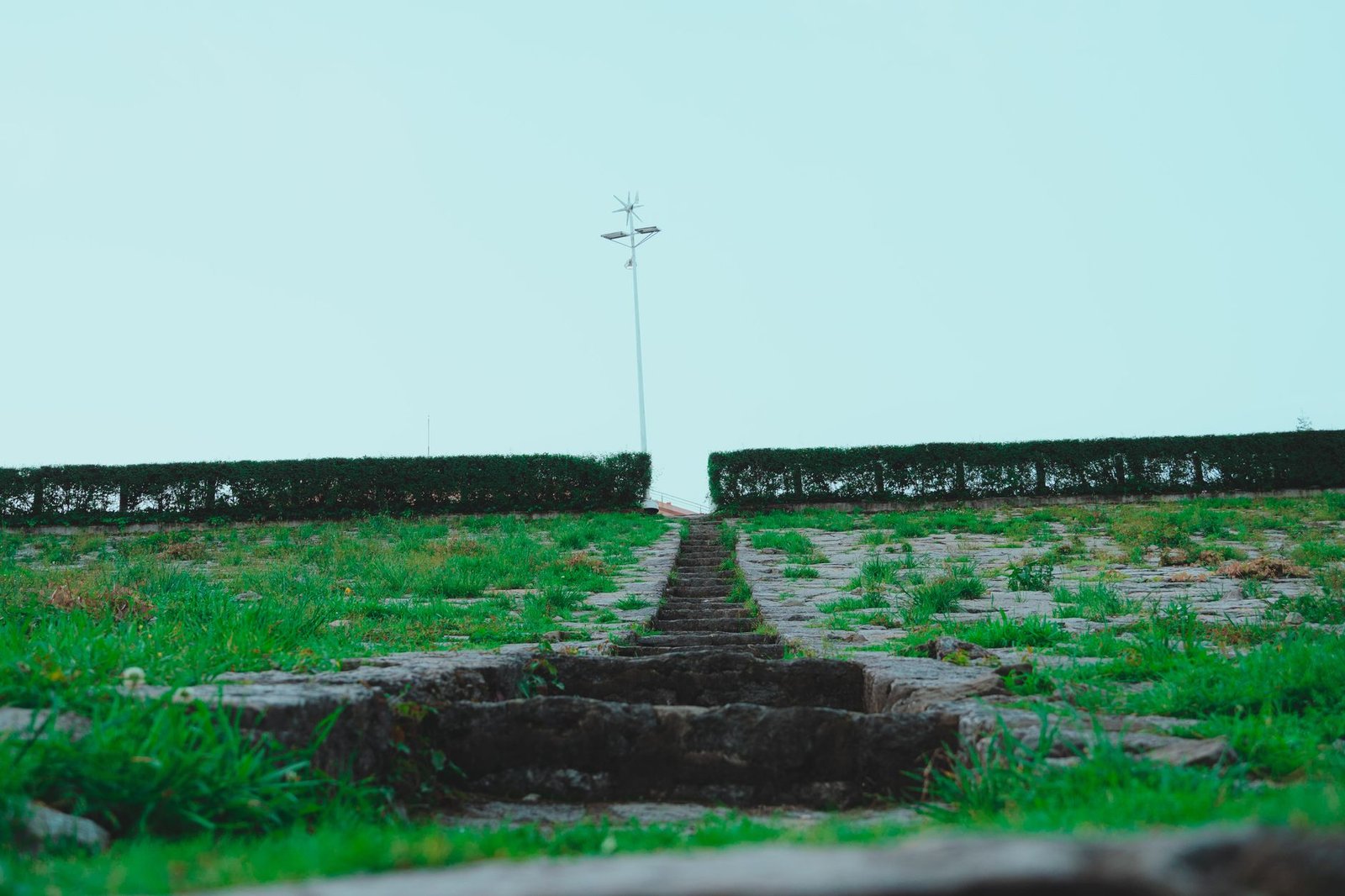
There is more than one way to get the effect. They differ in effort, in how much traffic they take, and in how much you have to mow.
| Approach | What goes in the joint | Best for | Trade-off |
|---|---|---|---|
| Low ground cover (thyme, mazus, blue star creeper) | Soil mix, small plants | Patios and paths with light to moderate foot traffic | Needs watering until it fills in |
| Moss | Nothing much; moisture and shade | Shady, damp paths | Browns in dry sun |
| Seeded lawn grass | Soil mix, grass seed | Wide joints between large stepping pavers | Needs mowing and trimming |
| Turf squares or sod strips | Cut sod pressed into the gap | Quick results | Needs the gap to be wide and deep enough to hold it |
| Grass pavers (open-cell blocks) | Soil in cells | Parking and heavy traffic | A different product altogether |
The last row is not really "between pavers" at all. If your plan involves driving on it, look at turfstone pavers, which are built with openings for exactly that.
Ground covers that handle being stepped on
Plants are where the guides agree most. Rural Sprout's ground covers for pavers lists creeping thyme, blue star creeper, creeping mazus, white stonecrop and brass buttons as taking moderate foot traffic, while Irish moss, green carpet, moss phlox and Corsican mint do better with light traffic. Several of them need part shade or afternoon shade, and Corsican mint is not drought-tolerant.
How I would use that list:
- Full sun, regular foot traffic: creeping thyme. Rural Sprout puts it at 2 to 3 inches tall and moderate traffic, and it is the one nearly every source names first.
- Part shade, damp soil: blue star creeper or creeping mazus.
- Shady and damp: moss, left alone.
- Along the edge of a path, not in the middle: moss phlox, which they recommend planting along the edges.
I could not find a manufacturer or extension document that gives a minimum joint width for planting. Treat that as a limit of the sources rather than a hidden rule: most guides simply describe gaps wide enough to hold soil and a plant, and leave the number to you. Lay out a few pavers on the ground with a gap you could comfortably slip a small hand trowel into, and judge from there.
Plant it in the right order
Planting is the easy part. The sequence matters, because roots go into the soil you leave them.
- Lay the pavers on a compacted base as you normally would, but with a deliberate gap. Nothing about the structure changes: the standard from the Interlocking Concrete Pavement Institute's Tech Spec 2 is still at least 4 inches of compacted base under a patio on well-drained soil, with 2 to 4 inches more on wet or weak ground. See how much space between pavers for the usual gap sizes when you are not planting.
- Dig out the gap a few inches if it is filled with base stone, and replace it with a soil and compost mix. Rural Sprout suggests compost-rich soil.
- Space the plants 6 to 9 inches apart and let them fill in, as the same source recommends.
- Keep off new plantings for at least a few weeks.
- Water every day for the first few weeks, then back off.
One thing the guides do not push hard: ground covers fill in slowly in year one, and a bare, muddy joint looks worse than a weedy one for a few months. Plant in spring or early fall, when the weather helps rather than fights.
Keep the pavers from sinking into the soil

A planted joint is softer than a sand joint, and that changes how the paver behaves. The edges of each paver are no longer supported by tight, locked sand, so a heavy step can tilt one slightly.
Three things keep it from becoming a trip hazard:
- Big pavers, wide spacing, light use. Stepping-stone-style units spaced on a firm base work better than small units spread thin.
- A real base under each paver. A stepping stone dropped on bare grass will tilt. The base under a patio is not optional because the gap above it is green. See how to lay stepping stones for setting individual stones level.
- Edge restraint around the whole field. The perimeter still needs something solid holding it in. Interlock is reduced, and the outer row has more reason to wander.
(Treat a planted-joint patio as a path, not a dining terrace. A table leg landing in thyme tells you quickly how stable the thyme is.)
Water, mow and trim without drowning the pavers
Soil in the joints holds water, and water has to go somewhere. If the base underneath drains, the joint behaves like a small rain garden. If it does not, the pavers settle and the green strip turns to mud.
For ongoing care:
- Water gently while the plants fill in, then only in dry spells. Thyme and stonecrop prefer lean, dry conditions once established.
- Trim the edges with shears rather than a string trimmer. A trimmer chews at both plants and paver corners.
- If you used lawn grass, mow on a high setting. A mower wheel that runs over pavers needs them to be level and firmly bedded.
- Pull the weeds that are not yours. Dandelions and crabgrass come up anyway. Hand-pulling a few per week beats a chemical that also kills the thyme.
The same gap that grows grass also grows trouble
A wide, soil-filled joint welcomes the plant you want and every seed that lands on it. Ants like the loose soil too. If you ever want to convert the patio back to tight joints, the planted soil has to come out first, and that is a slow job.
There is also a cost-and-labor tradeoff. A tight sand joint holds the pavers together; a wide soil joint doesn't, so a green patio needs a bit more base work and a lot more weeding. If the main reason you want grass between pavers is that you like the look of green, an easier route is a conventional patio with plants around it. For ideas on that, see our guide to landscaping around a paver patio.
Choose tough plants and wide gaps, then stay off it wet
Grass between pavers rewards a specific kind of patience: wide joints, tough ground cover, a base that drains, and a few months of not stepping on it. Do those four things and it looks planned. Skip the base and it looks like a drainage experiment.
If you are still choosing a plant, pick creeping thyme for sun, blue star creeper for shade, and then do the dull part first: dig to the proper base depth. Your plants will thank you the way plants do, by quietly not dying.
FAQ
Can you grow grass between pavers?
Yes, if the joints are wide enough to hold soil and the base underneath drains. Tight joints filled with sand do not support healthy grass. For a planted joint, lay the pavers with a deliberate gap and fill it with a soil and compost mix.
What is the best ground cover to plant between pavers?
Creeping thyme is the usual choice for sun and moderate foot traffic, at roughly 2 to 3 inches tall. Blue star creeper and creeping mazus suit part shade, and moss works in shady, damp spots. Match the plant to the sun on your patio.
How wide should the gap be for grass between pavers?
I could not find a published minimum. Practical guides describe gaps wide enough to hold soil and a young plant, and to leave room to plant by hand. Test with a few pavers laid out on the ground before you commit.
Why does grass grow through my existing paver joints?
Seeds and dust collect in the joint sand, and a thin layer of organic debris gives them something to root in. That is a weed problem rather than a planting job, and it usually means the joints need cleaning and refilling.
Will grass between pavers damage them?
Roots do not damage concrete pavers, but constant moisture and a poor base can make them settle or tilt. Build the base properly, restrain the edges, and the green joint will not hurt the pavers.


