

Last Updated on October 20, 2026 by Umar Farooq
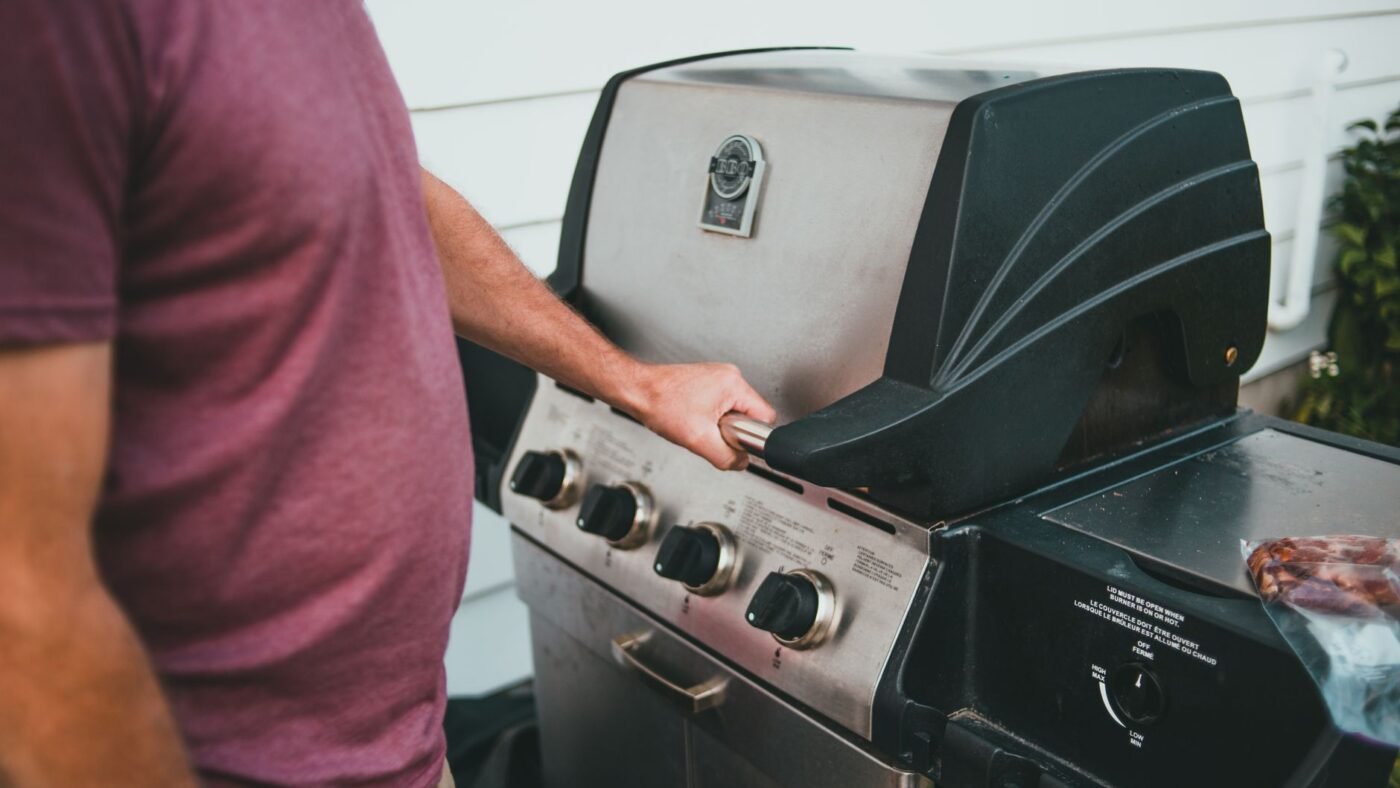
A grill on pavers is fine in almost every case. A standard grill sits on legs or a cart, and heat rising from the firebox does very little to the paving underneath. The things that actually damage a paver patio around a grill are grease that soaks in, a very hot grill or coal tray set straight onto the surface, and a heavy cart parked on an uneven spot. Fix those three and the patio will handle a decade of summers.
The sources I read for this one agree on a surprising point: the heat is the smallest of the problems. The sections below take the real ones in order of how often they bite.
Grease is the real enemy, not heat
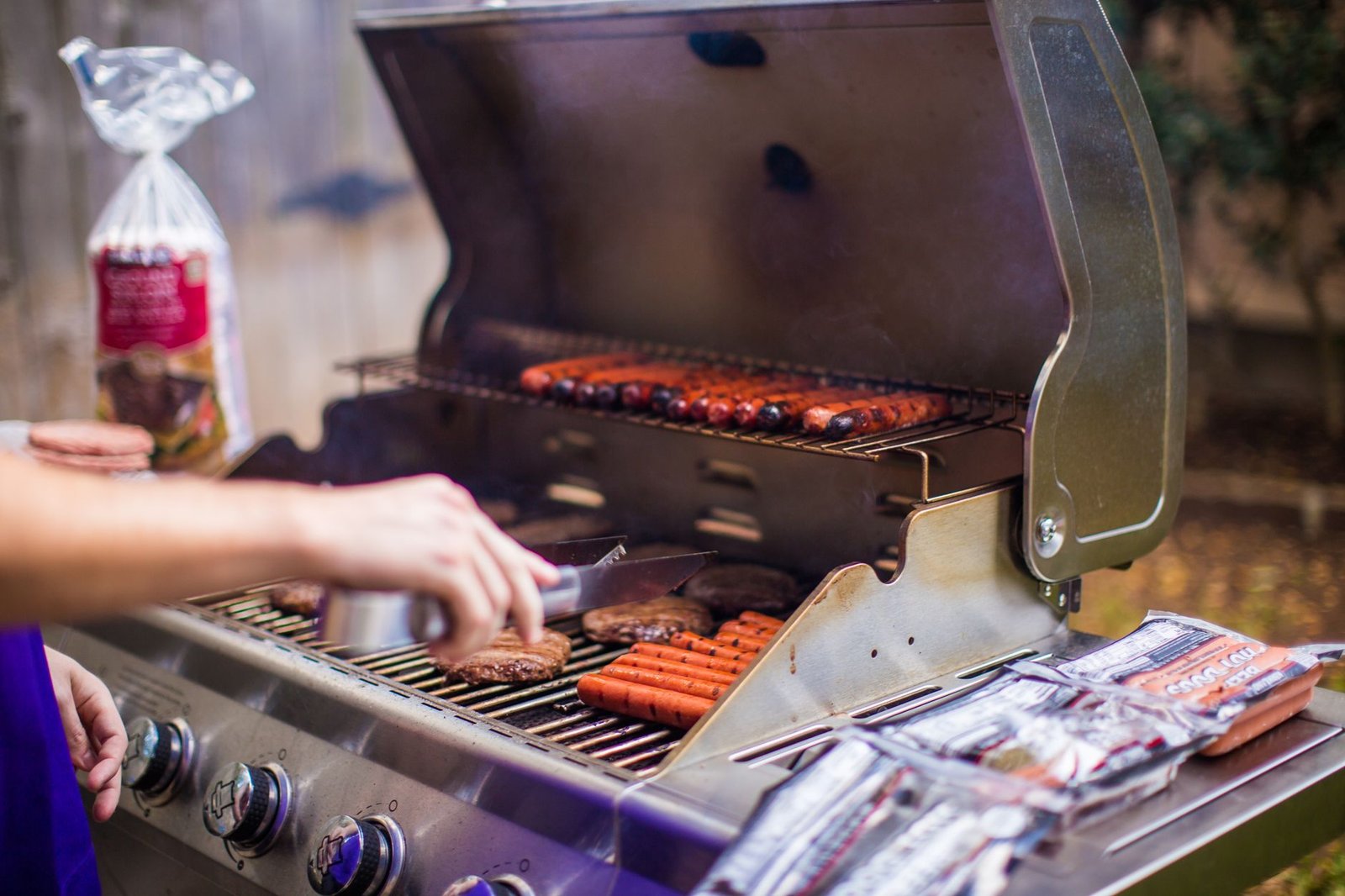
Concrete is porous. Belgard's guidance on sealing says it plainly: unsealed concrete absorbs stains (Belgard). A grill is a machine for dripping fat on the ground, and fat that soaks into a porous paver is a stain that stays.
Andy McLaughlin of RF Paving, quoted by Tom's Guide, says fatty foods and drinks are often dropped while guests are enjoying the hospitality, and that removing them early is key to minimizing long-lasting marks. He also notes that some materials are more porous than others, and that once stains impregnate the surface they can be more stubborn (Tom's Guide).
So the plan is boring and cheap:
- Put a mat under the grill and the prep area. It catches drips before they reach the paver.
- Wipe fresh spills right away. A paver that is wiped in a minute is a paver that never stains.
- Seal the patio. A sealer slows absorption so a spill has time to be wiped. Belgard's rule of thumb is to reseal every 3 to 5 years, and to remove any stain before sealing. See our paver sealing guide.
If a stain has already set, our remove oil stains from pavers guide covers the poultice and degreaser methods. For a fresh drip, McLaughlin's method is dish soap applied neat, scrubbed with a stiff brush and rinsed after about 15 to 20 minutes. Before you try any cleaner, check that it is suitable for your paver type.
My opinion, and I will stand on it: a grill mat costing around $40 is better value than any other accessory you will buy for the patio. It is cheaper than a degreaser, a pressure washer rental or a new sealer coat, and it works before the stain exists.
Where the heat really goes
The fear is that a hot grill will crack or melt the pavers. The expert advice I found says the reality is more nuanced.
McLaughlin says it is advised never to place the grill directly onto any surface or paving, because the direct heat may harm it. He explains that if the temperature is too high, natural stone may crack, and even porcelain, which is fired at around 1300 degrees C (2372 degrees F), will likely scorch. But he adds that the mistake of grilling directly on a surface is more common with disposable barbecues, and that standard grills are raised on stands. In his words, there may be some heat transfer through the stand, but it is very unlikely to be enough to harm the surface.
That matches the pattern: a freestanding grill on legs is not the issue. A disposable barbecue or a coal tray sitting flat on the paving is. If you use one, McLaughlin suggests raising it on a spare piece of non-combustible material, such as a spare paving stone supported by house bricks.
Fire pits and ovens are a different case, since flame sits at ground level. Our heat resistant pavers article covers firebrick and what goes under a fire ring.
The 3-foot zone, and why the manual wins

Where the grill sits matters more than what it sits on. The U.S. Fire Administration's safety graphic says to place your grill at least 3 feet from siding, deck railings, eaves and overhanging branches (USFA).
I want to be careful here. Many pages repeat a 10-foot figure for grill distance. I could not find that number in the safety pages I opened, so I am giving you the one I could verify. Your grill's manual, and your local fire code, can ask for more, and they override a rule of thumb. Read the manual's clearance section before you choose the spot.
Use the pavers to help. Mark the grill pad on the patio plan at the far end from the house door, and keep it out from under roofs and trees.
A level spot, or the grill will rock
Heat and grease get the attention, but a grill that rocks is a bigger safety issue. McLaughlin says a flat and even surface for the grill is essential.
On pavers, that depends on the base. ICPI's spec calls for pedestrian pavers to be laid with no more than 1/8 inch of lippage between neighbors, and at least 4 inches of compacted base on well-drained soil (ICPI Tech Spec 2). If the grill rocks, one of the pavers under a wheel has probably settled. Lift it, add base material and re-set it, rather than shimming the grill. Our paver base guide covers the layers.
A cart with four small wheels puts its weight on four small patches. That is fine for a normal patio base. A built-in island is another story, and it should have its own footing. See outdoor kitchen on pavers.
Charcoal grills: ash and embers
A charcoal grill adds two jobs. Ash and soot spill onto the patio, and McLaughlin says the same dish-soap approach used for grease can be used on ash and soot. Hot embers can fall too, so keep a metal bucket for ash, never tip it onto the paving while warm, and use a raised base if the grill has no legs.
The checklist before the first cookout
Walk the patio once before you light anything:
- Rock each paver under the grill's wheels or legs with your foot. Any that moves needs re-setting.
- Measure 3 feet from the siding, rails and eave to the nearest edge of the grill, then check the manual for a bigger number.
- Put the mat down so it extends past the grill on every side, since that is where grease lands.
- Keep a bucket and a stiff brush near the grill, so a spill is a one-minute job.
- If the patio is unsealed and the pavers are new, read the sealer's wait time before you coat anything. Belgard says to wait one week with a non-film-forming sealant or 30 days with a film-forming one.
A mat, a level spot and 3 feet are enough
Put a grill on pavers with a mat under it, a level spot beneath it and at least 3 feet of clear space around it, and your patio will outlast the grill. Skip the mat and you will be reading about poultices by August. (The mat, unlike the guests, never asks when the burgers will be ready.)
FAQ
Can you put a grill on pavers?
Yes. A standard grill on legs or a cart is fine on pavers. Heat transfer through the stand is very unlikely to harm the surface. Disposable barbecues and coal trays should be raised on a non-combustible spacer instead of sitting flat on the paving.
Will a grill crack concrete pavers?
An expert quoted by Tom's Guide says very high temperatures can crack natural stone and scorch even porcelain, but that standard grills raised on stands are unlikely to cause harm. Keep any open flame or hot coal tray off the paving.
What should I put under a grill on a paver patio?
A grill mat. It catches grease and protects the surface. Add a metal or non-combustible pad if you are using a disposable barbecue or coal tray.
How do you get grease stains off pavers?
Act early. A neat application of dish soap, scrubbed with a stiff brush and rinsed after 15 to 20 minutes, is the simplest method. For older stains, use a cleaner that suits your paver type.
How far should a grill be from the house?
The U.S. Fire Administration says at least 3 feet from siding, deck railings, eaves and overhanging branches. Your grill's manual and local fire code may require more.
Should I seal pavers around a grill?
It helps. Concrete is porous and absorbs stains if left unsealed, so a sealer gives you time to wipe a spill. Belgard suggests resealing every 3 to 5 years.


